Last Updated: October 22, 2026
Quick Summary
Business headshot trends for 2026 favor natural expressions and relaxed posing, with minimal retouching close behind, according to The Studio Pod’s 2026 headshot trend report. Environmental context, such as a real office or boardroom, rounds out the look, so skin keeps its texture and the result looks like you on a good day.
- The Studio Pod’s 2026 report ranks natural expressions and relaxed posing first among headshot trends.
- Minimal retouching keeps skin texture and lines, so the photo looks like you on a good day.
- Smart-casual with structure works best: a blazer over an open-collar shirt or a knit under a tailored jacket.
- Turn your body about 15 degrees from the lens, then bring your face back to camera.
- Ask for square, vertical, and wider horizontal crops from the same frame to fit every platform.
Table of Contents
- Why Business Headshot Trends Shifted Toward Authenticity in 2026
- The 2026 Business Headshot Photography Trends That Matter
- Professional Headshot Examples by Industry and Role
- Professional Headshot Outfit Ideas for 2026
- Business Headshot Poses That Read as Confident, Not Stiff
- Headshot Backgrounds for Business: Studio, Office, and Outdoor
- AI, Retouching, and Disclosure: Getting Authenticity Right
- How to Choose a Trend and Plan a Team Refresh
- Frequently Asked Questions
Why Business Headshot Trends Shifted Toward Authenticity in 2026
Business headshot photography trends for 2026 and in 2026 share one clear theme: real people, not polished mannequins. The Studio Pod’s 2026 headshot trend report lists natural expressions and relaxed posing as the leading style for the year, with minimal retouching close behind.
The reason is simple. Buyers and donors have learned to spot heavy editing. A face that looks airbrushed reads as a stock image, and stock images do not build trust. Authentic representation now carries more weight than a flawless finish.
Below, we break down the trends worth adopting, the outfits that work, and how to plan a refresh for your whole team.
The 2026 Business Headshot Photography Trends That Matter
Two trends define the year: natural expression and restrained editing. Everything else, from lighting to background, follows from those two choices.
Natural Expressions and Relaxed Posing
The stiff, shoulders-square pose is fading. The Studio Pod’s 2026 headshot trends guide places natural expressions and relaxed posing first on its list of trends. That means a real smile, a slight turn of the head, and hands that look like they belong to a person rather than a mannequin.
Minimal Retouching and Environmental Context
Minimal retouching is the second half of the story. Skin keeps its texture, lines stay put, and the result looks like you on a good day. Environmental context rounds it out: a real office, a boardroom, a doorway. Both The Studio Pod and Lasting Images’ 2026 branding photography trends highlight environmental settings as a defining look for the year.
Ask your photographer to show you the unretouched frame alongside the edited one. If the difference is hard to spot, the retouching is calibrated correctly.
Professional Headshot Examples by Industry and Role
Industry changes the brief more than any single trend. A nonprofit executive and a tech founder should not look interchangeable.
- Nonprofit and association leaders: warm, approachable, often in environmental settings that hint at mission.
- Corporate executives: clean, even lighting with a neutral background and confident posture.
- Government-adjacent and public affairs roles: conservative framing, subdued color, minimal styling.
Capturely’s corporate headshot examples consistently favor a clean head-and-shoulders crop, eye-level framing, and even lighting. Those basics hold across every industry. The variables are wardrobe, background, and how much personality you let through.
Professional Headshot Outfit Ideas for 2026
The 2026 answer is smart-casual with structure. A blazer over an open-collar shirt, a knit top under a tailored jacket, or a simple solid-color blouse all photograph well.
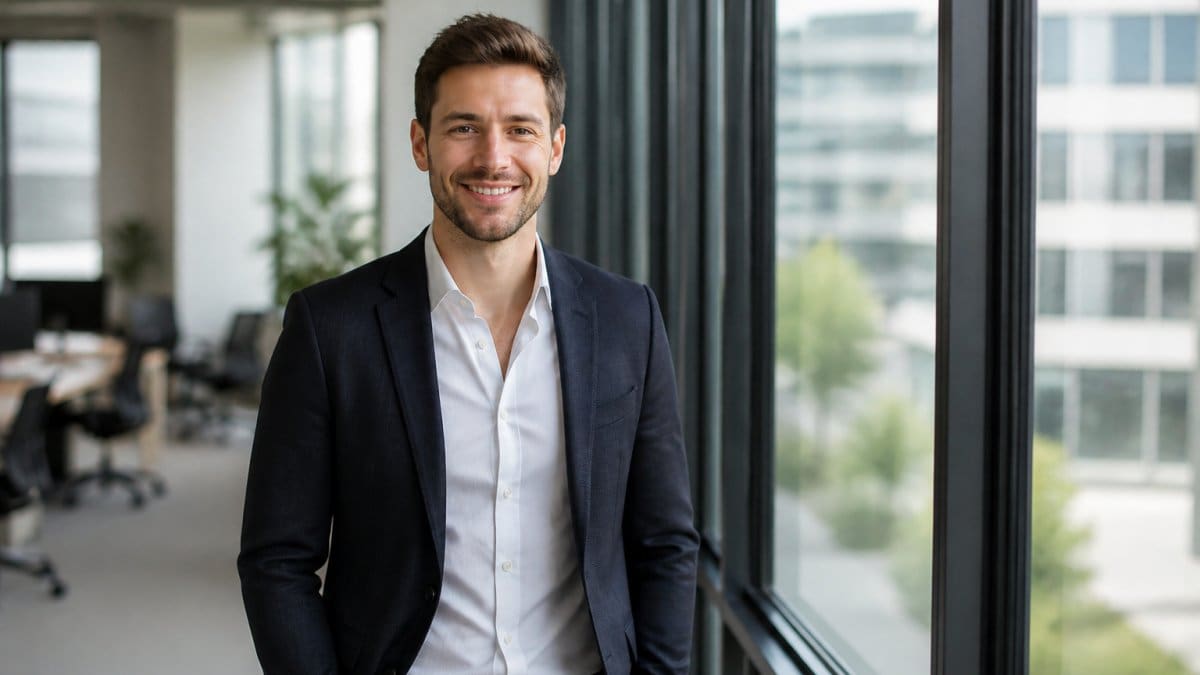
Color matters more than brand. Solid mid-tones, navy, charcoal, deep green, and burgundy, separate cleanly from most backgrounds. White can blow out under bright studio light. Black can lose detail in the shadows.
Wearing a busy print or a strong logo in a headshot pulls the eye away from your face. In a small LinkedIn crop, the pattern becomes visual noise and your expression gets lost.
Business Headshot Poses That Read as Confident, Not Stiff
Confidence in a headshot comes from small asymmetries, not a rigid stance. Business headshot poses that work in 2026 share three traits: a slight angle to the camera, relaxed shoulders, and a genuine expression.
Try these on the day:
- Turn your body about 15 degrees away from the lens, then bring your face back to camera.
- Let one shoulder sit slightly lower than the other.
- Keep your hands busy, holding a jacket lapel or resting on a desk, so they do not dangle.
Denver Headshots’ 2026 professional headshot guidance describes guided posing as part of a strong result, which matches what we see: the best frames come from direction, not from a subject left to improvise.
Headshot Backgrounds for Business: Studio, Office, and Outdoor
Background choice should follow your role and your platform. Headshot backgrounds for business fall into three usable categories, and each sends a different signal.
| Background | Best For | What It Signals |
|---|---|---|
| Studio neutral | Executives, board bios, press use | Authority, consistency across a team |
| Office or workplace | Consultants, agency leads, founders | Context, approachability |
| Outdoor or architectural | Creative roles, public-facing leaders | Personality, local roots |
Studio backdrops give you the most consistency, which matters when a whole team appears on one website. Environmental backgrounds tell a story but require more planning around light and clutter. Outdoor settings work best in soft, overcast light, not harsh midday sun.
AI, Retouching, and Disclosure: Getting Authenticity Right
AI-enhanced photography is now part of the workflow, and the honest approach is disclosure. If a tool altered your appearance beyond basic retouching, say so. Donor and client trust is harder to rebuild than a reputation for transparency.
Keep the line clear:
- Acceptable: blemish removal, stray-hair cleanup, color and exposure correction.
- Risky: reshaping a jawline, slimming, or replacing a background with a fabricated office.
- Never: generating a face that is not yours.
Most competitors stop there. The harder question is how to put that line into practice, because the risk is not only reputational.
Set a Retouching Boundary Before the Session
Write the boundary into the booking. A simple three-tier agreement works:
- Cleanup only: temporary blemishes, flyaway hair, lint, and color correction. No structural change.
- Light polish: even skin tone, softened shadows under the eyes, and minor stray-hair removal, with skin texture preserved.
- No structural edits: no jawline reshaping, no slimming, no eye enlargement, no teeth replacement, and no fabricated backgrounds.
Ask the photographer to deliver the unretouched frame alongside the edited one. If the two are hard to tell apart at LinkedIn crop size, the retouching is calibrated correctly.
Get Consent in Writing
A headshot is a likeness, and a likeness is personal data in several state privacy regimes. A short written consent at booking should cover:
- Who owns the images and how long they are retained.
- Whether the images may be used in the photographer’s portfolio or marketing.
- Whether any AI tool will process the images, and for what purpose.
For team shoots, collect consent per person rather than relying on a single company sign-off. Employees leave, and a former employee’s likeness on a company page is a common source of complaints.
Disclose When It Matters
Disclosure does not mean stamping every image with a label. It means being honest when a tool changed something a viewer would reasonably assume was real. A practical rule:
- No disclosure needed: exposure, color, blemish, and stray-hair cleanup.
- Disclose in context: AI background replacement, AI-generated wardrobe, or heavy skin smoothing, especially in a bio, press kit, or speaker page.
- Do not use: a generated or heavily synthesized face presented as the person.
If a platform or publisher has its own disclosure rule, follow the stricter one. When in doubt, a one-line note in the bio or caption (“Image retouched; background digitally replaced”) costs little and protects credibility.
A headshot that no longer looks like you in person will cost more trust than it earns. The test is simple: would a colleague recognize you at a conference from the photo alone?
Minimal retouching protects your credibility. Put the boundary in writing, get consent per person, and disclose any edit a viewer would not expect.
How to Choose a Trend and Plan a Team Refresh
Pick the trend that matches your audience, not the one that looks best on a mood board. A nonprofit gala program and a corporate press kit call for different visual languages. The useful question is not “which trend is best” but “which trend fits this role, this audience, and this platform.”
A Decision Framework by Role and Audience
Score each option on four axes before you book:
- Industry formality: regulated, government-adjacent, and legal roles reward conservative framing and subdued color. Creative, media, and marketing roles reward warmer grading and more personality.
- Audience expectation: donors and boards read polish and consistency as credibility. Clients and prospects read approachability and context as trust.
- Brand personality: a mission-driven nonprofit can carry environmental warmth; a financial firm usually cannot.
A quick rule of thumb: the more regulated the industry, the more the headshot should look like the rest of the team. The more client-facing the role, the more the headshot can show context and personality.
Match the Crop to the Platform
One session should produce several crops, not one image stretched everywhere:
| Platform | Typical Use | Framing Guidance |
|---|---|---|
| LinkedIn profile | Personal profile | Head-and-shoulders, face fills most of the frame, eye-level |
| Company website team page | Consistent grid | Same background and crop across the team |
| Speaker bio | Event program | Slightly wider crop with room for caption text |
| Press kit | Media use | High-resolution, neutral background, clean edges |
Ask for a square crop, a vertical crop, and a wider horizontal crop from the same frame. That single request prevents the stretched, off-center results that show up when a team page and a speaker bio pull from the same file.
Plan a Team Refresh in Four Steps
- Audit current images. List every place a headshot appears: website, LinkedIn, annual report, press kit, event signage.
- Set one visual standard. Choose a background, crop, and wardrobe level for the whole team, then document it in a one-page style note.
- Book in batches. Group sessions by role or department to keep lighting and styling consistent.
- Plan the rollout. Refresh the highest-traffic profiles first, then work through print and event materials.
Measure Whether It Worked
Few teams connect headshot choices to outcomes, which is a missed opportunity. Pick two or three measures before the refresh and compare before and after:
- Profile views and connection requests on LinkedIn.
- Inquiries or meeting requests that reference a team page or bio.
- Time on page for team and leadership pages.
You do not need a formal study. A simple before-and-after snapshot over a quarter is enough to show whether the refresh moved anything.
Consistency is the underrated trend here. When you need coverage that matches that standard across a conference, gala, or board meeting, our team at Event Photojournalism can build a custom plan around your brand and your timeline.
Frequently Asked Questions
What are the biggest business headshot trends for 2026?
The 2026 trends point toward natural expressions and relaxed posing, minimal retouching instead of heavy editing, and environmental settings that show a person in context. The Studio Pod lists natural expressions, relaxed posing, and minimal retouching among its top headshot trends for the year, and both The Studio Pod and Lasting Images highlight environmental context as part of contemporary business headshot photography. The practical takeaway is a portrait that looks like a real person at work, not a heavily processed studio cutout.
What should I wear for a professional headshot in 2026?
Start with professional headshot outfit ideas that match your actual workday: a blazer over a simple top, a collared shirt without a tie, or a structured knit in a solid color. Smart-casual outfits are among 2026 headshot styles, which gives you room to dress slightly above your daily norm without looking costumed. Avoid busy prints, logos, and stark white against a white background. Bring two options so the photographer can check how each reads on camera before you commit.
What should you avoid in a business headshot?
Avoid over-retouching that erases skin texture, stiff military-style posture, and backgrounds that compete with your face. Capturely recommends a clean head-and-shoulders crop with eye-level framing, even lighting, and a clean background, which rules out tilted angles and cluttered rooms. Also skip heavy filters and AI edits you would not disclose. If a photo no longer looks like you on a normal Tuesday, it will undercut trust with clients and donors rather than build it.
How often should professionals update their headshots?
Refresh your business headshot every two to three years, or sooner if your role, wardrobe, or hairstyle has changed noticeably. Consistency across a team matters as much as the individual image: when one person’s photo is five years old and lit differently from everyone else’s, the team page looks disjointed. For organizations planning a team-wide refresh, book one session with a shared style brief so lighting, background, and crop stay consistent across every portrait.
The hardest part of a headshot refresh is not choosing a trend. It is keeping a whole team consistent while still letting each person look like themselves. Event Photojournalism brings award-winning photography, customized solutions, and high-resolution delivery to conferences, galas, corporate events, and individual sessions, with two locations serving the region. Contact us to plan your next headshot session or event coverage and put a consistent, authentic face on your brand.