
Last Updated: October 29, 2026
Quick Summary
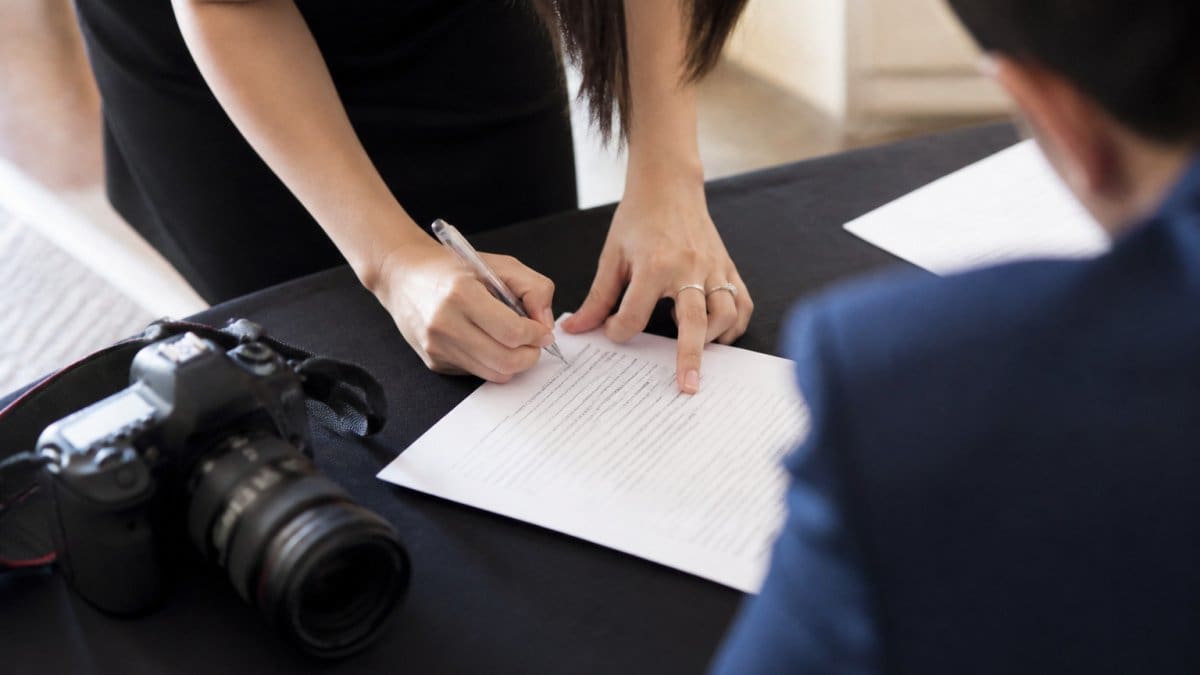
An event photography model release is a signed agreement in which a person grants a photographer permission to use their likeness in photos, defining how those images may be published. It protects the photographer, the client, and the person pictured, and it is needed most when an attendee is identifiable and featured in promotional material.
- Shoot everything, but tag any image with a featured subject for release verification before delivery.
- Attendance at a public event does not grant commercial rights to a person’s likeness.
- A parent or legal guardian must sign for any minor appearing in an image.
- Pair signage with a signed form for anyone you plan to feature in promotional material.
- Set a target for removing images after a written consent withdrawal request.
Table of Contents
- What a Model Release Is and Why Event Photographers Use One
- Model Release vs Photo Release: What Actually Differs
- When Event Photos Need a Release and When They Don’t
- Building an Event Photography Model Release Form
- Opt-In and Opt-Out Policies for Attendee Photos
- Commercial Use of Event Photos: Scope, Limits, and Client Rights
- Booking Event Photography That Handles Consent for You
- Frequently Asked Questions
What a Model Release Is and Why Event Photographers Use One
A model release is a signed agreement in which a person grants a photographer permission to use their likeness in photographs, and it defines how those images may be used, which makes the event photography model release the document that governs every later publication.
The release protects three parties at once. It gives the photographer legal permission to publish, it gives the client clear rights to the images they commissioned, and it gives the person in the frame a documented choice about how their image is used. Without one, a photographer may hold excellent images that the client cannot safely publish.
Event work is more complicated than studio portraiture because the subjects are often unplanned. A board member mid-conversation at a summit, or a donor at a gala table, has not posed and has not signed anything.
Model Release vs Photo Release: What Actually Differs
People use “model release” and “photo release” interchangeably, but many organizations treat them as different documents.
The practical difference shows up in scope. A photo release might authorize one annual-report photo.
Many event teams simply use one form and call it a release. That works as long as the form clearly states the permitted uses, the duration, and the territory.
When Event Photos Need a Release and When They Don’t
Not every photo at an event requires a signed release, but the decision should be made by rule before the shutter fires, not by instinct afterward. The two variables that drive the answer are identifiability and use.
- Identifiability: Can a reasonable person recognize the attendee from the image alone, or from the image plus context (a name badge, a caption, a known role)? A face in focus, a distinctive outfit, or a name tag all push an image toward identifiable.
- Use: Is the image being used to sell, promote, or endorse something (commercial), or to report on or document the event (editorial)? The same photo can be editorial in a news recap and commercial in a sponsor deck.
A practical matrix event teams can apply on site:
| Image type | Editorial recap | Promotional / commercial |
|---|---|---|
| Wide crowd shot, no one identifiable | Generally no release | Generally no release |
| Incidental background attendee, not a subject | Generally no release | Release preferred |
| Recognizable attendee as a featured subject | Release preferred | Signed release required |
| Close-up portrait or named quote | Signed release required | Signed release required |
| Minor, clearly identifiable | Guardian release required | Guardian release required |
Attendance at a public event does not grant commercial rights to a person’s likeness. “It was a public event” is the most common and most expensive misconception in event photography.
Public Events, Crowds, and Identifiable Attendees
Crowd photography is where most consent disputes start, so treat it as its own workflow rather than an edge case.
- Crowd scenes: A wide shot where no single person is the subject and no one is identifiable in the delivered crop is the lowest-risk category. Shoot wide, deliver wide, and avoid tight crops that turn a background attendee into a featured subject.
- Incidental appearances: Someone walking through the back of a frame is incidental. If the image will be used only for editorial recap, most practitioners proceed; if it will anchor a promotional post, flag it for review.
- Close-ups and featured subjects: Once you frame one attendee as the subject, you are in release territory. This includes posed grip-and-grins, award recipients, speakers, and anyone a caption will name.
A workable on-site rule: shoot everything, but tag anything with a featured subject for release verification before delivery. That keeps coverage fluid while ensuring no promotional image ships without documented consent.
Minors and Guardian Consent
Photographing children at events requires extra care and a separate procedure, not a checkbox on the adult form.
- Who signs: A parent or legal guardian signs for a minor. A child cannot consent on their own behalf, and a teacher, coach, or event volunteer is not a substitute for a guardian unless they hold documented authority.
- When to collect: For any event where minors are expected, youth programs, family days, school-affiliated conferences, build guardian consent into registration rather than chasing signatures on site.
- If no guardian is present: Avoid using any identifiable image of that child in promotional material. When in doubt, exclude the image from the promotional set and keep it only in the private client gallery.
How Consent Is Captured at Registration, Check-In, and During the Event
The strongest event programs treat consent as a workflow that runs alongside registration and check-in, not as paperwork that happens after the fact.
- At registration: Add a consent question to the event registration form. State the policy in plain language, offer an opt-in or opt-out choice, and record the answer against the attendee’s registration record.
- At check-in: For attendees who did not register online, provide a short paper or digital form at the desk. A QR code that opens a mobile release takes under a minute and produces a timestamped record.
- During the event: Use visible signals, a colored lanyard, a badge sticker, or a marked no-photo area, so photographers can see consent status at a glance. Brief the photo team on the signal system before doors open.
- After the event: Reconcile the attendee list against the images delivered. Any featured subject without a matching release gets flagged before the gallery goes to the client.
Pair signage with a signed form for anyone you plan to feature. A notice on a wall documents the event’s policy; it does not document an individual’s consent to a specific commercial use.
Building an Event Photography Model Release Form
A usable event release is short, specific, and readable in under two minutes. The form itself is only half the system; the other half is how you capture, store, and act on it. Build both.
The Form Itself
A workable structure includes the following elements:
- Parties: the photographer or studio, and the event organizer or client.
- Grant of rights: a clear statement that the signer permits use of their likeness in photographs taken at the event.
- Permitted uses: a list such as editorial, promotional, website, social media, and print.
Keep the language plain. A release that reads like a contract for a stranger will be skipped or refused.
Digital and On-Site Release Management
Paper forms work, but they create a reconciliation problem: someone has to match a signature to a face to a delivered image. A digital workflow closes that gap.
- E-signatures: A mobile-friendly release signed on a phone or tablet produces a timestamped record and eliminates illegible handwriting. Most e-signature tools let you export a signed PDF per attendee.
- QR-code forms: Print a QR code on signage, badges, and table cards that opens the release directly. This is the fastest way to capture consent from attendees who did not register online.
- Attendee lists and image tagging: Link each release to an attendee record, then tag delivered images with the attendee’s name or ID. This lets you verify consent per image rather than per event.
The goal is not a signed form in a folder. The goal is the ability to answer, for any delivered image, “who consented, to what use, and when?” in under a minute.
What to Do When Someone Declines or Withdraws Consent
A release system is only as good as its removal process. Decide the following before the event, and write it into the client agreement:
- Who handles the request: Name a single point of contact, usually the event organizer or the photographer’s on-site lead, so requests do not fall between teams.
- How fast images come down: Set a target, such as removing the image from pending use before the gallery is delivered and from published channels within a defined window after a written request.
- How the change is recorded: Log the request, the date, the images affected, and the action taken. This record protects both the photographer and the client if a dispute arises later.
For institutional settings, review the rules that apply to the venue. The Smithsonian’s event photography guidelines, for example, set out advance notice, equipment, lighting, and use-rights requirements that illustrate how institutions define their own limits. Your release should reflect the limits of your actual client agreement, not a generic template.
Opt-In and Opt-Out Policies for Attendee Photos
An opt-in policy means attendees must actively agree before their images are used for promotion.

Whichever approach you choose, state it on the event registration page, on printed signage, and in the program.
Watch out: relying on a sign alone. A notice on a wall does not document an individual’s consent for a specific use, so pair signage with a signed form for anyone you plan to feature.
Commercial Use of Event Photos: Scope, Limits, and Client Rights
Commercial use means using a photo to advertise, sell, or endorse something. Refining the final presentation of these images requires a consistent workflow, especially when you edit event photos to ensure they maintain the professional standards expected for both commercial and editorial applications.
Client rights should be written down before the shoot. Specify whether the client owns the images or licenses them, how they may be cropped or edited, and whether they may be passed to sponsors.
For institutional settings, review the rules that apply to the venue. The Smithsonian’s event photography guidelines, for example, set out advance notice, equipment, lighting, and use-rights requirements that illustrate how institutions define their own limits.
Booking Event Photography That Handles Consent for You
If you are hiring an event photographer rather than running consent in-house, ask how releases are collected, stored, and tracked during the event.
Event Photojournalism covers conferences, corporate events, galas, and weddings across the DMV area. For current pricing, contact the team directly, since rates depend on the event’s scope, length, and delivery needs.
Frequently Asked Questions
Do photographers need model releases for event photography?
Not always. In the United States, photographing people in public spaces is generally lawful without a release for editorial or newsworthy purposes. However, a model release is needed when you want to use an identifiable person’s likeness in advertising, marketing, or merchandise, or when a featured subject is posed or interviewed. Event organizers commonly collect releases at registration so the photographer can use images for sponsor, promotional, and press purposes without disputes later. Rules vary by state, so confirm local requirements before publishing commercial material.
Can event photos be used commercially without a model release?
Commercial use generally means using a person’s likeness to promote a product, service, or organization. Using an identifiable attendee’s face in such material without written permission can create right-of-publicity exposure. Editorial use, such as coverage of the event in a news story or annual report, is treated differently. If your gala photos will appear in fundraising ads, sponsor decks, or paid campaigns, secure a signed release from anyone clearly identifiable, or crop and blur faces where a release is not available.
What is the difference between a model release and a photo release?
A model release is a contract in which a person grants permission to use their likeness, typically for commercial purposes. A photo release is a broader term that often covers permission to photograph and publish images, sometimes without the detailed commercial grant found in a model release. Many organizations use the terms interchangeably, but the scope of rights matters. Read the document to confirm whether it grants commercial usage, defines the media and duration, and states whether the person may withdraw consent.
Does photographing someone at a public event imply consent?
Attending a public event does not by itself equal written consent to commercial use of your image. Courts and photographers generally recognize that people at public events have a reduced expectation of privacy for editorial coverage, but that does not extend to advertising. Consent is strongest when it is documented. Posting clear notice at registration, on tickets, and at entrances, and offering an opt-out option, helps set expectations and reduces conflict with attendees.
How can event organizers collect model releases from attendees?
The most reliable workflow collects consent during registration through an online form that includes a signature field, a checkbox for each intended use, and a clear opt-out path. Some organizers add a short notice to the event website and printed program, then provide on-site consent stations with tablets for walk-up guests. Keep signed records with the event file and share the consent status with your photographer so they know which attendees to avoid featuring commercially.
What should an event photography model release include?
A solid release identifies the parties, describes the photography and event, states the permitted uses (editorial, promotional, commercial), names the media (print, web, social), and sets a duration or confirms it is perpetual. It should include the person’s signature, date, and contact information, plus a guardian signature for anyone under 18. Add a clause on withdrawal or opt-out procedures, an indemnity term if needed, and a statement that no compensation is owed unless agreed. Have counsel review templates before use.
Can attendees opt out of being photographed at an event?
Yes, and offering an opt-out is good practice. Attendees who decline can be given a wristband, badge sticker, or lanyard color that signals photographers to avoid them, or be directed to a designated photo-free area. Opt-out does not always prevent incidental capture in crowd shots, so clearly state that policy in your release and notices. Honoring an opt-out for commercial and featured use builds trust with board members, donors, and sponsors who expect discretion.
How long does a model release last?
Duration depends on the wording of the release. Some releases are perpetual, meaning they remain valid indefinitely for the granted uses. Others specify a term, such as two or five years, after which the permission expires and new consent is needed. Organizations producing long-lived materials like annual reports or archived galleries often prefer perpetual terms, while those using images for a single campaign may choose a limited term. Define the duration clearly and keep signed copies for as long as the images remain in use.