Quick Summary
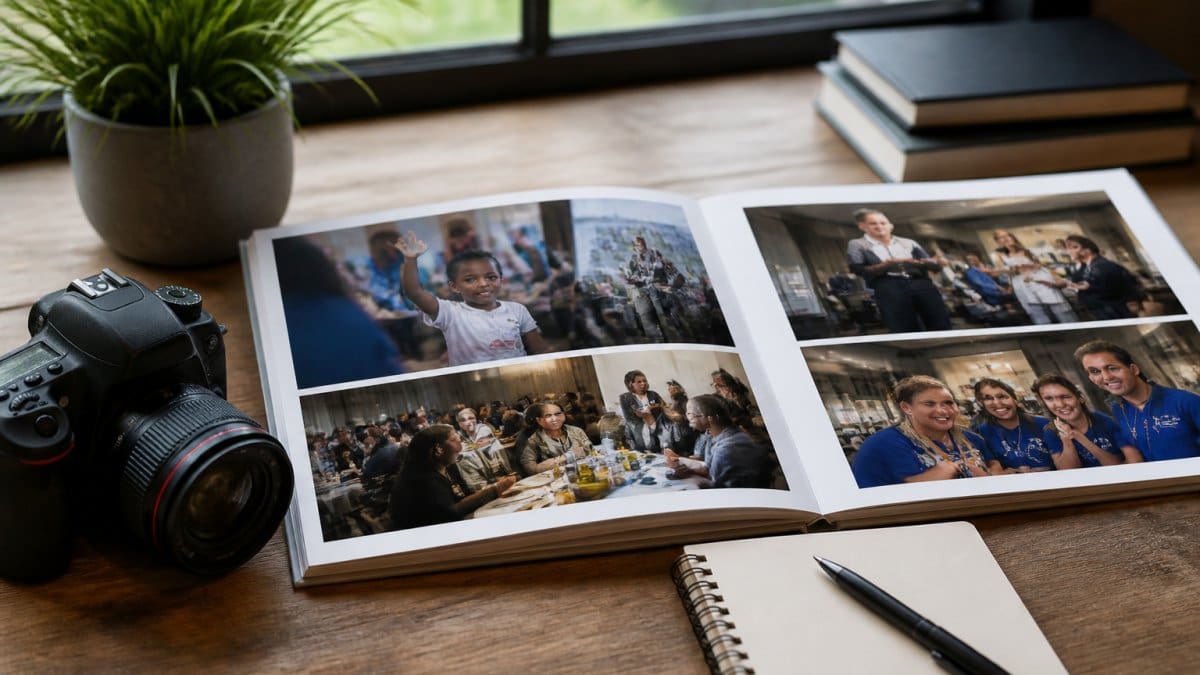
To build a nonprofit event photography portfolio, gather your event images, confirm written consent for every identifiable person, and curate frames around the organization’s mission rather than the venue. Aim for 25 to 40 strong images grouped by event type, with usage rights stated clearly.
- Log every image by subject type and release status before publishing anything.
- Treat any unresolved release as a hard stop and keep that image out of the portfolio.
- Build your shot list around the mission, such as beneficiaries, volunteers and hands-on work.
- Keep the overall portfolio to roughly 25 to 40 images, with 6 to 10 per event type.
- Group images by event type, lead each gallery with a short story, and add captions and alt text.
Table of Contents
- Why a Nonprofit Event Photography Portfolio Works Differently
- Step 1: Gather Your Starting Material and Consent Records
- Step 2: Plan a Shot List Around the Mission
- Step 3: Select Images That Show Impact and Need
- Step 4: Decide How Many Photos to Include
- Step 5: Organize by Event Type and Mission, Then Apply Best Practices
- Booking Event Photography Coverage for Your Next Gala or Summit
- Frequently Asked Questions
Why a Nonprofit Event Photography Portfolio Works Differently
Last Updated: November 1, 2026
Nonprofit event photography is not the same as wedding or corporate work. Building a strong nonprofit event photography portfolio means showing that you can capture a mission in action, not just a pretty room full of people.
A nonprofit portfolio has to do three jobs at once. It shows technical skill, it shows you understand a cause, and it shows you respect the people in the frame. Galas, summits and board events often carry donor privacy concerns, so a portfolio that looks careless with faces or names can cost you a client before the first call.
Here is the core idea for this guide: build the portfolio around the mission, not the venue. A ballroom photo tells a planner almost nothing.
Step 1: Gather Your Starting Material and Consent Records
Start by pulling together every image you already have from nonprofit or community events. Include volunteer work, school events and small local gatherings if they show people and activity. You do not need a long history of paid nonprofit jobs to begin.
Before you publish anything, sort your images by consent status. Nonprofits answer to boards, donors and the people they serve, so a portfolio that looks careless with faces or names can cost you a client. Build a simple log with these columns:
- Event name and date
- Subject type: donor, staff, volunteer, beneficiary, minor
- Release on file? Yes / No / Pending
- Permitted uses: web, print, social, press, both
- Restrictions: no name, crop face, blur badge, no use after date
Know the release types you will actually see
Most nonprofits use one of three instruments, and they are not interchangeable:
- A general event release signed at registration. It usually covers candid crowd shots but often excludes minors and anyone who opted out at the door.
- A subject-specific model release for a beneficiary, volunteer or donor who is the clear focus of a frame. This is the one you need before a portrait or a named quote runs next to an appeal.
- A minor release signed by a parent or guardian. Many organizations require these for any identifiable child, even in a wide crowd shot.
A common pattern is that the nonprofit’s communications director already holds releases you have never seen. Ask for them before you build the gallery, not after. If a release is missing, mark the image Pending and keep it out of the public portfolio until it is resolved.
Curate beneficiary images respectfully
Nonprofit photography carries an ethical weight that wedding or corporate work does not. The people in your frames are often in a vulnerable moment, and the image may outlive the event by years. Apply these filters before an image earns a portfolio slot:
- Dignity over drama. Prefer frames where the subject has agency, speaking, working, choosing, over frames that reduce them to need.
- No identifiable details without consent. Crop out case files, medication, address labels, wristbands and name badges unless the release explicitly covers them.
- Context, not pity. A food distribution line shot from a respectful distance tells a story; a close-up of a child’s empty plate can exploit the subject.
- Consistency check. Would the subject’s family recognize the portrayal as fair? If not, cut the frame.
Publishing first and asking permission later is the most common portfolio mistake in this niche. Once an image is indexed or shared, you cannot fully recall it. Treat every unresolved release as a hard stop, not a to-do.
Build samples when you have little nonprofit work
If your archive is thin, you can still build relevant material ethically:
- Volunteer assignments. Offer a free or reduced-rate shoot to a local nonprofit in exchange for written permission to use a defined set of images in your portfolio.
- Permission-based collaborations. Partner with a small organization on a styled community project and document the consent process in writing.
- Second-shooter work. Assist an established event photographer and ask upfront whether you may use specific frames with the client’s written approval.
Never present volunteer or styled work as paid client experience. Label it honestly as volunteer, collaboration or personal project. Prospective nonprofit clients often check references, and a mislabeled sample can quickly erode trust.
Your consent log is a portfolio asset, not paperwork. A clean, documented release trail signals to communications directors that you can be trusted with their beneficiaries, donors and reputation.
Step 2: Plan a Shot List Around the Mission
Once you know what you have, plan the shots you still need. Build your shot list around the organization’s mission, not a generic event checklist. If a food bank runs a distribution day, your list should include the line of families, the volunteers packing bags and the moment of handoff, not only the banner.
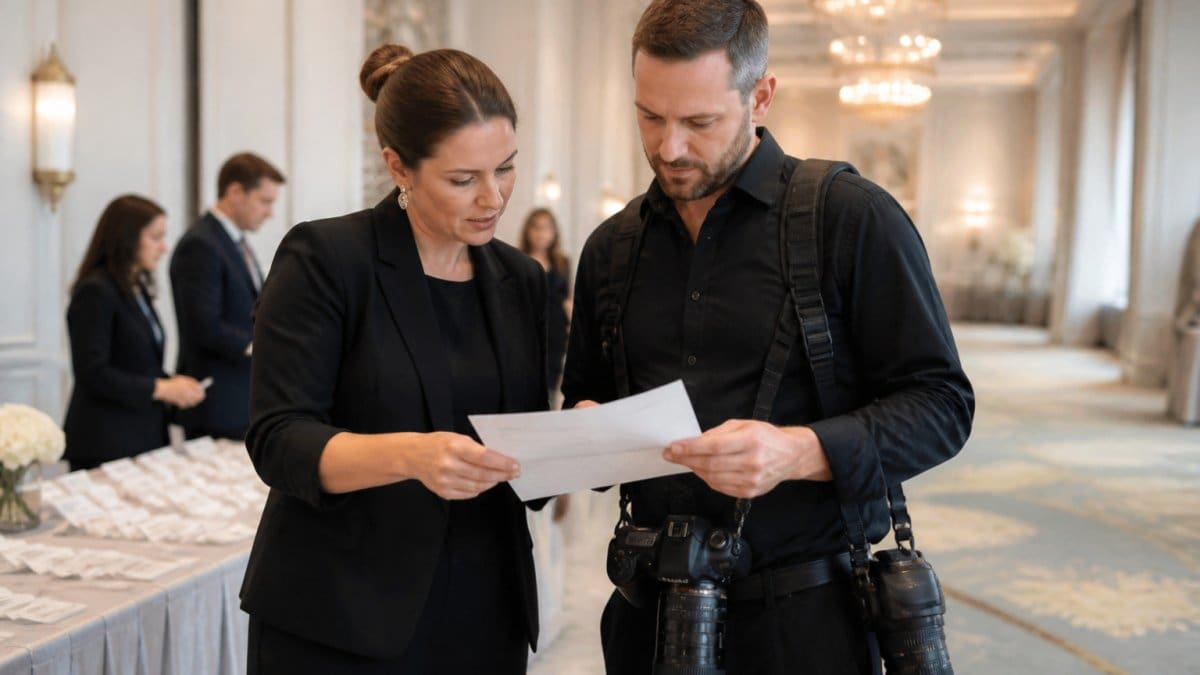
Use a simple structure for each event type:
- Arrival: Entrance, registration table, name badges
- Mission moments: Speakers, beneficiaries, hands-on work
- Connection: Candid conversations between donors and staff
- Wrap-up: Thank-you moments, group photo, empty room after
Print the list and bring it to the event. Staff members often forget what matters most, so the list keeps your shooting on target.
Step 3: Select Images That Show Impact and Need
Your portfolio should answer one question for a communications director: “Would this image help our fundraising or press release?” Choose images that show activity, emotion and the need the nonprofit addresses.
Sharp focus, good exposure and clean composition still matter. But impact matters more. If you need dedicated visuals, a step-by-step guide to planning an annual report photo shoot explains how to set one up.
A quick filter to apply:
- Does the image show a person, not just a space?
- Does it connect to the mission in some visible way?
- Is the face clear and the moment unposed?
- Could it run next to a donor appeal without embarrassing anyone?
Step 4: Decide How Many Photos to Include
Do not dump your entire archive into the portfolio. Clients skim, and a bloated gallery makes your best work harder to find.
A workable starting point:
- Overall portfolio: 25 to 40 strong images
- Per event type: 6 to 10 images
- Per featured event: 3 to 5 images that tell a short story
If you are early in your career, a smaller set of 15 to 20 excellent images beats a longer set with weak frames. Quality signals skill far more than quantity.
The table below summarises the portfolio size guidance from this section.
| Portfolio part | Suggested count | Note |
|---|---|---|
| Overall portfolio | 25 to 40 images | Strong images only |
| Per event type | 6 to 10 images | Grouped by event type |
| Per featured event | 3 to 5 images | Tell a short story |
| Early-career portfolio | 15 to 20 images | Quality beats quantity |
Step 5: Organize by Event Type and Mission, Then Apply Best Practices
Group your portfolio by event type first, such as galas, summits, community days and board meetings. Within each group, arrange images by mission area, such as education, health, housing or the arts. This helps a planner in any sector find examples that match their own event.
A structure that works for most nonprofit portfolios:
- Fundraisers and galas: donor moments, stage program, auction, thank-you frames
- Community and mission programs: service delivery, volunteers, beneficiaries with consent
- Summits and convenings: speakers, panels, audience Q&A, networking
- Board and governance events: portraits, group photos, formal moments
Within each gallery, lead with three to five frames that tell a short story: arrival, mission moment, connection, wrap-up. A planner should be able to scan one gallery and understand what you would deliver for their event.
License and deliver images the way nonprofits actually use them
Nonprofit communications teams reuse images across appeals, annual reports, email, social and press. Your portfolio should show that you understand the handoff:
- State usage rights plainly. Tell visitors whether portfolio images are client-owned, licensed for a term, or restricted. A short line like “Images shown with client permission; usage terms vary by engagement” prevents confusion.
- Offer delivery formats that match the work. Most teams need web-optimized JPEGs, print-resolution files and a few social crops. Show a sample delivery page or a one-line note on what clients receive.
- Include alt text and captions. Accessibility matters to nonprofit teams, and a portfolio that ships captioned, alt-texted images signals professionalism. Write a one-sentence caption that names the event and the mission without identifying anyone who has not consented.
- Export web images at a reasonable size so pages load quickly, and keep a separate print-resolution set for client delivery.
Add a short “about this work” note to each category explaining the event type, the mission area and the consent approach. It takes two sentences and answers the questions a communications director would otherwise email you about.
Connect images to measurable outcomes
Nonprofits often justify photography spend with results, so it helps to show that you think beyond the frame.
A practical way to track this for future samples: after each engagement, ask the client which images were used and where.
Watch out: never caption a photo with a donor’s full name or a beneficiary’s details unless the release explicitly covers it. A single mistake here can damage a nonprofit’s trust.
Booking Event Photography Coverage for Your Next Gala or Summit
Once your portfolio is ready, potential clients will want to see how you handle a real booking.
Hiring the right photographer matters as much as the portfolio itself.
Ask for a written contract that covers usage rights, consent handling, delivery timing and what happens if key moments are missed.
Event Photojournalism covers galas, summits and board events across the DMV, including Washington DC and Northern Virginia.
Frequently Asked Questions
What should a nonprofit event photography portfolio include?
A strong nonprofit event photography portfolio shows the range of events you cover, such as galas, board meetings, conferences and community events, along with candid moments, speakers, volunteers and beneficiaries. Include images that show the mission in action, not only crowds and stages. Pair the photos with short captions that name the event type and the organization’s goal, since many nonprofit buyers want proof that a photographer understands their work. Keep the set focused on work that is relevant to the client you want to attract, and remove images that look staged or do not show clear mission impact.
How do I get permission to use nonprofit event photos in my portfolio?
Get written permission before publishing any event photos showing identifiable people, especially beneficiaries, minors, or donors who may not want public attention. Many nonprofits will approve portfolio use in advance if you include it in the event contract, along with a clause allowing you to showcase selected images. Keep signed releases on file, note which individuals asked not to be featured, and avoid cropping or captioning in ways that reveal sensitive information about clients or the people they serve. When in doubt, ask the organization to approve the specific images before posting.
How many photos should I include in a photography portfolio?
A focused portfolio usually works best with roughly 20 to 40 strong images rather than hundreds of weak ones. Choose a few images for each event type you want to be hired for, so a reader can scan the set quickly and see your range. Replace older work as you shoot newer events, and remove any photo that is soft, poorly lit or repetitive. Quality and relevance matter more than total count, so cut any image that does not add a new angle or moment.
How often should I update my event photography portfolio?
Update your portfolio after each significant event or at least a few times a year. Adding recent work keeps the portfolio current and shows that you are still active in the nonprofit sector. Review the full set annually to remove outdated images and to check that links, captions and consent notes are still accurate. If your best recent work is from a new event type, move it to the front so visitors see it first.