Table of Contents
- Why Event Teams Are Moving Beyond Traditional Stage Photography
- Candid Event Photography Techniques That Capture Authentic Moments
- Documentary Style Event Photography vs. Staged Imagery
- Candid vs Posed Event Photography: Which Serves Your Goals
- Interactive Photo Booth Alternatives and AI-Powered Experiences
- Guest-Generated Content and Digital Disposable Cameras
- Videography, Aerial, and Specialty Coverage Options
- Post-Processing and AI-Assisted Workflows for Stage Images
Last Updated: August 30, 2026
Why Event Teams Are Moving Beyond Traditional Stage Photography
The photography services market is expanding rapidly. According to Vertex AI Search’s 2026 Market Outlook, the U.S. photography services market was valued at $9.60 billion in 2025 and is projected to reach $15.80 billion by 2035, growing at a compound annual growth rate of 5.60%. Wedding and event photography dominated with a 28.60% market share in 2025, yet how event teams capture moments has fundamentally shifted.
Traditional staged photography, rigid poses, formal lineups, heavily managed scenes, no longer delivers the authentic visual storytelling modern audiences expect. Today’s event teams combine candid photojournalism, interactive photo booth experiences, guest-generated content, and specialty coverage to create richer, more authentic visual records.
The driving force is simple: attendees expect real-time access to photos. According to Kamero’s 2026 AI-Powered Photo Sorting Revolution, 84% of event attendees expect real-time access to their photos, and same-day delivery generates 4.2 times more social media shares than traditional post-production timelines. This demand has forced event professionals to rethink both how they capture moments and which methods serve their goals.
Below, we explore alternatives to traditional stage photography reshaping event documentation, from candid techniques and documentary styles to AI-powered photo booths and guest-generated content. Each approach serves different purposes; the best events use multiple methods simultaneously.
Candid Event Photography Techniques That Capture Authentic Moments
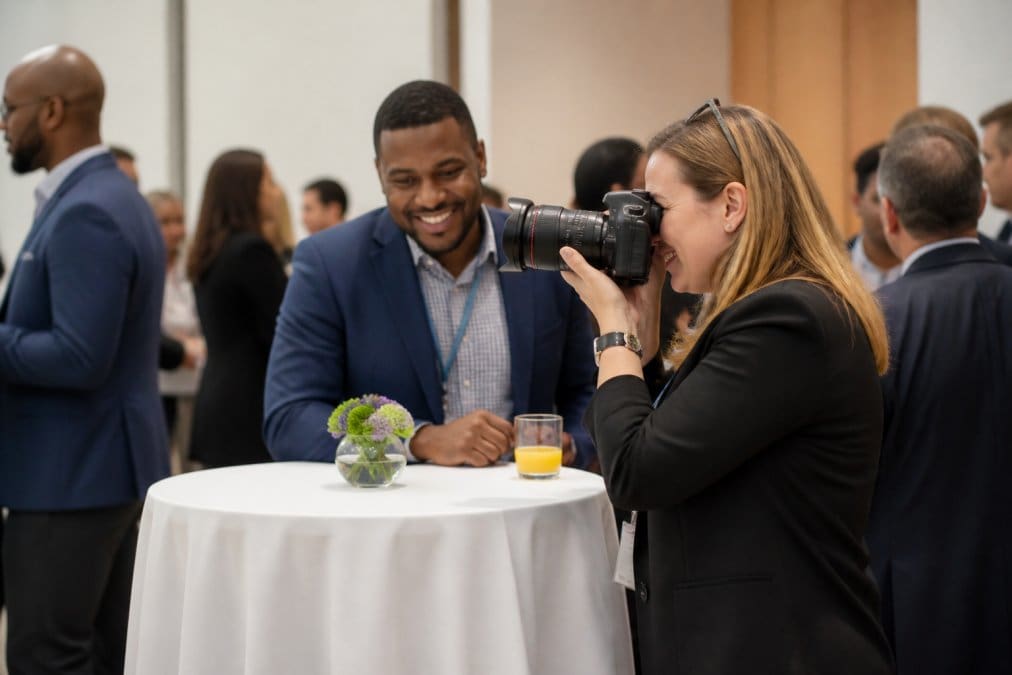
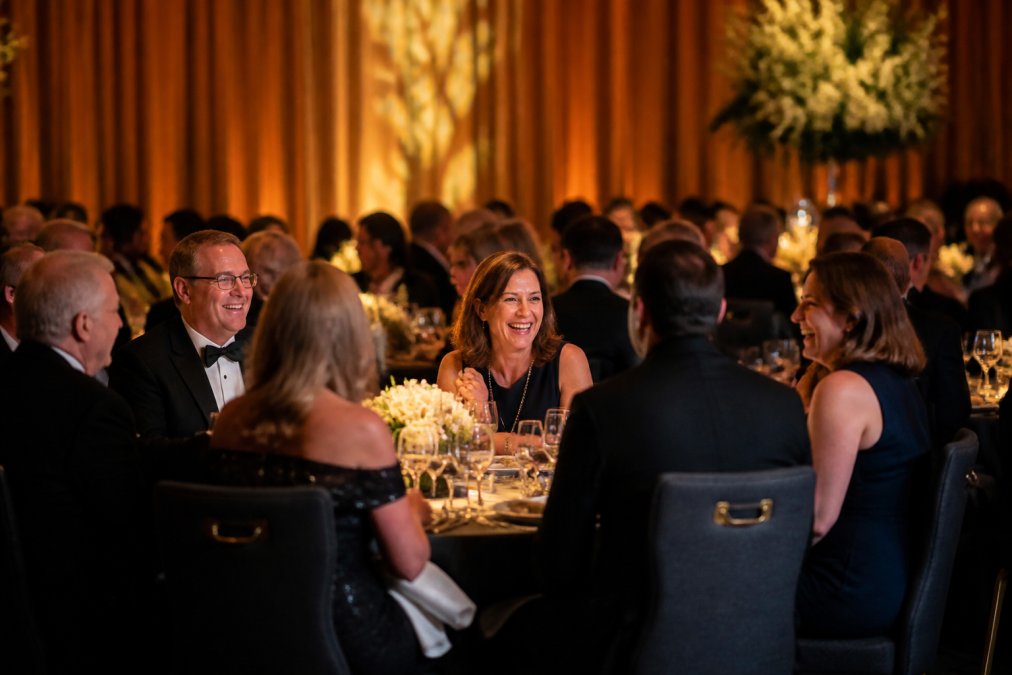
Candid event photography documents moments as they unfold naturally, capturing genuine emotion and authentic interactions that posed photography often misses. According to The Photo Project’s 2025 Photography Trends, candid event photography is now often the default, with clients requesting coverage that tells a story, evokes emotion, and presents their brand as warm and accessible.
Candid techniques require anticipating action rather than directing it. You position yourself strategically, understand how light will hit subjects, and know when to step back rather than step in.
Shutter Speed and Aperture for Candid Capture
For candid work in event environments, shutter speed and aperture determine whether you capture the moment or miss it. A baseline of 1/125th of a second freezes typical movement without excessive ISO sensitivity. For movement-heavy moments, push to 1/250th or faster.
Wide apertures (f/2.0 to f/2.8) allow faster shutter speeds in low light and create shallow depth of field that isolates subjects from background clutter. However, they demand precision focusing. Many candid photographers prefer f/2.8 as a sweet spot, wide enough to gather light and create subject separation, yet forgiving enough that slight focus errors don’t ruin the shot. Pair that with ISO 1600-3200 and you have flexibility across most event lighting scenarios.
Focal Length and Positioning for Unobtrusive Coverage
Your lens choice determines how close you need to be and how intrusive you appear. Prime lenses in the 35mm to 85mm range are standard for candid work. A 35mm lens gives wider field of view and environmental context; an 85mm lets you stand back further without subjects noticing. Many professionals use both.
Positioning matters as much as focal length. Stand to the side of conversations rather than facing them directly. Shoot from slightly elevated positions that feel less confrontational. The goal is documenting without directing.
Documentary Style Event Photography vs. Staged Imagery
Documentary style photography captures events as they unfold, prioritizing authenticity over control. Staged imagery is controlled, composed, and intentional, but recognizably posed. According to Experiential Marketing Statistics 2026, 98% of consumers create digital or social content at experiences, with 96% of Millennials sharing photos online. The content people choose to share is overwhelmingly candid and authentic, not posed group shots.
Building Visual Narratives Through Compositional Techniques
Documentary photography requires deliberate compositional choices that build narrative. Use layering to position foreground, middle ground, and background elements, creating depth and context. Rather than isolating subjects against plain backgrounds, position them within their environment.
Leading lines guide the viewer’s eye through the frame. Rule of thirds remains relevant but shouldn’t be rigid. Negative space, empty areas within your frame, is powerful in documentary work, creating emphasis through simplicity.
Candid vs Posed Event Photography: Which Serves Your Goals
Candid photography excels at capturing authentic moments and building narrative; it generates more shareable content because it feels real. Posed photography serves formal documentation, group shots, and key stakeholder photos, ensuring you capture specific people and moments for organizational records.
The modern approach is both. Dedicate specific time for posed group shots and formal documentation, then spend the rest of the event capturing candid moments. This hybrid approach gives you authenticity and narrative plus the formal documentation organizations require.
Interactive Photo Booth Alternatives and AI-Powered Experiences
Photo booth experiences have evolved from traditional enclosed booths to 360-degree video capture, AI-powered transformations, and roaming robots. These interactive elements create entertainment, generate shareable content, and give guests an active role in creating event memories.
360 Photo Booths for Dynamic Social Sharing
A 360 photo booth uses a rotating camera arm to capture slow-motion video clips as guests move through a complete rotation. The result is dynamic, cinematic content inherently shareable. The main advantage is uniqueness; the disadvantage is space requirements.
AI Photo Booths and Real-Time Transformations
AI photo booths use artificial intelligence to transform photos in real-time with stylized portraits, creative edits, branded content, or AI-generated backgrounds. Guests see their transformed image instantly, creating immediate reward for participation. These are ideal for corporate events and brand activations. The main drawback is cost and the requirement for reliable internet connection.
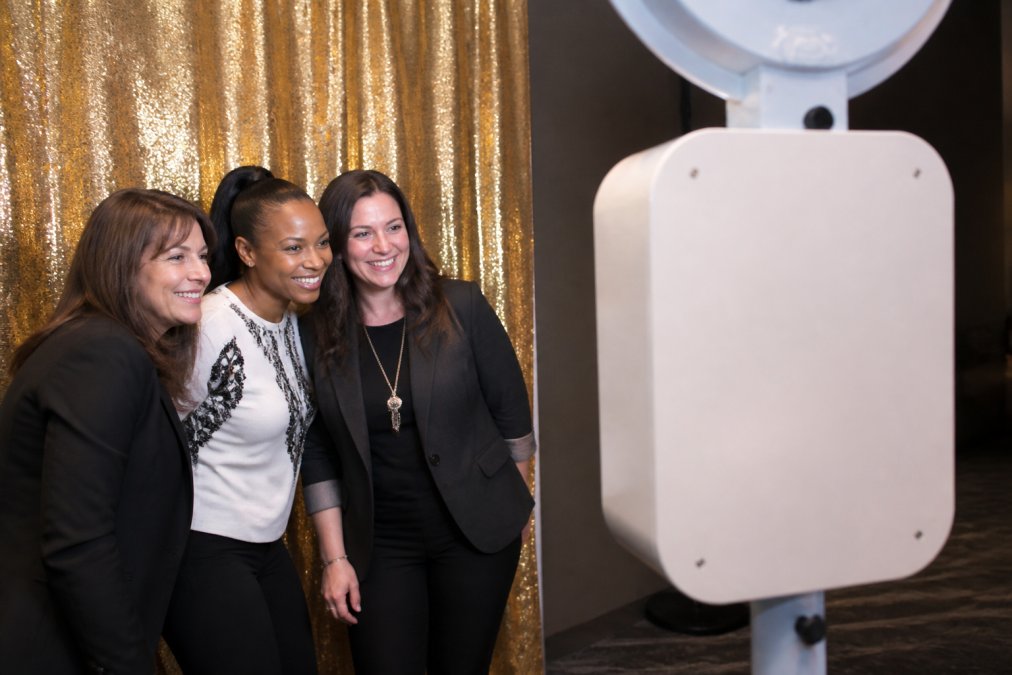
Roaming Robot Photo Booths for Maximum Guest Engagement
Roaming robot photo booths bring the interactive experience directly to guests. A mobile robot equipped with a camera roams the venue, interacting with attendees and capturing photos or GIFs on the spot. The experience is particularly effective for large corporate events and trade shows. Main advantages are mobility and novelty; disadvantages include space requirements and potential for distraction.
Guest-Generated Content and Digital Disposable Cameras
Digital disposable camera apps like Lense and LensGo recreate the charm of physical disposable cameras through centralized digital albums. Guests scan a QR code and upload photos to a shared album. The result is authentic, guest-perspective content capturing moments professional photographers might miss.
For guests, it’s simple and frictionless. For organizers, it’s cost-effective. For social media, it’s authentic user-generated content. According to research, 98% of consumers create digital or social content at experiences, so you’re simply channeling existing behavior. The main limitation is quality variability, but authenticity often compensates.
Videography, Aerial, and Specialty Coverage Options
Event Videography for Narrative and Dynamic Storytelling
Professional event videography captures dynamic footage with multi-camera coverage and professional editing. Video captures motion, sound, and temporal flow that photography cannot. Video is ideal for events requiring comprehensive documentation. The main disadvantage is cost and delivery timeline.
Drone Photography for Venue and Scale
Drone photography captures aerial perspectives showing scale and layout. The service is ideal for large outdoor events. Main advantages are unique perspectives and efficient coverage; disadvantages include weather dependency and airspace regulations.
Live Sketch Artists for Personalized Keepsakes
Live sketch artists create real-time portraits or caricatures, offering personalized, artistic keepsakes. This option is ideal for weddings and corporate events seeking unique entertainment and personalized guest favors. Main advantages are uniqueness and guest experience; the limitation is throughput.
Post-Processing and AI-Assisted Workflows for Stage Images
AI-assisted workflows are revolutionizing post-processing. According to Kamero’s AI-Powered Photo Sorting Revolution, AI culling and sorting technologies use facial recognition with 99.5% accuracy to automatically categorize thousands of event photos, reducing workflow time by up to 50%.
AI-assisted editing systems like Imagen AI allow photographers to train the system on their editing style, then apply it to hundreds of images automatically. Photographers then focus on selective adjustments and creative refinement where human judgment adds the most value.
The workflow: capture images, use AI facial recognition to sort and organize by subject, train an AI editing system on your preferred style, apply that style automatically, then selectively refine individual images for final polish. The result is faster delivery, consistent quality, and reduced administrative burden.
The shift away from traditional stage photography reflects a fundamental change in what events need. Modern attendees expect authenticity, real-time access, and participation. Professional event teams are responding by combining candid techniques, documentary approaches, interactive experiences, guest-generated content, and specialty coverage into comprehensive visual strategies.
Event Photojournalism understands this evolution. Our award-winning photography services across the DMV area combine professional candid techniques with customized solutions designed to capture your event’s authentic essence. Whether you need discreet coverage for high-profile board meetings, dynamic documentation for corporate conferences, or comprehensive gala photography that tells your event’s true story, our professional and service-oriented team delivers the high-resolution imagery that elevates your brand and amplifies your message. Contact us to discuss how we can transform your next event into lasting visual assets that matter.
=== FAQ ANSWERS (audit these too, same rules) ===
[1] Q: What is the difference between candid and staged event photography?
A: Candid photography captures unposed, authentic moments as they naturally unfold, using techniques like fast shutter speeds and prime lenses to remain unobtrusive. Staged photography involves deliberate posing and composition, often with controlled lighting and backgrounds. Candid approaches produce emotional, narrative-driven images that feel human and relatable, while staged imagery delivers polished, controlled results. For events, candid coverage typically generates more social media shares than traditional post-production timelines, according to 2026 event data.
[2] Q: How does documentary style event photography improve event storytelling?
A: Documentary style photography emphasizes narrative and visual storytelling by capturing the genuine flow of events rather than isolated moments. Photographers using this approach focus on compositional techniques, dynamic range, and high-contrast elements to reveal emotion and context. This method documents how attendees interact, react, and engage, creating a cohesive visual record that tells the event’s true story. Research shows clients increasingly seek raw, intimate moments over polished perfection, making documentary-style coverage the preferred choice for galas, conferences, and fundraising events.
[3] Q: Why are corporate clients shifting toward candid event photography techniques?
A: Corporate clients recognize that candid event photography techniques authentically represent their brand, employees, and mission in ways staged imagery cannot. Candid coverage captures genuine interactions, emotional responses, and spontaneous moments that build trust and relatability. With 84% of event attendees expecting real-time photo access and 98% of consumers creating digital content at events, candid approaches align with modern expectations for authentic, shareable content. This shift reflects a broader move away from technical perfection toward human presence and narrative-driven visual assets.
[4] Q: What alternatives to traditional stage photography work best for virtual or hybrid events?
A: Virtual photo booths and AI photo sharing platforms are ideal for hybrid and remote events. Virtual photo booths allow guests to capture photos with custom backgrounds and branded overlays from any device via QR code or link, with instant sharing to social media. AI photo sharing platforms use facial recognition to automatically deliver personalized photo galleries to individual attendees, improving engagement without manual sorting. These solutions extend your event’s reach beyond the physical venue and provide scalable, cost-effective alternatives to traditional stage photography setups.
Frequently Asked Questions
What is the difference between candid and staged event photography?
Candid photography captures unposed, authentic moments as they naturally unfold, using techniques like fast shutter speeds and prime lenses to remain unobtrusive. Staged photography involves deliberate posing and composition, often with controlled lighting and backgrounds. Candid approaches produce emotional, narrative-driven images that feel human and relatable, while staged imagery delivers polished, controlled results. For events, candid coverage typically generates more social media shares than traditional post-production timelines, according to 2026 event data.
How does documentary style event photography improve event storytelling?
Documentary style photography emphasizes narrative and visual storytelling by capturing the genuine flow of events rather than isolated moments. Photographers using this approach focus on compositional techniques, dynamic range, and high-contrast elements to reveal emotion and context. This method documents how attendees interact, react, and engage, creating a cohesive visual record that tells the event's true story. Research shows clients increasingly seek raw, intimate moments over polished perfection, making documentary-style coverage the preferred choice for galas, conferences, and fundraising events.
Why are corporate clients shifting toward candid event photography techniques?
Corporate clients recognize that candid event photography techniques authentically represent their brand, employees, and mission in ways staged imagery cannot. Candid coverage captures genuine interactions, emotional responses, and spontaneous moments that build trust and relatability. With 84% of event attendees expecting real-time photo access and 98% of consumers creating digital content at events, candid approaches align with modern expectations for authentic, shareable content. This shift reflects a broader move away from technical perfection toward human presence and narrative-driven visual assets.
What alternatives to traditional stage photography work best for virtual or hybrid events?
Virtual photo booths and AI photo sharing platforms are ideal for hybrid and remote events. Virtual photo booths allow guests to capture photos with custom backgrounds and branded overlays from any device via QR code or link, with instant sharing to social media. AI photo sharing platforms use facial recognition to automatically deliver personalized photo galleries to individual attendees, improving engagement without manual sorting. These solutions extend your event's reach beyond the physical venue and provide scalable, cost-effective alternatives to traditional stage photography setups.
This article was written using GrandRanker