
Table of Contents
- Why Branding Photography Outperforms Stock and DIY Imagery
- The Impact of Professional Photography on Marketing ROI
- Building Donor and Client Trust Through Real Faces
- How to Prepare for a Branding Photoshoot
- Your Branding Photography Session Checklist
- Getting the Most From Your Branding Photography Investment
- Frequently Asked Questions
Last Updated: September 16, 2026
Why Branding Photography Outperforms Stock and DIY Imagery
The benefits of professional branding photography for NoVA companies start with a simple problem: generic visuals make every organization look interchangeable. Consistent brand presentation increases revenue by 23% on average, according to Lucidpress and Demand Metric’s brand consistency research, yet many organizations still rely on stock photos that competitors also license.
Branding photography is the practice of creating original, on-brand imagery of your people, spaces, and work for use across marketing channels. It replaces borrowed visuals with assets that only your organization can publish.
Original photography gives audiences a real organization to trust, while stock imagery gives them a template. Research published through ResearchGate’s study on professional photography in SME digital marketing confirms that professional photography strengthens brand visibility and customer trust over the long term.
Here’s the part most guides skip: the problem usually isn’t the photos themselves. It’s how few of them get used.
Most organizations deploy roughly 5% of the images produced in a branding session, according to Capturely (2026). The other 95% sit unused on a drive, which quietly erodes the return on every dollar spent.
Below, we break down what branding photography actually delivers, how to prepare for a branding photoshoot, and how to stretch one session across an entire year of marketing.
The Impact of Professional Photography on Marketing ROI
Marketing ROI from photography comes from reuse, not from a single hero image. One well-planned session can supply a year of website, social, and campaign assets, which is why the return compounds with every additional placement.
The economics are straightforward once you compare costs. A stock subscription runs indefinitely and still delivers the same images your competitors use. A single branded session produces assets you own outright and can deploy everywhere.
How Consistent Visuals Compound Across Channels
Consistency is what turns individual photos into a recognizable brand. When the same faces, colors, and settings appear on your website, LinkedIn, annual report, and event signage, audiences begin to recognize your organization before they read a word.
Capturely’s 2026 trend analysis notes that the real return arrives when assets are deployed across all digital touchpoints rather than confined to one platform. That means the same gala photo can serve a press release, a donor email, a sponsor deck, and a year-end campaign.
| Stage | What It Looks Like | Where It Pays Off |
|---|---|---|
| One session | Team, venue, and event coverage in a single shoot | Website, social, print |
| Consistent use | Same visual style across every channel | Recognition and recall |
| Compounding | Assets reused for years of campaigns | Lower cost per usable image |
Building Donor and Client Trust Through Real Faces
Trust is the strongest argument for branding photography, and it’s measurable. New consumer research for 2026 shows clients increasingly choose providers based on their ability to connect with real faces and authentic storytelling, per SquareShot’s 2026 report on brand photography.
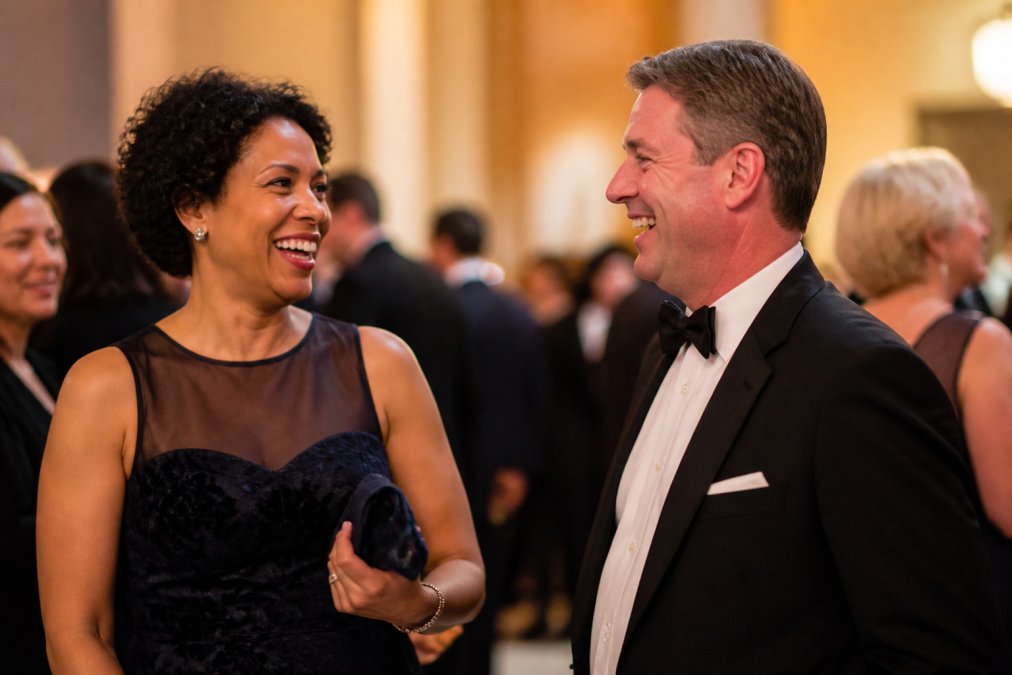
For nonprofits and associations, this is not cosmetic. Donors give to people they believe in, and a polished portrait of your executive director does less work than a candid frame of them mid-conversation with a supporter.
The same logic applies to corporate audiences. Event photography clients who documented corporate functions and galas saw stronger brand building and visibility for both organizers and featured businesses, according to FasterCapital’s analysis of event photography value.
One caveat worth naming: real faces only build trust when they’re current. Industry commentary in 2026 warns that outdated headshots actively hurt business acquisition, because prospects read them as a signal that the organization itself may be behind the times.
How to Prepare for a Branding Photoshoot
Preparation is what separates a session that produces 20 usable images from one that produces 200. The organizations that get the most from a branding photoshoot decide in advance what the images need to do.
Start by listing every place the photos will appear over the next 12 months: website headers, LinkedIn banners, annual reports, sponsor decks, event signage, and press materials. That list tells your photographer which shots matter.
Then brief the people side of it. Your photographer should know who your sponsors, board members, and VIPs are before the event, not during it. Knowing which faces matter is what makes candid coverage usable.
Build a one-page shot list that maps each image to its final destination. “Executive director portrait for the annual report cover” tells a photographer far more than “some leadership photos.”
Your Branding Photography Session Checklist
A branding photography session checklist keeps a shoot on track and prevents the follow-up scramble that eats into your timeline. Use this one as a starting template.
Before the Shoot
- Confirm the shot list and map each image to a channel
- Share a VIP and sponsor list with names and roles
- Approve wardrobe guidance for anyone being photographed
- Walk the venue and flag lighting challenges
- Agree on delivery format and resolution requirements
- Set the delivery deadline in writing, especially for press needs
During and After the Shoot
- Designate one point of contact for the photographer
- Capture candid moments alongside posed groupings
- Confirm image selection and editing scope
- Request web-optimized and print-resolution versions
- Archive originals for future campaigns
- Schedule a review of which assets performed best
Getting the Most From Your Branding Photography Investment
The biggest mistake organizations make is treating a shoot as a one-time expense instead of a reusable asset library. Strategic deployment of imagery is the defining trend of 2026, moving away from using a handful of photos in a handful of spots.
Photography employment is projected to grow 4% from 2022 to 2032, with nearly 292,000 people employed in photography businesses as of 2025, according to the U.S. Bureau of Labor Statistics photography industry data. Demand is rising because organizations increasingly treat visuals as infrastructure rather than decoration.
Budget conversations deserve honesty here. Pricing for branding and event coverage depends on scope, dates, delivery timeline, and licensing, so the right first step is a consultation rather than a guess at a number. For smaller nonprofits, the practical move is fewer, better-planned sessions with wider reuse, not more shoots.
A second trend worth planning around: demand is growing for creative motifs and authentic storytelling that attract high-value clients, as outlined in 2026 brand photography trend coverage. Stiff, posed coverage no longer competes with candid work that shows how an organization actually operates.
The challenge for most organizations isn’t finding a photographer. It’s building a visual library that still works two years from now, across every channel and every campaign. Event Photojournalism delivers award-winning, high-resolution coverage across the DMV area from our Washington DC and Northern Virginia locations, with customized solutions built around your mission, your VIPs, and your delivery deadlines. From corporate conferences and galas to weddings and milestone celebrations, our team captures the moments that elevate your brand and amplify your message. Contact Event Photojournalism to plan a session that keeps working long after the event ends.
Frequently Asked Questions
What is included in a professional branding photography session?
A typical session covers pre-shoot planning, a styled location, and a mix of candid and directed images of your team, workspace, and key moments. You receive high-resolution files sized for your website, LinkedIn, press releases, and print materials. Many photographers also include a strategy call to identify which images your marketing team actually needs. Ask about usage rights and delivery formats before you book, since these vary by provider.
How does branding photography differ from standard corporate headshots?
Headshots give you one image per person against a plain background. Branding photography captures your team in context: working together, speaking at events, and interacting with clients. That range matters because audiences respond to authentic storytelling, and a single headshot cannot show how your organization operates. For NoVA companies balancing donor relations and corporate communications, a full branding session produces assets for far more channels than a headshot day.
How often should a company update their professional branding imagery?
Most organizations refresh their core branding images every 12 to 18 months, or sooner if leadership changes, your office moves, or your visual identity shifts. Industry commentary in 2026 notes that outdated imagery, such as headshots from 2021, can hurt business acquisition because prospects cannot see your current team and identity. Nonprofits with annual galas often capture fresh event images each year and rotate them into donor materials and annual reports.
How can professional photos improve our social media engagement?
Consistent brand presentation increases revenue by 23% on average, according to Lucidpress and Demand Metric research, and that consistency depends on having a deep library of on-brand images. Professional photos give you enough variety to post regularly without repeating the same shot. One common mistake is using only a small fraction of the images from a session; deploying the full set across LinkedIn, your website, and email campaigns is where the engagement gains come from.