Table of Contents
- Why On-Site Coordination With Event Photographers Matters
- How to Brief an Event Photographer Before the Event
- Creating an Event Photography Shot List Template
- Questions to Ask Event Photographer Before Event Day
- Managing Real-Time Communication During Your Event
- Event Photography Timeline Best Practices
- Handling Difficult Scenarios and Delivery Expectations
- Frequently Asked Questions
Last Updated: September 26, 2026
Why On-Site Coordination With Event Photographers Matters
Coordinating with event photographers on site isn’t just a nice-to-have. It’s the difference between getting images you actually use and photos that sit in a folder for years. Poor coordination leads to missed moments, mismatched expectations, and rushed delivery that leaves everyone frustrated.
When your photographer understands the event flow, knows who matters, and communicates in real time, everything changes. Research from Eventiere’s 2026 event photography benchmarks shows that the value of event photography is directly tied to how quickly content gets shared post-event. That speed depends entirely on coordination.
Without coordination, your photographer delivers generic coverage. VIP moments get missed. Timeline shifts go uncommunicated. Three weeks later, images arrive too late for press releases or social campaigns.
Now imagine the alternative. Your photographer arrives briefed, knows the schedule, can identify key people, and stays in touch throughout the event. They capture what matters. Highlights are ready the next morning. That’s what on-site coordination delivers.
How to Brief an Event Photographer Before the Event
Your brief is the foundation. It tells your photographer exactly what success looks like.
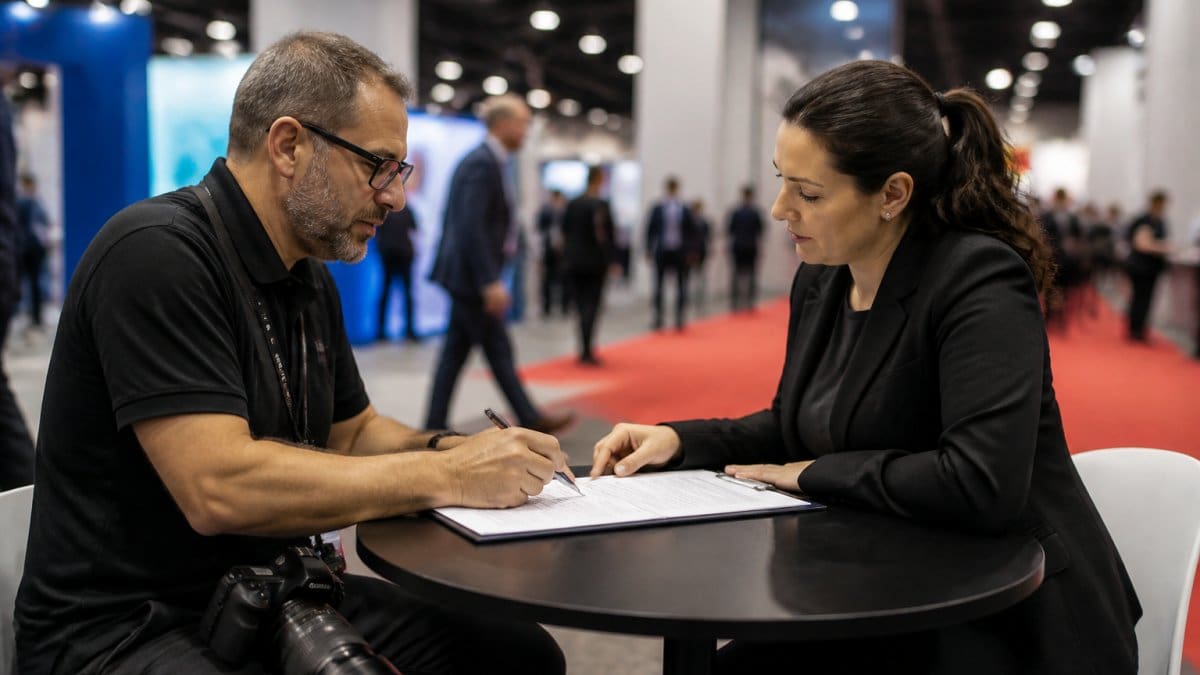
Start with a written brief at least one week before the event. According to Adam Rowley Creative’s 2026 event photography guidance, delivering on a specific brief is the primary indicator of a successful event photographer. Your brief should cover:
- Event purpose and audience: What is this event about? Who’s attending?
- Key moments you need captured: Speeches, awards, networking, arrivals, departures
- Brand requirements: Logo placement, sponsor visibility, messaging priorities
- Tone and style: Candid and photojournalistic, or more posed? Formal or relaxed?
- Deliverable format: High-resolution files for print? Social media-ready crops? Both?
Walk through the brief with your photographer by phone or video call. A 15-minute conversation prevents weeks of misalignment.
Be specific about what you don’t want: candid vs. posed, formal vs. relaxed, and any off-limits photography areas.
Creating an Event Photography Shot List Template
A shot list is a roadmap your photographer can adapt as the event unfolds.
Your shot list should include:
- Arrivals and check-in: Guests entering, registration table, welcome moments
- Keynote and speakers: Speaker at podium, audience reactions, Q&A moments
- Networking and mingling: Candid conversations, group interactions, informal moments
- Awards or recognition: Winners receiving recognition, presentations, reactions
- Vendor and sponsor moments: Logo visibility, booth interactions, branded elements
- Closing and departures: Final remarks, group photos, goodbyes
However, Adobe Creative Cloud’s 2026 photography guidance notes that shot lists should not be followed so rigidly that they prevent capturing spontaneous, authentic moments. Your photographer should feel empowered to deviate when something real is happening.
Prioritize your list, marking must-haves differently from nice-to-haves. This helps your photographer make split-second decisions when multiple moments happen at once.
Share the shot list at least three days before the event. Give your photographer time to ask questions and visualize the flow.
Questions to Ask Event Photographer Before Event Day
On timing and coverage:
- What time will you arrive and stay?
- How many photos do you typically deliver for an event this size?
- What’s your turnaround time for initial edits and delivery?
On technical setup:
- What lighting equipment will you bring? (Flash, modifiers, reflectors?)
- Do you need access to power outlets or specific setup space?
- What’s your backup plan if equipment fails?
On communication and access:
- How will we stay in touch during the event? (Phone, text, radio?)
- Do you need a staff member to help you navigate the venue?
- Are there areas where you’ll need special access or credentials?
On deliverables:
- What format will the final files be in? (RAW, JPEG, edited?)
- Can we get a small batch of highlights within 24 hours?
- How long will full editing take?
- Do you provide digital files only, or prints too?
On handling difficult situations:
- What happens if a VIP asks not to be photographed?
- How do you handle low-light situations? (Flash or ISO adjustment?)
- If the event runs late, can you stay longer if needed?
Managing Real-Time Communication During Your Event
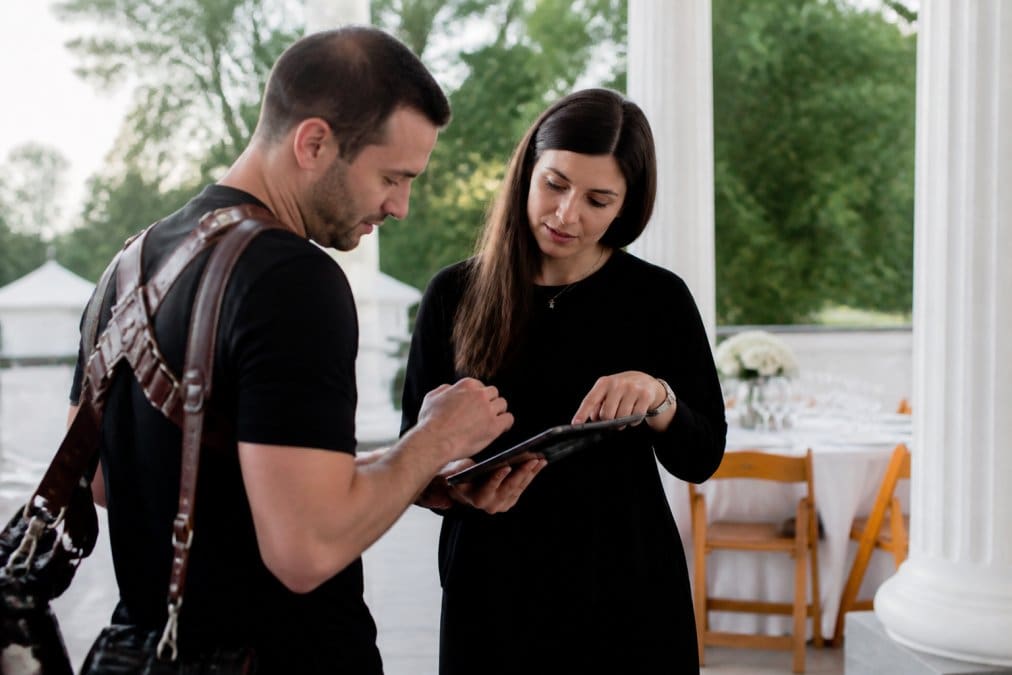
Your photographer needs a single point of contact during the event, usually you or a designated staff member, with a structured communication protocol.
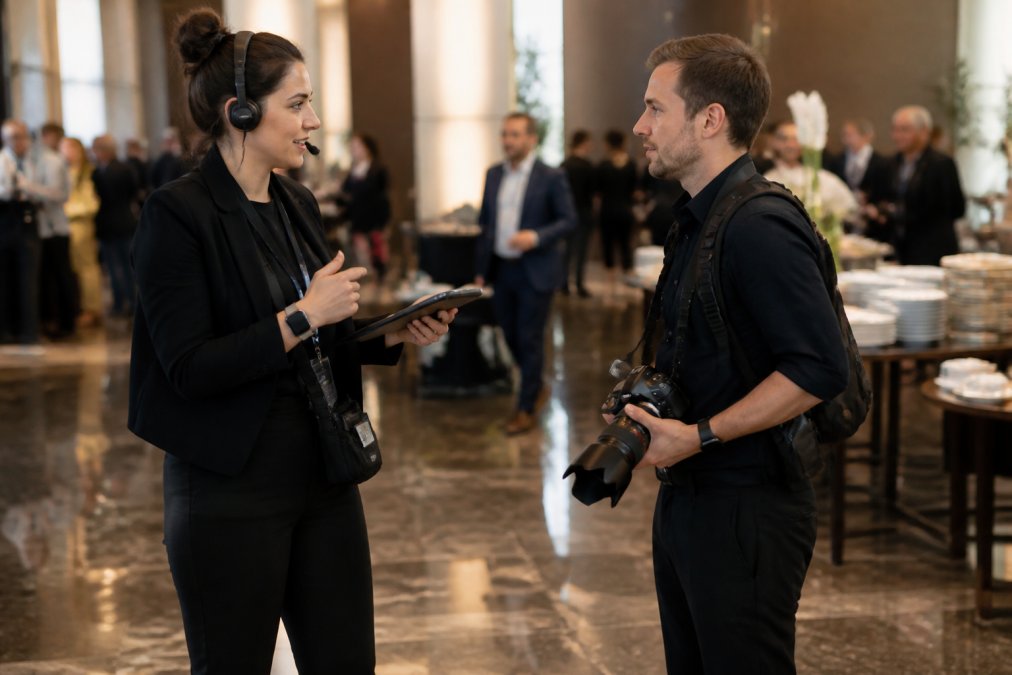
Establish a communication method before the event. Text messaging works best for most events; for larger venues (over 500 guests) or high-security events, consider two-way radios. Agree on a check-in schedule, typically every 30 to 45 minutes, so your photographer can flag issues and confirm coverage.
Define what information flows in each direction. Your photographer reports coverage gaps, access issues, technical problems, and schedule deviations. You provide VIP identifications, schedule changes, and priority shifts. Keep communications brief and specific. Establishing a consistent rhythm for these exchanges relies on effective communication strategies that ensure all project stakeholders remain aligned throughout the event.
Designate a backup contact to prevent communication breakdowns if you’re unavailable.
Use a shared document for real-time updates. Create a simple Google Doc listing current time, what’s happening, what’s next, and schedule changes. This is especially useful for events with multiple sessions where timing is fluid.
Establish a signal for when coverage ends. Agree on a specific moment and confirm it verbally to prevent missed final moments.
Plan for low-connectivity scenarios. Scout the space beforehand and brief your photographer on areas with poor signal so they’re not surprised.
The best on-site coordination feels invisible to guests. Real-time communication helps your photographer understand the flow and adapt without interrupting it.
Event Photography Timeline Best Practices
A clear timeline prevents panic and manages expectations from the start.
Pre-event timeline:
- 4 weeks before: Hire photographer and confirm availability
- 2 weeks before: Deliver written brief and shot list
- 1 week before: Confirm all details by phone or video call
- 3 days before: Share final schedule and any changes
- 1 day before: Final confirmation of arrival time and venue access
Day-of timeline:
- Photographer arrival: 30 minutes before guests arrive (allows setup and venue familiarity)
- Coverage period: From first guest arrival through final moment you want captured
- Check-ins: Every 30-60 minutes during the event
- Wrap-up: Clear signal when coverage ends
Post-event timeline:
- 24 hours: Photographer delivers initial selects or highlights
- 3-5 days: Full edited gallery available
- 2 weeks: Final delivery of all files in requested format
These timelines set realistic expectations. Your photographer knows what to prepare for. You know when to expect results. Everyone stays aligned.
Handling Difficult Scenarios and Delivery Expectations
Real events rarely go exactly as planned. Preparation helps you handle curveballs, and clarity on post-event workflow prevents delays that undermine the value of your photography.
Prepare for low-light and challenging venue conditions. Brief your photographer in advance about dim lighting so they can bring appropriate equipment. Ask: “What’s your approach to low-light shooting?” This prevents mismatched expectations about image quality.
Clarify VIP privacy boundaries and access restrictions. Some guests don’t want to be photographed; some areas of the venue are off-limits for security or privacy reasons. Before the event, provide your photographer with a list of individuals who’ve requested no photography and a map of restricted zones. Brief your photographer on why these boundaries exist (“The CEO’s family is in the VIP lounge and prefers privacy”; “The secure server room is off-limits”). This prevents awkward moments and ensures your photographer respects boundaries without needing to ask permission for every shot.
Establish a protocol for handling schedule changes in real time. Events shift. Speeches run long. Breaks disappear. Networking extends past the planned end time. When the timeline changes, communicate it immediately to your photographer using your agreed-upon channel.
- For social media: Request JPEG files at 1080 x 1080 pixels (Instagram square), 1200 x 628 pixels (Facebook), and 1080 x 1920 pixels (Instagram Stories). Ask for files with minimal editing so you can apply your brand’s color grading or filters. Confirm turnaround: “Can I get 10-15 hero images within 24 hours for social posting?”
- For print and marketing materials: Request high-resolution TIFF or JPEG files at 300 DPI (dots per inch) in RGB color space. These files are larger but necessary for print quality. Confirm file size expectations and delivery method (cloud storage, external drive, etc.).
- For web and email: Request JPEG files at 72 DPI, optimized for fast loading. These are smaller files suitable for websites and email campaigns.
- For archival: Ask whether you want RAW files (unedited sensor data, larger file sizes, maximum editing flexibility) or edited JPEGs (smaller, ready to use, but less flexible for future edits).
Frequently Asked Questions
How do I create an effective shot list for my event photographer?
Start by identifying must-capture moments: keynote speakers, VIP arrivals, group photos, and candid interactions. List specific people, locations, and activities in chronological order. Include both posed portraits and candid shots to balance authenticity with brand requirements. Share your event photography shot list template at least two weeks before the event so the photographer can plan equipment and positioning. Keep the list realistic, prioritize 10-15 key moments rather than overwhelming your photographer with 50+ shots.
What information should I provide when I brief an event photographer?
Deliver a formal written brief covering event goals, schedule, venue layout, key stakeholders, and brand guidelines. Include photos of VIPs so the photographer recognizes them. Specify whether you need high-resolution files for print, social media optimized versions, or both. Clarify your preferred style: candid photojournalistic coverage, posed portraits, or a mix. Mention any restricted areas, privacy concerns, or sensitive moments. This preparation directly correlates with faster post-event delivery and better alignment with your vision.
What’s the typical turnaround time for event photos after the event?
Delivery speed depends on your event photography timeline best practices and the photographer’s workflow. Preliminary selects for social media or press releases typically arrive within 24-48 hours. Full edited galleries with high-resolution files for print and marketing usually take 5-10 business days. Confirm turnaround expectations in your contract before the event, especially if you need images for immediate press coverage or morning-after announcements.
How can I ensure the photographer remains unobtrusive while still capturing authentic moments?
Brief your photographer on your privacy expectations and introduce them to key staff before the event begins. Discuss which areas are off-limits or require discretion. Position the photographer in strategic locations where they can observe event flow without hovering over conversations. A skilled event photographer balances being present but unobtrusive by using longer lenses, staying on the periphery, and avoiding constant flash. Communicate that candid authenticity matters more than posed perfection, this permission actually helps photographers capture better moments naturally.