Table of Contents
- Why Professional Corporate Photographers Matter
- Types of Corporate Photography Services
- Understanding Corporate Event Photography Pricing
- Creating a Corporate Photography Shot List Template
- How to Prepare for a Corporate Photoshoot
- What to Expect During Your Session
- Choosing the Right Corporate Photographer
- Frequently Asked Questions
Last Updated: September 2, 2026
Why Professional Corporate Photographers Matter
Professional corporate photography is a strategic investment in organizational perception. According to LinkedIn Economic Graph research, profiles with professional photos receive up to 21 times more views and 36 times more messages than those without. When professionals replace casual self-taken photos with genuine headshots, perceived competence jumps 76% and perceived influence rises 62%, based on a study of 243 participants. Websites with high-quality custom imagery see up to 45% higher conversion rates, directly impacting your bottom line.
Event Photojournalism has spent years capturing moments that matter most to organizations across the DMV area, from board meetings to galas to product launches. The difference between mediocre and professional photography is trust, credibility, and the lasting impression your organization leaves on stakeholders, donors, partners, and employees.
Professional corporate photography delivers measurable ROI: higher engagement, increased perceived authority, and stronger conversion rates. It’s the visual foundation of modern business communication.
Types of Corporate Photography Services
Corporate photography encompasses several distinct service categories, each solving a specific communication challenge.
Executive Headshots capture individual leadership in controlled settings for LinkedIn, websites, annual reports, and press materials. Quality headshots show confidence without artificiality, approachability without casualness.
Team and Group Photography documents your workforce authentically. Modern corporate teams prefer candid moments, people collaborating and engaged in actual work, over forced smiles. This requires photographers who capture genuine interaction while maintaining professional standards.
Corporate Event Coverage demands photojournalistic skill. Conferences, galas, product launches, and board meetings happen once. A skilled event photographer captures energy, key moments, and emotional arc, working discreetly and anticipating moments before they peak.
Office and Lifestyle Photography shows your organization in context, your workspace, culture, and people doing real work. Used for recruiting, internal communications, social media, and brand storytelling, this requires photographers who understand environmental portraiture.

The U.S. commercial photography market is forecast to grow at 2.7% compound annual growth rate from 2026 to 2036, according to Commercial Photography Market analysis. Commercial and enterprise segments are expanding fastest at 7.80% CAGR, reflecting increased corporate investment in visual branding.
Executive Headshots
An executive headshot projects leadership, competence, and approachability. The best feel natural, like someone caught mid-conversation rather than stiffly posed. Modern trends favor less retouching, more personality, and backgrounds aligned with corporate branding.
The global professional headshot photography service market was valued at $2.8 billion in 2025 and is projected to reach $5.1 billion by 2034, expanding at 6.8% CAGR. This growth reflects how seriously organizations now treat visual representation. Consistency matters, if your CEO’s LinkedIn photo differs from the headshot on your website or annual report, it creates cognitive dissonance. Professional photographers coordinate lighting, styling, and editing so every executive’s image reinforces your brand identity.
Team and Group Photography
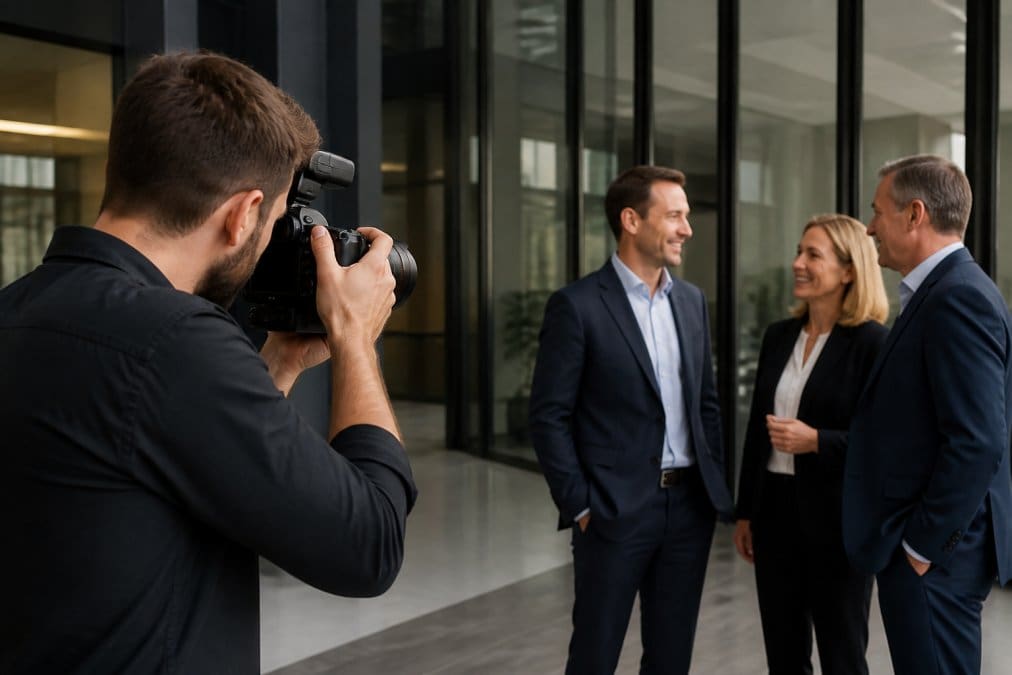
Team photography serves recruitment, culture documentation, social media, and stakeholder communications. The challenge is capturing groups without making them look like a police lineup. Skilled photographers arrange people naturally, create visual flow, and capture genuine interaction. Group photos work best when candid, people slightly turned toward each other, varying heights, genuine expressions. Event Photojournalism specializes in capturing how your people actually interact rather than how they look when told to smile.
Corporate Event Coverage
Event photography requires anticipating moments, working in variable conditions, and delivering images that capture emotional truth. Quality event coverage means the photographer understands your event’s goals, whether documenting networking for donor relations, capturing speakers for press releases, or recording community energy for internal morale.
Office and Lifestyle Photography
Office and lifestyle photography shows your organization in its actual environment, populating career pages, internal communications, marketing materials, and social media. The best avoids looking staged. Real people at real desks, actual meetings, genuine collaboration moments build trust because they feel authentic and are more versatile across platforms. corporate video production.
Understanding Corporate Event Photography Pricing
Pricing for corporate event photography varies based on event duration, deliverable quantity, turnaround time, number of photographers, and post-production scope. In Washington D.C., professional event photography pricing starts around $425 per hour for individual photographers, with project-based packages potentially beginning around $1,500.
Most photographers structure pricing around hourly rates, day rates (typically 8-10 hours), half-day rates, and project-based packages. Some include editing and retouching in base fees; others charge separately. Turnaround time affects cost, same-day delivery costs more than standard two-week turnaround. The number of final edited images also influences price.
Choosing based on price alone often leads to disappointment. According to [Professional Photographers of America research](https://www.ppa.com/my-ppa), 78% of clients prioritize photography style and strong client reviews over cost alone. The cheapest option frequently underdelivers on what actually matters.
Event Photojournalism provides customized solutions designed for your specific needs and budget, ensuring you’re not paying for services you don’t need while getting exactly what you do.
Creating a Corporate Photography Shot List Template
A shot list prevents miscommunication, ensures critical moments are captured, and helps the photographer prioritize when multiple things happen simultaneously. Start with event structure and identify 3-5 critical shots per segment. Name your VIPs with brief descriptions or LinkedIn screenshots. Specify locations and define the purpose of each shot category, whether for press releases, social media, or annual reports.
Here’s a template framework:
| Shot Category | Specific Moments | Key People | Location | Purpose |
|---|---|---|---|---|
| Opening | Guests arriving, registration, welcome remarks | Event chair, keynote speaker | Main entrance, podium | Press release, social media |
| Program | Awards presentation, speaker at podium, audience reaction | Award recipients, speakers | Main stage | Annual report, website |
| Networking | Candid conversations, group interactions, sponsor moments | Board members, major donors, VIPs | Ballroom, lounge areas | Donor relations, internal |
| Closing | Group photo opportunity, final remarks, departures | All leadership, attendees | Main stage | Social media, year-end campaign |
This structure ensures nothing critical gets missed while giving the photographer creative freedom.
How to Prepare for a Corporate Photoshoot
Preparation determines whether your photoshoot delivers professional results.
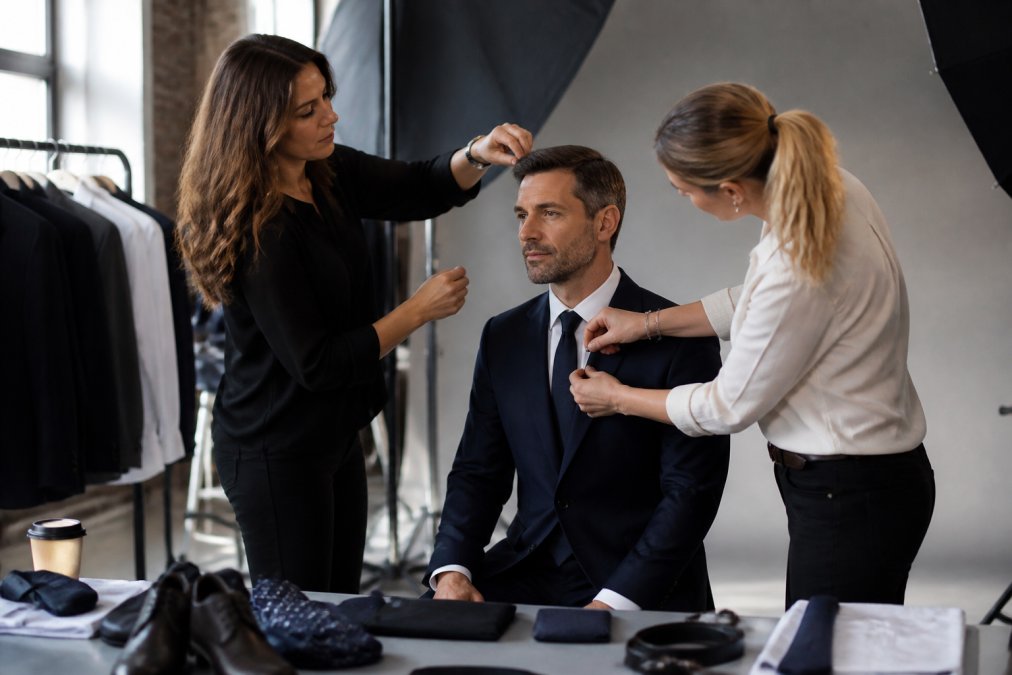
Coordinate wardrobe choices. Solid colors photograph better than busy patterns. Blues and jewel tones photograph well; neons and pure whites can cause technical issues. For team photos, coordinate without being identical, similar color palettes create visual cohesion while maintaining individuality.
Brief the photographer on context. Share your organization’s mission, visual identity, and specific goals. A photographer who understands your purpose delivers more aligned work.
Plan the schedule. Block adequate time; rushing creates stress that shows in photos. For headshots, plan 30-45 minutes per person. For team photos, allow 1-2 hours depending on group size. For events, discuss timing around key moments and natural light changes.
Manage logistics. Confirm parking, building access, equipment space, and technical requirements. Discuss lighting conditions and WiFi availability if needed.
Prepare participants. For headshots, remind people to get adequate sleep, hydrate, and avoid heavy meals beforehand. For group photos and events, brief people on what to expect and whether they should interact naturally or pose for specific shots.
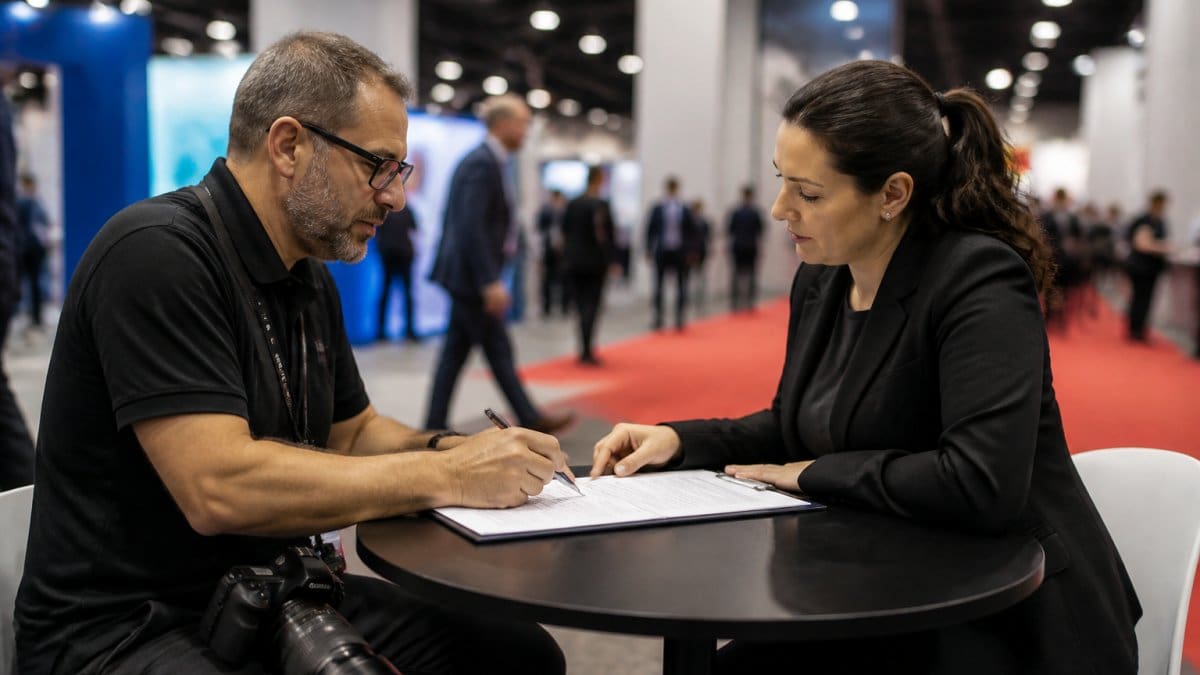
Set clear expectations. Discuss deliverables, file formats, delivery timeline, retouching scope, and usage rights. This prevents misunderstandings after the shoot.
What to Expect During Your Session
Setup and lighting. The photographer arrives early to assess the space, test lighting, and arrange backgrounds, typically 20-30 minutes. For events, the photographer scouts locations and identifies good vantage points.
Direction and posing. During headshots, expect specific guidance on angles and positioning. During events, the photographer captures authentic moments rather than directing them.
Multiple takes. Professional photographers shoot dozens of frames for every final image, capturing variation in expression, lighting, and composition.
Interaction and feedback. Good photographers show you images during the shoot and explain what’s working. Speak up if something isn’t working, this gives the photographer valuable information.
Turnaround expectations. Standard turnaround is typically 2-3 weeks for edited files. Rush delivery costs more. For events requiring next-morning press release images, confirm this timeline upfront.
File delivery. You’ll receive images in agreed-upon formats, typically high-resolution JPEGs for print and web-optimized versions for digital use.
Choosing the Right Corporate Photographer
Review portfolios critically. Analyze whether headshots look natural or stiff, whether event coverage captures emotional moments, whether team photos feel authentic. Look for consistency in quality and style.
Ask about experience with your event type. Photographers typically specialize. Ask directly about similar work they’ve completed.
Check references and reviews. Ask for client references from organizations similar to yours. What did they appreciate? Did the photographer deliver what was promised?
Discuss communication style. Do they respond promptly? Ask clarifying questions? Seem genuinely interested in your goals? Communication quality predicts project success.
Verify technical capability. Ask about equipment, backup systems, and contingency plans. Professional photographers have redundancy built in.
Understand the contract. What’s included? What’s extra? What’s the cancellation policy? What are usage rights? A clear contract prevents misunderstandings.
Event Photojournalism brings award-winning expertise to corporate photography across the DMV area. The team understands organizational goals and customizes solutions rather than offering templated packages. The combination of technical skill, photojournalistic sensibility, and service orientation makes the difference between adequate coverage and imagery that advances your mission.
Request a consultation before committing. Most professional photographers offer initial consultations to discuss your event, answer questions, and determine if there’s a good fit. Use it to gauge whether the photographer asks smart questions about your goals, understands your timeline, and seems genuinely interested in delivering aligned work.
Choosing professional corporate photography is an investment in how your organization presents itself to the world. The statistics are clear: professional imagery increases perceived competence, drives higher engagement, and improves conversion rates. These outcomes happen when you select a photographer who understands your goals, has proven capability in your specific need, and brings both technical skill and genuine service orientation.
Event Photojournalism delivers exactly that combination. The award-winning team has spent years capturing corporate conferences, galas, and special events across the DMV area. Every project is customized to your specific goals, whether strengthening donor relationships, building employer brand, or documenting organizational culture. The high-resolution imagery you receive becomes lasting visual assets that elevate your brand and ensure your important moments are remembered. Contact Event Photojournalism to discuss your photography needs and get started.
Frequently Asked Questions
What should I look for in a corporate photographer’s portfolio?
Look for consistent quality, professional lighting, and authentic moments that match your brand style. Review their work across different event types and settings. Ensure they’ve photographed events similar to yours, galas, conferences, or team celebrations. Check that their editing style aligns with your vision: some favor natural, minimal retouching while others deliver more polished, color-graded images. Request references from past corporate clients to confirm they deliver on time and handle high-pressure situations professionally.
How far in advance should I book a corporate photographer?
Book 4-8 weeks ahead for corporate events and headshot sessions. This timeline ensures availability and allows the photographer to prepare a shot list and understand your event details. For high-profile galas or large conferences, book earlier if possible. If you need a quick turnaround, confirm the photographer offers expedited delivery and can meet your timeline before committing. Many professionals fill their schedules quickly during peak seasons.
What’s the typical turnaround time for receiving edited photos?
Most corporate photographers deliver edited images within 2-4 weeks. However, if you need highlights for a press release the morning after your event, discuss expedited delivery options upfront, some offer 24-48 hour turnaround for a premium fee. Ask whether you’ll receive web-ready files, print-ready files, or both. Clarify what’s included: color grading, retouching, and how many final images you’ll receive. Fast turnaround is especially important for time-sensitive marketing campaigns and donor communications.
Do corporate photographers provide raw files or edited images?
Most deliver professionally edited, color-graded images ready for marketing, LinkedIn, annual reports, and print. Raw files are rarely included in standard packages due to licensing and quality control. If you need raw files for in-house editing, negotiate this separately, it typically costs more. Ask what file formats you’ll receive (JPG, PNG, TIFF) and whether images are optimized for web or print. Confirm you have rights to use images across your website, social media, and internal communications.
This article was written using GrandRanker