
Table of Contents
- Corporate Photography Trends Shaping 2026
- Authenticity and Human-Centered Visual Storytelling
- Professional Headshot Trends 2026
- Corporate Event Photography Best Practices
- AI Integration and Workflow Optimization
- Commercial Photography ROI for Businesses
- Recurring Content Creation for Sustained Brand Growth
- Frequently Asked Questions
Last Updated: September 21, 2026
Corporate Photography Trends Shaping 2026
Nearly 292,000 people work in photography businesses across the country, and the field is projected to grow 4% through 2032. But the real story isn’t about headcount, it’s about what’s changing in corporate photography trends and how businesses use them to tell their stories. According to the 2026 State of the Photography Industry Report, almost 50% of photographers plan to explore new genres this year, signaling a fundamental shift in how professionals approach their craft. The companies winning in 2026 aren’t the ones following yesterday’s playbook. They’re the ones embracing authenticity, investing in recurring visual assets, and rethinking how photography drives actual business results.

Authenticity and Human-Centered Visual Storytelling
Forget the stiff, over-produced corporate headshot. Brands are moving fast away from flawless, overly polished imagery toward raw, genuine moments that actually feel like real people. According to Exhibit Studios’ 2026 trend analysis, this shift toward authentic content is one of the most significant changes in commercial photography right now.
Your annual report photos should show employees mid-conversation. Your conference coverage should capture real reactions and genuine energy. Visual storytelling that wins in 2026 prioritizes human connection over perfection.
When briefing your photographer, focus on moments rather than poses: “capture the moment when someone realizes the solution” instead of “get everyone smiling.” Authentic imagery performs better on social media, generates higher engagement, and builds stronger emotional connections with your audience.
When briefing your photographer, share the story you want told, not just the shots you need. The best corporate photography emerges when the photographer understands your brand narrative and can capture moments that reinforce it naturally.
Professional Headshot Trends 2026
Corporate headshots are evolving toward environmental settings that place professionals in their actual work context rather than against a blank backdrop, telling a more complete story about who they are and what they do. This shift toward authentic settings necessitates a careful consideration of corporate wardrobe trends to ensure that the subject’s attire remains as cohesive and purposeful as the surrounding environment.
Natural lighting dominates, creating dimension and humanity that studio setups can’t match. Many professionals now opt for lifestyle photography that shows them in their element.
When refreshing team headshots, prioritize location over backdrop, natural light over studio flash, and candid moments over forced smiles. The goal is professional credibility combined with genuine approachability, critical as remote work makes first impressions through video calls and LinkedIn profiles more important.
Professional headshots in 2026 succeed when they balance polish with personality. Your team should look competent and approachable, not like they’re posing for a DMV photo.
Corporate Event Photography Best Practices
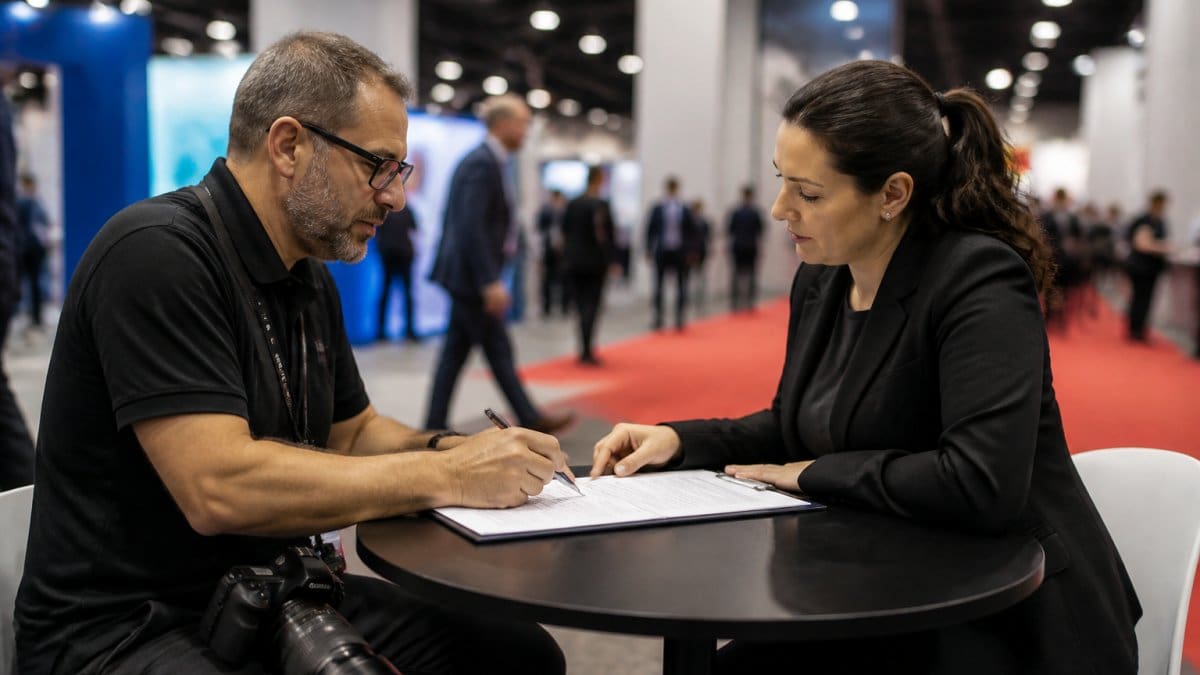
Most event content goes unused. Best practice in 2026 pairs strategic event photography with distribution planning. Your photographer should understand your social media calendar, press release timeline, and communications schedule before arrival.
Deliver a mix: wide environmental images showing energy, medium shots of key moments, and detail shots of signage or interactions, all captured without being intrusive.
Plan photography around business outcomes: photograph sponsors in action for renewals, capture announcement moments for launches, get board members contributing to discussions for engagement. Photography becomes a strategic tool, not an afterthought.
AI Integration and Workflow Optimization
AI isn’t replacing photographers in 2026. What it is doing is transforming the post-production workflow while introducing new legal and ethical considerations that corporate clients must navigate carefully. According to Joe Albert Signature’s workflow analysis, photographers are using AI to automate tedious tasks like sorting through large volumes of shots and basic exposure corrections, freeing up time for creative decisions.
AI flags sharp images, corrects exposure, and removes distracting elements. Your photographer focuses on color grading, composition, and storytelling. This workflow delivers faster turnaround without sacrificing quality.
The Legal and Ethical Layer Corporate Clients Must Understand
When your photographer uses AI-assisted editing tools, clarify three critical points:
Copyright and Ownership. Under current U.S. copyright law, the photographer retains ownership of the original image, but AI-generated enhancements exist in a gray zone. Your contract should state: (1) who owns the AI-processed final image, (2) whether the photographer uses proprietary or third-party AI tools, and (3) what happens to your data if the platform changes terms. This matters for sensitive environments (defense, government, healthcare) where data residency is a compliance issue.
Disclosure and Transparency. Stakeholders increasingly expect disclosure of AI-enhanced elements. LinkedIn requires disclosure of synthetic media. If using AI to remove distracting elements or enhance lighting, your communications team should know, especially for investor materials, annual reports, or regulatory filings. Undisclosed AI enhancement damages credibility if discovered.
Model Training and Data Usage. Some AI tools retain training rights to processed images. Your contract should prohibit uploading images to cloud-based platforms claiming training rights. Require on-premise or licensed AI tools.
Delivery speed is now competitive, but not at the cost of legal exposure. AI-assisted workflows deliver polished assets in days instead of weeks. Before engaging a photographer, ask: (1) What AI tools do you use, and do they retain training rights? (2) Can you guarantee my images won’t train AI models? (3) Will you disclose which images have been AI-enhanced?
AI editing tools are only as good as the photographer’s creative direction, and only as safe as the legal agreements governing their use. A bad shot processed through AI is still a bad shot. The technology enhances professional work; it doesn’t replace the need for skilled photographers who understand light, composition, and storytelling, and who can navigate the legal landscape of AI-assisted creation.
Commercial Photography ROI for Businesses
You can’t measure photography ROI like ad spend, but you can trace it, and methodology differs by industry.
Companies treating photography as a strategic asset track which images drive LinkedIn engagement, measure impact on donor conversion, and correlate quality with brand perception. Businesses investing in recurring professional photography see measurable improvements in brand consistency, employee engagement, and stakeholder confidence.
Industry-Specific ROI Models in the Region
In tech and software sectors, photography ROI centers on recruitment. A 2025 LinkedIn Talent Solutions report found job postings with professional team photography receive 40% more applications. If your average cost-per-hire is $8,000 and professional photography reduces time-to-fill by two weeks, a $3,000-$5,000 quarterly retainer pays for itself in one hiring cycle.
For government contracting and defense firms (a major economic driver in Northern Virginia), photography ROI operates through a different mechanism: proposal competitiveness and past-performance credibility. Federal contractors know that proposal evaluations include subjective factors like “organizational capability” and “team stability.” Professional imagery of your facilities, your team in action, and your leadership presence in proposal documents influences scoring. One regional defense contractor reported that upgrading from stock photos to custom facility and team photography improved their proposal win rate by 12% within 18 months, a difference worth millions in contract value.
For professional services (law, consulting, accounting firms clustered in Arlington and Tysons), photography ROI centers on client acquisition and retention. Professional headshots and team imagery on your website and LinkedIn profile directly impact whether prospects perceive you as established and trustworthy. A regional consulting firm found that refreshing their team photography and website imagery correlated with a 23% increase in inbound inquiry conversion over six months.
Budget Reality for 2026
Understanding ROI requires understanding what professional corporate photography actually costs in your market. Pricing varies significantly by scope and photographer experience. For current prices or a quote, please contact us.
Calculating Your Actual ROI
The key is intentionality. Random event photos scattered across your channels generate minimal ROI.
-
Define the business outcome. Are you trying to improve recruitment? Strengthen proposals? Build brand credibility? Each outcome has different photography requirements.
-
Identify the measurement point. For recruitment, track application volume and quality before and after photography refresh. For proposals, track win rate. For brand perception, use employee engagement metrics or customer surveys.
-
Calculate the baseline cost of the problem. If slow hiring costs you $8,000 per unfilled position and you have three open roles, the cost of the problem is $24,000. If professional photography reduces time-to-fill by 10%, the ROI threshold is clear.
-
Allocate photography investment proportionally. If photography addresses 20% of your hiring challenge, allocate 20% of your hiring budget to it. This prevents over-investment in photography while ensuring adequate resources.
Recurring Content Creation for Sustained Brand Growth
One of the biggest shifts in 2026 is the move away from one-off event shoots toward recurring content creation. According to Fstoppers’ 2026 growth analysis, recurring content creation for small businesses has become one of the five photography niches experiencing significant growth this year.
| Approach | Frequency | Best For | ROI Timeline |
|---|---|---|---|
| One-off event shoots | As needed | Major events, launches | Immediate but limited |
| Quarterly sessions | 4x annually | Consistent brand presence | 6-12 months |
| Monthly retainer | 12x annually | High-volume content needs | 3-6 months |
| Hybrid (events + recurring) | Mixed | Strategic + operational needs | 6-9 months |
Frequently Asked Questions
What are the major corporate photography trends for 2026?
The 2026 State of the Photography Industry Report identifies four primary focus areas: authenticity in visual storytelling, AI-assisted workflow optimization, human-centered brand imagery, and recurring content creation. Brands are shifting away from overly polished, staged photography toward raw, genuine moments captured with natural lighting and minimalist styling. Nearly 50% of photographers plan to explore new genres this year, reflecting a broader industry shift toward diverse, authentic visual content that resonates with consumers.
Why is professional corporate photography essential for business marketing?
Professional photography directly influences client booking decisions and brand perception. High-quality visual assets serve multiple purposes: they elevate brand identity across digital channels, amplify messaging in marketing collateral, and create lasting impressions in fundraising and donor relations.
How should businesses approach commercial photography ROI for businesses in 2026?
Commercial photography ROI depends on strategic asset deployment. Recurring content creation can provide sustained brand visibility across social media, websites, and marketing materials. Businesses can track engagement metrics on content featuring professional imagery, monitor booking conversions tied to visual assets, and measure the cost per asset versus its usage across multiple channels.
What should I look for in a corporate photographer in 2026?
Seek photographers who demonstrate expertise in three key areas: authentic, human-centered visual storytelling that captures genuine moments rather than stiff poses; understanding of your industry and key stakeholders so coverage feels strategic rather than generic; and proficiency with modern workflows including fast turnaround times and digital asset delivery. Ask about their approach to discretion during high-profile events, their experience with your event type, and whether they offer recurring content packages. Award-winning photographers with regional expertise and customized solutions are often sought after.