
Table of Contents
- Start With Your Brand Identity and Visual Goals
- Evaluate Portfolios: Commercial Photography vs. Event Coverage
- Questions to Ask a Brand Photographer Before You Book
- Branding Photography Shot List Examples for Your Session
- Brand Photography Pricing Guide: What Drives the Investment
- Red Flags and Contract Terms to Watch For
- Frequently Asked Questions
Last Updated: September 11, 2026
Start With Your Brand Identity and Visual Goals
Learning how to choose a photographer for brand marketing starts with your own brand, not the photographer’s portfolio. The global photographic services market reached USD 39.04 billion in 2026, growing at 3.2% annually, according to Research and Markets’ photographic services report, and much of that growth comes from businesses treating imagery as a strategic asset rather than a decorative one. The organizations that brief photographers on brand identity first often get usable images faster than the ones who book on style alone.
Your brand identity is the combination of values, voice, and visual cues that make your organization recognizable across every channel. Before you contact a single photographer, write down three things: the audience you’re speaking to, the feeling you want your imagery to create, and where those images will live, whether that’s an annual report, a LinkedIn campaign, or a fundraising appeal.
Define Your Aesthetic and Build a Mood Board
A mood board is a collection of 10 to 15 reference images that shows the lighting, color, composition, and mood you want. Pull from your existing brand assets, competitor campaigns you admire, and editorial photography that matches your tone. The goal isn’t to copy anyone; it’s to give your photographer a shared visual language before the shoot.

Evaluate Portfolios: Commercial Photography vs. Event Coverage
Commercial photography and event coverage demand different skills, and conflating them is a common hiring mistake. Commercial photographers build controlled images for campaigns, product launches, and headshots. Event photographers work in uncontrolled environments, capturing real moments as they happen. If your brand needs both, ask whether the photographer has genuine depth in each.
What to Look for in a Brand Marketing Photographer’s Portfolio
Look for consistency, not just highlights. A portfolio built entirely on one alluring look may lack the versatility your marketing channels need, a caution raised by [Jessica Vickers’ guidance on selecting a brand photographer(/faq-washington-dc-event-conference-gala-photography-event-photojournalism/) | angelabrownphotography.com]. Check whether the photographer can deliver professional headshots, lifestyle photography, and candid event coverage that all feel like the same brand.
- Range across settings: studio, location, and live events
- Aesthetic consistency across a full gallery, not just the best ten frames
- Real client work with named organizations, not stock imagery
- Retouching that looks natural rather than heavily processed
Questions to Ask a Brand Photographer Before You Book
The right questions separate a vendor from a partner. A 2026 report from Professional Photographers of America’s consumer research identifies the specific drivers that lead clients to book, and communication style consistently ranks near the top. Ask these before signing anything:
- Can you share a full gallery from a similar project, not just a portfolio?
- How do you handle creative direction, and do you work from a shot list?
- What is your turnaround time for edited deliverables?
- Who owns the images, and what usage rights are included?
- How do you handle VIPs, sponsors, and sensitive guests at private events?
Licensing, Usage Rights, and Turnaround Time
Usage rights determine where and how long you can use the images, and they matter more than most buyers realize. Confirm in writing whether you’re receiving full copyright, a licensing agreement, or limited usage, and check whether the license covers paid advertising, print, and social media. Turnaround time is equally critical: if you need highlights for a press release the morning after a gala, say so upfront and get the commitment in the contract.
Branding Photography Shot List Examples for Your Session
A shot list is a written plan of every image you need, organized by priority. It’s the single most effective tool for getting usable brand assets from one session. Here’s a starting template you can adapt:
| Shot Category | Examples | Priority |
|---|---|---|
| Leadership | Executive headshots, team portraits | High |
| Environment | Office, venue, or event space | Medium |
| Action | Speakers, candid guest moments, networking | High |
| Brand assets | Signage, sponsor logos, product details | Medium |
| Editorial | Candid moments for press and social | High |
Build your list around marketing collateral: annual reports, donor appeals, website headers, and social campaigns. Mark each shot as essential or nice-to-have so the photographer can prioritize when time runs short.
Brand Photography Pricing Guide: What Drives the Investment
Pricing for brand photography is scoped, not flat-rated, and the fastest way to compare bids is to understand the six variables that move every quote. Most photographers price by combining a creative fee (their time, expertise, and licensing) with production costs (gear, assistants, studio, travel) and post-production (editing and retouching). Ask any photographer to break their proposal into those three buckets so you can see where the money actually goes.
The Six Cost Drivers
- Shoot hours. Half-day (up to 4 hours) and full-day (8-10 hours) rates are the industry norm. A half-day brand session typically covers one location and one or two looks; a full day allows multiple setups, wardrobe changes, and a larger shot list.
- Final image count. Photographers usually quote a set number of edited deliverables (often 25-75 for a half-day). Additional retouched images are billed per image, so agree on the included count before the shoot.
- Licensing scope. A license for organic social media and your website costs less than one that includes paid advertising, print, billboards, or unlimited duration. Broader rights = higher fee. This is the single most negotiated line item.
- Retouching depth. Basic color correction and exposure balancing is standard. Advanced retouching, skin cleanup, object removal, composite work, background replacement, is billed hourly or per image and can add meaningfully to the total.
- Production costs. Studio rental, assistants, stylists, props, hair and makeup, and equipment rentals are typically passed through at cost or with a small markup. Ask for these as separate line items.
- Travel and usage territory. Local shoots may include a mileage radius; beyond that, expect travel fees. Licensing tied to a specific region versus nationwide or global use also affects price.
Typical Pricing Tiers to Expect
Exact numbers vary by market, but most brand photography proposals fall into recognizable tiers:
| Tier | Typical Scope | What It Usually Includes |
|---|---|---|
| Starter / headshot session | 1-2 hours, one location | 5-15 edited images, personal or small-team use |
| Half-day brand session | Up to 4 hours, one or two setups | 25-50 edited images, standard commercial license |
| Full-day brand production | 8-10 hours, multiple setups | 50-150 edited images, expanded license, some retouching |
| Campaign / multi-day | 2+ days, creative direction | Custom deliverables, full usage rights negotiated |
Treat these as structural guides, not quotes. A photographer with a national advertising clientele will price a half-day very differently from a local event specialist.
How to Compare Proposals Without Comparing Headline Rates
A $2,000 quote and a $5,000 quote are not the same product. When you line up bids, normalize them:
- Cost per usable image. Divide the total by the number of fully edited, licensed images you actually receive.
- Cost per usage channel. If one quote includes paid social and print and another only covers organic web, the cheaper quote may cost more once you license the extra channels.
- Cost of a reshoot. If the deliverables miss your shot list, what does a second session cost? Ask.
- Retouching included vs. billed. Confirm how many images get full retouching and what additional retouching costs per image.
Where Budget Gets Wasted
Most overspend in brand photography comes from three places: booking a full day when a half-day shot list would suffice, paying for broad licensing you will never use, and skipping a pre-shoot brief so the photographer captures images that never make it into a campaign. A tight shot list and a clearly defined usage scope are the two cheapest ways to protect your budget.
Ask every photographer for a written estimate that separates creative fee, production costs, post-production, and licensing. A proposal that lumps everything into one number is harder to compare and harder to trim if your budget changes.
How to Measure ROI on Brand Photography
Measure ROI by tying images to outcomes, not by counting photos. Track how branded imagery affects conversion rates on landing pages, engagement on social posts, and response to fundraising appeals. A 2026 analysis from SquareShot’s report on brand photography investment links strategic photography investment directly to trust, engagement, and business growth. Set a baseline before the shoot, then compare performance across the same channels afterward.
A practical framework: pick two or three channels where the new images will run, record their current performance (click-through rate, conversion rate, average engagement), publish the new imagery, and compare the same metrics over a matched window, typically 30 to 60 days. If you cannot isolate photography from other changes, run an A/B test on a single landing page or email where the only variable is the image. Attribution is imperfect, but a documented before-and-after beats a gut feeling when you justify next year’s photography budget.
Red Flags and Contract Terms to Watch For
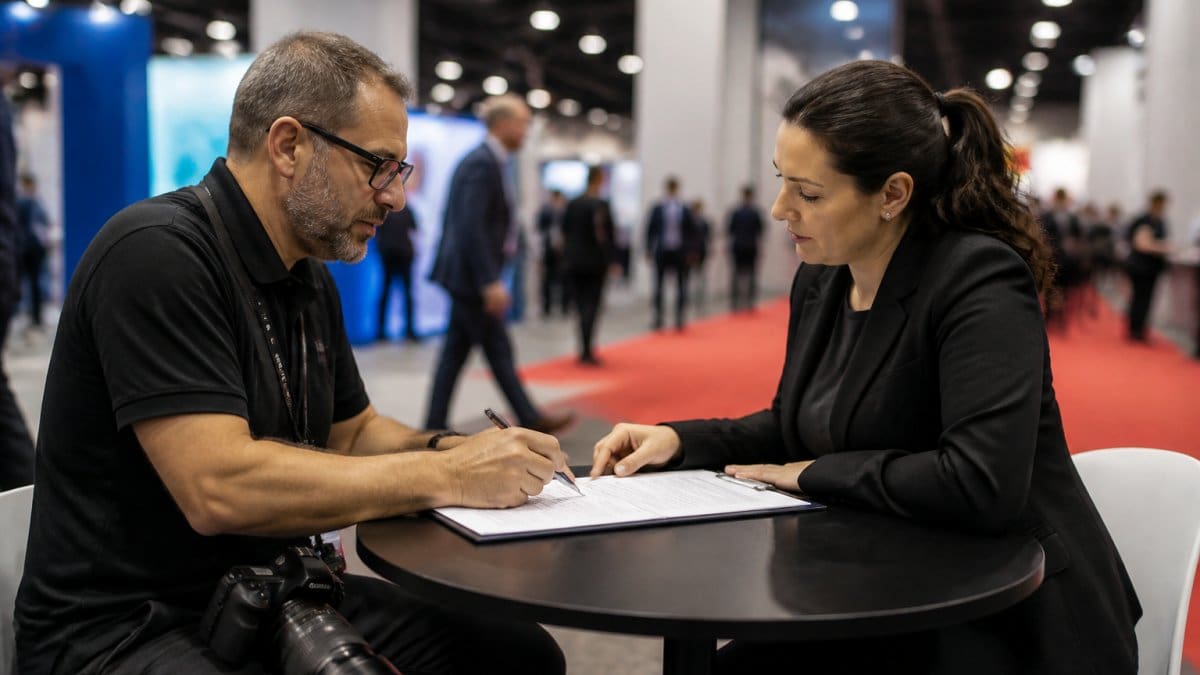
Most guides on hiring a brand photographer stop at “check the portfolio and ask for references.” The expensive mistakes are legal, not aesthetic, and they show up months later when you try to run a paid ad with an image you thought you owned. Here is what to actually read in the contract.
Copyright vs. License: The Distinction That Costs Businesses Money
Under U.S. copyright law, the photographer owns the copyright to every image the moment the shutter clicks, unless the contract says otherwise in writing. What you are almost always buying is a license, permission to use the images under specific terms, not the copyright itself. That is normal and fine, but the license terms are where deals go wrong.
A usable commercial license should spell out four things:
- Channels: web, organic social, paid social, email, print, out-of-home (billboards, transit), broadcast.
- Territory: local, national, or worldwide.
- Duration: one year, three years, perpetual, or tied to a campaign window.
- Exclusivity: can the photographer resell the same images to a competitor?
If any of those four are missing, you do not know what you bought. A license that covers “marketing use” is not a license, it is a promise to argue later.
Work-for-Hire and Full Buyouts
Some buyers ask for a work-for-hire arrangement, which transfers copyright to the company. Photographers often resist this because it eliminates their ability to license the work elsewhere, and they typically price it significantly higher. For most brand marketing needs, an expanded, perpetual, worldwide license is cheaper and functionally equivalent. Reserve full buyouts for images you genuinely need to own outright, for example, a trademarked mascot or a product hero shot you will reuse for a decade.
Contract Clauses to Read Line by Line
- Deliverable count and format. How many edited images, in what resolution, and are RAW files included? (Most photographers do not release RAW files; confirm before you assume.)
- Turnaround and delivery date. Get a specific date, not “within a few weeks.”
- Reshoot and revision policy. What happens if an image is unusable due to photographer error? Who pays?
- File retention. How long does the photographer archive your images, and what does it cost to retrieve them later?
- Named photographer guarantee. If you booked a specific person, does the contract promise that person, or can the studio send an associate?
- Indemnification. If a third party claims the image infringes their rights, who defends whom?
- Kill fee. If you cancel after the shoot is scheduled, what do you owe?
- Model and property releases. For any image featuring identifiable people or private property, confirm releases are in place, otherwise you cannot safely use the image in advertising.
Red Flags in the Proposal Itself
- No written licensing or usage-rights clause at all.
- A portfolio that relies on a single look, with no evidence of range across the channels you need.
- No backup plan for lost or corrupted files.
- Delivery promises with no date and no remedy if they slip.
- No named photographer guarantee (you may get an associate).
- Pressure to sign before you have seen a full gallery from a comparable project.
Skipping a written usage-rights clause is the costliest mistake in brand photography. Without it, you may be legally limited from using the very images you paid for in paid ads or print, forcing a reshoot, and a reshoot is almost always more expensive than the license you declined to negotiate.
A Simple Pre-Signature Checklist
Before you sign, confirm in writing: the exact deliverables and file formats, the delivery date, the license channels/territory/duration/exclusivity, the retouching scope, the named photographer, the reshoot policy, and the file-retention window. If a photographer will not put those in writing, that is the answer.
A photographer who refuses to put deliverables, turnaround, and rights in writing is telling you something. Listen.
Frequently Asked Questions
What should I look for in a brand marketing photographer?
Look for a portfolio that shows aesthetic consistency across different settings, not just one signature look. Check that the photographer understands commercial photography and can deliver images suited for multiple channels like annual reports, LinkedIn, and press releases. Ask about their process for learning your brand values, target audience, and visual storytelling goals. A photographer who asks strategic questions before the session is more likely to produce usable brand assets.
What are red flags when hiring a brand photographer?
Watch for photographers who show only one rigid aesthetic, since those images may lack the versatility your marketing channels need. Be cautious if they cannot explain usage rights, licensing, or turnaround time in writing. A lack of interest in your brand messaging, target audience, or creative direction before the shoot is another warning sign. Also avoid anyone who will not provide a clear contract covering deliverables, retouching scope, and image licensing.
How do I ensure a photographer understands my brand voice?
Share your brand guidelines, mood board, and examples of imagery you admire before the session. Provide a creative brief that outlines your target audience, brand values, and where the images will appear. A skilled brand marketing photographer will ask about your visual communication goals and propose a shot list that aligns with your marketing collateral. The pre-shoot strategy conversation matters as much as the photo session itself.
What is the difference between event photography and brand marketing photography?
Event photography captures candid moments as they happen at conferences, galas, or summits, documenting the client experience in real time. Brand marketing photography is planned in advance with a creative brief, mood board, and shot list designed to produce specific brand assets for campaigns, websites, and social media. Both require technical skill, but brand marketing photography leans more heavily on creative direction and strategic alignment with your brand identity.