Table of Contents
- Start With Your Event’s Visual Requirements
- Research Local Professional Photographers and Their Portfolios
- Questions to Ask a Photographer Before Booking
- Event Photography Red Flags That Should Give You Pause
- Professional Photography Pricing Guide: What Drives Cost
- Legal and Contract Literacy for Photo Bookings
- Vetting for Your Specific Photography Niche
- Frequently Asked Questions
Last Updated: September 15, 2026
Start With Your Event’s Visual Requirements
The most effective tips for finding local professional photographers begin with a clear internal brief, not a vendor search. According to Bureau of Labor Statistics Occupational Outlook Handbook, the median hourly wage for photographers was $21.47 as of May 2025, a figure that reflects a market split between generalists and true specialists. That split matters: the photographer who shoots family portraits on weekends is not the same professional who can walk a gala floor and deliver press-ready images by morning.
Defining deliverables before you call prevents that.
Define Your Deliverable Needs
Deliverable needs are the countable outputs your team requires: how many final images, in what resolution, format, and by when. Vague requests produce vague results.
Write your requirements down as a checklist before contacting anyone:
- Number of final edited images (not raw frames)
- High-resolution files for print, plus web-optimized versions
- Delivery format: digital gallery, direct download, or cloud folder
- Turnaround time, with a separate deadline for press-ready highlights
- Print release or licensing terms for marketing use
- Whether raw files are included or retained by the photographer
Most organizations underestimate the press deadline. If your communications team needs images the morning after a gala, say so upfront, that eliminates many photographers immediately.
Match Photography Style to Your Brand
Photography style should follow from your brand’s tone, not a portfolio grid. A government-adjacent organization needs discreet, documentary coverage; a product launch needs controlled lighting and clean compositions.
The two dominant approaches are candid and posed. Candid, photojournalistic coverage captures unscripted moments: a board member’s reaction, a donor’s genuine laugh. Posed photography delivers controlled group shots and executive portraits. Most events need both, weighted toward one.
Ask one question: will these images appear in a fundraising campaign where emotion drives giving, or in a press release where clarity drives coverage? The answer determines the style you should be shopping for.
Research Local Professional Photographers and Their Portfolios
Portfolio research is where most buyers make their first mistake: judging images by attractiveness rather than fit with their own event conditions. A stunning outdoor wedding portfolio tells you nothing about a dim hotel ballroom with a 20-minute program window.
Look for portfolios showing your event type under your event’s real conditions: the venues, lighting, and crowd densities you’ll actually have.
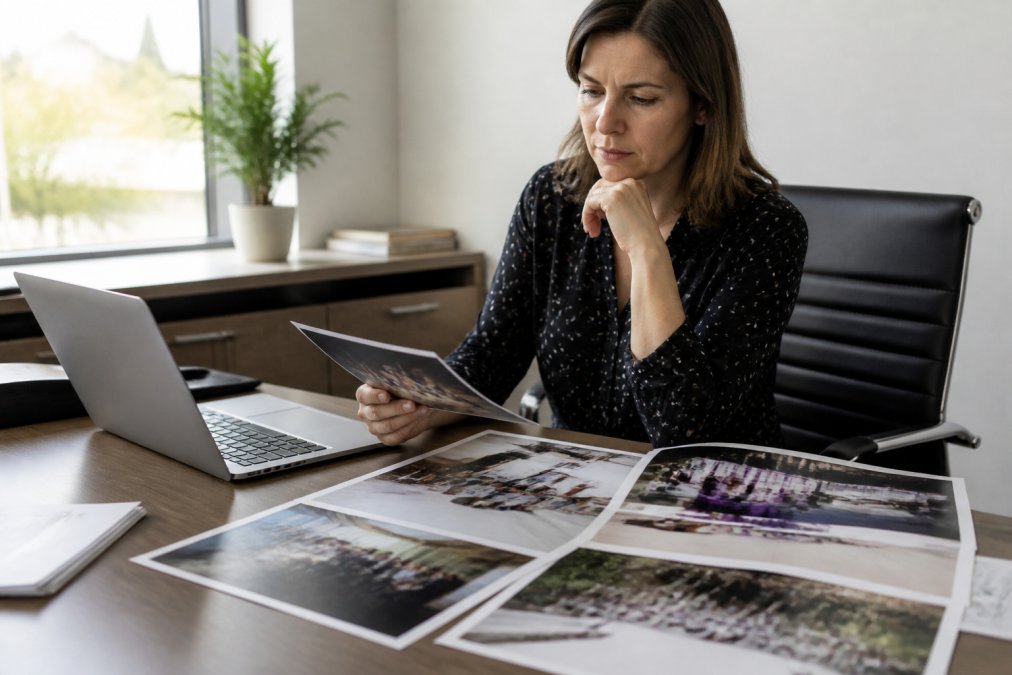
A shortlist of three to five photographers is plenty. For each, note their niche, the venues they’ve shot, and whether their gallery includes the moments you need: speaker shots, sponsor signage, candid attendee interaction.
Reverse-search the venue, not just the photographer. Search for the venue name plus “event photos” and see which photographers’ work appears repeatedly. Photographers who have shot your venue before already know the lighting, the load-in rules, and the best vantage points, which saves you a scouting trip and reduces day-of risk.
Questions to Ask a Photographer Before Booking
The questions to ask a photographer before booking fall into four categories: logistics, deliverables, backup planning, and experience with your event type. Ask them in one call and take notes, vagueness here predicts vagueness later.
Start with logistics and coverage:
- How many photographers will cover the event, and for how many hours?
- Have you photographed this venue or a similar one before?
- What is your backup plan if equipment fails or you become ill?
- Do you carry liability insurance, and can you provide a certificate?
- What is your turnaround time for a press-ready highlight set versus the full gallery?
- How do you handle a shot list, and will you coordinate with our on-site team?
- What happens if the event runs long?
Question three separates professionals from hobbyists: a serious photographer arrives with redundant camera bodies, backup storage, and a second shooter on call. Question five matters just as much, if your press release goes out next morning, “two to three weeks” is disqualifying.
Never book a photographer who cannot produce a certificate of liability insurance. Many venues require vendors to carry coverage, and if your photographer is turned away at load-in, you have no recourse and no images. Confirm the certificate before you sign anything.
Event Photography Red Flags That Should Give You Pause
Event photography red flags cluster around three failures: communication, proof of work, and contract clarity. One alone might be explainable; two or more means walk away.
Watch for these signals:
- Slow or evasive responses during the sales process
- A portfolio built entirely from styled shoots, with no real event galleries
- No written service agreement, only a verbal quote
- Unwillingness to name a specific turnaround time
- No mention of liability insurance or backup equipment
- Pressure to pay a full deposit before any terms are documented
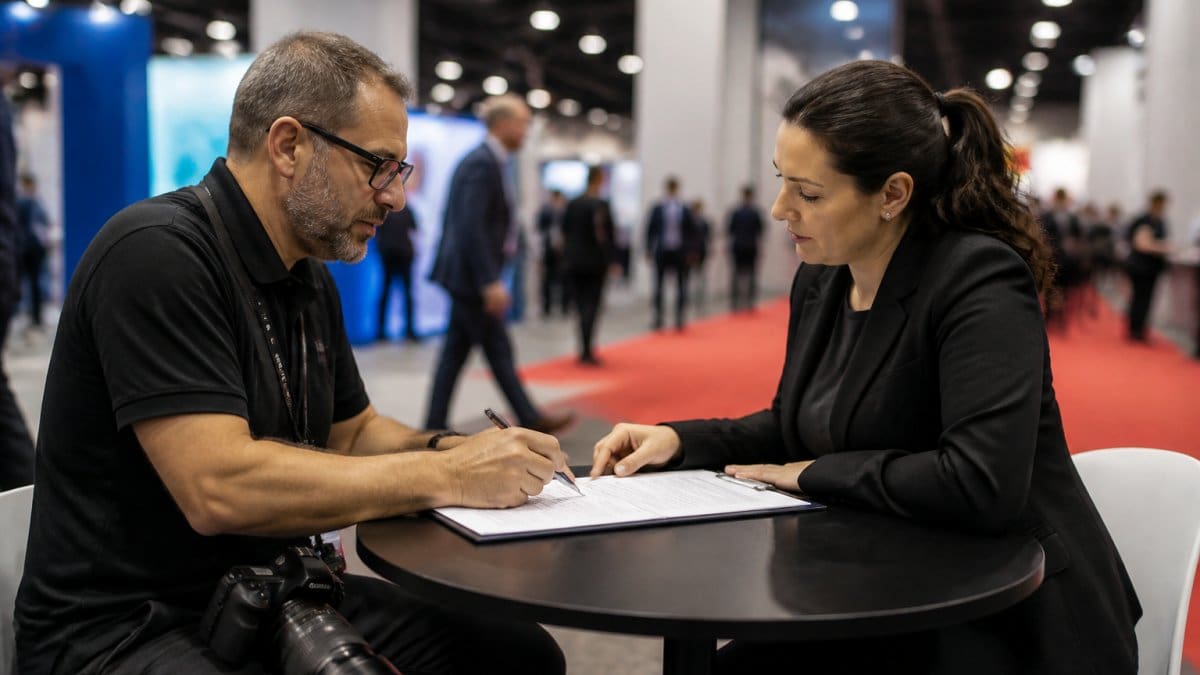
The most common red flag is the missing contract. A photographer who resists putting terms in writing is telling you how they’ll handle a dispute. Treating a friendly email thread as an agreement is a common first-time mistake. It isn’t one.
One more signal: some practitioners argue Google reviews are less reliable than Facebook reviews or word-of-mouth referrals, since review solicitation varies by platform. Ask peers who ran similar events who they used, and what went wrong, not just what went right.
Professional Photography Pricing Guide: What Drives Cost
A professional photography pricing guide is less about a single rate card and more about the variables that move the number. Pricing depends on coverage hours, number of photographers, deliverable volume, turnaround speed, licensing scope, and post-production complexity. According to Bureau of Labor Statistics Occupational Outlook Handbook, the median hourly wage for photographers was $21.47 as of May 2025, but that figure describes what photographers earn, not what clients pay. A booking rate is a business rate: it has to absorb equipment, insurance, editing time, second shooters, software subscriptions, marketing, and the unpaid hours spent on sales calls and culling.
Because those variables shift so much between events, any single “average price” figure online is close to meaningless. Treat pricing as a function of scope, not a menu, though it helps to know the market’s shape before collecting quotes.
Ballpark Ranges by Engagement Type
These are broad, commonly observed U.S. ranges, not quotes. Use them to sanity-check whether a proposal is in the right neighborhood, then let the scope conversation do the real work.
- Portrait sessions (headshots, family, senior): typically a session fee plus a per-image or package price; many bundle a set number of edited images into a flat fee.
- Half-day event coverage (up to about four hours, one photographer): often a flat coverage fee including a set number of edited images and a defined turnaround.
- Full-day event coverage (eight hours or more, one photographer): priced higher per hour than a half-day because the photographer loses the ability to book another job that day.
- Multi-photographer coverage: each additional shooter adds cost, and the lead often charges a coordination premium on top of the second shooter’s rate.
- Weddings: frequently the highest per-event ticket, since coverage spans a full day, deliverables are extensive, and the work is unrepeatable.
If a quote lands far below the range for its category, ask what is missing, usually it is turnaround, editing depth, insurance, or a second shooter.
What Actually Drives Cost Upward
- Coverage duration. A two-hour reception and an eight-hour conference are different jobs.
How to Normalize Quotes Before Comparing
Ask for the quote in writing with those four line items separated. Photographers who quote a single lump sum are not hiding anything necessarily, but you cannot compare their number to anyone else’s until it is broken down.
Deposit, Payment, and Cancellation Norms
Legal and Contract Literacy for Photo Bookings
Usage Rights and Licensing Explained
Vetting for Your Specific Photography Niche
Why the Criteria Differ by Niche
Niche-Specific Vetting Criteria
How to Test a Specialist’s Claim
Niche fit is not about the label on the website. It is about whether the photographer’s recent, verifiable work matches your event’s format, lighting, and pace, and whether their references confirm it.
Frequently Asked Questions
What are the biggest red flags to watch for when hiring a photographer?
Key red flags include no written contract, reluctance to provide references, portfolios that lack variety, and vague answers about turnaround time. If a photographer cannot show recent work from events similar to yours or avoids discussing licensing and usage rights, that is a warning sign. Also be wary of unusually low quotes that do not specify what is included. According to industry surveys from PPA and Zenfolio, professionals emphasize transparency and clear communication as hallmarks of reliable photographers.
What is a reasonable price for professional event photography?
Pricing for professional event photography depends on event duration, number of photographers needed, deliverable format, and usage rights. There is no single standard rate; costs vary by region, experience, and the complexity of your event. The Bureau of Labor Statistics reports a median hourly wage of $21.47 for photographers as of May 2025, but that figure reflects employed photographers and does not capture the full range of event pricing. Always request a custom quote based on your specific needs.
How do I verify the experience level of a local photographer?
Ask for a portfolio that includes events like yours, and request references from recent clients. Check whether they carry liability insurance and can provide a certificate. Look for professional affiliations, such as membership in PPA, and read client testimonials on multiple platforms. A photographer who has worked in your niche (corporate galas, conferences, weddings) will have specific examples to share and can speak to the unique challenges of your event type.
Why is it better to hire a local photographer versus a national service?
Local photographers know the venues, lighting conditions, and logistical quirks of your area. They can scout locations in advance and arrive without travel delays. For time-sensitive events like galas or press conferences, local photographers can deliver images faster because they are not shipping equipment or flying in. Local professionals also understand regional vendor networks and can recommend other trusted service providers. This local knowledge often translates into more efficient coverage and quicker turnaround.