
Table of Contents
- Why Booking the Wrong Event Photographer Costs More Than You Think
- Mistake #1: Choosing an Event Photographer Based on Price Alone
- Mistake #2: Booking Too Late or Without a Realistic Timeline
- Mistake #3: Skipping the Full Gallery and Portfolio Review
- Mistake #4: Ignoring Event Experience and Personality Fit
- Mistake #5: Failing to Provide a Clear Event Photography Shot List
- Mistake #6: Overlooking the Event Photography Contract and Contingency Terms
- Questions to Ask an Event Photographer Before You Sign
- Frequently Asked Questions
Last Updated: October 8, 2026
Why Booking the Wrong Event Photographer Costs More Than You Think
The wrong event photographer doesn’t just cost you a fee. The Professional Photographers of America’s consumer research on what drives clients to book frames booking as a trust decision, not a transaction, and that framing matters here.
This guide walks through common mistakes when organizations book event photographers across the DMV area. Below, we break down seven of them, plus the questions to ask before you sign anything.
Most of these mistakes share one root cause: treating event photographer booking as a scheduling task instead of a planning task.
Mistake #1: Choosing an Event Photographer Based on Price Alone
Booking on price alone is the most common mistake in event photography, and it is the one that costs the most to undo. A low quote is not automatically a bad quote, but it usually means something was left out.
What a Low Quote Often Leaves Out
Hourly rate comparisons hide the real cost structure. A proposal that looks cheap on paper may exclude post-production, travel, licensing, or a second shooter. Rafferty Weiss Media’s corporate event photography pricing guide notes that hourly comparisons routinely omit post-production, travel, and licensing costs, which is exactly how a budget-friendly quote becomes an expensive invoice.
If a quote is dramatically lower than every other proposal you received, ask what is missing before you celebrate. The gap is usually editing time, coverage hours, or usage rights.
How to Compare Event Photographer Pricing Proposals
Compare proposals on scope, not on the bottom line. Ask each photographer to break out coverage hours, editing, delivery format, and licensing separately. Jamie Good Photography’s guide to comparing DC and Baltimore corporate photography proposals makes the same point: proposal evaluation is about what is included, not what is quoted.
| Proposal Element | What to Check | Why It Matters |
|---|---|---|
| Coverage hours | Start and end times, overtime rate | Speeches often run long |
| Editing | Included or billed separately | Changes the true total |
| Delivery | Format, resolution, turnaround | Affects press deadlines |
| Licensing | Usage scope and duration | Affects marketing reuse |
| Travel | Included or added | Matters for venue distance |
| Backup | Second shooter or plan | Protects against a single failure |
Mistake #2: Booking Too Late or Without a Realistic Timeline
Booking late is the mistake that removes your options. The closer you get to the event date, the smaller the pool of available photographers, and the less room you have to compare. But “book early” is not useful advice on its own. What actually prevents the mistake is a working timeline with dates attached to decisions.
A Booking Timeline You Can Actually Follow
Use this sequence as a starting point and shift it earlier for large galas, conferences, or events with VIP and press components.
- Six to nine months out: Define the event date, venue, and run of show. Confirm whether the venue requires vendor approval, a certificate of insurance, or a load-in window for photographers. Start a shortlist of three to five photographers whose full galleries match your event type.
- Four to six months out: Request proposals. Ask each photographer for coverage hours, editing scope, delivery timeline, and licensing terms in writing. Check date availability before you fall in love with a portfolio.
- Three to four months out: Review full galleries, not highlight reels. Conduct a short call to assess communication style and how the photographer handles VIPs and guests who decline to be photographed.
If you are booking inside 30 days, ask directly about availability rather than assuming a photographer is free. A fast yes is more useful than a slow maybe. Be prepared to accept a narrower scope, a higher rush fee, or a backup photographer rather than the lead.
Why the Timeline Slips
Most late bookings happen for predictable reasons: the venue date moved, the budget was approved late, or the event was added to the calendar after the fact. Build a buffer for each of those. If your date is in a busy season, fall and spring are the heaviest for corporate and gala work, add at least a month to every step above.
What to Do If You Are Already Late
If you are inside 60 days, prioritize in this order: confirm the date is still available, confirm the photographer has covered your event type, confirm the deliverables and licensing in writing, and confirm the backup plan. Skip the extended comparison process and focus on the four items that protect the event. A photographer who can commit to those four things is a better late booking than a cheaper one who cannot.
Mistake #3: Skipping the Full Gallery and Portfolio Review
A highlight reel is a greatest-hits album, not a track record. Reviewing a photographer’s full gallery shows you how they handle an entire event, including the ordinary moments between the staged ones. Kate Cashin Photography’s guidance on hiring an event photographer warns against skipping the full gallery, and Aventography’s list of event photography booking mistakes flags not understanding a photographer’s style as a core error.
Look for consistency across a whole event, not one perfect frame. Ask to see a full gallery from an event similar to yours, in a similar venue, with similar lighting. If the photographer only shows you their best ten images, ask for the other two hundred.
Mistake #4: Ignoring Event Experience and Personality Fit
Personality fit is not a soft concern. Your photographer will spend hours near your board members, donors, and VIP guests, and how they carry themselves shapes the images you get. A photographer who is constantly in people’s faces produces stiff, guarded subjects.
Match experience to the event type. A wedding photographer may be excellent and still be the wrong choice for a corporate summit with a strict run of show.
The best event photographer for your gala is the one who has covered galas, knows when to step back, and can read a room without being told.
Mistake #5: Failing to Provide a Clear Event Photography Shot List
A clear event photography shot list is a written document that names the must-have images, the people in them, and the moments they happen. Without one, coverage depends on guesswork.
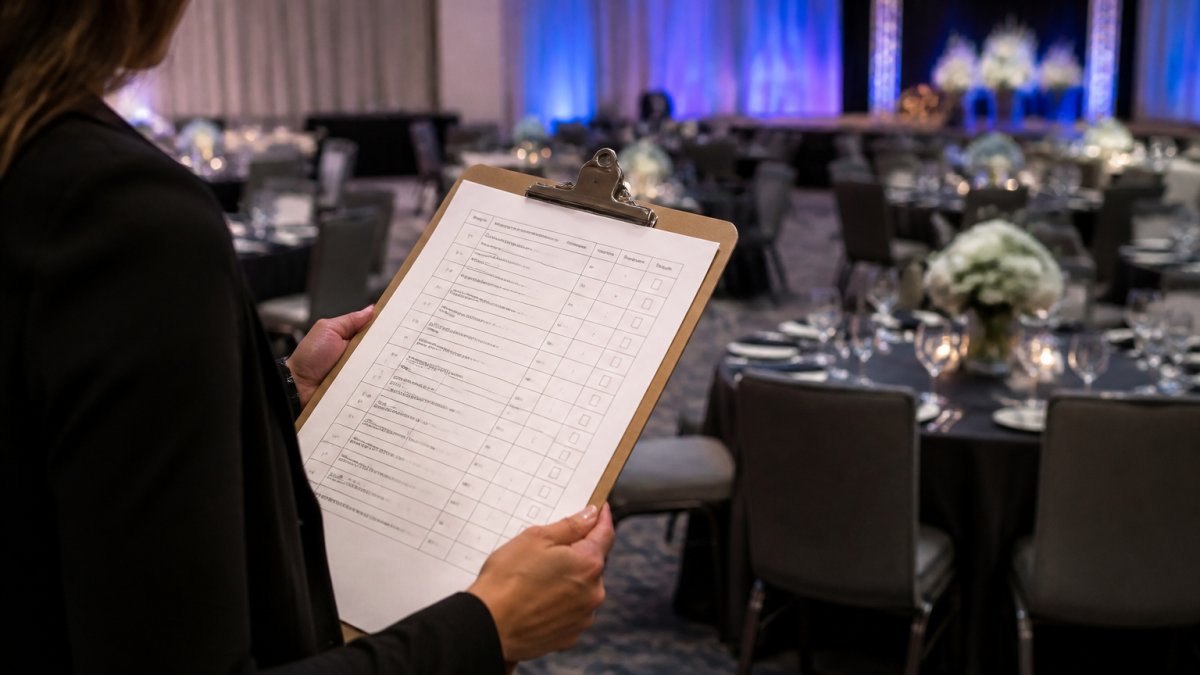
Seirer Photography’s breakdown of event photography mistakes highlights briefing as a preventable error, and our own corporate event photography guidance recommends confirming the shot list with the hiring decision-maker before the event.
What to Include in a Shot List for a Gala or Conference
- Names and roles of VIP guests, sponsors, and speakers
- Key moments: arrivals, welcome remarks, awards, keynote, closing
- Group shots with the specific people in each one
Mistake #6: Overlooking the Event Photography Contract and Contingency Terms
An event photography contract is the document that defines coverage hours, deliverables, image rights, and what happens if plans change. Skipping it is how good events end in disputes. The mistake is not signing a contract, it is signing one without reading the clauses that only matter when something goes wrong.
Coverage Hours, Deliverables, and Image Rights
Confirm the start and end times, the overtime rate, the number of edited images, the delivery timeline, and the scope of your usage rights. Kate Cashin Photography’s hiring checklist flags delivery time and image rights as booking considerations for good reason. If you plan to use images in a fundraising campaign or press release, say so before you sign.
Specific clauses to look for:
- Coverage window: The exact start and end times, plus the overtime rate and how it is triggered (per hour, per half hour, or rounded up).
- Deliverable count: A stated range of edited images, not a vague promise. Ask whether culling, color correction, and retouching are included or billed separately.
- Delivery timeline: A specific number of business days for the first gallery and for the full set. Ask whether a rush option exists and what it costs.
A quote that lists a low hourly rate but does not state the edited image count or the licensing scope is not a complete quote. Ask for those two numbers in writing before you compare it to any other proposal.
Deposits, Cancellation, and Rescheduling
Most event photographers require a deposit to hold the date, commonly a percentage of the total rather than a flat fee. The deposit is usually non-refundable because the date is removed from the photographer’s availability. Ask these questions before you pay:
- What percentage is the deposit, and when is the balance due?
- If we cancel, is any portion refundable, and does it depend on how far in advance we cancel?
- If we reschedule, does the deposit transfer to the new date, and is there a limit on how many times?
Get the answers in writing. A verbal assurance is not a contingency plan.
Backup Photographers and Equipment Failure
Ask what happens if the photographer falls ill, has a family emergency, or is otherwise unavailable on the event date. A professional will have a named backup or a network of colleagues they can call. Confirm:
- Whether the backup is named in the contract or described as a process.
- Whether the backup has comparable experience with your event type.
- Whether the backup’s rate differs from the original photographer’s.
Travel, Parking, and Venue Logistics
Confirm whether travel is included or added, and how it is calculated. For events with multiple venues or a long day, ask whether travel time between locations counts toward coverage hours. Confirm parking, load-in, and any venue-imposed vendor requirements such as a certificate of insurance or a signed venue agreement. These details are easy to overlook and expensive to resolve on the day of the event.
The contract is not the paperwork that follows the booking. It is the document that determines what you actually receive, what you can do with it, and what happens when the plan changes. Read it before you sign, and ask about every clause you do not understand.
Questions to Ask an Event Photographer Before You Sign
Ask these questions before you sign anything. The answers tell you more than any portfolio.
- Can you show me a full gallery from a similar event?
- How many events like ours have you covered?
- What is included in the quote, and what costs extra?
- How many edited images will we receive, and when?
- What usage rights come with the images?
- Who is the backup if you cannot attend?
- How do you handle private guests and VIPs?
- What is your cancellation and rescheduling policy?
Frequently Asked Questions
What are common red flags when hiring an event photographer?
Red flags include refusing to share full galleries, vague delivery timelines, no written contract, and quotes that seem too low to cover post-production. Aventography warns against focusing only on price, while Kate Cashin Photography advises reviewing complete galleries and confirming image rights. If a photographer cannot clearly explain what happens if they get sick or their gear fails, that is another warning sign. Always ask for a backup plan before you book.
How far in advance should I book an event photographer?
For large galas, conferences, or weddings in the DC area, book six to twelve months ahead. Peak seasons fill quickly, and last-minute booking limits your choice of experienced photographers. Smaller corporate events may only need three to four months of lead time. If your event falls during a busy period like spring or fall, start earlier. Booking late often means settling for whoever is available rather than choosing the right fit.
What should an event photography contract include?
Your event photography contract should spell out coverage hours, deliverables, image count, delivery timeline, and usage rights. Kate Cashin Photography highlights delivery time and image rights as common booking oversights. Also confirm deposit amounts, overtime rates, cancellation policy, and whether a backup photographer is included. For corporate or government events in the DMV area, ask about confidentiality clauses and whether images can be used for marketing or press releases.
How do I make sure an event photographer understands my shot list?
Share your event photography shot list at least one week before the event. Include must-have moments, VIP names and photos, sponsor logos, and the schedule. Event Photojournalism’s corporate event guidance recommends confirming the shot list with the hiring decision-maker. Walk through the list with your photographer during a pre-event call. On event day, designate one person to point out key guests so nothing gets missed.
How many photos should I expect from an event photographer?
Most event photographers deliver 50 to 100 edited images per hour of coverage, though this varies by event type and photographer. A four-hour gala might yield 200 to 400 final images. Ask for a specific estimate in your contract. Also confirm the turnaround time for edited images. If you need highlights ready for a press release the next morning, discuss rush delivery options and any additional fees before you book.
Booking the right event photographer comes down to planning, not luck. If you would rather spend your energy on the guest list than the vendor list, Event Photojournalism can help. Our award-winning team covers corporate conferences, galas, and special events across the DMV area from two locations, with customized coverage and high-resolution image delivery built around your event. Contact us to check availability for your date.