
Table of Contents
- Hiring a Professional Photographer for DC Conferences: What Changes in 2026
- What to Look For in a Conference Photographer
- How to Brief an Event Photographer Before the Doors Open
- The Conference Photography Shot List That Protects Your Brand
- Corporate Event Photography Rates: What Drives the Quote
- Security, Clearance, and Venue Rules for DC Conferences
- Turnaround, Usage Rights, and Image Licensing
- Frequently Asked Questions
Last Updated: October 2, 2026
Hiring a Professional Photographer for DC Conferences: What Changes in 2026
Hiring a professional photographer for DC conferences now means booking specialized event coverage, not general portrait work. The Bureau of Labor Statistics occupational outlook for photographers projects photographer employment to decline 1 percent from 2025 to 2035, with roughly 10,700 openings a year. That squeeze pushes serious photographers toward niches where demand holds: corporate conferences, galas, and summits. Event Photojournalism delivers award-winning, high-resolution photography services across the DMV area from our Washington DC and Northern Virginia locations, expertly capturing the essence of corporate conferences, galas, weddings, and special events. Generalists compete on price. Specialists compete on reliability.
Why the Numbers Push Toward Specialized Coverage
Specialized conference work is where the money and the demand sit. Corporate event photography rates run $175 to $250 per hour for tech events, according to DMV Photographers Group market rate discussion, while conference coverage from established firms often starts at $425 per hour. Meanwhile, the average hourly pay across all professional photographers sits near $23.05, per ZipRecruiter salary data for professional photographers.
Those earning the low average shoot portraits, real estate, and one-off gigs; those earning four figures a day understand conference logistics, sponsor obligations, and same-night delivery.
What This Guide Covers
This guide covers vendor vetting, briefing, shot lists, pricing drivers, venue rules, and image licensing, plus a booking checklist.
What to Look For in a Conference Photographer
Look for three things: a portfolio shot in bad light, proof of insurance and backup gear, and habits that keep the photographer invisible during sessions.
Portfolio and Low-Light Proof
Conference halls are lighting nightmares. Ballrooms use dimmed ambient light with harsh stage spots. Breakout rooms have fluorescent panels that turn skin green. Ask for images shot under those exact conditions, not outdoor portraits.
A wedding portfolio tells you almost nothing about conference ability: weddings have controlled lighting and cooperative subjects; conferences have neither.
Insurance, Backup Gear, and Non-Disruptive Habits
Ask for a certificate of insurance before you sign anything. Venues often require it, and a photographer without coverage can be turned away at the loading dock.
Then ask about redundancy:
- Two camera bodies minimum
- Dual card slots writing simultaneously
- Spare batteries and cards on-site
- A second shooter for multi-track agendas
The non-disruptive piece matters just as much. Board members and donors notice a photographer who blocks sightlines or fires a flash during a keynote, which is why professional firms emphasize quiet, documentary-style coverage.
Skipping the insurance check is the most common mistake organizers make. If your photographer can’t produce a certificate and your venue requires one, you’ll be scrambling for a replacement days before the event.
How to Brief an Event Photographer Before the Doors Open
A good brief takes 30 minutes and saves hours of correction later. Send it at least a week before the event, then walk the venue together if possible.
Cover these items in writing:
- Run of show with exact times for keynote, panels, awards, and breaks
- VIP and sponsor list with headshots so nobody gets misidentified
- Brand guidelines covering logo usage, approved backdrops, and colors to avoid
- Must-have shots ranked by priority in case time runs short
- Delivery deadline and where files should land
- On-site contact who can answer questions in real time
The question organizers ask most is whether the photographer will recognize sponsors and VIPs without hand-holding. Give them names, faces, and titles in your brief, and they’ll work independently; skip it, and you’ll be pointing people out all night.
The Conference Photography Shot List That Protects Your Brand
A conference photography shot list is a prioritized document mapping every image your marketing, PR, and development teams will need after the event. Build it before, not after.
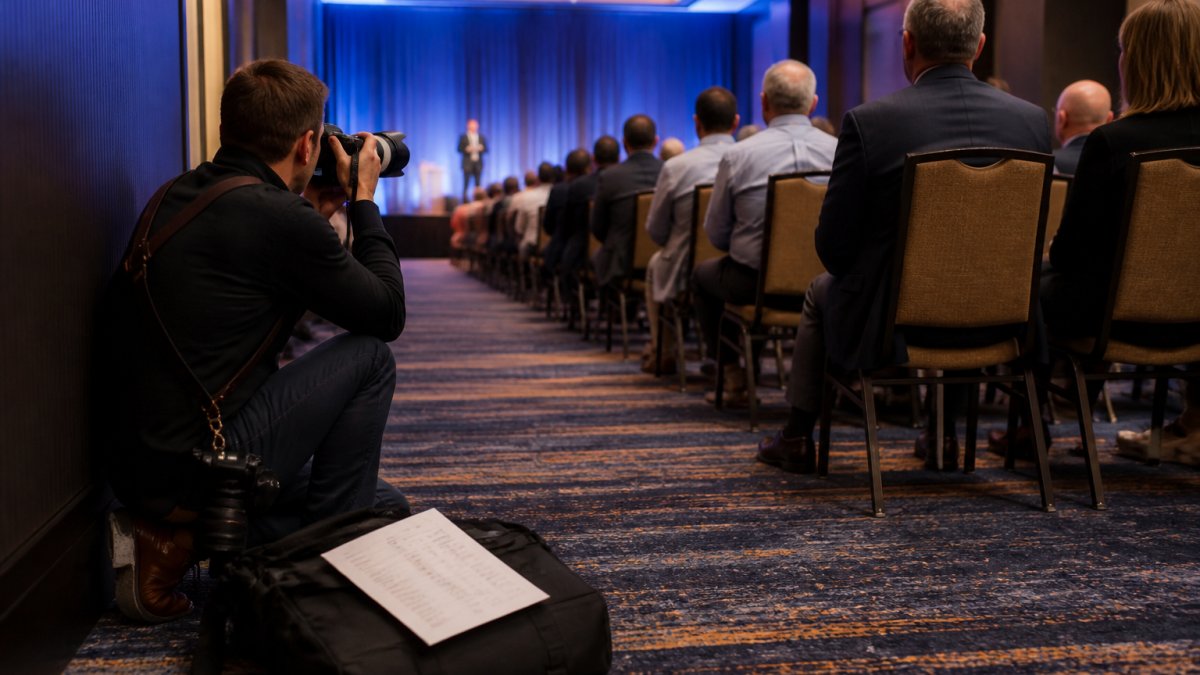
Here’s the structure that works for most conferences and galas:
| Priority | Shot Type | Why It Matters |
|---|---|---|
| 1 | Keynote speaker at podium | Press releases and recap posts |
| 2 | Sponsor logos and signage | Sponsor value protection |
| 3 | Audience reactions and candid moments | Social media and brand storytelling |
| 4 | Award and recognition moments | Donor relations and fundraising |
| 5 | VIP and board interactions | Annual reports and internal comms |
| 6 | Venue and detail shots | Event highlights and next-year promotion |
Rank by priority, not by time. If the schedule compresses, the photographer knows exactly what to protect.
Send your shot list as a single page, not a 12-page document. Photographers working a live event can’t flip through a binder. One page, ranked, with reference headshots attached.
Corporate Event Photography Rates: What Drives the Quote
Corporate event photography rates depend on coverage hours, deliverable count, editing complexity, and turnaround speed. Firms that quote blind are guessing, so understand the line items behind a quote to compare bids apples-to-apples.
The Line Items Behind Every Quote
A professional conference quote is usually built from five components. Ask any vendor to break their number into these buckets:
| Line Item | What It Covers | What Moves It Up |
|---|---|---|
| Coverage time | On-site hours, including setup and teardown | Multi-day agendas, early load-in, late teardown |
| Lead photographer | Primary shooter’s day rate | Senior specialists, keynote-only coverage |
| Second shooter | Additional body for breakouts or dual tracks | Parallel sessions, large galas, awards |
| Post-production | Culling, color, retouching, gallery delivery | High deliverable counts, low-light noise cleanup |
| Licensing and delivery | Usage rights, file formats, delivery method | Paid ad use, extended terms, rush turnaround |
Most firms quote half-day and full-day rates, then add hourly beyond that, with a minimum booking window, often two to four hours, even for a short reception, because the photographer’s day is consumed either way.
Duration Is the Biggest Driver
A two-hour reception costs far less than a three-day summit with breakouts. A multi-day event requires planning around changing rooms, lighting, and VIPs, plus securing gear overnight, real labor that shows up in the quote.
If your agenda has parallel breakout tracks, one photographer cannot cover both. Either add a second shooter or accept that one track goes undocumented.
Deliverables and Editing Complexity
Deliverable count is the second driver: 50 edited images is one quote, 500 is another. The jump is not linear, because culling 2,000 frames down to 500 selects takes time before a single image is edited.
Post-production is where quality separates firms. Basic color correction takes minutes per image; full retouching, noise reduction, and consistent tone across a gallery takes hours.
Turnaround Speed and Rush Fees
Standard delivery is often a week or more. Rush delivery for a morning press release costs more because it requires overnight editing and a dedicated editor. If you need same-day social media assets, say so at the quote stage, not the night of the event.
Ask for a sample delivery timeline in writing: how many images, in what resolution, by what hour, on what day. Vague promises like “within a week” are the most common source of post-event friction.
How to Compare Two Quotes
Two quotes that differ by thousands of dollars usually aren’t quoting the same scope. Confirm:
- Hours of coverage, including load-in and teardown
- Number of photographers on site
- Guaranteed minimum deliverable count
- Editing level (color only vs. full retouch)
- Delivery deadline and file formats
- Usage rights included in the base price
- Overtime rate if the agenda runs long
- Travel or parking charges for the venue
Because Event Photojournalism quotes each project based on scope, the honest answer to “what will this cost” is: it depends on hours, deliverables, and deadline. Request a quote with your run of show attached for a real number instead of a range.
Security, Clearance, and Venue Rules for DC Conferences
Venue rules vary widely, and federal-adjacent buildings add layers most photography guides ignore. Ask about clearance requirements the week you book the venue, not the week of the event, this is where events in this region get derailed.
Why Restricted Venues Change the Hiring Process
Conferences in or near government buildings, embassies, museums, and historic properties often fall under vendor-credentialing rules unrelated to photography. The venue may require:
- Background checks for every vendor, submitted weeks in advance
- Equipment lists with serial numbers and bag counts
- Photo ID matching the credential at the door
- Escorted access in certain rooms or floors
- Prohibited items, including some lens sizes, tripods, and hard cases
A photographer who has never worked a credentialed venue will underestimate the lead time; one who has will ask for the vendor packet before your shot list.
How to Vet a Photographer for a Restricted Venue
Ask these questions before you sign:
- Have you worked credentialed venues before? Ask for two examples and the name of the venue contact who credentialed them.
- Can you pass a background check on the venue’s timeline? Some checks take two to four weeks. If your event is in ten days, that timeline matters.
- What is your equipment footprint? A photographer who travels light clears security faster and draws less attention in session rooms.
- Do you carry a certificate of insurance and can you name the venue as additional insured? Many venues require this before issuing a credential.
- How do you handle a gear search or a bag restriction? The answer tells you whether they have done this before.
The most common failure mode is a photographer who is fully qualified but was never submitted for credentialing because nobody asked the venue early enough. Build the credential deadline into your booking timeline the same week you sign the venue contract.
Build a Venue Checklist
Run this list the week you book the venue, not the week of the event:
- Confirm vendor credential process and submission deadline
- Submit equipment list if required, with serial numbers
- Ask whether flash is permitted in main session rooms
- Confirm whether tripods, monopods, or light stands are allowed
- Identify load-in doors, freight elevators, and gear parking
- Get a written photography policy for any restricted areas
- Name an on-site escort if the venue requires one
- Confirm whether images can be published from the venue in real time
That last item surprises planners. Some venues restrict live posting from certain rooms or during certain sessions. If your social team plans to publish during the keynote, confirm it in writing first.
Technical Requirements for Conference Lighting
The technical side matters as much as the paperwork. Conference lighting shifts constantly, and a photographer who can read a room and adjust without flash will deliver usable images where flash is banned.
- Dark hotel ballrooms: dim ambient light with harsh stage spots. Requires fast prime lenses, high-ISO capability, and noise reduction in post.
- Bright convention centers: mixed daylight and overhead fluorescents that turn skin green. Requires custom white balance and color correction per room.
- Breakout rooms: low ceilings, fluorescent panels, and tight aisles. Requires a small footprint and a willingness to shoot from a seat rather than the aisle.
- Restricted session rooms: no flash, no tripod, limited movement. Requires a photographer who can work handheld at wide apertures without disrupting the room.
Ask any candidate how they handle each of these four scenarios. The answer separates a conference specialist from a generalist with a good portfolio.
Turnaround, Usage Rights, and Image Licensing
Confirm two things in writing before the event: when images arrive and who can use them. Both cause more post-event friction than any other issue.
Turnaround should be spelled out in the contract.
Image licensing covers how and where you can use the photos. Most corporate contracts grant broad usage rights to the hiring organization, but specifics vary. Ask about:
- Social media and paid advertising use
- Print and annual report use
- Sponsor and partner redistribution
- Duration of the license
- Whether the photographer retains portfolio rights
Get the license terms in the contract, not a verbal agreement. A handshake won’t protect you when a sponsor asks for images six months later.
Frequently Asked Questions
How much does it cost to hire a professional photographer for a conference?
Rates vary by market and scope. Corporate tech events have been observed at $175 to $250 per hour, and specialized conference coverage often starts around $425 per hour for firms with dedicated event experience. Your final quote depends on coverage hours, number of photographers, deliverables, and turnaround speed. Request a written quote tied to your event schedule rather than comparing hourly numbers alone.
How far in advance should I book a photographer for a professional conference?
Start conversations eight to twelve weeks out for large conferences, galas, or events with VIP speakers. That window gives you time to confirm venue access rules, share your shot list, and lock a contract. Peak seasons fill faster, so if your date falls near a major industry meeting period, book earlier. A signed agreement with a deposit protects your date.
What should I look for in a portfolio when hiring a conference photographer?
Look for full event galleries, not just highlight reels. Check low-light stage shots, candid audience moments, sponsor signage, and posed portraits of speakers. Ask how much post-production each image receives. A portfolio built on corporate event photography should show consistent color, sharp detail in dim ballrooms, and images that still look clean when cropped for LinkedIn or a press release.
How do I brief an event photographer on branding and VIPs?
Send a written brief at least a week before the event. Include your event schedule, a shot list, sponsor logos that must appear, and photos with names of board members, donors, and speakers. Note any off-limits areas or people. Then hold a 20-minute walkthrough on site so the photographer can check venue lighting, stage angles, and room flow before guests arrive.