Table of Contents
- Types of Photography Services You Can Hire Today
- Benefits of Professional Photography for Brands and Events
- Professional Photography Pricing Guide: What to Budget
- Questions to Ask a Photographer Before Booking
- Photography Service Contract Template: Legal and Licensing Guide
- What to Expect from a Photography Session: Pre-Shoot Consultation Checklist
- Technical Equipment Breakdown: What Professional Photographers Use
- How to Choose the Right Photography Services for Your Needs
- Conclusion
Last Updated: May 19, 2026
Choosing the right photography services can make or break how your brand, event, or property is perceived. At Event Photojournalism, we’ve guided hundreds of clients across the DMV area through this exact decision, and the single biggest mistake we see is hiring based on price alone without understanding what differentiates one type of service from another. This guide covers every stage of the process, from understanding what types of photography exist to negotiating contracts, budgeting accurately, and knowing exactly what questions to ask before you sign anything. Below, we’ll show you how to evaluate, hire, and work with a professional photographer so every dollar you spend returns lasting visual value.
Here’s what most guides get wrong: they treat all photography as interchangeable. A corporate conference photographer and a food photographer share a camera, but almost nothing else. Matching the right specialist to your specific need is the foundation of a successful shoot.
Types of Photography Services You Can Hire Today
Professional photography services fall into several distinct categories, and each requires a different skill set, equipment setup, and creative approach. Hiring the wrong specialist is one of the most common and costly mistakes clients make.
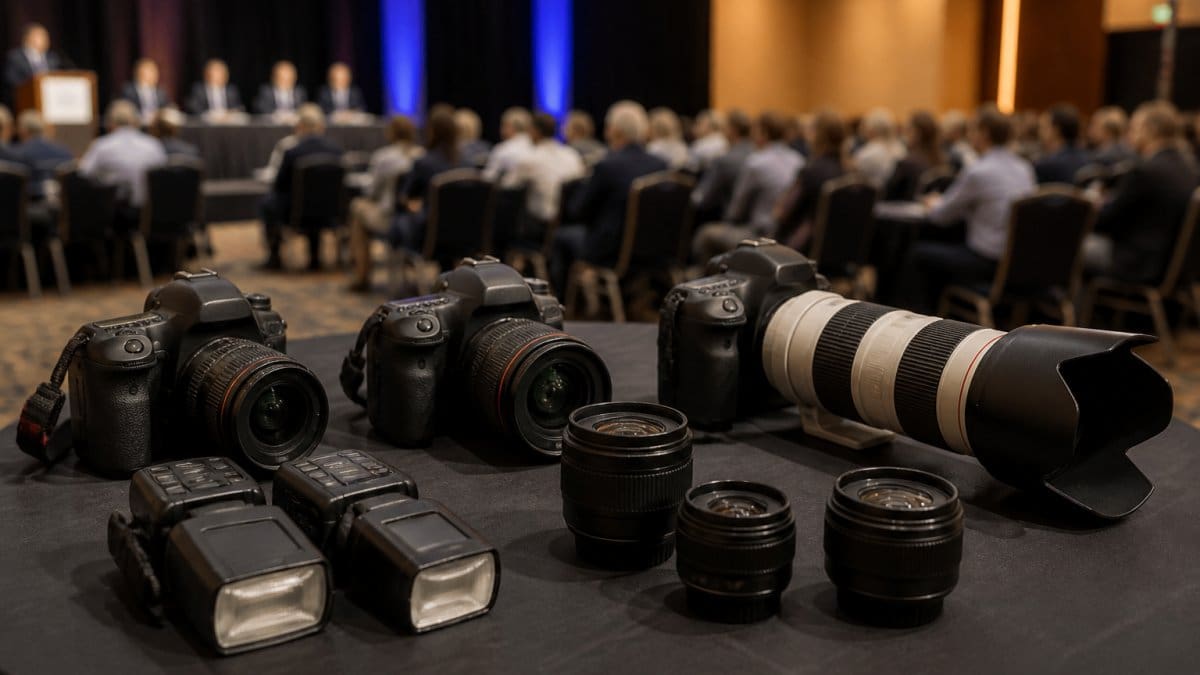
 lighting and an attentive audience visible in the background](https://cdn.grandranker.com/articles/photography-services-a-complete-buyers-guide-2026-content-1-1779222579.jpg)
Event and Corporate Photography
Event photography covers conferences, galas, product launches, trade shows, and award ceremonies. The photographer must work quickly in unpredictable lighting, capture candid moments without disrupting the program, and deliver images that serve both internal communications and external marketing.
Corporate photography is a broader category that includes headshots, team portraits, office environments, and executive sessions. These images typically appear on websites, press releases, LinkedIn profiles, and annual reports. The standard for sharpness and consistency is high because these photos represent the organization’s public face.
According to the Professional Photographers of America’s industry resource hub, event and corporate photography consistently ranks among the most in-demand commercial specialties, driven by the growth of content marketing and the need for authentic visual storytelling.
Portrait, Lifestyle, and Commercial Photography
Portrait photography focuses on individuals or small groups, prioritizing expression, lighting, and composition. Lifestyle photography goes a step further by placing subjects in natural, relatable environments rather than formal studio setups. Brands use lifestyle shoots to show their products or services in real-world contexts, making them feel accessible rather than aspirational and distant.
Commercial photography is the broadest term in this category. It includes advertising campaigns, product photography, model casting sessions, and creative direction work. A commercial photographer often collaborates with a stylist, art director, and production coordinator to execute a pre-planned visual concept.
Real Estate and Food Photography
Real estate photography demands technical precision: wide-angle lenses, controlled interior lighting, and careful composition to make spaces feel open and inviting. Food photography is similarly technical, relying on precise styling, controlled color temperature, and macro detail to make dishes look as appealing on screen as they do in person. Both specialties have direct commercial consequences. A poorly lit listing photo reduces inquiry rates. An unappetizing food image reduces menu conversions.
Benefits of Professional Photography for Brands and Events
The argument for professional photography services is straightforward: visual quality directly affects perception, and perception drives decisions. But most guides stop there, listing vague benefits without explaining the specific mechanisms that make professional imagery worth the investment. Below, we go deeper, covering not just what the benefits are, but why they work, where they show up in real business outcomes, and how to measure whether your photography spend is actually paying off.
Technical Quality: What "Professional Grade" Actually Means in Practice
Professional photographers use full-frame sensors, fast prime lenses, and off-camera lighting systems that produce images with a depth of detail, dynamic range, and color accuracy that phone cameras cannot match. This is not marketing language, it is a measurable difference in file quality that becomes visible the moment an image is printed larger than roughly 8×10 inches, displayed on a high-resolution monitor, or used in a paid advertising context where platform algorithms favor high-quality creative.
The practical consequence: images shot on a smartphone or entry-level mirrorless camera often fail technical review when submitted for billboard production, magazine publication, or broadcast licensing. Professional files, typically 24 to 45 megapixels in RAW format, pass those reviews and can be cropped, resized, and repurposed without quality loss. That flexibility is a direct business asset.
Creative Direction: The Skill That Separates Good Photos from Useful Photos
Technical competence gets you a sharp, well-exposed image. Creative direction gets you an image that communicates something specific to a specific audience. These are different skills, and the second one is harder to develop.
A professional photographer working a corporate conference is not just documenting what happened. They are making real-time editorial decisions: which speaker expression communicates authority, which audience reaction communicates engagement, which room angle communicates scale. Those decisions determine whether the images can be used in a press release, a fundraising pitch deck, or a social media campaign, or whether they are just a visual record that sits in a folder.
For brand and commercial shoots, creative direction extends to subject posing, wardrobe guidance, prop selection, and background control. A photographer who cannot direct a subject to look natural rather than stiff is producing images that will underperform in every context they appear in.
Long-Term Asset Value: How to Calculate the Real ROI of a Shoot
High-quality images are assets with a compounding return. A single well-executed corporate event shoot can produce content that fuels social media posts, website banners, email campaigns, press releases, and internal communications for 12 to 18 months. When you divide the cost of the shoot by the number of distinct content uses it enables, the per-unit cost of professional photography is often lower than the cost of producing equivalent content through other means.
A practical way to evaluate this before you book: list every channel where you currently need visual content, website, LinkedIn, email newsletter, event recap blog post, annual report. Then ask your photographer how many final images the proposed package includes and whether the shot list can be structured to produce usable content for each of those channels in a single session. A photographer who understands content strategy will help you plan a shoot that maximizes output. One who does not will deliver a beautiful set of images that only serves one purpose.
Professional photography is not a cost center. It is a content production investment. The images from one well-planned shoot can fuel 12 months of marketing content across multiple channels, but only if the shot list is planned with distribution in mind from the start.
The Hidden Benefit Competitors Do Not Cover: Equipment as Risk Management
One benefit that almost no photography guide addresses is the risk-mitigation value of professional equipment and workflow. Consumer cameras do not have dual card slots, which means a single card failure during a wedding or conference can result in total image loss. Professional camera bodies write simultaneously to two memory cards, creating a redundant backup in real time.
Similarly, professional photographers carry backup camera bodies, backup lenses, and backup flash systems to every paid engagement. Equipment failure during a corporate gala or product launch is not recoverable without a backup. When you hire a professional, you are not just paying for better images, you are paying for the operational infrastructure that ensures images exist at all.
This is a concrete, verifiable differentiator that justifies a higher rate and should be part of every pre-booking conversation. Ask any photographer you are considering: what is your backup plan if your primary camera body fails during my event? The answer tells you a great deal about how seriously they take the professional side of their work.
Sustainability as a Differentiator: An Emerging Consideration for Modern Brands
An angle most photography guides ignore entirely: the environmental footprint of a photo production. For brands with published sustainability commitments, the production practices of their vendors, including photographers, are increasingly relevant.
Eco-conscious production choices in photography include using LED lighting systems instead of tungsten or halogen fixtures (LED panels consume significantly less power and generate less heat), minimizing printed materials during pre-production in favor of digital mood boards and shot lists, choosing local talent and crew to reduce travel emissions, and working with studios that use renewable energy sources.
For commercial clients producing advertising campaigns with large crews and multiple shoot days, these choices can meaningfully reduce the carbon footprint of a production. For brands that report on Scope 3 emissions, the indirect emissions from their supply chain and vendor relationships, this is not a soft preference. It is a procurement consideration. Asking a photographer about their production practices is a reasonable question, and photographers who have thought about it will have a clear answer.
Professional Photography Pricing Guide: What to Budget
Photography pricing is one of the most opaque parts of the hiring process, and that opacity costs clients money, either by leading them to overpay without understanding what they are getting, or by leading them to underpay and receive work that does not meet their needs. This section breaks down how professional photography is actually priced, what line items to expect on a quote, and how to evaluate whether a rate is fair for your market and project scope.
How Professional Photographers Structure Their Rates
Most experienced commercial photographers in major metropolitan markets price by the half-day or full-day rather than by the hour. A half-day typically covers four hours of shooting time on location; a full-day covers eight hours. Some photographers offer hourly rates for smaller projects, but hourly billing is less common among established professionals because it does not account for the significant time spent on pre-shoot preparation and post-production.
The day rate you see quoted is almost never the total cost of a project. It covers the photographer’s time on set. It does not automatically include:
- Post-production and editing: Culling, color correction, and delivery of final images can take two to three times as long as the shoot itself. Some photographers include a set number of edited images in their day rate; others charge separately per image or per hour of editing time.
- Licensing fees: For commercial use, advertising, product packaging, paid social media campaigns, a licensing fee is charged on top of the creative fee. This is standard industry practice and is separate from the cost of the photographer’s time.
- Travel and expenses: For shoots outside a photographer’s local market, travel time, mileage, accommodation, and per diem costs are typically billed to the client.
- Second shooter or assistant: Larger events often require a second photographer or a lighting assistant. This is a separate line item, not included in a solo day rate.
- Equipment rental: Specialized gear, large-format lighting rigs, drone equipment, tethered shooting setups, may be rented for specific projects and passed through to the client at cost or with a small markup.
Never evaluate a photography quote based on the day rate alone. Request a full line-item breakdown before comparing quotes from multiple photographers. A photographer with a lower day rate who charges separately for editing, licensing, and travel may cost significantly more than one with a higher day rate that bundles those elements.
Typical Rate Ranges by Specialty and Market
Rate ranges vary by specialty, experience level, and geographic market. The figures below reflect general patterns in mid-to-large U.S. metropolitan markets for experienced professional photographers. Rates in smaller markets are typically lower; rates for photographers with significant editorial or advertising credits are typically higher.
| Specialty | Typical Day Rate Range | Edited Images Included | Licensing Notes |
|---|---|---|---|
| Event / Corporate | Mid-to-high hundreds to low thousands per half-day | 50-150 images | Usage rights vary by contract |
| Portrait / Headshot | Per-session flat fee | 10-30 retouched images | Personal use standard; commercial use extra |
| Commercial / Advertising | Project-based creative fee | Negotiated per brief | Licensing fee always separate |
| Real Estate | Per-property flat fee | 25-50 HDR images | Listing use standard; other uses extra |
| Food / Product | Per-dish or half-day | 10-30 styled images | Commercial use negotiated |
These are ranges, not guarantees. A photographer with a national advertising portfolio commands rates at the high end of their category. A photographer building their commercial portfolio may price at the low end. The rate alone does not tell you which you are dealing with, the portfolio does.
The Post-Production Cost Problem
Post-production is the most consistently underestimated line item in photography budgets. Clients who focus on the day rate and overlook editing costs frequently experience sticker shock when the final invoice arrives.
A professional editing workflow for a corporate event shoot includes: importing and backing up raw files, culling hundreds or thousands of frames down to the best selects, applying color correction and exposure adjustments consistently across the entire set, performing any agreed retouching, exporting final files in the correct format and resolution, and uploading to a delivery platform. For a full-day event shoot producing 100 final images, this process commonly takes six to ten hours of skilled post-production time.
When reviewing a photography package, ask specifically: how many final edited images are included, what does "edited" mean in your workflow (basic color correction only, or full retouching), and what is the cost per additional image beyond the package limit? These three questions will tell you the true cost of the deliverable.
Photography Packages and Add-On Services
Most professional photographers structure their offerings as packages rather than pure hourly billing. A standard package bundles shooting time, a defined number of final edited images, and a delivery timeline. Add-on services are priced separately and typically include:
- Rush delivery or same-day service: For time-sensitive events, press conferences, product launches, breaking news coverage, same-day or next-morning delivery commands a premium, often 25 to 50 percent above the standard rate.
- Extended retouching: Skin retouching, background removal, composite work, and object removal are billed per image or per hour beyond what is included in the base package.
- Print services: Large-format prints, photo books, and mounted prints are available through most professional photographers via their delivery platform’s integrated print lab.
- Licensing extensions: If you need to use images in a context not covered by the original license, for example, running paid advertising with images originally licensed for website use only, a licensing extension is purchased separately.
- Behind-the-scenes video: Many photographers now offer short-form video content captured during the shoot day, useful for social media content showing the production process.
If you are booking photography for a recurring need, quarterly headshot sessions, monthly product shoots, annual conference coverage, ask about retainer pricing. Many photographers offer a meaningful discount for clients who commit to a defined number of shoot days per year, and a retainer agreement also guarantees availability on your preferred dates.
How to Negotiate a Photography Quote Without Damaging the Relationship
Negotiating photography rates is normal and expected, but the approach matters. Asking a photographer to simply lower their rate without changing the scope of work is unlikely to succeed and may signal that you are not a client they want to work with. Effective negotiation focuses on scope adjustment rather than rate reduction.
Practical approaches that work:
- Reduce the deliverable count: If the package includes 150 edited images and you realistically need 75, ask whether a reduced-deliverable package is available at a lower price point.
- Adjust the timeline: Rush delivery commands a premium. If you can accept a standard two-week turnaround instead of a three-day turnaround, ask whether that affects the price.
- Bundle multiple projects: If you have two or three shoots coming up in the same quarter, offering to book them together often unlocks a volume discount.
- Narrow the licensing scope: If you only need images for internal use and your company website, you do not need a broad commercial license. A narrower license costs less.
What does not work: asking a photographer to match a competitor’s lower quote without understanding why that quote is lower. The most common reason a quote is significantly below market rate is that it excludes post-production, uses a narrower license, or reflects a less experienced photographer. You are not comparing equivalent products.
Understanding Licensing Fees: The Line Item Most Clients Miss
For commercial clients, brands, agencies, and organizations using photography in advertising, product packaging, or paid media, the licensing fee is often the largest single line item on a photography invoice, and it is the one most clients do not anticipate.
A license defines four things: exclusivity (whether the photographer can license the same images to other clients), territory (where the images can be used geographically), duration (how long the license is valid), and permitted uses (which specific channels and contexts are covered). Each of these variables affects the price.
A non-exclusive license for website use only, valid for one year in the United States, costs far less than an exclusive license for national advertising use across all media, valid for three years. Both are legitimate licensing structures. The difference in cost can be substantial, and it is entirely appropriate, the commercial value of the image to the client is different in each scenario.
Clients who need broad commercial rights should budget for licensing as a separate line item from the creative fee, discuss usage requirements with the photographer before the shoot, and ensure the final contract specifies exactly what uses are covered. Using images outside the agreed license is a copyright infringement, regardless of whether the violation was intentional.
For a detailed reference on how commercial photography licensing is structured, the American Society of Media Photographers’ licensing resources provides publicly available guidance on industry-standard licensing practices.
Questions to Ask a Photographer Before Booking
Asking the right questions before booking photography services separates clients who get exactly what they need from those who end up disappointed. The questions to ask a photographer before booking fall into four categories: experience, process, deliverables, and rights.
Experience and fit:
- Do you have a photography portfolio that includes work similar to my project?
- Have you shot in this venue or a similar environment before?
- Can you provide references from comparable clients?
Process and logistics:
- What does your pre-shoot consultation process look like?
- How do you handle backup equipment if something fails on the day?
- Do you work alone or bring a second shooter for larger events?
Deliverables and timeline:
- How many final images will I receive?
- What is your standard turnaround time for image editing and delivery?
- Do you offer same-day service or expedited delivery?
Rights and licensing:
- Who retains copyright after the shoot?
- What specific uses are covered under the included license?
- What is the process and cost for extending usage rights?
A photographer who cannot answer these questions clearly is a red flag. Experienced professionals have thought through every one of these scenarios and will give you direct, confident answers.
Ask to see the actual contract before committing to a booking deposit. The photography service contract template a photographer uses tells you a great deal about how they run their business. Vague contracts produce disputes. Detailed contracts protect both parties.
Photography Service Contract Template: Legal and Licensing Guide
A photography service contract template is the legal document that defines the relationship between a client and a photographer. Every professional engagement should be governed by a written agreement, regardless of the size or informality of the project.
According to the American Society of Media Photographers’ business resources, the majority of photography disputes arise not from the quality of the work but from ambiguity in the original agreement. A clear contract eliminates that ambiguity before it becomes a problem.
Key Clauses Every Photography Contract Should Include
A complete photography contract covers these essential elements:
- Scope of work: Specific dates, times, locations, and deliverables
- Payment terms: Deposit amount, payment schedule, and late payment consequences
- Cancellation and rescheduling policy: What happens if either party needs to cancel
- Delivery timeline: When final images will be delivered and in what format
- Model and property releases: Required for commercial use of images featuring identifiable people or private property
- Force majeure: What happens in circumstances outside either party’s control
Image Licensing, Usage Rights, and Copyright Basics
Copyright in photography is automatic and belongs to the photographer from the moment the image is created, unless a work-for-hire agreement transfers that right to the client. Most commercial photography engagements involve a license, not a transfer of copyright.
A license defines:
- Exclusivity: Whether the photographer can sell or license the same images to other clients
- Territory: Geographic limits on where images can be used
- Duration: How long the client can use the images
- Permitted uses: Specific channels and contexts, such as website use only, or editorial publication, or paid advertising
Clients who need broad commercial rights, such as national advertising campaigns or product packaging, should expect to pay a licensing fee on top of the day rate. This is standard practice across the photography industry and is documented in the Getty Images licensing guide for commercial buyers.
What to Expect from a Photography Session: Pre-Shoot Consultation Checklist
Knowing what to expect from a photography session starts well before the day of the shoot. The pre-shoot consultation is where a professional photographer gathers the information needed to execute your vision accurately. Skipping or rushing this step is the most common reason shoots underdeliver.
A thorough pre-shoot consultation covers:
- Project goals and intended use of images
- Shot list with priority images identified
- Mood board or reference images to align on visual style
- Venue walkthrough or location scouting (for on-location shoots)
- Lighting conditions and time of day considerations
- Subject preparation: wardrobe, hair, makeup, and styling guidance
- Timeline for the shoot day including setup, shooting, and breakdown
- Backup plans for weather, equipment failure, or scheduling changes

On-Location vs. In-Studio Shoots
On-location photography takes place in a real-world environment, whether that is a corporate office, event venue, restaurant, or outdoor space. The advantage is authenticity: the images feel grounded in a real context. The challenge is that the photographer must work with existing light, manage environmental variables, and often operate in tight or awkward spaces.
In-studio photography gives the photographer complete control over lighting, background, and environment. Photography studios are the preferred setting for headshots, product photography, and any shoot where consistency and repeatability matter. The trade-off is that studio images can feel more formal and less contextual.
The right choice depends on your goals. For event photography, on-location is the only option. For headshots, either works, though many clients prefer the clean, controlled look of a studio environment.
Post-Production, Retouching, and Digital Image Delivery
Post-production is where raw files become finished photographs. A professional workflow includes culling (selecting the best frames), color correction, exposure adjustment, and image editing to produce a consistent, polished set of images.
Photo retouching goes further, addressing skin texture, removing distracting background elements, and performing background removal for product images. The level of retouching should be agreed upon before the shoot, as it significantly affects both the final look and the turnaround time.
Digital images are typically delivered through a private online gallery platform. Tools like Pixieset and ShootProof are widely used in the industry, offering password-protected galleries, download controls, and integrated print services.
Technical Equipment Breakdown: What Professional Photographers Use
The equipment a photographer brings to a shoot directly affects image quality, flexibility, and reliability. Understanding the basics helps you evaluate whether a photographer is appropriately equipped for your project.
Camera bodies: Professional photographers use full-frame mirrorless or DSLR camera bodies with high-resolution sensors. These systems handle low-light conditions better than crop-sensor cameras, which matters enormously for indoor event photography.
Lenses: A standard professional kit includes:
- A fast 24-70mm f/2.8 zoom for versatility
- A 70-200mm f/2.8 telephoto for candid and stage photography
- A 50mm or 85mm prime for portraits
Lighting: Off-camera flash systems, continuous LED panels, and light modifiers (softboxes, reflectors) allow photographers to control and shape light in any environment. Event photographers often use a single on-camera flash with a bounce modifier for mobility.
Backup equipment: Any professional working a paid event should carry a second camera body. Equipment failure during a wedding or conference is not recoverable without a backup.
Editing software: Adobe Lightroom Classic is the industry standard for photo organization, color grading, and workflow management. Complex retouching work is typically finished in Adobe Photoshop.
The gap between consumer and professional-grade equipment is most visible in three situations: low-light environments, fast-moving subjects, and large-format print output. If your images will appear in any of these contexts, professional equipment is not optional.
How to Choose the Right Photography Services for Your Needs
Selecting the right photography services comes down to matching your specific need to the right specialist, then vetting that specialist thoroughly before committing. The photography booking process should feel structured, not rushed.
Start by defining your output. Where will these images appear? What size will they be printed or displayed? Who is the intended audience? The answers to these questions determine which specialty you need and what technical standards apply.
Next, review photography portfolios with a critical eye. Look for consistency across a body of work, not just one or two standout images. A photographer who has one great shot and fifty mediocre ones is not the same as one whose entire portfolio reflects the same level of quality.
Check photography rates against your budget early. Many photographers list starting prices on their websites, and a quick email inquiry can confirm whether a full project falls within range. Avoid the trap of selecting a photographer based on price and then discovering mid-project that the deliverables do not match your expectations.
Finally, trust the consultation process. A photographer who asks detailed questions about your goals, timeline, and intended use of images is a photographer who will deliver work that actually serves your needs. One who jumps straight to the contract without understanding your project is a risk.
For clients in the Washington DC and Northern Virginia area, Event Photojournalism brings award-winning expertise to corporate conferences, galas, weddings, and special events. With customized solutions designed around each client’s specific goals, the team delivers high-resolution images that elevate your brand and ensure every important moment is preserved with precision.
As the National Press Photographers Association’s ethical and professional standards notes, the best photographers combine technical mastery with an understanding of their client’s communication goals. That combination is what separates a photography agency that delivers lasting value from one that simply shows up with a camera.
Frequently Asked Questions
What are the different types of professional photography services?
Professional photography services span a wide range of specialties, including event photography, portrait photography, commercial photography, real estate photography, food photography, and lifestyle shoots. Each type requires different skills, equipment, and creative direction. For example, event photography focuses on candid, real-time storytelling at conferences or galas, while commercial photography is typically more structured and brand-focused. Choosing the right type depends on your specific goals, venue, and intended use of the final digital images.
How much do professional photography services typically cost?
Photography rates vary widely based on the photographer's experience, location, shoot duration, and deliverables. Portrait or headshot sessions can start around $150-$400, while event photography often ranges from $500 to $3,000 or more per day. Commercial photography and lifestyle shoots with full creative direction, styling, and model casting can run significantly higher. Most photographers offer tiered photography packages that bundle hours, edited images, and post-production services. Always request an itemized quote before booking.
What questions should I ask a photographer before booking?
Before booking any photography service, ask about their photography portfolio and experience with your specific event or shoot type, their photography rates and what's included in each package, turnaround time for edited digital images, whether they carry liability insurance, how they handle backup equipment, and what their cancellation or rescheduling policy is. Also ask about image licensing and usage rights, especially for commercial photography or brand campaigns where you'll use images in marketing materials.
What is included in a standard photography service package?
A standard photography package typically includes a pre-shoot client consultation, a set number of shooting hours either on-location or in-studio, professional editing and photo retouching, and delivery of high-resolution digital images via an online gallery. Higher-tier packages from a photography agency or freelance photographers may also include background removal, same-day service, print services, and extended licensing rights. Always review the contract carefully to confirm exactly how many edited images are delivered and what usage rights you receive.
How do I prepare for a professional photography session?
Preparation is key to a successful photography session. Start with a detailed client consultation to align on goals, style, and logistics. Create a shot list and share any reference images or mood boards with your photographer. Confirm the venue, lighting conditions, and whether the shoot is on-location or in-studio. Arrange any necessary styling, wardrobe, or props in advance. For events, share the run-of-show schedule so the photographer can anticipate key moments. Clear communication before the shoot day leads to better composition and fewer reshoots.
Is it worth paying for professional photography services?
For most businesses and events, professional photography services deliver a strong return on investment. High-resolution images from a skilled photographer elevate your brand, improve marketing materials, and create lasting visual assets from conferences, galas, or product launches. Unlike smartphone snapshots, professional-grade equipment, proper lighting, and expert post-production ensure images that are print-ready and digitally versatile. For events where moments cannot be recreated, the cost of professional coverage is almost always worth it.
The hardest part of hiring a photographer is not finding one. It is knowing enough to evaluate them accurately before the shoot day arrives. Event Photojournalism was built to solve exactly that problem, offering customized photography services, high-resolution image delivery, and the kind of reliable professional coverage that transforms a single event into years of usable visual assets. Contact us to discuss your next project and get a customized solution designed around your specific goals.
This article was written using GrandRanker