Table of Contents
- Why Professional Event Photography Matters for Nonprofits
- How to Plan Corporate Event Photography for Nonprofits: The Foundation
- Building a Nonprofit Event Photography Shot List
- Creating Your Event Photography Timeline and Coverage Plan
- Nonprofit Event Photography Budget and ROI
- Legal and Ethical Considerations for Nonprofit Event Photography
- Nonprofit Event Photography Contract Essentials
- Briefing Your Photographer and Managing Expectations
Plan Corporate Event Photography for Nonprofits: A Strategic Guide
Last Updated: August 2, 2026
Why Professional Event Photography Matters for Nonprofits
Nonprofits struggle to convert one-time donors into lifelong supporters. According to the Chronicle of Philanthropy’s 2026 Donor Retention Report, organizations sharing compelling visual stories see 34% higher donor retention rates than those relying on text alone.
Professional event photography isn’t simply documentation, it’s creating reusable assets that serve your organization for months or years. At Event Photojournalism, we understand nonprofits operate differently: your events carry mission weight, donors are emotionally invested, budgets are tight, and the stakes are high.
The difference between mediocre and transformative imagery comes down to planning. Most nonprofits either hire without a shot list or rely on volunteers with decent cameras. Both approaches waste resources. Professional event photography succeeds through strategy, not equipment.
Professional event photography transforms one-time attendees into repeat donors by creating shareable, mission-driven visual content that extends your event’s impact far beyond the day itself.
How to Plan Corporate Event Photography for Nonprofits: The Foundation
Before contacting a photographer, clarify what you’re actually trying to accomplish. This step determines whether you’ll use thousands of images or none.
Define Your Marketing Goals and Content Needs
Start by answering: What will you do with these photos after the event? This drives every decision that follows.
Are you building content for your annual report? You need posed portraits of board members and major donors. Creating social media content? You need candid, authentic moments of people connecting. Demonstrating grant impact? You need photos of beneficiaries and program delivery in action.
Most nonprofits need all three. If budget is tight, prioritize based on your immediate needs.
List specific places these photos will appear: LinkedIn and Instagram posts, annual reports, donor thank-you packets, grant applications, email newsletters, your website homepage, and press releases. Each platform performs best with different image styles, LinkedIn rewards professional portraits and action shots; Instagram rewards candid, emotional moments.
Ask board members and major donors in advance: “What photos from this event would you want to share with your network?” Their answer tells you exactly what to prioritize capturing.
Identify Key Moments and VIPs
Create a list of VIPs who must be photographed: your executive director, board chair, major donors, keynote speakers, and key community partners. These aren’t optional, they’re essential for donor relations and marketing.
Next, identify key moments that must be captured: welcome remarks, keynote speech, award presentations, sponsor recognition, and closing remarks. Then note supporting moments: arrivals, table conversations, networking, volunteers working. A photographer without this roadmap will miss critical shots.
Building a Nonprofit Event Photography Shot List
A shot list ensures you capture critical moments and communicates success to your photographer.
Essential Coverage Categories
Organize your shot list by category:
Keynote and Speakers: Close-ups at the podium, audience reactions, speaker with your executive director.
Donor and VIP Recognition: Posed portraits of major donors with leadership, candid interactions, award presentations.
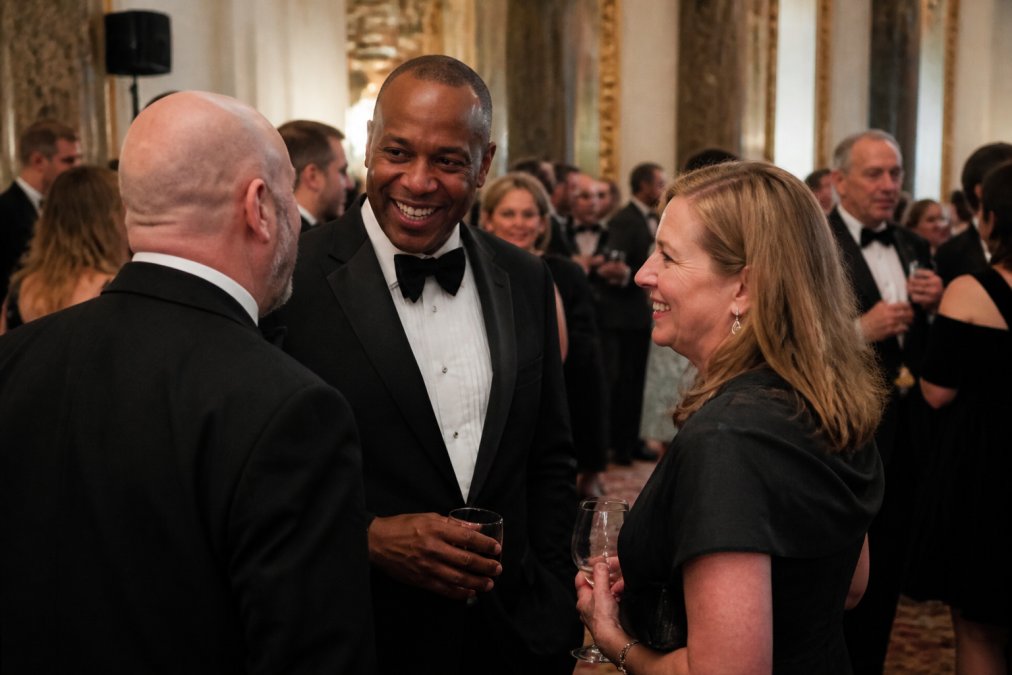
Networking and Candid Moments: Small group conversations, people laughing, silent auction interactions.
Sponsor Recognition: Company logos, sponsor representatives, sponsor acknowledgments on stage.
Venue and Setup: Decorated space, registration area, overall room energy.
Mission in Action: Services being provided, beneficiaries at the event, volunteers in action.
A typical nonprofit event needs 30-50 specific shots across these categories. A professional photographer captures this in 2-4 hours.
Missing the keynote speaker’s opening remarks is not recoverable. Your shot list prioritizes irreplaceable moments so your photographer knows what happens if they can only be in one place at a time.
Documenting Sponsors and Sponsor Recognition
Sponsors expect to see themselves in event photos, it’s part of what they paid for. Before the event, get a sponsor list and brief your photographer on representatives and recognition moments.
Ensure your photographer captures sponsor signage, representatives at the event, recognition moments, and sponsor interactions with attendees. After the event, provide sponsor photos to your development team for thank-you emails and relationship management. Sponsors who see themselves featured prominently are more likely to renew.
Creating Your Event Photography Timeline and Coverage Plan
Exceptional coverage depends on logistics. Know when your photographer arrives, where they position themselves, and when they leave.
Pre-Event Briefing and Logistics
Schedule a 30-minute call with your photographer at least one week before the event. Walk through your shot list together. Show photos of VIPs so they can recognize people in the moment. Explain your event flow: keynote timing, sponsor recognition moments, networking portions, and any surprises.
Discuss access and positioning. Some events have restricted areas or moments where photographers should blend into the background. Confirm technical details: arrival time, parking, greeting contact, equipment storage, power outlets.
Discuss your preferred style. Do you want candid, photojournalistic coverage? Or more posed moments? Do you prefer vibrant or natural tones? Align expectations on the final look.
Real-Time Coordination During the Event
Assign one person as the photographer’s point of contact with a copy of the shot list. They alert the photographer to key moments coming up and introduce them to VIPs needing photos.
During the event, monitor what’s being captured. If the photographer missed a critical moment, let them know. If a VIP is about to leave, flag it. If a sponsor representative arrived late, introduce them.
Nonprofit Event Photography Budget and ROI
Professional photography costs money, but the question isn’t whether you can afford it, it’s whether you can afford not to.
Pricing Factors and Budget Planning
Photography costs depend on photographer experience, event duration, number of photographers, turnaround time, and location. Pricing depends on quantity, dates, and delivery specifics; reach out to Event Photojournalism for a current quote tailored to your event.
Allocate 2-4% of your event budget to professional photography. If your gala raises $100,000, spending $2,000-$4,000 is reasonable. If your event budget is $20,000, allocating $400-$800 is realistic.
You’re buying a skilled professional who captures moments under pressure, manages VIPs, and delivers images supporting your mission, not just photos.
Maximizing ROI Through Asset Management
Professional photography only delivers ROI if you use the images. Create an asset management system before the event. Decide where photos will be stored (cloud storage or media library), who has access, and how they’ll be organized and tagged.
After the event, sort and organize photos by category and add descriptive tags. Then distribute strategically: send thank-you emails with donor photos, post highlights to social media within 48 hours, use photos in newsletters, include in grant applications and annual reports, and create a website gallery.
A single professional photo used four or more times typically breaks even or generates positive ROI through improved donor retention and engagement.
Legal and Ethical Considerations for Nonprofit Event Photography
Photography rights, privacy, and consent matter, especially when attendees include board members, government officials, and vulnerable populations.
Photo Release Forms and Consent
Before your event, create a simple photo release form that attendees sign at registration. This grants your nonprofit the right to use photos for marketing, social media, annual reports, and fundraising.
For minors, you need parental consent. For professional events with primarily adults, a simple opt-out system often works: "We will be photographing this event. If you prefer not to be photographed, please let us know at registration."
Store signed releases with your event records. If someone later objects to a photo’s use, you have documentation of their consent.
Using someone’s photo without consent can expose your nonprofit to legal liability. A photo release form takes five minutes to create and prevents months of problems later.
Privacy and Discretion for Board Members and VIPs
Board members and major donors often expect higher privacy levels. Some may not want photos shared on social media, even if comfortable being photographed.
During your pre-event briefing, discuss discretion. Explain which attendees are sensitive about privacy. Board members should never be photographed in unflattering moments. Consider a separate, formal photo session before or after the main event for professional portraits.
Discuss what happens with photos of private moments. If your photographer captures a board member in a private conversation, that photo should stay in your archive, not on Instagram.
A skilled photojournalist knows how to capture authentic moments while being respectful and discreet, blending into the background without intruding on private conversations.
Nonprofit Event Photography Contract Essentials
A contract protects both you and your photographer, clarifying expectations and ensuring you receive images in the format you need.
What to Include in Your Agreement
Your contract should specify:
Scope of Work: Hours of coverage, number of photographers, deliverables (digital files, prints, online gallery).
Event Details: Date, time, location, and special requirements or restrictions.
Pricing and Payment: Total cost, payment schedule, and what’s included. Are additional hours available?
Image Delivery: When will you receive photos? In what format? Will they be edited? How long will the photographer retain copies?
Usage Rights: Who owns the photos? Can the photographer use them in their portfolio? Can you use them for any nonprofit purpose?
Cancellation Policy: What happens if the event is postponed or canceled?
Liability and Insurance: Does the photographer have liability insurance?
A simple one-page contract is sufficient. If the photographer provides their own contract, review it carefully to ensure it addresses these points.
Image Delivery, Usage Rights, and Turnaround Time
Clarify expectations in writing:
Turnaround Time: Highlights within 48 hours (for social media) and the complete set within 7-10 days is reasonable.
File Format and Resolution: High-resolution files (300 dpi) suitable for printing should be standard, plus compressed web versions.
Editing: Will photos be color-corrected and edited? Most nonprofits prefer lightly edited, ready-to-use images.
Usage Rights: You should own the right to use photos for any nonprofit purpose. The photographer retains the right to use photos in their portfolio with your permission.
Image Archive: The photographer should provide a complete digital archive of all photos. Store this securely for future use.
Briefing Your Photographer and Managing Expectations
The relationship between a nonprofit and its photographer is a partnership. The photographer brings technical skill and creative vision; you bring knowledge of your organization and mission.
Communicating Your Brand Identity and Style Preferences
Your nonprofit has a brand identity that shapes how people perceive your mission. Your photographer needs to understand this.
Before the event, share examples of photos you love from your website, annual report, and social media. Explain what works for your brand. If you work with vulnerable populations, explain why discretion and dignity are non-negotiable.
A photographer who understands your brand will deliver images that fit seamlessly into your marketing.
Candid Versus Posed Photography Strategy
Most nonprofits need both candid and posed photos. Candid photos show authentic emotion; posed photos look professional and suit formal documents.
For a fundraising gala, aim for 70% candid and 30% posed. For a board meeting, aim for more posed portraits. For a volunteer event, aim for more candid moments showing real impact.
Dedicate 15-20 minutes before or after the event to posed portraits of key people. This gives you both authentic coverage and professional portraits.
| Coverage Type | Best Used For | Typical Ratio | Key Benefit |
|---|---|---|---|
| Candid/Photojournalistic | Networking, donor interactions, mission moments | 60-70% | Authentic emotion, real impact |
| Posed/Portrait | VIP recognition, board members, sponsor representatives | 20-30% | Professional, suitable for reports |
| Venue/Ambiance | Room setup, decorations, overall event energy | 5-10% | Context and scale |
Planning professional event photography for nonprofits requires strategy, clear communication, and attention to detail. Organizations investing in quality photography see measurable improvements in donor engagement, grant success rates, and social media reach. Event Photojournalism specializes in delivering award-winning, high-resolution photography that captures your nonprofit’s mission and transforms one-time attendees into committed supporters. We understand nonprofit budgets, sensibilities, and the specific moments that matter to your organization. Ready to ensure your next event is remembered through stunning imagery? Contact Event Photojournalism to discuss your nonprofit’s photography needs and get a custom quote for your event.
Frequently Asked Questions
What should be included in a nonprofit event photography shot list?
A comprehensive shot list for nonprofits should cover keynote speakers at the podium, candid networking moments between donors, group photos of board members and staff, sponsor recognition moments, the guest of honor, award presentations, and candid action shots throughout the event. Include specific VIP names, event logistics details, and desired poses or compositions. Share this with your photographer at least one week before the event to ensure they understand your brand identity and can plan their positioning and equipment accordingly.
How do you plan corporate event photography for nonprofits on a limited budget?
Prioritize high-impact moments over comprehensive coverage. Focus on keynote speakers, donor interactions, and sponsor recognition rather than attempting to photograph every attendee. Negotiate pricing based on event duration and deliverable quantity. Request high-resolution images suitable for annual reports and social media rather than extensive post-production editing. Consider hiring a photographer for core hours only (2-3 hours during peak moments) instead of full-event coverage. Discuss your budget constraints upfront so the photographer can tailor their approach to your nonprofit's needs.
What legal considerations should nonprofits address for event photography?
Nonprofits must obtain photo release forms from attendees before using their images for marketing or fundraising purposes. Include a clear photo release in your event registration or have guests sign upon arrival. Establish written agreements with your photographer that specify image ownership, usage rights, and how long images will be retained. Ensure your contract addresses whether the photographer retains copyright or transfers it to your organization. Be especially cautious with board members and major donors who may request privacy or restricted usage of their images.
What should a nonprofit event photography contract include?
Your contract must specify the event date, time, location, and coverage duration. Include a detailed shot list or coverage plan, deliverable format (high-resolution JPEGs, RAW files, etc.), and turnaround time for image delivery. Clearly state image ownership and usage rights, whether your nonprofit can use photos for annual reports, websites, and social media. Define payment terms, cancellation policies, and any backup photographer arrangements. Address confidentiality and discretion requirements, especially for private board meetings or sensitive donor events. Have an attorney review the contract to ensure it protects your nonprofit's interests.
This article was written using GrandRanker