Table of Contents
- Why Gala Engagement Matters for Long-Term Donor Retention
- Segment Donors Before the Event: Creating Profiles and Touchpoints
- Real-Time Gala Engagement Technology and Tactics
- Fundraising Gala Engagement Ideas That Build Relationships
- Psychology of Gala Attendees: What Donors Actually Respond To
- Nonprofit Event Follow-Up Best Practices After Your Gala
- Donor Engagement Tools for Events: Choosing What Works
- Gala Fundraising Scripts and Talking Points That Convert
Capture Donor Engagement at Galas: 7 Proven Strategies
Last Updated: August 3, 2026
Learning how to capture donor engagement at galas means building relationships that sustain your mission for years to come. At Event Photojournalism, we work with nonprofits across the DMV and have seen firsthand how the best organizations treat galas as strategic cultivation opportunities. The difference between a gala that generates one-time gifts and one that launches major donor relationships comes down to intentional engagement strategy before, during, and after the event.
Why Gala Engagement Matters for Long-Term Donor Retention
Your annual gala is one of the few nights when major donors, board members, and prospects gather in one room. Most organizations treat it as transactional: sell tickets, deliver a pitch, hope for donations. That approach leaves enormous value on the table.
The real power lies in conversations, moments of connection, and follow-up that demonstrates you listened. Nonprofits focusing on stewardship and relationship-building at galas see significantly higher retention rates. When donors feel genuinely heard and valued, not just solicited, they’re far more likely to increase giving and stay engaged long-term.
The best gala engagement happens in the margins: during cocktail hour, at table conversations, in one-on-one moments with leadership. These informal touchpoints often matter more than the formal program.
Think of your gala as a donor journey checkpoint. You’ve already invested in acquiring these relationships. The gala deepens them, reveals what aspects of your mission resonate most, and positions you for the next ask. Without intentional engagement strategy, you’re hosting an expensive event that generates short-term revenue but misses lifetime donor value.
Segment Donors Before the Event: Creating Profiles and Touchpoints
Effective donor engagement starts long before the event. You need to know who’s coming, what motivates them, and what role they should play in your gala experience.
Identifying VIPs and Major Gift Prospects
Your VIPs are your most strategically important attendees: board members, seven-figure donors, major gift prospects, corporate sponsors, or influential community leaders.
Create a tiered list before registration opens:
- Tier 1 (VIPs): Your top 10-15 donors and prospects capable of six-figure gifts
- Tier 2 (Major Donors): Mid-level supporters in the $10K-$100K annual giving range
- Tier 3 (Emerging Donors): Newer supporters or younger professionals showing strong engagement
- Tier 4 (General Attendees): Everyone else
For each Tier 1 attendee, assign a specific staff member or board member as their steward for the evening. That person’s job is to spend meaningful time with that donor, ask genuine questions, and listen more than pitch. This ensures every VIP receives intentional attention.
Mapping Donor Profiles by Engagement Level
Segment donors by how they prefer to engage with your mission. Some care deeply about program impact; others are motivated by infrastructure or research; still others want leadership roles.
Use your constituent relationship management system (CRM) to tag attendees by primary interest area. If your nonprofit runs multiple programs, note which ones each donor has supported. During the gala, this information guides conversations so your program director can speak meaningfully about the specific initiative they care about.
Donors who feel personally known, not just as a gift amount, are significantly more likely to deepen their commitment.
Real-Time Gala Engagement Technology and Tactics
Modern technology enables real-time engagement during the event. Choose tools that enhance human connection rather than replace it.
Mobile Apps and Check-In Systems
Event check-in apps do more than process arrivals. As donors check in, staff can pull up their profile, see giving history, and note personal details. This transforms a staff member’s ability to have meaningful conversation.
Some organizations use mobile apps that let attendees view the agenda, access speaker bios, or see photos in real-time. Keep it simple; a cluttered app creates friction rather than engagement.
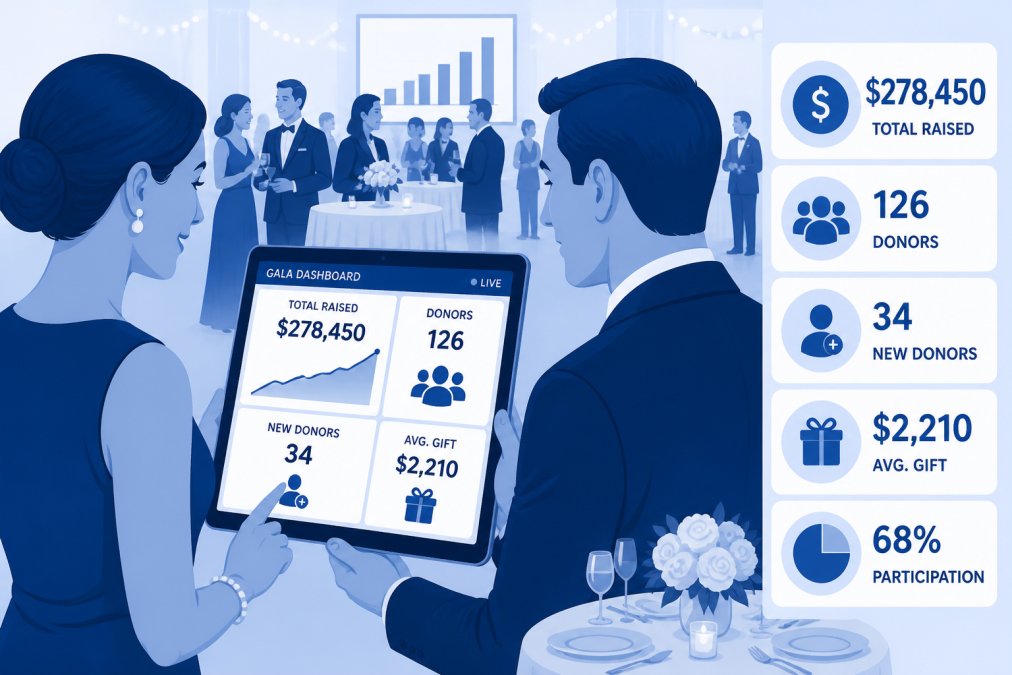
The most effective check-in systems flag important attendees so staff prioritizes them. A simple color-coded badge or internal note system works as well as expensive software.
Live Polling and Feedback Capture
During your gala program, live polling keeps attendees engaged while generating real-time data. "Which program area excites you most?" "What’s your biggest concern for our community?" These polls give you permission to follow up with specific donors based on their answers.
Keep polls simple and mobile-friendly: three to five questions maximum.
Fundraising Gala Engagement Ideas That Build Relationships
The structure of your event shapes how donors interact with your mission and each other.
Structured Donor Conversations and Stewardship Moments
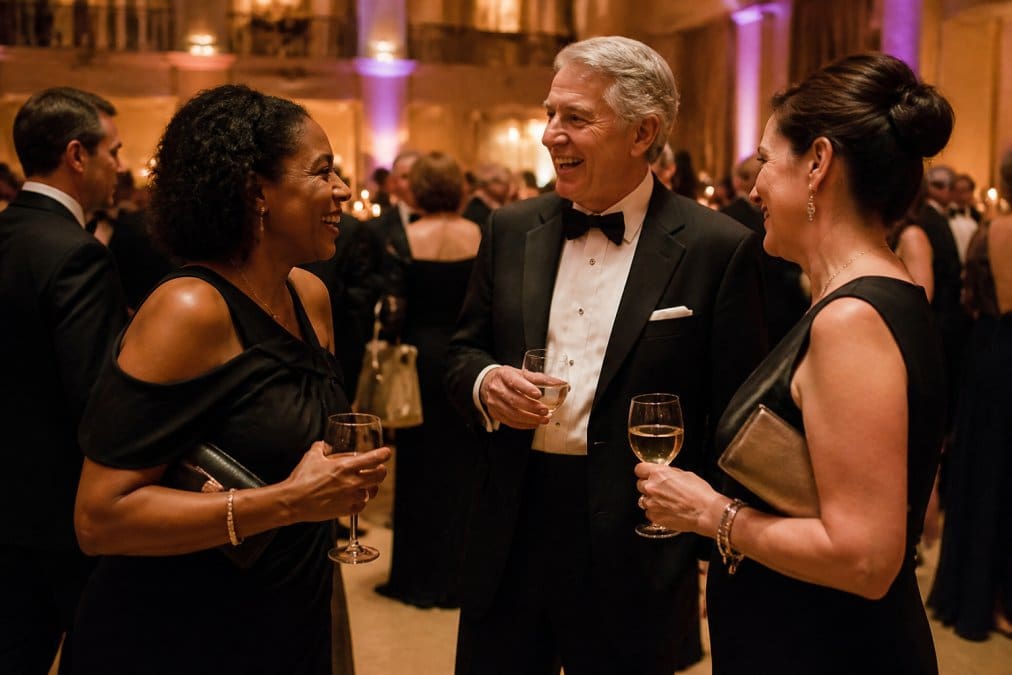
Cocktail hour is your biggest engagement opportunity. Design it intentionally. Rather than free-form mingling, create structured moments where donors interact with your mission.
Set up three to four "conversation stations" staffed by program leaders, board members, or impact experts. Each station focuses on a different aspect of your work: "Youth Outcomes," "Community Impact," "Innovation and Research." Attendees visit whichever stations interest them most.
Another approach: schedule brief, one-on-one "connection conversations" with your executive director or board chair during cocktail hour. These aren’t pitches; they’re genuine check-ins. "What brought you tonight?" "What would you like to see us tackle next?" These conversations often reveal giving interests you’d never discover in group settings.
The biggest mistake is overscheduling your leadership team. If your executive director is locked into back-to-back meetings, they can’t respond to spontaneous relationship-building moments. Build in buffer time.
Interactive Impact Demonstrations
Show, don’t tell. If your nonprofit runs educational programs, bring in a student to share their story. If you provide direct services, create a brief, authentic demonstration. If you fund research, set up an interactive exhibit where donors engage with findings.
These demonstrations should be 3-5 minutes maximum and feel genuine. A real program participant sharing their experience is far more powerful than statistics.
Psychology of Gala Attendees: What Donors Actually Respond To
Understanding why people give helps you design engagement that works. Donors are motivated by belonging, impact, and alignment with values.
Belonging matters more than most nonprofits realize. Donors want to feel part of something larger than themselves. They want to know their peers care about your mission. VIP receptions, exclusive briefings, and insider access signal belonging to a community of values-aligned supporters.
Impact clarity is equally important. Donors give to outcomes, not activities. "We helped 500 people find stable employment, with 87% still employed after one year" is more motivating than "We served 500 people." Be specific about what your work changes.
Recognition without excess matters too. A heartfelt thank-you from someone whose life was changed by your work is more meaningful than a plaque with their name.
Nonprofit Event Follow-Up Best Practices After Your Gala
The gala ends. Most nonprofits send a thank-you email within 48 hours and stop. That’s where the real opportunity begins.
Personalized Post-Event Communication
Within 48 hours, send a brief, personalized thank-you email to every attendee. Reference something specific about their attendance: "Thank you for the wonderful conversation about our youth program during cocktail hour."
For major donors and prospects, follow up with a phone call or in-person meeting within two weeks. If a donor expressed interest in a specific program, schedule a tour. If someone asked about your budget, send relevant materials with a personal note.
For donors who made significant new commitments, assign them a dedicated steward for the next 12 months. Check in monthly. Update them on how their gift is used. Invite them to program events.
Measuring Engagement Metrics and Event ROI
Track what matters. Beyond revenue raised, measure:
- Donor acquisition: How many new donors attended? How many have given again?
- Retention lift: Did gala attendees increase their giving in the following year?
- Engagement signals: How many visited your website after? Opened your newsletter? Attended a program event?
- Conversion to major gifts: How many became major gift prospects? How many converted within 12 months?
- Stewardship effectiveness: Did donors report feeling personally connected to your mission? (Ask in a post-event survey.)
A gala raising $100K but creating zero major gift relationships is less valuable than one raising $75K but moving five donors into your major gift pipeline.
Donor Engagement Tools for Events: Choosing What Works
Technology should support your engagement strategy, not drive it.
Budget-Friendly Engagement Solutions
You don’t need expensive software:
- Spreadsheet-based VIP tracking: A simple Google Sheet with donor names, giving history, interests, and assigned stewards works for most nonprofits
- Free CRM options: HubSpot CRM or Zoho CRM offer free tiers sufficient for gala planning
- Mobile check-in: Eventbrite handles registration and check-in with minimal cost
- Post-event surveys: Google Forms or Typeform collect feedback at zero cost
The most important investment is staff time dedicated to executing your engagement strategy. Technology amplifies that effort but can’t replace human attention.
Constituent Relationship Management Systems
If managing multiple events and hundreds of donors, a dedicated CRM becomes worthwhile. Best options for nonprofits include Salesforce, HubSpot, and Zoho. The key is actually using the system. A well-maintained spreadsheet beats a neglected CRM.
Gala Fundraising Scripts and Talking Points That Convert
What your team says during the gala matters enormously. Vague pitches don’t work. Specific, authentic stories do.
Crafting Authentic Impact Stories
Every staff member working the gala should tell 2-3 specific stories about your mission’s impact. Not statistics, actual stories about real people whose lives changed.
A good impact story follows this structure:
- The situation: Paint a brief picture of where the person started
- The intervention: Describe what your organization did
- The outcome: Show what changed
- The reflection: Include a quote about what the experience meant
Example: "We worked with Marcus, a 17-year-old who dropped out of high school. Our mentorship program paired him with a career counselor who helped him see his strengths. He earned his GED, got a job at a local tech company, and is now taking community college courses. Marcus told me: ‘Nobody ever believed in me before. Now I believe in myself.’"
That story takes 90 seconds and is infinitely more persuasive than statistics.
Ask Frameworks for Different Donor Segments
Different donors need different asks. Create brief talking points for different scenarios:
For new donors: "What brought you to our gala? I’d love to tell you more about how we’re approaching this work."
For mid-level donors: "Your support made a real difference. Would you be interested in deepening your involvement this year?"
For major donors: "We’re at an inflection point. We have the opportunity to expand into three new communities, but we need partners who believe in the vision. Would you be interested in exploring a significant partnership?"
For prospects: "I think there’s real alignment between what you care about and what we’re building. Would you be open to a conversation about working together?"
The best ask is often a question, not a statement. “Would you be interested in learning more?” opens conversation. “We need your support” closes it.
Capturing Visual Evidence: Why Professional Photography Matters
Professional photography reinforces donor belonging and deepens emotional connection to your organization. When donors see themselves in authentic moments at your event, engaged in conversation and moved by your mission, it strengthens their sense of community.
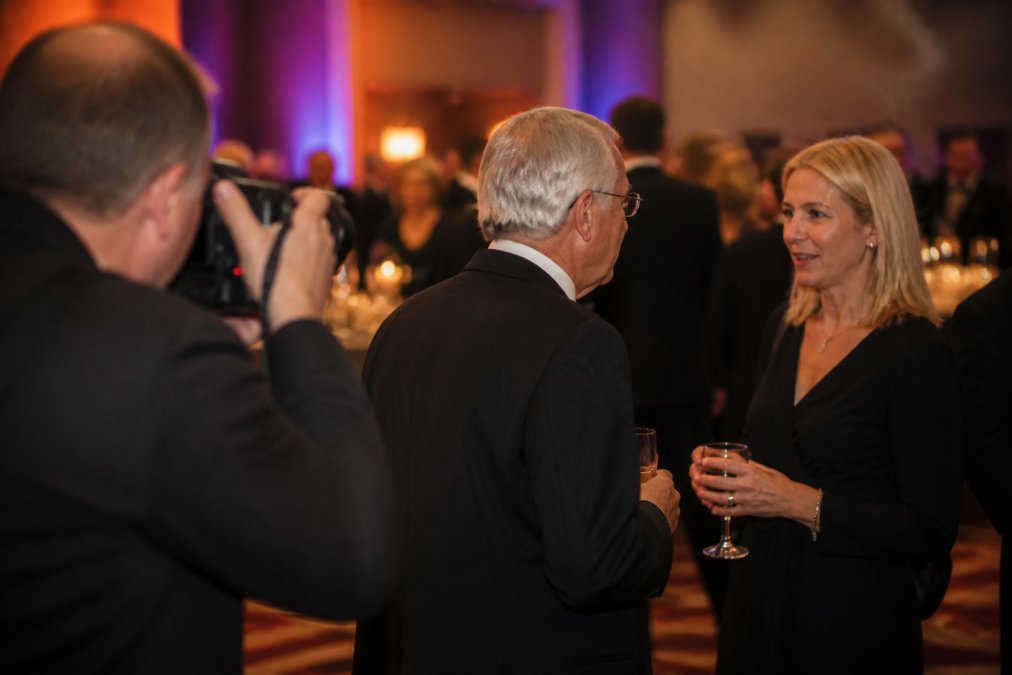
Event Photojournalism specializes in capturing these moments with candid, photojournalistic style that feels authentic. High-quality gala photography serves multiple purposes:
Stewardship and relationship building: When you send a donor a beautiful photo of themselves at your gala, especially one showing genuine engagement with your mission, it reinforces their value to your organization.
Social proof and recruitment: Photos circulate on social media and in annual reports. When prospective donors see images of engaged supporters celebrating your mission, it signals your organization is a place where people want to be.
Documentation for impact reporting: Professional gala photos provide visual evidence of your community’s support for grant proposals, annual reports, and fundraising materials.
Board and sponsor recognition: High-quality images of board members and corporate sponsors give them content to share, reinforcing their commitment and amplifying your reach.
Work with a photographer who understands nonprofit gala dynamics: discreet enough not to disrupt conversations, skilled enough to capture authentic moments, with fast turnaround for social media and high-resolution files for print use.
Gala engagement doesn’t happen by accident. It requires intentional strategy before the event, thoughtful execution during the evening, and sustained follow-up afterward. When you treat your gala as a relationship-building opportunity rather than transactional fundraising, you unlock its true potential: moving donors from one-time supporters into committed partners in your mission.
Event Photojournalism helps nonprofits maximize that potential by capturing authentic, high-resolution imagery that strengthens donor relationships and amplifies your mission. Our award-winning team delivers professional coverage designed to elevate your gala experience and provide visual assets for stewardship, recruitment, and impact reporting. CONTACT US to discuss how professional event photography can enhance your gala engagement strategy.
Frequently Asked Questions
What's the best way to capture donor engagement at galas without being intrusive?
Use a combination of discreet observation, real-time note-taking by staff, and professional photography that captures candid moments rather than posed shots. Assign team members to specific donor segments, brief them on conversation starters, and equip them with mobile apps to log interactions in real-time. Professional photojournalistic coverage ensures authentic moments are documented without disrupting the event experience, and these images serve as powerful stewardship assets afterward.
How do you measure event ROI and donor engagement metrics after a gala?
Track conversion rate (percentage of attendees who made or increased their gift), engagement metrics (number of meaningful conversations, survey responses, and follow-up actions), and retention rate (repeat attendance and giving). Segment your data by donor profile to see which groups showed the strongest engagement. Calculate event ROI by comparing total funds raised against costs, then factor in the lifetime value of new major gift relationships created. Use this data to refine your nonprofit event follow-up best practices for future galas.
What donor engagement tools for events work best for smaller nonprofits with tight budgets?
Free or low-cost options include Google Forms for real-time surveys, simple spreadsheets for donor segmentation, and email platforms with basic automation for follow-up. Constituent relationship management (CRM) systems like Bloomerang and Donorbox offer affordable tiers designed for smaller organizations. The key is choosing tools that let you capture donor feedback, track touchpoints, and personalize communication without breaking the budget. Often, a well-trained team and a simple system outperform expensive technology used poorly.
How should nonprofit event follow-up best practices differ based on what donors did at the gala?
Segment your follow-up by engagement level. Major donors who attended the event and had personal conversations should receive personalized thank-yous within 24-48 hours, referencing specific conversations and impact stories. First-time attendees need stewardship focused on building familiarity and inviting them to future events. Donors who attended but didn't engage might respond better to an invitation to a smaller cultivation event or one-on-one meeting. Use your gala fundraising scripts as templates for follow-up conversations, tailoring them to each donor segment's interests and giving history.
External Sources
[EXTERNAL_LINK: Chronicle of Philanthropy research on donor retention | philanthropy.com]
[EXTERNAL_LINK: AFP (Association of Fundraising Professionals) standards for donor stewardship | afpnet.org]
[EXTERNAL_LINK: Stanford Center on Philanthropy and Civil Society donor engagement research | pacscenter.stanford.edu]
This article was written using GrandRanker