Table of Contents
- Understanding the Unique Demands of Donor Dinner Photography
- Best Camera Settings for Indoor Event Photography
- Balancing Candid Moments with Strategic Posed Shots
- Creating a Nonprofit Event Photography Shot List for Fundraising ROI
- Ethical Fundraising Photography Guidelines and Donor Privacy
- Working Effectively with Event Organizers and Sponsors
- Post-Production and High-Resolution Delivery for Fundraising Campaigns
- Tips for Photographing Donor Dinners Without Being Intrusive
Tips for Photographing Donor Dinners: A Professional Guide
Last Updated: August 4, 2026
Photographing donor dinners requires a fundamentally different approach than standard event coverage. These aren’t casual celebrations, they’re carefully orchestrated moments where every image either strengthens donor relationships or undermines them. At Event Photojournalism, we understand that tips for photographing donor dinners center on balancing professional documentation with genuine discretion, capturing authentic moments while respecting the privacy and prominence of high-net-worth individuals.
A poorly lit photo of a major donor can damage their perception of your organization. A candid shot that feels invasive might discourage future giving. Conversely, stunning images that showcase genuine connection and impact become powerful fundraising assets for annual reports, LinkedIn campaigns, and grant proposals.
Below, we’ll show you exactly how to navigate the unique demands of nonprofit event photography, from camera settings that work in dimly lit ballrooms to ethical frameworks that keep donors comfortable while capturing the moments that matter most.
Understanding the Unique Demands of Donor Dinner Photography
Donor dinners exist in tension between visibility and privacy. Your job is to document impact without intruding. At a wedding, guests expect cameras. At a donor dinner, many attendees are uncomfortable being photographed. Board members worry about how images will be used. Major donors may not want their attendance publicized.
Know who the key players are before you arrive. Event organizers should brief you on VIPs, board members, and major donors so you can prioritize documenting their engagement without making them feel hunted. Understand the event timeline, when speeches happen, when networking occurs, when emotional impact peaks.
Request a detailed attendee list and event timeline at least one week before the gala. Identify key moments (keynote speaker, award presentations, donor recognition) and scout the venue for lighting challenges. This prep work cuts your setup time in half and prevents missed moments.
The ethical dimension is equally important. Your presence changes the room’s dynamic. The best donor dinner photographers are nearly invisible, capturing authentic moments without making people self-conscious.
Best Camera Settings for Indoor Event Photography
Indoor fundraising events present consistent challenges: low light, mixed color temperatures, moving subjects, and no environmental control. Your camera settings must adapt in real time.
Aperture, Shutter Speed, and ISO for Low-Light Venues
Start with aperture-priority mode. For donor dinners, shoot at f/2.8 or wider if your lens allows it. This opens your sensor to more light and creates shallow depth of field that separates candid moments from cluttered backgrounds.
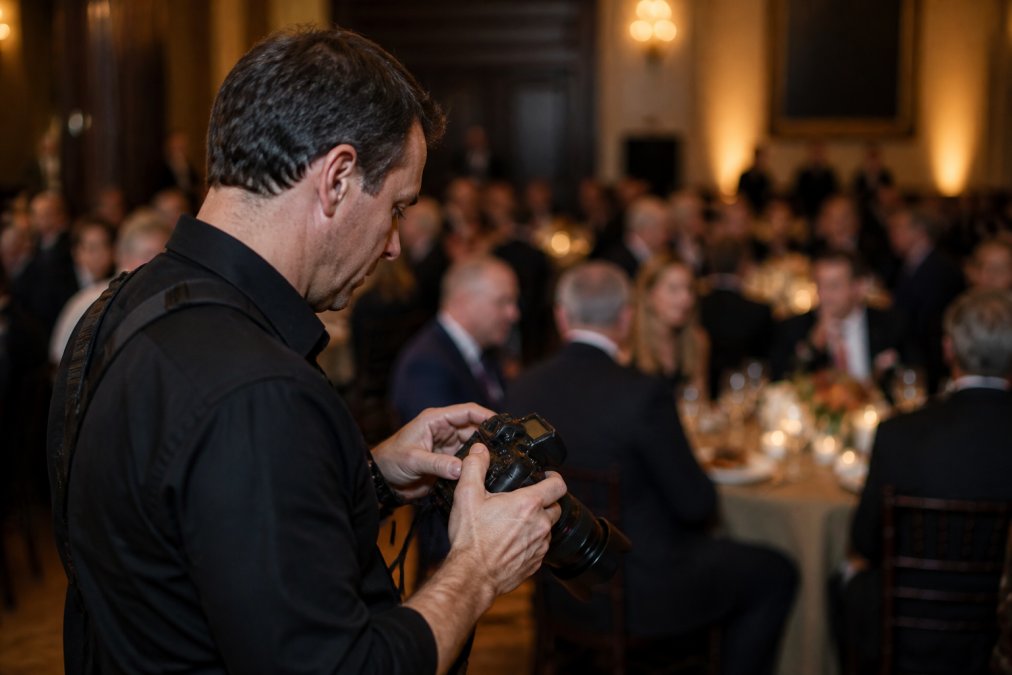
Shutter speed should not drop below 1/160th of a second when shooting handheld. ISO is where most photographers make mistakes, they’re afraid of noise and keep ISO too low, resulting in motion blur. Modern cameras handle ISO 3200-6400 exceptionally well. A slightly grainy image of a genuine moment beats a blurry one every time.
A practical starting point for typical ballroom lighting:
- Aperture: f/2.8
- Shutter speed: 1/200th
- ISO: 3200
Adjust ISO up if the room is darker, down if you’re near windows or uplighting.
The single biggest mistake is underestimating how dark event venues actually are. What your eye perceives as “well-lit” is often 2-3 stops darker than you think. Shoot at ISO 3200 as your baseline, not your maximum.
Flash and Off-Camera Lighting Strategies
Flash at a donor dinner is a last resort. On-camera flash washes out skin tones, creates harsh shadows, and disrupts the intimate atmosphere you’re documenting.
Off-camera flash is different. A single speedlight mounted on a light stand in the corner of the room, triggered wirelessly, can fill shadows without announcing itself. Position it 8-10 feet away, aimed at a 45-degree angle toward your subject.
Better yet: use available light first. Most upscale venues have professional lighting design. Shooting at f/2.8 and ISO 3200 lets you work within existing light rather than against it. If you must use flash, set it to -1 or -1.3 exposure compensation so it supplements available light rather than dominating it. A CTO (color temperature orange) gel on your flash brings it closer to warm tungsten tones in amber-lit ballrooms.
(/dc-nonprofit-event-photography-guide/)]
Balancing Candid Moments with Strategic Posed Shots
Candid photography captures genuine emotion: a donor laughing with a nonprofit executive, a board member’s face during an emotional testimonial, the energy of a successful silent auction. Posed photography documents attendance and creates keepsake moments. A photo of a major donor with the executive director serves as a relationship marker and thank-you moment.
Alternate between hunting for candids and creating posed moments. Spend 15 minutes capturing the room naturally, then take 5 minutes to position key people for structured shots. When posing people, direct them toward each other rather than toward the camera. Ask them to share a specific memory or ask a genuine question. People’s faces relax when thinking about something meaningful rather than performing for a camera.
Creating a Nonprofit Event Photography Shot List for Fundraising ROI
A shot list is your roadmap. Without one, you’ll react to moments rather than intentionally documenting the narrative your organization needs. Start with the timeline and map critical moments: keynote remarks, fund-a-need, award presentations, donor recognition. Identify the 8-12 shots you absolutely must capture.
Documenting Key Moments and Speakers
Keynote speakers and executive remarks are non-negotiable. Position yourself with a clear sight line to the podium before remarks begin. Get a wide shot showing the speaker in context and a tighter shot capturing facial expression. Shoot from the side or back of the room, never directly in front.
For the fund-a-need moment, document the energy: hands raised, faces engaged, the auctioneer’s expression. Award presentations and donor recognition moments are critical. When an individual is recognized, get a clean shot. This image becomes their thank-you moment, appearing in thank-you letters and annual reports.
Missing the keynote speaker’s moment is a critical failure. Scout the podium location immediately upon arrival and position yourself 30 minutes before remarks start.
Capturing Donor Engagement and Networking
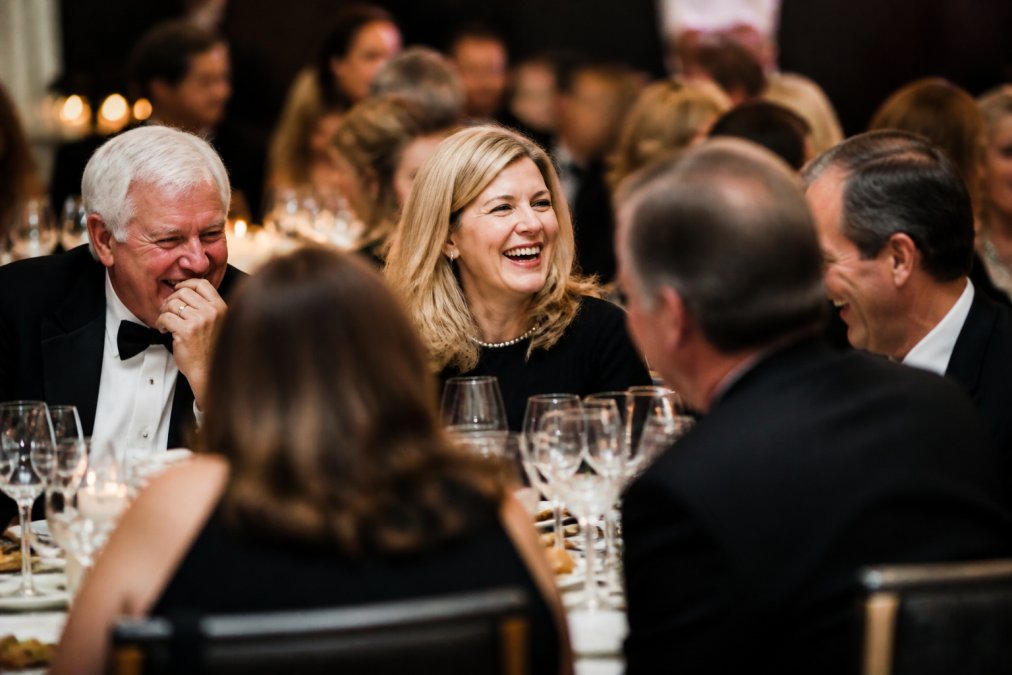
The real story happens in conversations between moments. Position yourself near high-traffic areas: the bar, silent auction, registration table. Shoot from the periphery, capturing genuine conversation without intrusion. Watch for moments of connection: a donor introducing a friend to your executive director, someone laughing at a table, a board member leaning in to listen intently.
Avoid photographing people eating. Instead, photograph conversations and transitions. Table shots work if they show genuine interaction, with people looking at each other rather than at the camera.
Showcasing Event Details and Sponsorship Branding
Sponsors expect visibility. Document sponsor signage, branded elements, and silent auction items with sponsor logos. Photograph centerpieces, especially if they’s branded or reflect the organization’s mission. Environmental shots of the stage setup, entrance, and room design show production value and professionalism.
Ethical Fundraising Photography Guidelines and Donor Privacy
Ethics in donor dinner photography affects real relationships.
Photo Release Forms and Legal Consent Workflows
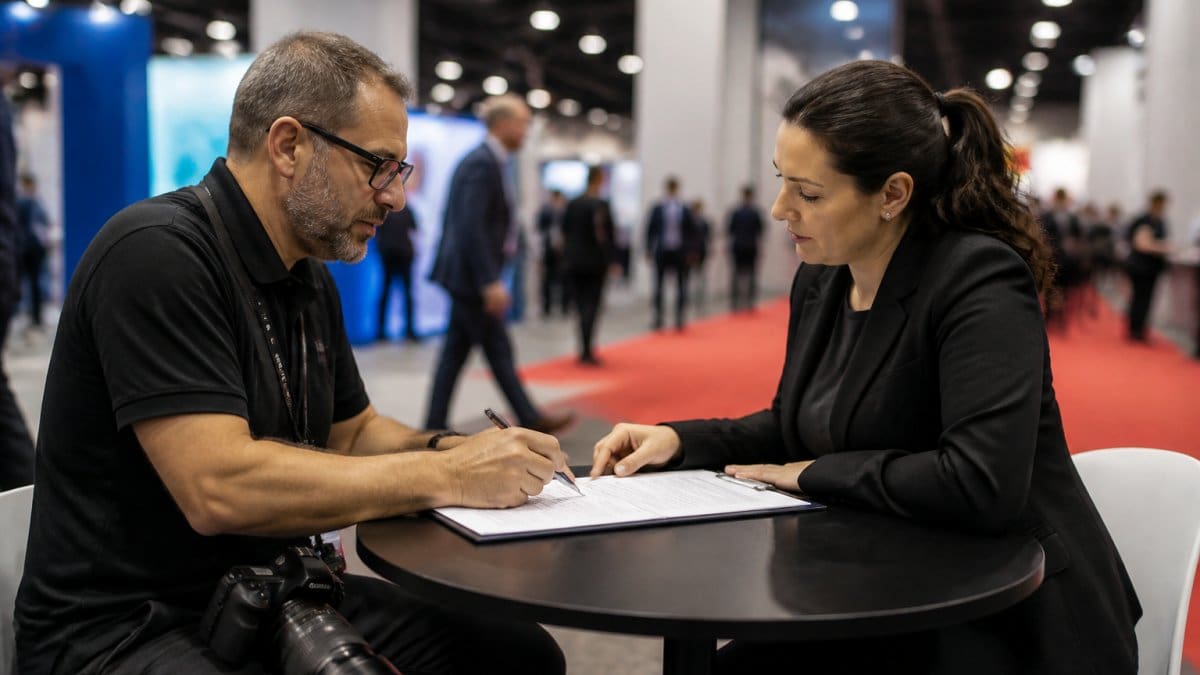
Get written consent before using images commercially. A photo release form should clearly state what images will be used, how long, whether the donor’s name will be attached, and whether images will be shared with media. Make this part of event registration. When donors register, they check a box consenting to photography and its use.
For major donors or board members who didn’t pre-consent, get verbal consent immediately after photographing them. Never use images without consent. If an image shows someone in a compromising moment, ask permission before using it. For children or vulnerable individuals, get explicit written consent from a parent or guardian.
Donor-Specific Etiquette and Discretion
Some donors don’t want to be photographed. Honor that completely. The key is reading the room. If a donor seems uncomfortable, step back. If they’re engaging with you, they’re giving permission to photograph more actively.
Never photograph private conversations or intimate moments. Be especially discreet with board members. They’re often more sensitive about how they’re photographed and more concerned about image use. If someone asks you not to post an image on social media but says it’s okay for internal use, honor that distinction. The donor’s preference takes precedence.
Create a “do not photograph” list before the event. If a donor or board member requests not to be photographed, write their name down and check it throughout the event.
Working Effectively with Event Organizers and Sponsors
Three weeks before the event, contact the event organizer and ask about the timeline, key people to photograph, critical moments, venue layout, lighting, and any restricted areas. Ask the organizer to introduce you to key people before the event starts. A brief introduction makes people more comfortable when you’re photographing them later.
Confirm what happens after the event: when you deliver images, what format, how many images, and whether you’re doing same-day social media posts. For sponsors, understand their expectations. Some want their logo visible in every shot. Others just want documentation of their attendance. Clarify this upfront.
Post-Production and High-Resolution Delivery for Fundraising Campaigns
Start with culling. You’ve probably taken 800-1200 images. Cut this down to 150-200 of your absolute best. Delete blurry shots, unflattering angles, and moments that didn’t land.
Color correction is essential. Ballroom lighting is often mixed. Batch-correct images by lighting zone. Skin tone is critical, donors need to look healthy and vibrant. Subtle adjustments to exposure, contrast, and saturation make a world of difference. Brighten the eyes slightly. Smooth obvious blemishes. Don’t over-process; the goal is "enhanced reality." Straighten horizons and crop out distracting elements.
Deliver in high resolution: minimum 300 DPI for print, 72 DPI for web. Organize images into folders by moment or theme: "Keynote Speaker," "Silent Auction," "Donor Recognition," "Networking," "Details." Include brief captions identifying key people and moments. Deliver within one week of the event. Donor momentum is highest immediately after the gala.
Tips for Photographing Donor Dinners Without Being Intrusive
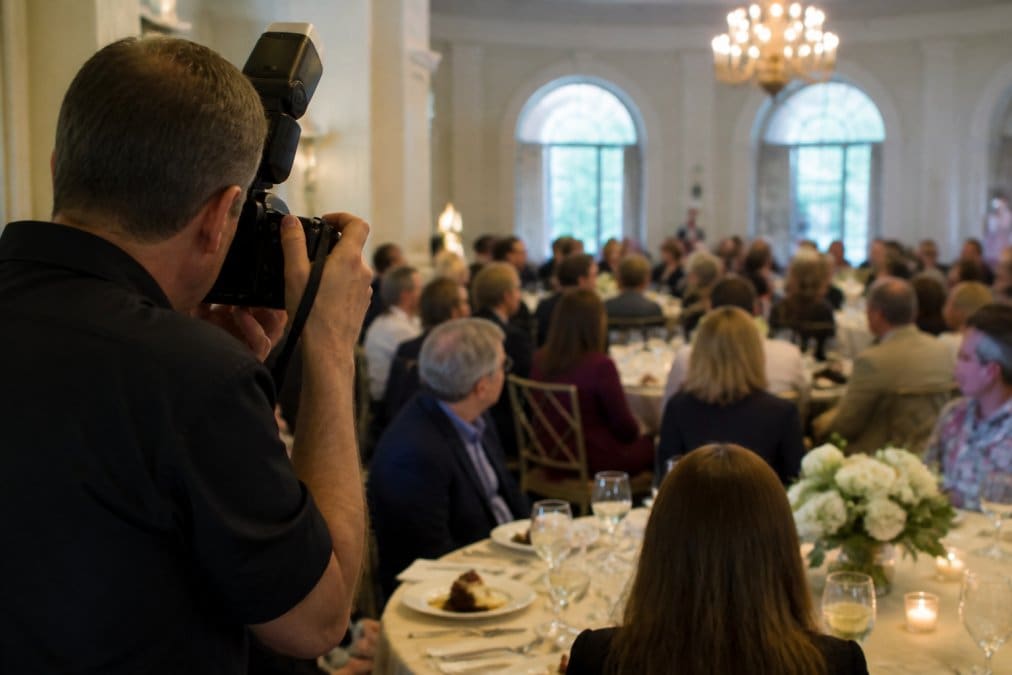
The mark of professional donor dinner photography is invisibility. You’re present and capturing moments, but people barely notice you’re there.
First: dress like you belong. If the event is black-tie, wear a tuxedo or formal dress. Second: use longer lenses. A 70-200mm zoom lets you photograph from the periphery rather than standing in conversations. Third: move slowly and deliberately. Photographers who rush around signal anxiety and make people nervous.
Fourth: position yourself strategically but stay still. Find a spot with good sight lines and light. Stay there for 10-15 minutes, photographing moments that unfold naturally. Fifth: avoid eye contact with subjects. When you’re photographing someone, don’t make eye contact. Keep your eye on the viewfinder.
Sixth: use available light whenever possible. Flash announces your presence. Seventh: photograph the moments between moments. The real story happens in transitions, the walk from the bar to a table, the moment someone sits down, the instant after a conversation ends. Eighth: understand the social hierarchy and respect it. Ninth: know when to step back. If your presence makes someone uncomfortable, move away. Tenth: build relationships with regular attendees. If you photograph the same nonprofit’s events multiple times, donors will recognize you and become more comfortable.
| Technique | Purpose | Impact |
|---|---|---|
| 70-200mm telephoto lens | Photograph from distance | Subjects unaware, authentic moments |
| ISO 3200+ with available light | Avoid flash | Invisible presence, natural ambiance |
| Strategic positioning, minimal movement | Blend into background | People forget photographer is there |
| Slow, deliberate pace | Signal confidence and belonging | Reduced anxiety in subjects |
| Photograph transitions and micro-moments | Capture authentic emotion | More genuine storytelling |
Photographing donor dinners successfully means understanding that you’re documenting relationships, not just events. Every image should strengthen the bond between the organization and its supporters. Event Photojournalism specializes in exactly this kind of nuanced, relationship-focused event coverage, capturing the authentic moments that donors want to remember while maintaining the discretion that high-net-worth individuals expect. Our award-winning team delivers high-resolution images with customized shot lists tailored to your organization’s fundraising goals and donor relationships. Ready to transform your next gala into a powerful fundraising asset? CONTACT US to discuss your event photography needs and get a customized proposal.
Frequently Asked Questions
What are the best camera settings for photographing a donor dinner with low lighting?
For indoor donor dinners, use aperture between f/2.0 and f/2.8 to gather available light, shutter speed of 1/125 or faster to avoid motion blur, and ISO 1600-3200 depending on available light. These settings balance image sharpness with the low-light conditions typical of formal event venues. Combine with off-camera flash or diffused lighting to maintain skin tones and capture genuine moments without harsh shadows.
How do you photograph a nonprofit event photography shot list that captures fundraising ROI?
Prioritize shots that show donor engagement: keynote speakers addressing the audience, donors interacting at tables, VIP moments with board members, event details and signage showcasing sponsorships, and candid networking interactions. Include high-resolution images of the event venue setup and branded elements. Deliver these as a curated gallery that tells the story of the evening and demonstrates the impact of donor support for grant proposals and annual reports.
What ethical considerations matter most when photographing donors at fundraising events?
Obtain signed photo release forms before or at the event, clearly explaining how images will be used (social media, annual reports, press releases). Respect donor privacy by not photographing individuals who opt out. Be discreet around high-profile attendees and board members. Avoid capturing sensitive moments or unflattering angles. Follow ethical fundraising photography guidelines by using images authentically to tell your organization's story rather than manipulating context. Always prioritize donor relationships over getting the perfect shot.
How can you be an unobtrusive photographer at a donor dinner without missing key moments?
Position yourself strategically at different vantage points throughout the evening rather than staying in one spot. Use a longer focal length lens (70-200mm) to capture moments from distance without standing directly over guests. Arrive early to scout lighting and identify key moments from your shot list. Move quietly between positions during speeches and transitions. Blend into the background by dressing appropriately for the event. Anticipate moments rather than reacting to them, which reduces the need to interrupt conversations or move suddenly.
External Sources
[EXTERNAL_LINK: Professional event photography best practices for nonprofits | nonprofittech.org]
[EXTERNAL_LINK: Camera settings guide for indoor event photography | dpreview.com]
[EXTERNAL_LINK: Photo consent and privacy guidelines for event documentation | asmp.org]
This article was written using GrandRanker