Table of Contents
- Why Book a Corporate Photographer in Northern Virginia
- Best Corporate Event Photographers NoVA: What Sets Them Apart
- Corporate Headshot Pricing Northern Virginia: Packages and Budgeting
- How to Prepare for Corporate Headshots: A Pre-Shoot Checklist
- Corporate Photography Session Duration: What to Expect
- Legal, Licensing, and Post-Production: The Full Photography Workflow
- How to Book a Corporate Photographer in Northern Virginia
- Conclusion
Last Updated: May 20, 2026
Choosing the right photographer for your business is not a minor decision. The corporate photography market in the DMV area has grown significantly, and knowing how to book corporate photographer northern virginia services that actually deliver can save you time, budget, and a lot of frustration. This guide from Event Photojournalism walks you through every stage of the process, from evaluating portfolios to understanding licensing, so you can make a confident, informed hire. Below, we cover the exact workflow that separates a forgettable session from imagery that genuinely elevates your brand.
Here is what most guides get wrong: they focus almost entirely on finding a photographer and almost nothing on preparing for the session, understanding the legal handoff, or knowing what professional-grade equipment actually looks like. We fix that here.
Why Book a Corporate Photographer in Northern Virginia
Professional corporate photography is the visual foundation of your brand’s credibility. A single strong set of headshots or event images can appear across your website, LinkedIn profiles, press materials, investor decks, and recruiting pages for years. The return on a well-executed session compounds over time in ways that stock imagery simply cannot replicate.
Northern Virginia’s corporate corridor, spanning Tysons Corner, Reston, Arlington, and Alexandria, hosts a dense concentration of federal contractors, technology firms, consulting agencies, and associations. That environment creates specific visual expectations. Decision-makers here are accustomed to polished, professional imagery, and anything below that standard signals a lack of attention to detail.

Benefits of Professional Photography for Your Brand
Commercial photography is a direct investment in first impressions. According to LinkedIn’s research on profile photo impact, profiles with professional headshots receive significantly more connection requests and profile views than those without. For a team of twenty executives, that multiplier effect is substantial.
Beyond headshots, professional event photography gives your organization documentation of its culture, milestones, and community presence. These images feed social media, annual reports, and internal communications simultaneously. A photography agency that understands corporate storytelling will capture not just posed portraits but candid interactions that show your team as human, engaged, and capable.
The contrarian point worth making: many organizations underinvest in photography and then overspend on graphic design trying to compensate for weak source images. Strong photography reduces downstream production costs.
On-Location vs. In-Studio Corporate Shoots in the DMV
On-location sessions take place at your office, venue, or an approved site. They integrate your brand environment into the imagery, which tends to resonate with clients and candidates who want to see where work actually happens. The trade-off is that you depend on ambient lighting conditions and available space, which requires a photographer experienced in managing unpredictable environments.
In-studio sessions offer controlled lighting, consistent backgrounds, and a simplified workflow. They work especially well for headshot packages where consistency across a large team matters more than environmental context. Many Northern Virginia photography studios offer both options, and the best corporate event photographers NoVA can execute either with equal confidence.
For large teams needing consistent headshots, in-studio sessions with a fixed backdrop and calibrated lighting produce more uniform results. For executive portraits intended for press or investor materials, on-location sessions in a meaningful setting often carry more visual authority.
Best Corporate Event Photographers NoVA: What Sets Them Apart
The difference between a competent photographer and an exceptional one rarely shows up in a price quote. It shows up in the work. The best corporate event photographers NoVA distinguish themselves through a combination of technical mastery, editorial instincts, and professional reliability.
Reliability matters more than most clients initially realize. A photographer who arrives on time, communicates clearly before the shoot, and delivers edited images on the agreed schedule is worth more to a busy marketing director than one with a slightly more impressive portfolio who misses deadlines.
Reviewing Portfolios and Past Commercial Photography Work
A photography portfolio tells you three things: the range of work a photographer handles, the consistency of their output, and whether their aesthetic matches your brand. When reviewing portfolios for corporate photography work, look specifically for:
- Consistency in exposure and color grading across a full event or headshot series
- Variety in composition without sacrificing professionalism
- Evidence of experience in environments similar to yours (conference rooms, galas, outdoor corporate events)
- Post-production quality, including background removal and photo retouching work
A single standout image means less than a consistently strong gallery of fifty. Anyone can get lucky on one shot. A professional gets it right repeatedly.
Types of Corporate Photography Services to Look For
Corporate photography is not a single service. A full-service photography agency should offer a range of options that cover your organization’s needs across multiple contexts.
| Service Type | Best Use Case | Typical Deliverables |
|---|---|---|
| Corporate headshots | LinkedIn, bios, press kits | Retouched digital images |
| Event photography | Conferences, galas, launches | Full event gallery, high-res files |
| Commercial photography | Marketing campaigns, ads | Styled, edited campaign images |
| Lifestyle shoots | Culture pages, recruiting | Candid team and office imagery |
| Real estate photography | Office listings, facility tours | Wide-angle architectural shots |
Portrait photography, event photography, and commercial photography each require different technical setups and creative approaches. Confirm that your photographer has specific experience in the category you need, not just general photography experience.
Corporate Headshot Pricing Northern Virginia: Packages and Budgeting
Corporate headshot pricing in Northern Virginia varies more than most clients expect, and the variation is not random. It reflects real differences in session structure, post-production scope, equipment overhead, and licensing terms. Understanding the underlying cost drivers lets you evaluate quotes accurately instead of defaulting to the lowest number.
The Northern Virginia and greater DMV market sits at a higher price point than many other U.S. metros, driven by the density of federal contractors, law firms, and technology companies that have established a baseline expectation for polished, commercially licensed imagery. A photographer pricing below that baseline is usually cutting corners somewhere in the workflow, most often in post-production or licensing scope.
Typical Package Structures in the Northern Virginia Market
Most professional corporate photographers in the region structure their pricing in one of three ways:
Per-session flat rate with a subject cap
A base session fee covers a fixed number of subjects (commonly four to eight), with a per-person rate applied to additional individuals. This structure works well for small teams and executive portrait packages. The base fee typically covers setup, shoot time, and a defined number of final retouched images per subject.
Per-person rate with a session minimum
The photographer sets a minimum booking fee to cover travel, setup, and overhead, then charges a per-person rate above that floor. This structure is common for on-site team headshot days where the subject count is uncertain at the time of booking.
Half-day and full-day blocks
Event photography and large-scale headshot marathons are typically priced by time block rather than per subject. A half-day block (four hours) and a full-day block (eight hours) are standard. This structure gives the client flexibility to use the photographer’s time across multiple deliverable types, headshots in the morning, event coverage in the afternoon, without paying separate session fees for each.
| Package Type | Typical Scope | What to Confirm Is Included |
|---|---|---|
| Executive portrait session | 1-3 subjects, 60-90 min | Retouched finals, licensing scope, background options |
| Team headshot day (on-site) | 10-30 subjects, half-day | Per-person retouching, consistent background, delivery timeline |
| Conference or event coverage | 4-10 hours | Number of edited finals, turnaround time, raw file policy |
| Commercial campaign shoot | Half or full day | Usage licensing territory and duration, styled editing |
The single most common pricing misunderstanding in corporate photography is conflating the session fee with the total cost. Many packages advertise a session rate that does not include post-production, licensing, or rush delivery. Always request an itemized quote that separates (1) session and travel fees, (2) post-production and retouching, (3) licensing scope, and (4) any optional add-ons. Comparing only the headline number across photographers is how organizations end up with unexpected invoices after delivery.
What Affects Photography Rates and Package Costs
Several variables drive photography rates up or down. Understanding them helps you budget accurately and negotiate fairly.
- Session length and complexity: A two-hour headshot session for ten people costs less than a full-day conference with multiple rooms and speakers.
- Post-production scope: Photo retouching, background removal, and color correction all add time. More extensive image editing increases cost. Confirm whether the quoted rate includes light retouching (blemish removal, color correction) or heavy retouching (background replacement, composite work).
- Turnaround time: Same-day service or rush delivery within 24-48 hours typically carries a premium over standard five-to-ten business day delivery.
- Equipment requirements: Sessions requiring specialized lighting rigs, multiple camera setups, or aerial photography involve higher overhead that is legitimately reflected in the rate.
- Licensing scope: This is the variable most clients overlook entirely. Images licensed for national advertising campaigns cost more than those licensed for internal use or a single website. A photographer who does not ask about your intended use before quoting is almost certainly not accounting for licensing in their rate, which means you may not have the rights you assume you do.
- Location and travel: On-site sessions at your Northern Virginia office may include a travel fee depending on the photographer’s base location. Confirm this before comparing quotes from photographers based in different parts of the DMV.
How to Compare Quotes Without Getting Burned
When you receive quotes from multiple photographers, build a simple comparison grid before making a decision. For each quote, record:
- Session fee and what it covers (hours, subjects, locations)
- Number of final retouched images included
- Per-image or per-subject rate for overages
- Post-production scope (light vs. heavy retouching, background removal)
- Licensing terms (permitted uses, territory, duration)
- Delivery timeline and rush delivery cost
- Cancellation and rescheduling policy
A quote that looks fifteen percent lower than competitors may reflect a narrower licensing scope, fewer retouched finals, or a longer delivery window. None of those trade-offs are inherently wrong, but they need to be visible before you sign.
According to Professional Photographers of America pricing guidance, pricing transparency from photographers correlates strongly with client satisfaction. Request an itemized quote that separates session fees from post-production and licensing, and treat any photographer who resists itemization as a yellow flag.
If your budget is fixed, share it with your top two or three candidates during the consultation. Experienced photographers can often restructure a package, fewer retouched finals, a shorter session block, or a slightly longer delivery window, to fit your number without compromising the quality of the shoot itself. Negotiating scope is more productive than negotiating rate.
How to Prepare for Corporate Headshots: A Pre-Shoot Checklist
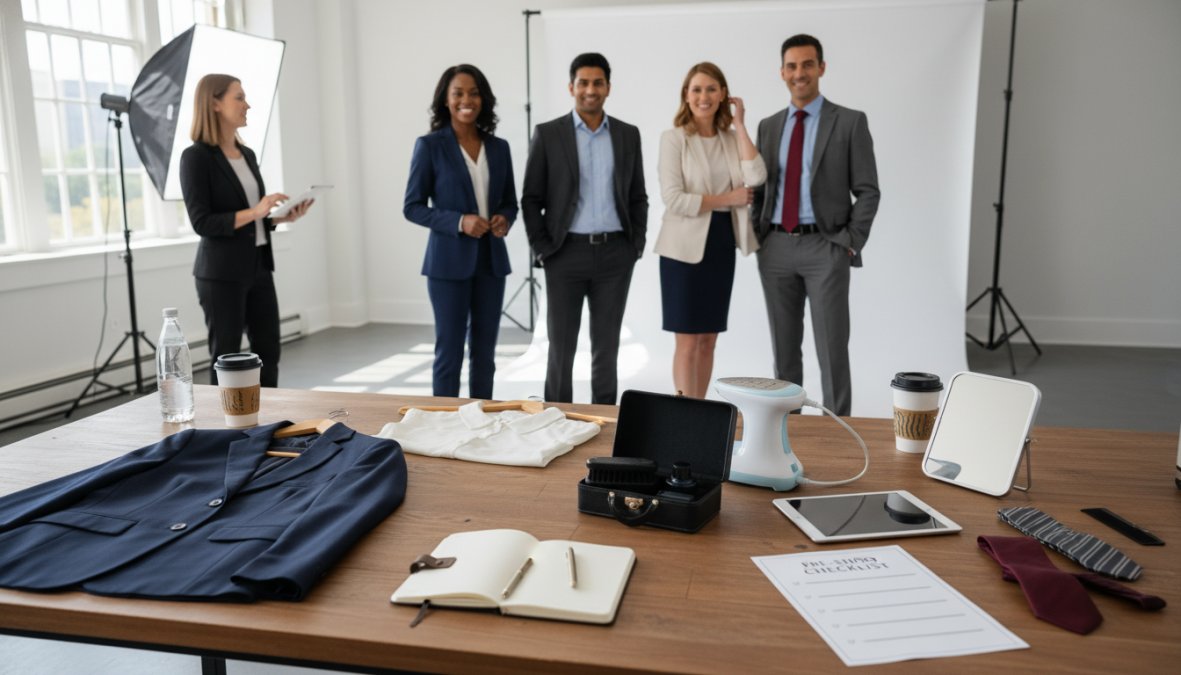
Preparation is the single biggest variable within your control. A well-prepared subject produces better images in less time, which means lower costs and stronger results. The following checklist reflects what experienced photographers wish every client knew before the session.
Pre-Shoot Preparation Checklist:
- Confirm wardrobe choices at least 48 hours before the session (solid colors photograph better than busy patterns)
- Get a full night of sleep the night before (visible fatigue shows in headshots)
- Arrange hair and grooming appointments for the morning of the shoot
- Confirm the session location, parking, and check-in process with your photographer
- Review your photographer’s portfolio one more time to align on style expectations
- Prepare a list of required shots, team members, and any specific branding requirements
- Confirm digital image delivery format, resolution, and expected turnaround time
- Identify a point of contact on your team to coordinate subject scheduling on shoot day
Client Consultation and Creative Direction
A client consultation before any commercial photography session is not optional, it is essential. This is where creative direction gets established: the visual tone, the wardrobe palette, the backdrop options, the intended use of the images, and any brand guidelines that need to inform the shoot.
A good photographer asks about your brand colors, your audience, and where the images will appear. A great one also asks what you want people to feel when they see your team. That distinction shapes every compositional and lighting decision made on shoot day.
Event Photojournalism builds customized solutions around each client’s specific mission and brand identity, which means the consultation process is substantive rather than a formality. Bring your brand style guide, examples of imagery you admire, and a clear brief on intended use.
Corporate Photography Session Duration: What to Expect
Session duration is one of the most consistently underestimated variables in corporate photography planning. Most clients think about the camera-facing time, the minutes a subject actually stands in front of the lens, and forget everything surrounding it. A well-structured production plan accounts for setup, transitions, lighting adjustments, and the inevitable schedule slippage that comes with coordinating multiple people in a professional environment.
This section goes beyond basic time estimates to give you a production coordination framework you can use to plan any corporate photography session, from a ten-person headshot day to a multi-day conference.
Time Estimates by Session Type
Use these ranges as planning baselines, not guarantees. Actual duration depends on subject preparedness, location complexity, and how tightly the schedule is managed on shoot day.
| Session Type | Subjects / Scope | Realistic Duration |
|---|---|---|
| Single executive portrait | 1 subject, 2-3 looks | 45-75 minutes |
| Small team headshots | 4-8 subjects | 2-3 hours |
| Mid-size team headshot day | 10-20 subjects | 3-5 hours |
| Large team headshot marathon | 25-50+ subjects | Full day (6-8 hours) |
| Half-day event coverage | Single venue, 1-2 rooms | 4 hours |
| Full-day conference coverage | Multi-room, keynotes + networking | 8-10 hours |
| Multi-day event | Conference, gala, or summit | Day-by-day blocks, agreed in advance |
The variable that most clients underestimate is transition time. Moving subjects from a waiting area to the camera, adjusting lighting for different skin tones, reviewing test shots, and managing late arrivals all consume time that is not visible in a photographer’s quoted session length. Build a fifteen to twenty percent buffer into your schedule for any group session.
How to Build a Shot List That Actually Works
A shot list is the production document that separates a chaotic shoot day from a smooth one. It is not a wish list, it is a prioritized, time-stamped schedule that tells the photographer exactly what needs to be captured, in what order, and by when.
A functional corporate photography shot list includes:
For headshot sessions:
- Subject name and title (for file naming and delivery)
- Scheduled time slot per subject (typically 8-12 minutes per person for a standard headshot)
- Background or backdrop preference per subject, if multiple options are offered
- Any specific wardrobe changes or looks required
- Priority tier: must-have vs. nice-to-have (critical for managing overruns)
For event or conference coverage:
- Keynote and speaker names, scheduled times, and room locations
- VIP or executive moments that require dedicated coverage (award presentations, ribbon cuttings, panel introductions)
- Branded signage and environmental details to capture (sponsor walls, registration areas, branded stage)
- Networking and candid moments, flag the time windows when these are most likely to occur
- Group photos: who, where, and when (these require the most coordination and should be scheduled explicitly, not left to chance)
- End-of-day or end-of-event priority: what is the last must-have shot before the photographer wraps?
Share the shot list with your photographer at least five business days before the session. A good photographer will review it, flag any logistical conflicts, and suggest additions based on their experience with similar events.
Structuring a Multi-Subject Headshot Day: A Coordination Framework
For teams of ten or more, the logistics of moving people through a headshot session efficiently are as important as the photography itself. The following framework reflects what experienced corporate photographers use to keep large headshot days on schedule.
Step 1: Assign a single internal point of contact.
This person owns the subject schedule, manages late arrivals, and communicates with the photographer throughout the day. Without a dedicated coordinator, the photographer becomes the de facto scheduler, which pulls focus from the camera.
Step 2: Schedule subjects in 10-15 minute slots, not open blocks.
Open-ended scheduling creates bunching and waiting. Fixed time slots create accountability. Send calendar invites to each subject with their specific time, the location within your office, and wardrobe guidance.
Step 3: Build buffer slots into the schedule.
For every six to eight subjects, build one empty 10-minute buffer slot. This absorbs late arrivals and longer-than-expected sessions without cascading delays through the rest of the day.
Step 4: Sequence subjects strategically.
Start with the most senior or most camera-comfortable subjects while the photographer is calibrating the setup. Save subjects who may need more coaching or time for mid-session, when the photographer is fully warmed up and the workflow is smooth.
Step 5: Confirm a wrap time and stick to it.
Agree on a hard end time with your photographer before the session. If subjects are still outstanding at wrap time, the photographer should not be expected to extend without a pre-agreed overtime rate. Build this into your contract.
For large team headshot days, consider sending a one-page preparation guide to all subjects at least 48 hours before the session. Include wardrobe guidance (solid colors, avoid busy patterns and logos), grooming reminders, and the exact location and check-in process. Subjects who arrive prepared move through the session faster and produce better images, which means your budget goes further.
On-Site Logistics That Affect Session Duration
The physical environment of your shoot location has a direct impact on how efficiently the session runs. When scouting or confirming your shoot location, work through the following with your photographer in advance:
- Dedicated setup space: The photographer needs time to set up and calibrate lighting before the first subject arrives. Plan for 30-60 minutes of setup time before the session officially begins.
- Waiting area separate from the shoot space: Subjects waiting in the same room as the active shoot creates distraction and noise. A separate holding area keeps the session focused.
- Consistent ambient light: If shooting in a space with windows, confirm whether the photographer plans to use natural light, block it, or supplement it. Window light changes significantly over the course of a day, which can create inconsistency across a long headshot session.
- Parking and building access: Confirm that the photographer can load equipment directly to the shoot floor. Elevator access, loading dock availability, and security check-in procedures all affect setup time.
- Power access: Confirm the location of power outlets relative to the planned shooting area. Extension cords and power strips are standard photographer kit, but knowing the layout in advance prevents surprises.
For multi-day conferences or events, discuss a day-by-day shot list and a daily wrap protocol with your photographer before the event begins. Establish how images will be backed up each evening, when you can expect a preview gallery, and who the primary contact is for any mid-event changes to the coverage plan.
The difference between a session that runs smoothly and one that runs over time and over budget is almost always production planning, not photography skill. The shot list, the subject schedule, the site logistics, and the internal coordinator are all within your control before the photographer arrives. Invest thirty minutes in production planning and you will recover that time, and more, on shoot day.
Legal, Licensing, and Post-Production: The Full Photography Workflow
Most clients focus on the shoot day and underinvest attention in what happens before and after it. The photography workflow, from contract to final delivery, contains several points where misunderstandings can create real problems. Understanding the full process protects both parties.
The workflow for a professional corporate photography engagement typically follows this sequence: initial inquiry, client consultation, contract execution, pre-shoot planning, shoot day, post-production, image delivery, and licensing handoff. Each stage has specific deliverables and decision points.
Image Rights, Usage Licensing, and Delivery of Digital Images
Image licensing is the part of the photography business that most clients understand least. Copyright in a photograph belongs to the photographer by default under U.S. law, as noted by U.S. Copyright Office guidance on visual works. What you purchase in a photography package is typically a license to use the images, not ownership of the copyright itself.
Usage licensing defines where, how, and for how long you can use the images. A license for internal communications differs from one covering paid advertising. A license for regional use differs from one covering national campaigns. Before signing any contract, confirm:
- The scope of permitted uses (web, print, social, advertising)
- The geographic territory covered
- The duration of the license
- Whether the photographer retains the right to use images in their portfolio
High-resolution digital images should be delivered in a format appropriate for both print and digital use. Confirm file format (typically JPEG or TIFF), minimum resolution (300 DPI for print), and delivery method (secure download link, cloud storage, or physical drive) before the session.
Photo Retouching, Background Removal, and Post-Production Services
Post-production is where a raw shoot becomes a finished product. Photo retouching for corporate headshots typically includes skin smoothing, blemish removal, eye brightening, and color correction. Background removal is a separate service that allows images to be placed on branded or custom backgrounds after the fact.
A common mistake is assuming that all retouching is included in a base package. Many photographers offer light retouching as standard and charge additionally for heavy retouching or background removal. Clarify this in the contract.
Image editing turnaround times vary. Standard delivery for a corporate headshot session is typically five to ten business days. Rush delivery within twenty-four to forty-eight hours is available from many photographers at a premium. Same-day service is rare but exists for time-sensitive situations.
The quality of post-production work is as important as the quality of the shoot itself. Request samples of a photographer’s retouching work specifically, not just their shoot-day imagery, before committing to a package.
How to Book a Corporate Photographer in Northern Virginia
The process to book corporate photographer northern virginia services is straightforward when you know what to look for. Start with a clear brief: define your scope, timeline, team size, intended image use, and budget before reaching out to any photographer. Vague inquiries produce vague quotes.
Steps to book corporate photographer northern virginia engagements efficiently:
- Define your scope and deliverables in writing before contacting photographers
- Request portfolios specifically from commercial photography and corporate work categories
- Compare photography packages across at least three providers, noting what post-production is included
- Schedule consultations with your top two or three candidates before committing
- Review the contract for licensing terms, delivery timeline, and cancellation policy
- Confirm logistics: location, parking, equipment needs, and subject scheduling
- Execute the contract with a deposit to secure your date
According to Forbes guidance on hiring creative professionals, the most common mistake organizations make when hiring photographers is choosing based on price alone without evaluating the full scope of deliverables. Photography booking decisions made purely on rate often result in additional costs during post-production.
Event Photojournalism serves the DMV area from Washington DC and Northern Virginia locations, covering corporate conferences, galas, and special events with award-winning, high-resolution photography. The team’s customized approach means your photography workflow is built around your specific event structure and brand requirements.
Technical Equipment Breakdown: What Professional-Grade Equipment Looks Like
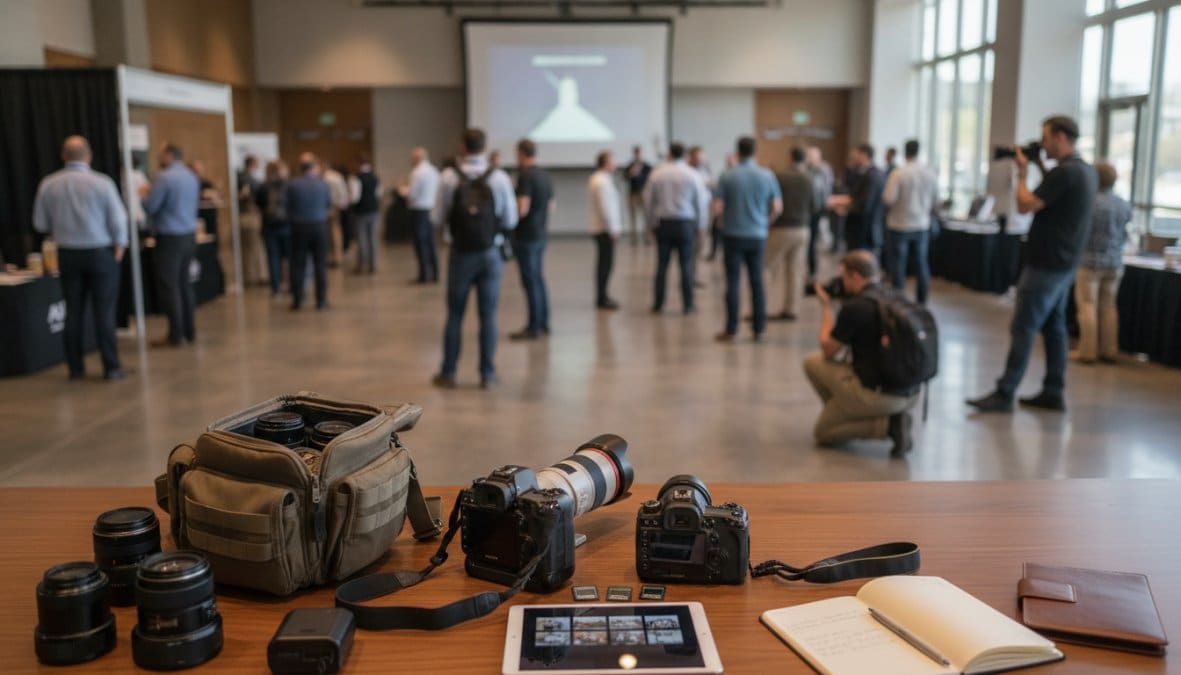
Professional-grade equipment is not just about camera brand. It encompasses the full system a photographer brings to a shoot, and it directly affects image quality, flexibility in challenging lighting conditions, and the ability to deliver consistent results across a long event day.
A professional corporate photographer’s kit typically includes:
- Full-frame mirrorless or DSLR camera bodies (minimum two, for redundancy): Full-frame sensors capture significantly more light and detail than crop-sensor alternatives, which matters in low-light conference environments.
- Prime and zoom lenses: A 70-200mm f/2.8 zoom for event coverage and 85mm or 50mm primes for headshots are standard professional tools.
- Off-camera flash and continuous lighting: Portable strobes with light modifiers (softboxes, umbrellas) allow photographers to shape light in any environment, not just react to it.
- Color calibration tools: Professional photographers use color checkers and calibrated monitors to ensure consistent color grading across an entire gallery.
- High-speed memory cards and redundant backup systems: On-location data loss is a real risk. Professional photographers back up images to multiple cards or drives during a shoot.
The thing nobody tells you about equipment is that the lighting setup matters more than the camera body for corporate headshots. A skilled photographer with a well-configured strobe and modifier will produce better headshots than an unskilled one with the most expensive camera on the market.
Corporate photography in Northern Virginia is a crowded market, and the gap between a mediocre hire and an exceptional one is wider than most organizations realize until they see the results. Event Photojournalism brings award-winning photography, high-resolution image delivery, and customized solutions built around your brand’s specific goals, whether you need coverage for a major conference, a gala, or a team headshot session. The team’s two DMV-area locations mean reliable, on-time coverage across the region. Contact Event Photojournalism to discuss your next session and get imagery that your organization will use for years.
Frequently Asked Questions
How much does it cost to book a corporate photographer in Northern Virginia?
Corporate headshot pricing in Northern Virginia varies based on session length, number of subjects, and deliverables. Half-day event coverage typically costs more than a standalone headshot session. Most professional photography packages include post-production, image editing, and digital delivery. Always request a detailed quote that outlines what is included, retouching, turnaround time, and licensing rights, before booking a corporate photographer in Northern Virginia.
How far in advance should I book a corporate photographer for an event?
For corporate events such as conferences, galas, or large team headshot days in Northern Virginia, booking four to eight weeks in advance is strongly recommended. High-demand periods like Q4 and spring conference season fill up quickly. For smaller portrait photography sessions or same-day service requests, some photography studios may accommodate shorter notice, but availability is not guaranteed. Early booking also allows time for a proper client consultation and creative direction planning.
How long does a corporate photography session typically last?
Corporate photography session duration depends on the scope of the project. Individual headshot sessions generally run 30 to 60 minutes per person. A team headshot day for 10 to 20 employees may take a half day. Full corporate event photography coverage for conferences or galas can span four to eight hours or more. Discussing your schedule and goals during the pre-shoot consultation helps your photographer plan an efficient workflow and ensure every key moment is captured.
What should I look for when hiring a corporate photographer in Northern Virginia?
When evaluating the best corporate event photographers in NoVA, review their photography portfolio for experience with commercial photography, event photography, and portrait photography. Confirm they use professional-grade equipment and offer post-production services including photo retouching and background removal. Ask about their photography workflow, delivery timeline for digital images, and usage licensing terms. A reputable photography agency or freelance photographer should also offer a clear client consultation process before the shoot begins.
Do corporate photographers in Northern Virginia travel to offices or job sites?
Yes. Most professional corporate photographers in Northern Virginia offer on-location services, traveling to your office, event venue, or any designated site within the DMV area. On-location shoots are ideal for lifestyle shoots, real estate photography, and event photography where context and environment matter. Some photographers also operate a photography studio for controlled in-studio sessions. Confirm travel fees and coverage area when discussing your photography booking to avoid unexpected costs.
This article was written using GrandRanker