
Table of Contents
- Why Hiring the Right Corporate Event Photographer Matters
- How to Hire a Corporate Event Photographer: Step-by-Step
- Questions to Ask an Event Photographer Before You Book
- Corporate Event Photography Rates: What to Expect in 2026
- Building Your Event Photography Shot List
- What Should Be in Your Corporate Event Photography Contract
- How to Hire a Corporate Event Photographer Without Common Mistakes
- Conclusion
Last Updated: June 3, 2026
Knowing how to hire corporate event photographer talent is one of the most consequential decisions an event planner makes, yet most guides treat it as an afterthought. This guide from Event Photojournalism covers the full process: from defining your coverage needs and vetting portfolios to negotiating contracts and protecting your image licensing rights. Get this right, and your conference, gala, or product launch produces marketing assets that work for months after the event ends. Get it wrong, and you’re left with unusable images and no legal recourse.
Most guides focus almost entirely on aesthetics and price, ignoring the operational and legal details that separate a smooth engagement from a disaster. Below, we’ll show you exactly how to vet, book, and brief a corporate event photographer so your brand representation is protected from the first inquiry to the final image delivery.
Why Hiring the Right Corporate Event Photographer Matters
Corporate event photography is professional documentation of your organization’s most important moments. A skilled photographer doesn’t just capture candid moments and keynote speakers, they produce high-resolution marketing assets that feed your internal communications, press releases, social media, and brand activations for months.
The stakes are higher than most planners realize. A single corporate conference might generate imagery used across dozens of touchpoints: LinkedIn posts, annual reports, pitch decks, and email campaigns. Poor photography doesn’t just look bad at the event, it creates a downstream content gap that’s expensive to fill.
Organizations that use different photographers for each event end up with a fragmented visual identity. Hiring a photographer with specific corporate event experience and building a long-term relationship solves this. There’s also a technical dimension: a photographer who excels at trade shows may struggle with award ceremonies in low-lit ballrooms. Corporate event photography demands adaptability, professional equipment, and the experience to anticipate moments before they happen.
Corporate event photographers produce more than memories. They produce reusable brand assets. Treat the hiring decision with the same rigor you’d apply to any marketing vendor.
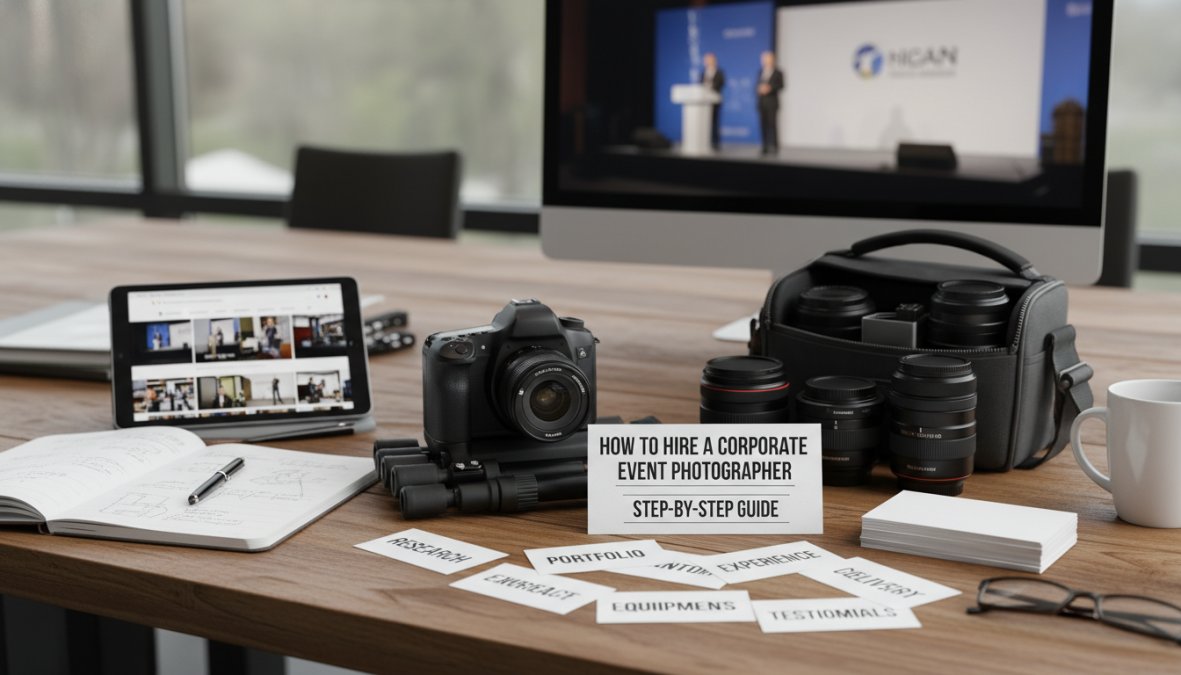
How to Hire a Corporate Event Photographer: Step-by-Step
The process works best when approached in a defined sequence. Skipping steps, particularly portfolio evaluation and contract review, is where most event planning teams run into trouble.
Step 1: Define Your Event Type and Coverage Needs
Map your event’s specific requirements before contacting a single photographer. Ask yourself:
- How many hours of coverage do you need?
- Will there be multiple simultaneous sessions requiring a second shooter?
- Do you need headshots, candid networking shots, or both?
- What are the deliverables: edited high-resolution files, a web gallery, or print-ready assets?
- What is the turnaround time requirement for post-production?
Defining these parameters upfront lets you get accurate quotes and filters out photographers who aren’t equipped for your event’s complexity. A single-shooter photographer physically cannot cover a simultaneous breakout session and general session without a second body on site.
Step 2: Evaluate Portfolios for Corporate-Specific Experience
An event portfolio tells you whether a photographer understands corporate environments. Look for evidence of experience with conferences, product launches, galas, and networking events, not just weddings or personal shoots.
Specific signals to look for:
- Sharp images of speakers at podiums under challenging stage lighting
- Candid moments that feel natural, not staged
- Group shots with consistent exposure across varied skin tones
- Detail shots of branded materials, signage, and event atmosphere
- Editing consistency across an entire event gallery, not just cherry-picked hero shots
Any photographer can produce five great images. The question is whether the full gallery holds up, because you’ll need hundreds of usable shots from a full-day event.
Step 3: Vet Remote or Out-of-State Photographers
Hiring a photographer outside your local market introduces logistical variables that require explicit vetting. When vetting remote photographers, verify:
- Local equipment backup: Do they have relationships with local rental houses in case gear fails?
- Travel and accommodation terms: Confirm who covers travel costs and whether those are billed separately.
- References from comparable remote engagements: Ask specifically for client references from events shot outside their home market.
- On-site coordination: How do they handle venue walkthroughs? A virtual walkthrough via video call is a reasonable minimum.
- Backup photographer availability: If the primary photographer has a travel disruption, what’s the contingency?
A photographer who is evasive about logistics or can’t provide remote-event references is a red flag, regardless of portfolio strength.
Never hire a remote photographer without a signed contract that specifies travel cost responsibility, cancellation terms, and what happens if the photographer cannot attend due to travel disruption. Verbal agreements are unenforceable.
Questions to Ask an Event Photographer Before You Book
On experience and logistics:
- How many corporate events of this type have you shot in the past 12 months?
- Will you do a venue walkthrough or virtual scout before the event?
- Do you bring backup equipment to every event?
- How do you handle low-light environments like award ceremony ballrooms?
On deliverables and workflow:
5. What is your standard turnaround time for edited images after the event?
6. How many final edited images can we expect from a full-day event?
7. What file formats and resolutions do you deliver?
8. Do you provide a web gallery, direct download, or both?
On the contract and rights:
9. Who owns the copyright to the images after delivery?
10. Are we licensed to use the images for commercial marketing, including paid advertising?
11. Can we use images in press releases and internal communications without additional fees?
12. What is your cancellation and rescheduling policy?
The answers to the last four questions matter as much as any portfolio review. Many photographers retain copyright by default and license usage back to clients, standard practice. What varies is the scope of that license, and one that excludes paid advertising or requires attribution can create real problems for marketing teams.
According to the American Society of Media Photographers’ guide on licensing, understanding the difference between copyright ownership and usage licensing is essential for any business hiring a photographer for commercial purposes.
Corporate Event Photography Rates: What to Expect in 2026
Corporate event photography rates vary based on event type, coverage duration, photographer experience, and geographic market.
| Factor | Entry-Level | Mid-Tier | Senior/Award-Winning |
|---|---|---|---|
| Half-day (4 hrs) | Lower range | Mid range | Premium range |
| Full day (8 hrs) | Moderate | Higher | Premium |
| Multi-day events | Day rate x days | Negotiable packages | Retainer available |
| Second shooter | Add-on fee | Often included | Often included |
| Rush turnaround | Extra fee | Sometimes included | Often included |
A few pricing realities worth knowing:
- Day rates vs. hourly rates: Most experienced corporate photographers quote day rates because events rarely end on schedule. A day rate protects both parties.
- Post-production is included, but volume matters: Standard packages include editing, but 500 images in 48 hours typically incurs a rush fee.
- Travel is usually extra: For remote events, travel, accommodation, and per diem are billed on top of the photography fee.
- Packages vs. custom quotes: For recurring events, ask about package pricing, photographers working with organizations annually often offer preferred rates.
Choosing the lowest quote is frequently the most expensive decision in the long run. Unusable images from an underqualified photographer can’t be reshot, the event is over.
Request itemized quotes rather than lump-sum pricing. Itemization reveals exactly what’s included in post-production, how many edited images are guaranteed, and what the turnaround time commitment is. Vague quotes produce vague results.
Building Your Event Photography Shot List
An event photography shot list is a pre-approved document specifying the exact images your photographer must capture. It’s the single most effective tool for ensuring your marketing team gets what they need.
Mandatory shots (must-have):
- Executive headshots or environmental portraits
- Keynote speaker at podium with branded backdrop visible
- Audience reaction shots during presentations
- Award recipients receiving awards (with presenter)
- Branded signage, banners, and registration area
- Networking moments between attendees
- Group photo of leadership team or full attendee group
- Sponsor recognition displays
Atmosphere shots (event context):
- Venue exterior and entrance
- Room setup before attendees arrive
- Catering and food displays
- Event materials (programs, badges, swag)
- Wide-angle room shots showing full attendance
Candid and detail shots (for social and internal use):
- Attendees in conversation (natural, unposed)
- Close-ups of branded materials
- Hands-on activities, workshops, or demos
- Reaction shots during Q&A sessions
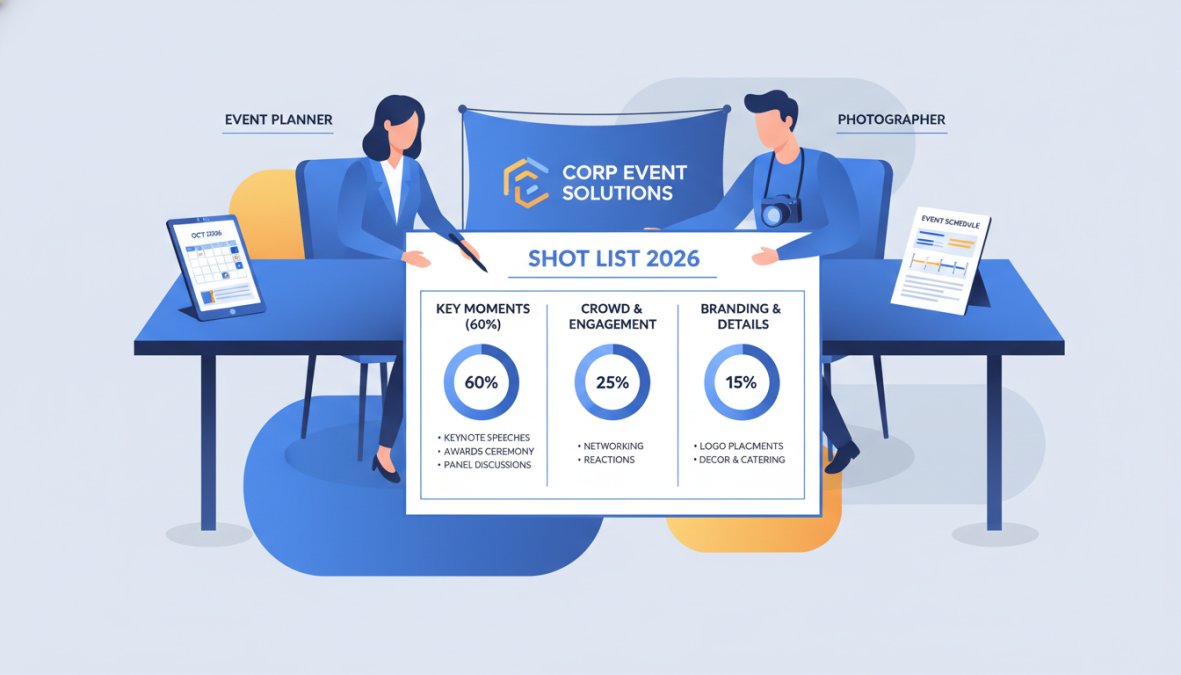
Share this list at least one week before the event. A good photographer will review it, flag logistically difficult shots, and suggest additions you may have missed.
According to the Professional Photographers of America’s event photography resources, shot lists are one of the most effective tools for aligning client expectations with photographer execution on complex events.
What Should Be in Your Corporate Event Photography Contract
A corporate event photography contract template should cover six core elements: scope of work, deliverables, payment terms, cancellation policy, image licensing, and turnaround time. Missing any of these creates ambiguity that tends to resolve in the photographer’s favor.
Image Licensing and Post-Event Usage Rights
Copyright in a photograph belongs to the photographer by default under U.S. law, as confirmed by the U.S. Copyright Office’s guidance on visual works. What your contract negotiates is a license, the specific permissions you have to use those images.
A corporate usage license should explicitly address:
- Scope of use: Can you use images for advertising, social media, press releases, annual reports, and internal communications?
- Geographic scope: Is the license limited to specific regions or global?
- Duration: Is the license perpetual or does it expire?
- Exclusivity: Can the photographer sell or license the same images to other parties?
- Attribution: Are you required to credit the photographer in commercial uses?
The practical advice is blunt: if your contract doesn’t explicitly grant you the right to use images in paid advertising and press releases, assume you don’t have it. If your marketing team plans to run paid social campaigns featuring event photography, that needs to be in the contract.
Turnaround Time and Editing Workflow Expectations
Turnaround time should be written into the contract as a specific commitment, not a vague promise. Standard turnaround benchmarks for corporate events:
- Initial selects (unedited previews): 24-48 hours for time-sensitive clients
- Full edited gallery: 7-14 business days for standard delivery
- Rush delivery: 48-72 hours for full gallery, typically at a premium
Ask specifically about the editing workflow: Does the photographer deliver all images or only their selects? Are color correction and exposure adjustment included, or only basic culling? These details determine whether you receive 200 polished images or 800 lightly processed files your team still needs to sort through.
How to Hire a Corporate Event Photographer Without Common Mistakes
The most common mistakes follow a predictable pattern. Knowing them in advance costs nothing and saves significant budget.
Mistake 1: Hiring based on price alone. The cheapest quote rarely accounts for experience with corporate environments, professional equipment capable of handling mixed lighting, or post-production capacity to deliver on deadline.
Mistake 2: Skipping the contract review. Many event planners sign contracts without reading the licensing terms, then discover they can’t use event images in paid advertising without additional fees.
Mistake 3: No shot list. Without one, the photographer guesses what matters most to your brand. Some guesses are good. Many are not.
Mistake 4: Ignoring turnaround time. If your post-event communications depend on images within 48 hours, that must be agreed upon before the event, not requested afterward.
Mistake 5: Not vetting for corporate-specific experience. A talented wedding photographer and a skilled corporate event photographer have different skill sets. Corporate work requires experience with stage lighting, large group logistics, and professional documentation without disrupting the event atmosphere.
The throughline across all five mistakes is the same: treating photography as a commodity purchase rather than a professional service engagement. Organizations that get the best results treat their photographer as a partner in event planning, not a vendor who shows up on the day.
For organizations in the DMV area seeking a photographer with proven corporate event credentials, Event Photojournalism brings award-winning coverage across conferences, galas, product launches, and award ceremonies, with high-resolution delivery and customized solutions built around each client’s brand goals.
According to IBIS World’s photography industry analysis, demand for professional event photography services has grown consistently as organizations recognize the long-term marketing value of high-quality event documentation.
Finding the right corporate event photographer is harder than it looks, and the gap between a good hire and a poor one shows up in your marketing content for years. Event Photojournalism delivers award-winning, high-resolution corporate event photography across the DMV area, with customized coverage solutions designed to elevate your brand and produce imagery that works well beyond the event itself. From conferences and galas to product launches and award ceremonies, our team handles the full scope of professional documentation with the reliability your brand representation demands. Contact Event Photojournalism to discuss your next event.
Frequently Asked Questions
What should I look for in a corporate event photographer?
When learning how to hire a corporate event photographer, prioritize candidates with a portfolio that shows experience with business-themed shoots, trade shows, galas, and award ceremonies. Look for consistency in lighting, composition, and candid moments across diverse event types. Verify they use professional equipment, understand on-site coordination, and can deliver high-resolution images suitable for press releases and marketing assets. Client testimonials and turnaround time guarantees are also strong indicators of reliability.
How much does a corporate event photographer cost?
Corporate event photography rates typically vary based on event length, location, deliverable count, and the photographer's experience level. Half-day rates often start around $500-$900, while full-day coverage can range from $1,200 to $3,500 or more for seasoned professionals. Additional costs may include travel fees, post-production editing, rush delivery, and extended image licensing. Always request an itemized package breakdown before signing a photography contract to avoid unexpected charges.
Do I need a contract for a corporate event photographer?
Yes, a corporate event photography contract is essential. It should clearly define deliverables, turnaround time, cancellation terms, and image licensing rights. Without a contract, you risk disputes over who owns the photos, how they can be used in internal communications or press releases, and what happens if the photographer cancels. A solid contract protects both parties and ensures your marketing assets and brand representation needs are fully covered.
How far in advance should I book a corporate event photographer?
For most corporate events, booking at least 4-8 weeks in advance is recommended. For large-scale events like product launches, galas, or multi-day conferences, booking 2-3 months ahead is advisable, especially during peak event planning seasons. Popular photographers with strong portfolios fill their calendars quickly. Early booking also gives you time to finalize your event photography shot list and align on logistics before the event day.
What is the difference between a corporate event photographer and a wedding photographer?
A corporate event photographer specializes in professional documentation of business environments, capturing keynote speakers, networking groups, brand activations, and candid moments that serve as marketing assets. Wedding photographers focus on emotional storytelling for personal milestones. Corporate photography requires technical skill suited to conference lighting, fast-paced schedules, and brand representation standards. The editing workflow and image licensing terms also differ significantly, as corporate clients often need broad usage rights for press releases and internal communications.
This article was written using GrandRanker