Table of Contents
- What Is Business Event Photography for Marketing
- Benefits of Professional Event Photography for Business Growth
- Creating an Event Photography Shot List for Marketing Success
- How to Use Event Photos for Social Media Marketing
- Preparing Your Team for a Professional Photography Shoot
- Legal Considerations and Image Licensing Rights
- Measuring the Marketing Impact of Your Event Photography
- Conclusion
Last Updated: August 8, 2026
What Is Business Event Photography for Marketing
Business event photography for marketing is the strategic capture and use of high-quality images from corporate events, conferences, galas, and product launches to support brand messaging, amplify reach, and generate marketing assets. Unlike casual event coverage, this approach treats photography as a deliberate marketing tool designed to tell your brand’s story, document key moments with stakeholders, and create repurposable content for social media, press releases, and donor relations.
At Event Photojournalism, we understand that professional event photography goes far beyond simply having someone point a camera at attendees. It’s about identifying moments that matter to your mission, keynote speakers delivering insights, sponsors engaging with your audience, VIPs networking, and capturing them in ways that reinforce your brand identity and marketing objectives.
The difference between snapshot coverage and strategic event photography comes down to intent. A photographer working with marketing goals in mind knows which moments will resonate on LinkedIn, which images support your fundraising narrative, and how to capture authentic interactions that prove your event’s value to stakeholders who weren’t there. This visual documentation becomes your marketing collateral for months after the event ends.
Benefits of Professional Event Photography for Business Growth
Professional event photography delivers measurable value across multiple business functions. The primary benefit is content creation: a single well-executed event generates dozens of high-resolution images ready for social media, annual reports, press releases, and website features. This eliminates the need to commission separate photo shoots or rely on generic stock imagery that fails to represent your actual brand and audience.
Beyond content volume, professional coverage strengthens brand awareness and perception. When attendees see themselves or their peers featured in polished event coverage, it reinforces the prestige and professionalism of your organization. For nonprofits and associations, this visual documentation proves impact to donors and board members. For corporate enterprises, it demonstrates company culture and thought leadership to prospects and employees alike.
Event photography also serves lead generation and relationship-building functions. High-quality images of your VIPs, sponsors, and key stakeholders create touchpoints for follow-up communications. A sponsor seeing themselves prominently featured in your post-event coverage strengthens their connection to your mission and increases likelihood of future partnership. This is particularly valuable for nonprofits managing donor relations and corporate clients managing stakeholder engagement.
The ROI extends to press coverage and media relations. Professional event photography provides journalists and media outlets with publication-ready images, which increases the likelihood your event receives press coverage. A PR professional armed with compelling visuals can pitch stories more effectively and control the narrative around your event rather than hoping media coverage captures your key messages.
Finally, professional photography reduces post-production burden. Working with a photographer who understands your marketing needs means receiving high-resolution, properly exposed images that require minimal editing. This accelerates your ability to deploy assets and respond quickly to time-sensitive opportunities like same-day social media coverage or next-morning press releases.
Creating an Event Photography Shot List for Marketing Success
A shot list is your strategic blueprint for what gets photographed at your event. It transforms event photography from reactive coverage into intentional documentation aligned with your marketing objectives. Without a shot list, photographers capture whatever happens to unfold in front of them, which may or may not serve your marketing goals.
Essential Moments to Capture
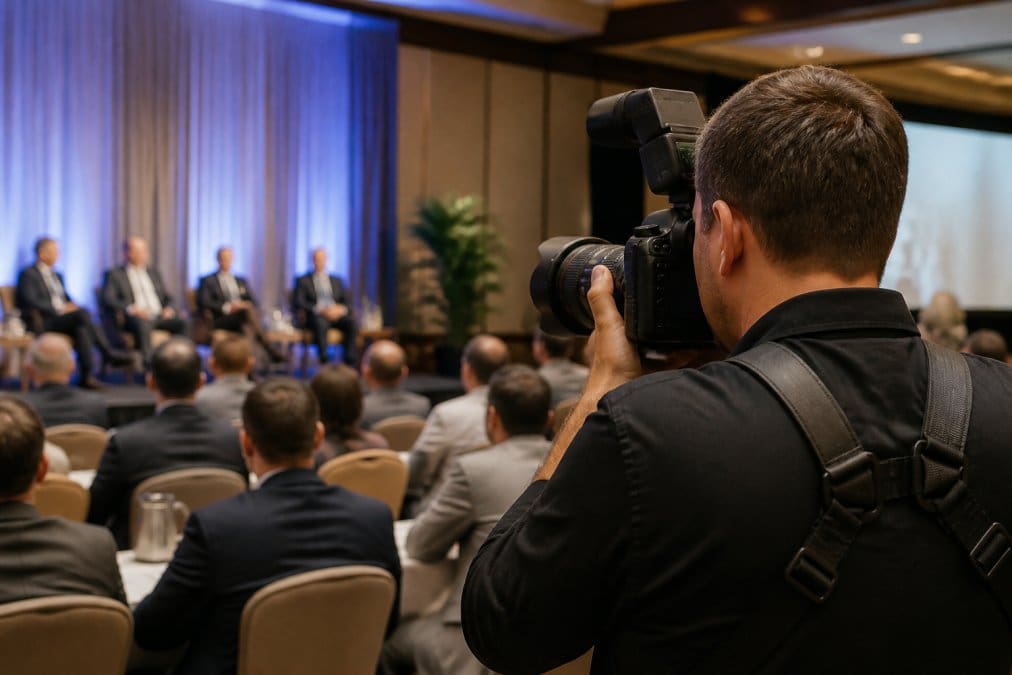
Your shot list should prioritize moments that tell your brand story and support your marketing narrative. Start with leadership and speakers: images of your executive team, keynote presenters, and board members delivering remarks or engaging with attendees. These images establish authority and thought leadership, and they’re essential for LinkedIn, annual reports, and press releases.
Next, capture sponsor and VIP moments. If your event depends on sponsors or features important stakeholders, photograph them actively engaged, not stiff posed shots, but candid moments of genuine interaction. A sponsor at a booth engaging with attendees, a major donor in conversation with your executive director, a board member networking, these images strengthen relationships and provide visual proof of partnership value.
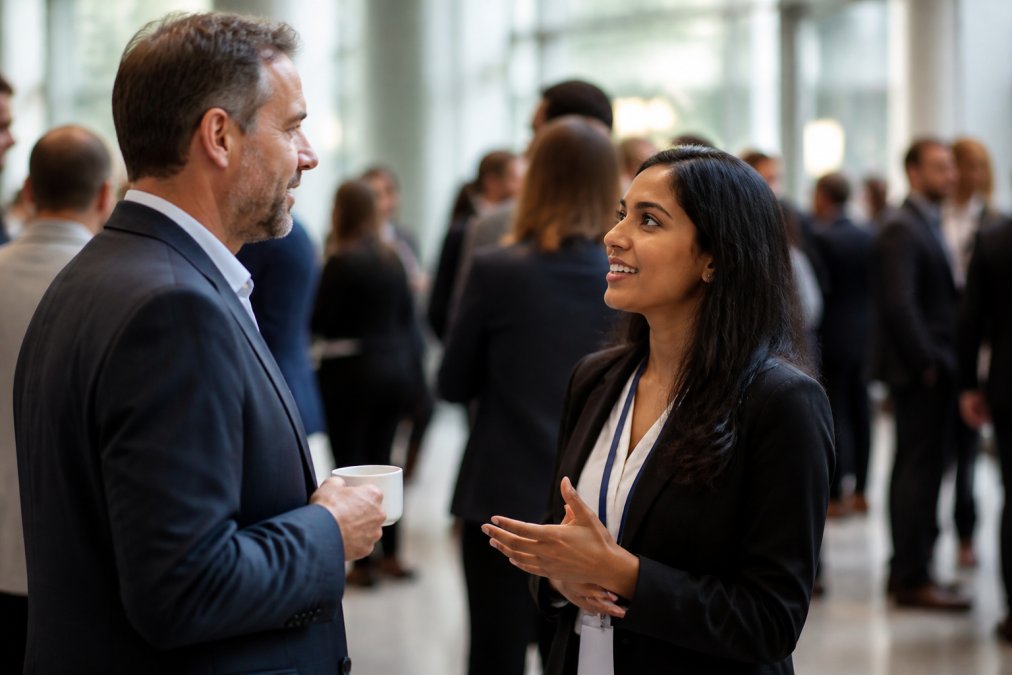
Attendee engagement and networking moments are critical for demonstrating your event’s value. Photograph genuine conversations, people taking notes during presentations, audience reactions during key moments, and the energy of the room. These candid moments convey the authenticity and impact of your event far better than posed group photos. They’re also more shareable on social media because they feel real rather than staged.
Product demonstrations, award presentations, and ceremonial moments deserve dedicated coverage. If your event includes a product launch, award ceremony, or significant announcement, ensure your photographer understands the timing and positioning needed to capture these moments effectively. Brief your photographer on what’s coming so they can position themselves strategically.
Finally, include environmental and atmospheric shots. Wide-angle images of the venue, the stage setup, the crowd, and the overall event environment provide context and scale. These images work well for social media stories, website galleries, and press releases because they convey the magnitude and professionalism of your event.
Planning Your Shot List by Event Type
Different event types require different photography strategies. For conferences and summits, prioritize speaker coverage, panel discussions, and networking moments. Photograph attendees engaged with content, speakers answering questions, and the overall conference environment. Include shots of signage, booth areas, and any interactive elements.
For product launches, emphasize the product itself in context, leadership presenting the product, and attendee reactions. Capture the product from multiple angles, in use if possible, and in the hands of speakers or demonstrators. Document the reveal moment and immediate audience response.
For galas and fundraising events, focus on donor recognition, VIP moments, and the overall elegance of the evening. Photograph attendees in formal attire, key donors with leadership, award presentations, and the decorated venue. These images support donor relations and demonstrate the caliber of your event to prospects.
For corporate board meetings and summits, prioritize confidentiality while capturing key moments. Photograph speakers, group discussions, and the venue without capturing sensitive content. Brief your photographer on privacy considerations upfront, high-profile board members often prefer discreet coverage.
For trade shows, document your booth setup, staff interactions with visitors, product displays, and any demonstrations. Include wide shots showing booth traffic and activity.
How to Use Event Photos for Social Media Marketing
Event photography unlocks immediate social media content. The morning after your event, you can begin posting highlights, a practice that extends your event’s visibility and keeps attendees engaged in the narrative beyond the live experience.
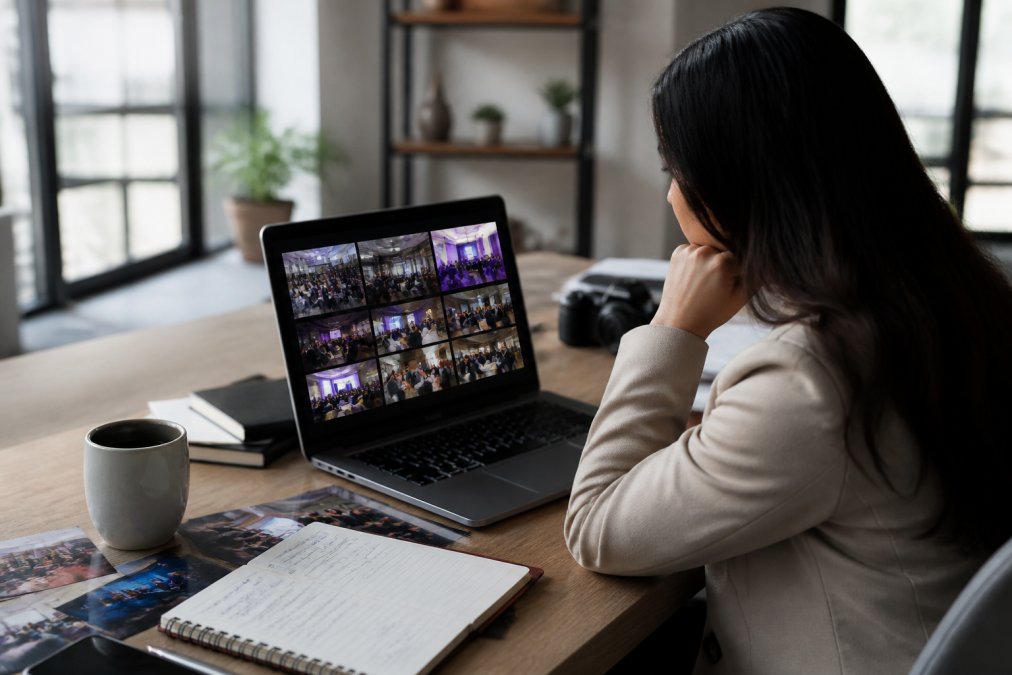
(/how-to-include-event-photos-in-sponsorship-decks/how-to-include-event-photos-in-sponsorship-decks-1786069611/) for Social Media Marketing]
Start with same-day or next-morning posts. Share your best 3-5 images within 24 hours of the event with captions that reinforce your marketing message. For a nonprofit gala, this might be "Thank you to our incredible sponsors and donors who made tonight possible." For a product launch, it’s "Introducing [Product], here’s the moment it hit the stage." These immediate posts capitalize on attendee excitement and reach people who are still thinking about the event.
Create a content calendar stretching 4-6 weeks after the event. Rather than dumping all images at once, space them across multiple posts. Feature different moments, different attendees, and different aspects of the event. This extends your event’s marketing lifespan and gives followers multiple reasons to engage.
Use event photos to tell different stories on different platforms. On LinkedIn, share professional moments featuring speakers, thought leadership, and business impact. On Instagram, lean into the visual storytelling, behind-the-scenes moments, attendee energy, and the atmosphere of the event. On Facebook, combine images with longer-form storytelling about your event’s impact. On TikTok or Instagram Reels, create short video compilations of event highlights set to music.
Tag attendees and speakers when appropriate. This increases reach as people share posts featuring themselves and their networks. For corporate events, tagging sponsors and partners extends visibility and strengthens those relationships.
Repurpose event photos beyond social media. Use them in email newsletters to event attendees and prospects. Feature them in your annual report or impact report. Include them in press releases about your event. Create a dedicated gallery on your website. Use them as backgrounds in presentations about the event’s success.
Preparing Your Team for a Professional Photography Shoot
Your photographer’s success depends on clear communication about your expectations, your event’s logistics, and your marketing objectives. Start by scheduling a pre-event briefing, even a 30-minute call makes a significant difference.
During this briefing, share your shot list and explain why certain moments matter to your marketing goals. Walk through the event timeline and identify key moments: when speakers present, when awards are given, when VIPs arrive. Explain the layout of the venue so your photographer understands sightlines and positioning.
Provide a list of important people who should be photographed. Include their names, titles, and context (e.g., "Sarah Chen, keynote speaker" or "James Rodriguez, our lead sponsor"). This prevents your photographer from wasting time trying to identify people or missing opportunities to photograph key stakeholders. If your event includes high-profile attendees who value privacy, brief your photographer on discretion requirements.
Communicate your brand’s visual style. Do you want polished, posed moments or candid, photojournalistic coverage? Do you prefer bright, energetic images or more subdued, professional tones? Show your photographer examples of event images you’ve liked in the past. This helps them understand your aesthetic preferences and deliver images aligned with your brand identity.
Discuss technical requirements upfront. Confirm that your photographer will deliver high-resolution images suitable for print (300 DPI) and digital use. Discuss file formats, delivery timeline, and any retouching expectations. Clarify whether you need images in color, black and white, or both.
Address access and logistics. Confirm whether your photographer needs credentials, parking, or special entry instructions. Let them know where they can position themselves during key moments. If there are restricted areas or sensitive moments, clarify those boundaries in advance rather than during the event.
Finally, designate a point person at your event who can help your photographer navigate logistics, provide real-time updates on timing changes, and help identify important people or moments. This person doesn’t need to be your marketing director, it could be an event coordinator or staff member, but having someone available to support the photographer’s work prevents missed opportunities.
Legal Considerations and Image Licensing Rights
Image licensing and usage rights are critical business considerations often overlooked in event planning. When you hire a professional photographer, you must clarify who owns the images, how you can use them, and what restrictions apply.
The default legal position is that the photographer owns the copyright to images they create. This means you cannot legally use those images without a license agreement. Before your event, establish a written agreement specifying your usage rights. At minimum, your agreement should grant you a perpetual license to use event images for internal marketing, social media, website content, and promotional materials related to your organization.
Discuss whether your license includes the right to modify images (crop, adjust color, add text overlays) or whether you need to use them as-is. Clarify whether you can license images to third parties, for example, allowing sponsors to use event images in their own marketing. Some photographers include this; others restrict it and charge additional fees.
Address image attribution. Many photographers request credit when their work is published. Establish whether you’ll provide attribution and in what format. This is a reasonable request and strengthens photographer relationships.
Understand restrictions on your use. Some photographers restrict commercial use or require additional licensing fees for certain applications. Clarify these upfront to avoid legal complications later.
For attendee privacy, establish a clear photo policy. Inform attendees that professional photography will occur and explain how images may be used. For events with high-profile attendees or sensitive content, some organizations require explicit consent before photographing certain individuals. This is particularly important for board meetings, confidential strategy sessions, or events involving government officials.
If your event includes minors, obtain parental consent before photographing them. This is both a legal requirement and an ethical best practice. Include clear language in your event materials stating that photography will occur and that you’ll use images in marketing materials.
For nonprofit galas and fundraising events, clarify whether donors can opt out of photography. Some donors prefer privacy; respecting this preference strengthens donor relationships.
Measuring the Marketing Impact of Your Event Photography
Event photography’s value extends beyond immediate social media engagement. Measure its impact across multiple dimensions to understand its contribution to your marketing objectives.
Start with content metrics. Track how many social media posts feature event photography, how many impressions and engagements those posts receive, and how they compare to non-event content. Event content typically outperforms other content because it features real people, real moments, and authentic storytelling. If your event photos generate 3x the engagement of your typical social post, that’s a clear ROI signal.
Monitor website traffic and gallery visits. If you feature event photos prominently on your website or in a dedicated gallery, track how many people view those images and how long they spend engaging with them. High engagement suggests your audience values seeing your event coverage.
Measure press coverage. If event photography helps you secure media coverage, track the number and quality of articles featuring your event. Calculate the earned media value, what you would have paid for advertising equivalent to the reach of that press coverage. Professional event photography increases press coverage likelihood, so improved media relations are a measurable outcome.
Track donor and sponsor feedback. After the event, ask donors and sponsors whether they appreciated seeing themselves featured in event coverage. This qualitative feedback is valuable even if it’s not quantifiable. Donors who see themselves or their peers featured in professional coverage feel more connected to your organization.
Monitor lead generation impact. If your event serves business development purposes, track how many leads or prospects engaged with event content on social media or your website. Did event photos lead to website visits, demo requests, or sales conversations? This directly connects photography to revenue impact.
For corporate events, measure internal impact. Did event coverage strengthen employee engagement or company culture perception? Did it support recruiting or employer brand objectives? Internal event photography serves purposes beyond external marketing.
Calculate cost per asset. Divide your photography investment by the number of usable images delivered. A photographer delivering 200 high-quality images for $2,000 costs $10 per image, a low cost for marketing assets you’ll use for months. Compare this to the cost of commissioning a photo shoot specifically for marketing content, which typically costs significantly more.
Professional event photography transforms your events from one-time experiences into lasting marketing assets. The images you capture today become your content, your proof points, and your storytelling tools for months to come. When you approach event photography strategically, with clear marketing objectives, intentional shot lists, and proper planning, you maximize the return on your event investment and amplify your message far beyond the attendees in the room.
Event Photojournalism specializes in this strategic approach. Our award-winning team across the DMV area understands how to capture moments that matter to your marketing, deliver images ready for immediate deployment, and provide the professional, discreet coverage that builds trust with your stakeholders. Whether you’re planning a nonprofit gala, corporate conference, product launch, or board summit, we deliver the visual assets that elevate your brand and maximize your mission. Contact Event Photojournalism today for a consultation about your upcoming event.
Frequently Asked Questions
What makes professional business event photography different from standard photography?
Professional business event photography combines technical expertise with strategic visual storytelling. Photographers trained in this discipline understand corporate identity, brand consistency, and the moments that matter most for your marketing objectives. They deliver high-resolution images optimized for multiple platforms, capture candid moments that feel authentic rather than posed, and work discreetly so attendees remain comfortable. This approach transforms raw event coverage into polished marketing assets ready for press releases, social media, annual reports, and donor relations materials.
How quickly can you deliver event photos after the event?
Turnaround time depends on the scope of your event and your specific needs. Many organizations need highlights for immediate press releases or social media promotion, while others can wait for a complete gallery. Professional photographers typically provide preliminary selects within 24-48 hours and full edited galleries within 1-2 weeks. Discuss your timeline upfront when booking, rush delivery may be available for time-sensitive campaigns. High-resolution final files should always be delivered in formats suitable for print, digital, and web use.
What should I include in an event photography shot list for marketing?
A strong shot list captures both planned moments and candid interactions. Include keynote speakers, panel discussions, networking scenes, VIP interactions, award presentations, product demonstrations, and crowd energy shots. For fundraising galas, prioritize donor moments and leadership engagement. For product launches, focus on the product reveal and attendee reactions. For conferences, capture educational sessions and networking. The best lists balance posed moments (for credibility) with candid shots (for authenticity). Work with your photographer beforehand to identify key people, sponsors, and moments unique to your event's marketing goals.
Can event photos really improve our marketing ROI?
Yes. High-quality event photography drives measurable marketing outcomes. Professional images increase engagement on social media posts by 40-80% compared to poor-quality alternatives. Event photos serve as marketing collateral for months after the event, in email campaigns, website galleries, press releases, and donor reports. They build brand authority by showcasing your organization's professionalism and impact. For nonprofits, compelling event imagery strengthens fundraising appeals. For corporations, event documentation supports brand storytelling and employee engagement. The key is planning your photography strategy around specific marketing objectives before the event begins, not just documenting what happens.
This article was written using GrandRanker