Last Updated: November 18, 2026
Quick Summary
Effective event photography marketing for a small business starts with choosing one primary event type and one primary buyer, then building every channel around that niche. Run only repeatable tactics you can sustain solo, such as a one-action website, referral follow-ups, and one strong social post per week. Add paid ads last, after referrals and local search produce booked work.
- Choose one primary event type and one primary buyer so your marketing compounds instead of resetting every quarter.
- Build your website around a single booking action rather than splitting attention across five calls to action.
- Two weeks after delivery, send past clients a short note with three standout images asking about next year’s date.
- A sustainable social rhythm for a solo operator is one strong post per week plus stories on live event days.
- Respond to every inquiry within one business day using a simple three-touch follow-up sequence.
Table of Contents
- Why Event Photography Marketing Fails for Small Studios
- Photography Marketing Ideas That Fit a Solo Operator’s Schedule
- How to Promote Your Photography Business on Social Media Without Burning Out
- Where to Advertise Photography Services for Event Clients
- Local SEO and Google Business Profile for Event Bookings
- Marketing Photography Examples You Can Copy This Month
- Lead Follow-Up and Booking Conversion: The Step Most Photographers Skip
- Booking Your Next Event Coverage With Event Photojournalism
- Frequently Asked Questions
Why Event Photography Marketing Fails for Small Studios
Many small studios struggle with event photography marketing when they try to reach everyone. They fail because they market to everyone. For a deeper walkthrough of marketing corporate photography services, start with narrowing the field.
The niche decision comes first because it shapes every channel downstream. A studio known for candid nonprofit gala coverage gets referred by development directors. A studio known for “events” gets referred by nobody, because nobody’s job title is “events in general.” Pick the buyer, then pick the channels.
The Niche Decision That Shapes Every Channel
Choose one primary event type and one primary buyer, then let everything else follow. If you shoot fundraising galas for associations, your website copy, portfolio edits, and outreach all speak to development and communications directors. That single decision tells you which images to lead with, which venues to know, and which referral partners matter. Studios that skip this step end up rebuilding their marketing every quarter because nothing compounds.
Photography Marketing Ideas That Fit a Solo Operator’s Schedule
Solo photographers don’t need more tactics. They need fewer that actually get done. The marketing that works for a one-person studio is the kind you can run in short, repeatable blocks: a website built around one action, a referral habit, a posting rhythm you can sustain, and a follow-up sequence that runs whether you’re editing or on site.
Build the Website Around One Booking Action
Your site should push every visitor toward one action: checking your availability and starting an inquiry. That means a portfolio organized by event type, a clear service description, and a single visible contact prompt on every page. If you want the full build sequence, this walkthrough on building a corporate photography portfolio website covers structure, galleries, and inquiry forms step by step.
Turn Past Events Into Repeat Bookings
The cheapest booking is the client you already shot. Associations and corporations run the same gala or summit every year, often with the same planner. Two weeks after delivery, send a short note with three standout images and a line asking about next year’s date. Track it in a simple spreadsheet: client, event, month, contact, follow-up date. That list becomes your calendar.
How to Promote Your Photography Business on Social Media Without Burning Out
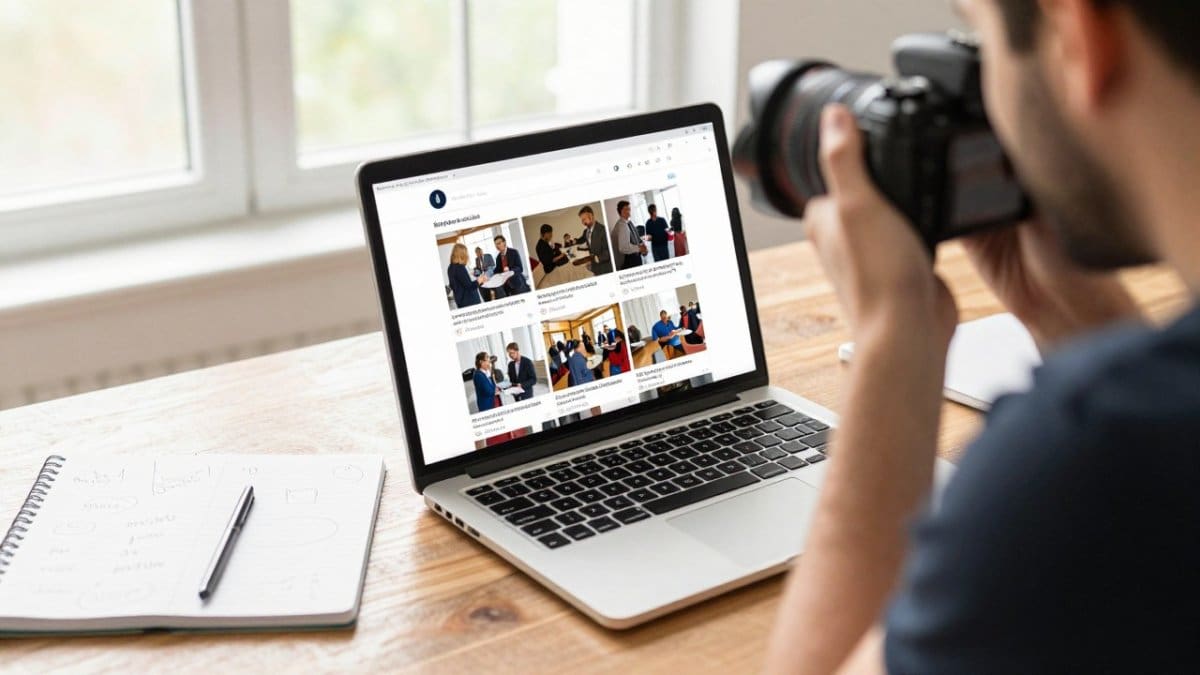
Social media for an event studio is not a portfolio feed. It is a proof-of-delivery channel for the people who hire event photographers: communications directors, development directors, planners, and marketing managers. They are not judging your composition. They are judging whether you can deliver usable images on deadline without being managed.
Post the Outcome, Not the Aesthetic
The post that books corporate work shows the image in use, such as a conference recap page or a gala press release. For weddings and milestone events, the equivalent is the family reaction, not the gear list.
A sustainable rhythm for a solo operator is one strong post per week plus a story or two on live event days. Batch the work on delivery days: while you cull and edit, pull three or four finished frames for the next month’s posts.
Match the Platform to the Buyer
- LinkedIn: corporate, association, and nonprofit buyers. Post event recaps tagged to the client (with permission), short case notes on how images were used, and delivery-time claims you can back up. This is where a communications manager checks whether you are safe to hire.
- Instagram: weddings, milestone celebrations, and venue-driven events. Use it to show range and consistency across a full event, not just hero shots. Venue tags and planner tags create the referral loop.
- Facebook: community events, local organizations, and older milestone buyers. Groups and local event pages still drive inquiries in many markets.
Do not try to run all three at full volume. Pick the one where your primary buyer already spends time and post there consistently; syndicate to the others when it is cheap to do so.
Turn Posts Into Inquiries
A post without a next step is a portfolio update, not marketing. Tracking which posts turn into inquiries makes it easier to refine your marketing strategy examples around the prompts and follow-ups that move event clients toward booking.
Watch out: posting client event images before the client has published them can breach an embargo or a sponsor agreement, confirm usage and timing in writing before anything goes live.
For the capture-to-publish workflow, including delivery timing and platform sequencing, see this guide to event photography for social media.
Where to Advertise Photography Services for Event Clients
Paid advertising is the last channel a solo event studio should turn on, not the first. Referrals and local search produce the cheapest booked work; ads only make sense once you can measure what a booked event is worth to you. The practical question is not “should I advertise” but “what is the most I can pay for a qualified inquiry and still profit?”
Set a Budget From Booked Work, Not From a Percentage
Work backward from your average event fee. If your typical corporate event books at a certain amount and your gross margin after editing, second shooter, and delivery is roughly half, then a cost per booked event above that margin loses money.
Split the test budget by intent, not by platform:
- High-intent search (Google Ads): bid on “corporate event photographer” plus your metro, “conference photographer [city],” and “gala photographer near me.” These capture planners already shopping.
- Retargeting (social): show finished event highlights to people who visited your inquiry page but did not submit. This is cheap reach against warm traffic and rarely works cold.
- Cold social reach: the weakest use of a small budget for event work. Skip it until the first two channels are producing booked events.
Track Cost Per Qualified Inquiry, Not Clicks
A click is not a lead. Define a qualified inquiry as someone with a real event date, a budget range, and decision authority, then log every inquiry in one spreadsheet: date, source, event type, event date, quoted fee, status (booked / lost / pending), and reason lost.
Watch out: cutting a channel after two weeks of no bookings usually kills a channel that was still gathering data, give a narrow search campaign at least one full event-booking cycle before you judge it.
When to Stop, Scale, or Change the Offer
Use three rules. Stop a channel when cost per booked event exceeds your margin on a typical event for two consecutive months. Scale a channel when it produces booked events at a cost per booking below half your margin, raise the budget in small increments and watch whether cost per booking holds. Change the offer before you change the channel: a “free 15-minute planning call” or a “same-week gallery preview” often converts better than a bigger ad budget. Ads amplify a message; they do not fix a weak one.
For most solo studios the honest sequence is referrals first, local search second, retargeting third, and cold paid reach last, and only after the inquiry-to-booking workflow is tight enough to convert the leads the ads deliver.
Local SEO and Google Business Profile for Event Bookings
Local search is where event inquiries start. Claim and complete your Google Business Profile with an accurate category, service area, and recent event photos. Collect reviews from planners and marketing directors after each delivery, and ask them to name the event type. Once those inquiries arrive, this Washington DC event photographer FAQ answers the questions prospects ask before they call.
Marketing Photography Examples You Can Copy This Month
Three moves you can run in the next thirty days. First, publish one case-style post per event: the brief, two images, and the result the client used them for. Second, build a one-page PDF of your best images per event type and send it to planners you’ve worked with. Third, add a short “recently photographed” section to your site and update it monthly.
Lead Follow-Up and Booking Conversion: The Step Most Photographers Skip
Most inquiries die from silence, not price. Respond within one business day, answer the questions the client is already asking, and include a link to availability. A simple three-touch sequence works: same-day reply with a portfolio link, a follow-up two days later with a relevant sample event, and a final check-in after a week. This list of questions to ask event photographers before booking is the same list your prospect is running through.
A simple three-touch sequence keeps inquiries from dying of silence.
| Touch | Timing | What to include |
|---|---|---|
| First reply | Within one business day | Portfolio link and answers to common questions |
| Follow-up | Two days later | A relevant sample event |
| Final check-in | After a week | Closing check-in with the prospect |
Booking Your Next Event Coverage With Event Photojournalism
At Event Photojournalism, we shoot corporate conferences, galas, weddings, and special events across the DMV area from our Washington DC and Northern Virginia locations, with award-winning photography and high-resolution image delivery. If your calendar has gaps this season, the fix isn’t another tactic.
If your marketing is bringing in inquiries but your portfolio isn’t closing them, the images are the bottleneck.
Frequently Asked Questions
What are the best marketing strategies for photographer businesses?
The strategies that work best for small studios are narrow and repeatable: pick one or two event types, build a website with a single clear booking action, keep a Google Business Profile updated with recent event photos, and ask every client for a review and a referral within two weeks of delivery. Pair that with a simple email list for past clients and a follow-up sequence for inquiries. Broad advertising rarely pays off for a solo operator; a focused event photography marketing plan built on referrals and local search usually does.
How can event photographers get more clients without a big ad budget?
Start with the people who already know your work. Past clients, venues, planners, and caterers are the fastest source of new bookings, and a short referral note after each delivery costs nothing. Then claim and complete a Google Business Profile, collect reviews, and publish recent event galleries on your site. When you do spend, put a small amount toward local search ads on terms tied to your event type rather than broad social ads. Track cost per inquiry so you know which channel earns its place.
How should a small photography business promote its services on social media?
Post fewer, better images and add context. A caption that names the event type, the venue style, and the moment captured tells a planner or marketing director whether you fit their next event. Mix in short behind-the-scenes clips, a monthly recap of recent work, and client testimonials. Pick two platforms where your buyers actually spend time and post consistently there instead of spreading thin across five. Save the best frames for your portfolio and use social to drive inquiries to your booking form.
Where should event photographers advertise their services?
Local search ads and directory listings reach people already looking for a photographer, which makes them the most efficient paid channels for most small studios. Venue and planner newsletters, local business association sponsorships, and community group boards put your name in front of the people who book event coverage. Social ads work better for retargeting people who visited your site than for cold reach. Whatever you choose, measure inquiries and cost per lead before adding another channel.
How can photographers encourage past clients to refer new business?
Make the ask specific and easy. After delivering images, send a short note thanking the client and asking if they know one planner, venue, or organization that needs similar coverage, with a link they can forward. Offer a clear thank-you for referrals, such as a print credit or a discount on their next booking. Keep in touch with a quarterly email showing recent work. Referrals compound when clients remember you between events, so stay visible without being pushy.
What should an event photography portfolio include?
Show the event types you want to be hired for, not everything you have ever shot. Include candid moments, speaker and stage coverage, guest interaction, and detail shots, plus at least one full gallery so buyers can judge consistency across an entire event. Add a short line under each set naming the event type and the client’s goal, such as donor relations or press coverage. Fast delivery and usage rights matter to marketing directors, so state your turnaround and licensing terms on the portfolio page.