Table of Contents
- What Is Corporate Conference Photography
- Types of Conference Events and Coverage Needs
- Creating a Corporate Event Photography Shot List
- How to Hire a Conference Photographer
- Tips for Photographing Large Conferences
- Corporate Conference Photography Pricing and Packages
- Post-Production Workflow and Rights Management
- Integrating Photography with Event Marketing Strategy
Corporate Conference Photography: A Complete Guide
Last Updated: June 27, 2026
Corporate conference photography captures the essence of your business events, transforming momentary interactions into lasting visual assets that amplify your brand message. Professional corporate conference photography ensures every important moment, from keynote speakers to networking conversations, is documented with precision and artistry. The difference between amateur snapshots and professional coverage is stark: a professional photographer arrives with a strategic shot list, knowledge of your venue’s lighting challenges, and the technical skill to capture candid moments that feel authentic rather than posed.
Events that receive professional photography coverage see significantly higher engagement on social media and in marketing materials compared to those documented casually. The right images become part of your brand narrative, telling the story of your company culture, leadership, and mission in ways that words alone cannot.
What Is Corporate Conference Photography
Corporate conference photography is the professional documentation of business events using high-resolution imagery designed for both immediate use and long-term marketing value. It goes beyond simple event coverage, it’s about capturing the energy, interactions, and key moments that define your conference while producing images suitable for press releases, social media, website content, and internal communications.
The distinction between corporate conference photography and standard event photography matters. Corporate work requires understanding business contexts: recognizing when a candid shot of executives collaborating matters more than a posed group photo, knowing which speakers and sessions warrant priority coverage, and delivering images that align with your brand identity and marketing strategy.
Professional corporate conference photography typically includes high-resolution images processed and color-corrected to match your brand standards, delivered press-ready for publication across various media. Many photographers now offer same-day delivery of select images, allowing you to share highlights on social media while the event is still fresh in attendees’ minds.
The best corporate conference photography doesn’t look like photography at all, it looks like candid moments that just happened to be captured. This requires a photographer who understands how to be discreet, anticipate moments before they happen, and blend into the event rather than dominating it.
Types of Conference Events and Coverage Needs
Business Conferences and Trade Shows
Business conferences and trade shows present unique photography challenges because they combine multiple simultaneous activities across large venues. A photographer covering a trade show must navigate crowded exhibition floors, capture booth interactions, document keynote presentations, and record networking moments.
Trade show photography requires specific expertise. Booth photography needs to showcase products and company presence without looking overly staged. Keynote speaker coverage demands understanding stage lighting and positioning to avoid backlighting and harsh shadows. The best trade show photography balances breadth with depth, overall event atmosphere combined with detailed shots of your company’s booth, executives engaging with prospects, and key moments from presentations.
Awards Nights and Galas
Awards ceremonies and gala events require elegant and sophisticated photography that captures both the ceremony itself and the celebration that follows. Gala photography demands precision timing to capture award winners at the moment their name is announced, executives on stage during presentations, and candid moments of celebration and conversation.
Professional coverage of awards nights typically includes formal group photos, candid celebration moments, and detail shots of the event setup and décor. These images serve multiple purposes: they’re shared with attendees as event memories, used in company communications, and often published in industry publications or on your website.
Corporate Retreats and Networking Events
Corporate retreats and networking events are more intimate than large conferences but equally important to document. These events often reveal company culture more authentically than formal conferences, team members collaborating, executives engaging casually with staff, and genuine moments of connection.
Retreat photography should capture both planned activities and spontaneous moments. Team-building exercises, breakout sessions, meals, and social activities all tell the story of your company culture. Networking event coverage focuses on capturing connections being made, demonstrating the value of your event and encouraging future attendance.
Creating a Corporate Event Photography Shot List
Essential Shots to Capture
A comprehensive shot list ensures your photographer captures the moments that matter most to your organization. Essential shots for any corporate conference include executive portraits and group photos for press releases and website updates, keynote speaker coverage for promotional materials and thought leadership documentation, booth and exhibition coverage showing your company’s presence and attendee interactions, networking and interaction shots demonstrating the real value of your conference, and detail shots of signage, décor, and event materials providing context and atmosphere.
Building Your Photography Brief
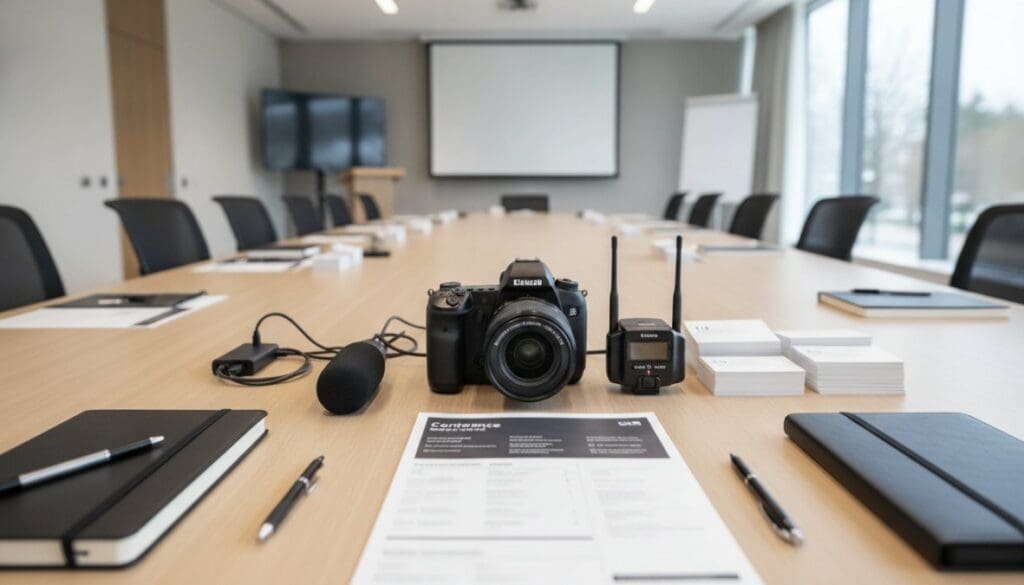
A photography brief is a written document that communicates your expectations, priorities, and specific needs to your photographer. Start by listing the key people who must be photographed, including their names and roles. Specify the key moments and sessions that require coverage, include logistical details such as event schedule, venue layout, lighting conditions, and access restrictions, and state your intended use for the images.
A clear photography brief reduces miscommunication and ensures your photographer understands what success looks like for your event. Spend time on this document, it’s one of the most valuable things you can do to improve your photography outcomes.
How to Hire a Conference Photographer
Evaluating Professional Experience and Portfolio
When hiring a conference photographer, experience matters significantly. Look for photographers who have documented events similar to yours in both type and scale. Review their portfolio carefully, analyzing their shooting style for candid moment capture, color correction consistency, and storytelling ability. Ask about their experience with your specific venue or similar spaces, as lighting challenges vary dramatically between locations.
Check references from previous corporate clients, asking specific questions about on-time delivery, image usability, handling of unexpected situations, professionalism during the event, and whether they provided the quantity and quality of images expected.
Understanding Service Area and Event Logistics
Location matters for photographer selection. Local photographers often have advantages including familiarity with regional venues, faster delivery times, and lower travel costs. Understand what "service area" means for your photographer and clarify whether travel fees apply.
Discuss logistics with your photographer before booking: How many photographers will cover your event? How will they move through the venue? What access will they need? Confirm the photographer’s equipment and backup plans, professional photographers carry backup cameras, lenses, and batteries with contingency plans for equipment failure.
Tips for Photographing Large Conferences
Discreet Coverage and Candid Photography Techniques
Large conferences require photographers who can work effectively in chaos while remaining unobtrusive. Discreet coverage means being present without being intrusive, positioning themselves strategically, using appropriate focal lengths, and developing an intuition for moments before they happen.
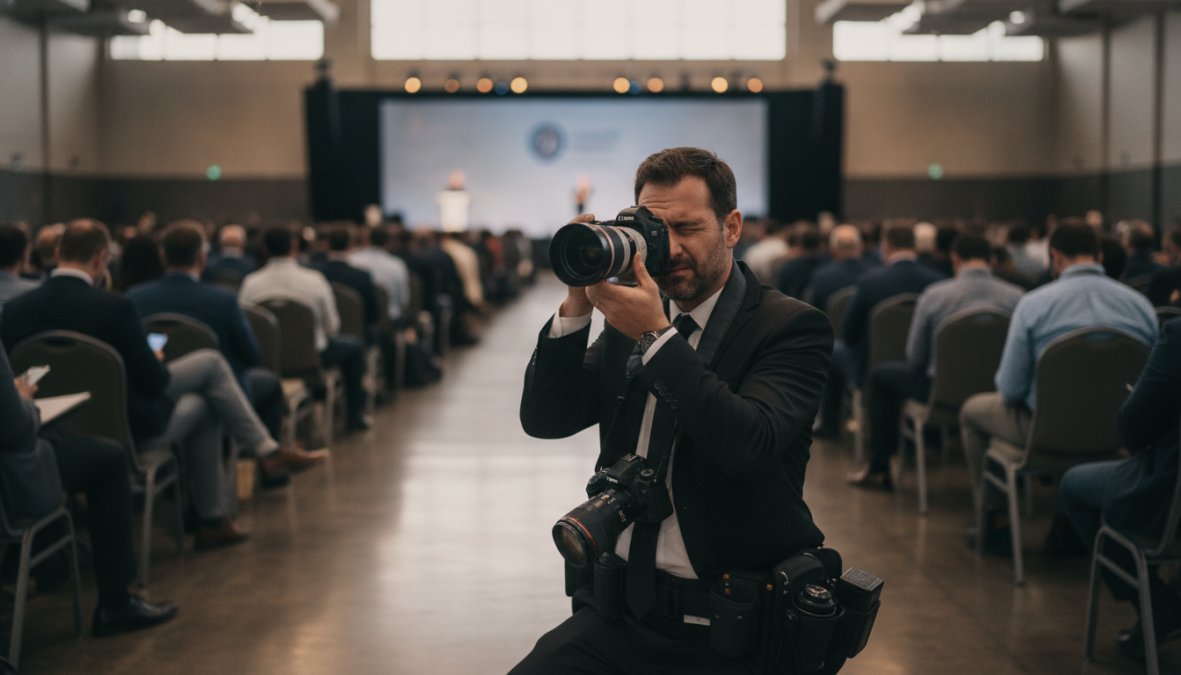
Working in large crowds requires navigating crowded spaces while maintaining stability and focus, anticipating where interesting moments will occur, and positioning accordingly. Lighting management becomes critical in large venues with mixed lighting conditions. Professional photographers understand how to expose for these mixed conditions and use techniques like exposure bracketing or fill flash.
Managing Multiple Locations and Keynote Speakers
Covering multiple simultaneous sessions requires either multiple photographers or strategic choices about which sessions receive priority coverage. Keynote speaker coverage requires specific positioning and timing, capturing the speaker at the podium, engaging with the audience, and in moments of emphasis or emotion.
Coordinating with event staff helps photographers work efficiently. Provide them with a schedule, introduce them to key staff members, and establish communication channels so staff can alert the photographer to key moments.
The biggest mistake with large conference photography is assuming one photographer can capture everything. Multiple photographers ensure you don’t miss critical moments and can specialize in different areas of the venue simultaneously.
Corporate Conference Photography Pricing and Packages
Standard Package Options
Corporate conference photography pricing varies based on event duration, number of photographers, deliverable quantity, turnaround time, and your location relative to the photographer’s base.
Half-day event coverage (4-6 hours) is suitable for smaller conferences and workshops. Full-day coverage (8-10 hours) is standard for single-day conferences. Multi-day events require either multiple photographers or strategic coverage decisions.
Standard packages typically include a set number of edited, high-resolution images delivered within a specified timeframe, a typical package might include 200-400 images from a full-day event. Premium packages offer more images, faster delivery, or additional services like on-site image selection or immediate social media-ready edits.
Turnaround Time and Image Delivery
Turnaround time varies significantly among photographers and pricing tiers. Standard turnaround is typically 2-4 weeks, expedited turnaround might be 1-2 weeks, and same-day delivery of select images is increasingly common but comes at a premium.
Professional photographers deliver high-resolution files suitable for print and publication, typically in multiple formats: full-resolution RAW or TIFF files for archival, high-resolution JPEGs for publication, and sometimes web-optimized versions for immediate social media use. Discuss storage and backup, where are images stored, how long will they be accessible, and what happens if you need images months or years later?
Post-Production Workflow and Rights Management
Image Processing and Color Correction
Professional image processing separates polished corporate photography from raw event snapshots. This includes color correction ensuring images look consistent across your entire library and match your brand standards, exposure adjustment correcting underexposed or overexposed images, and retouching removing distracting elements while maintaining authenticity.
The extent of post-production varies by package. Basic packages include essential color correction and exposure adjustment. Premium packages include more extensive retouching and customized processing to match your brand guidelines.
Usage Licensing and Commercial Rights
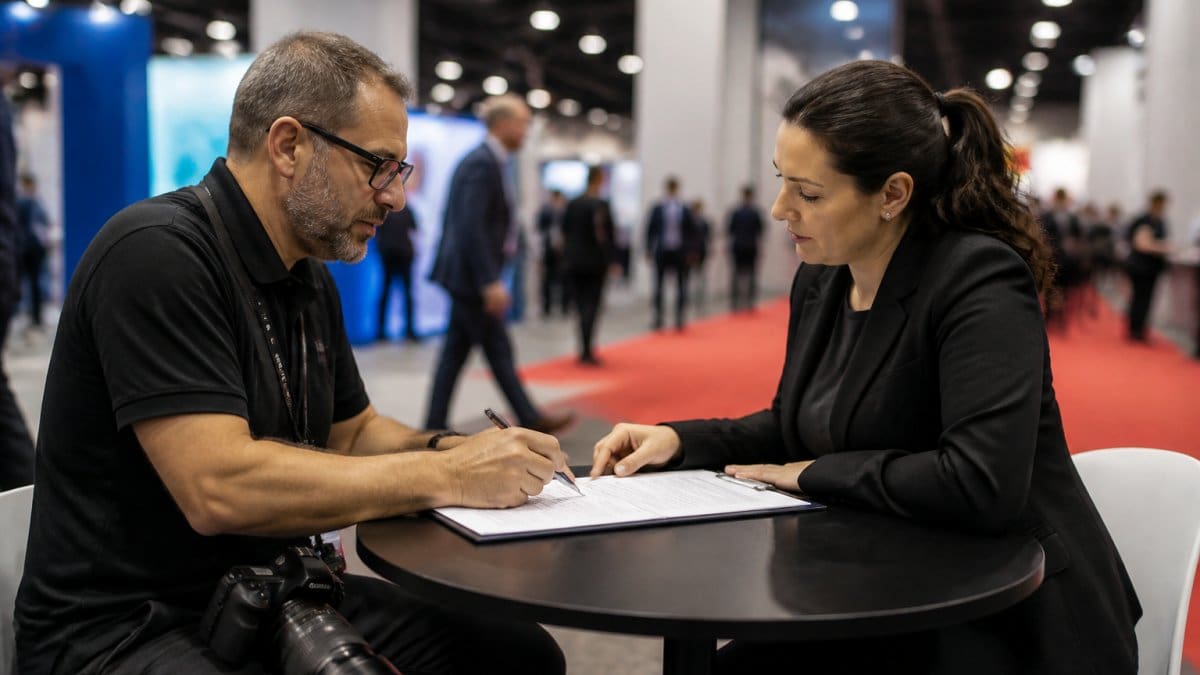
Understanding image rights is critical for corporate event photography. Most corporate photography contracts grant you a license to use images for your business purposes, marketing, internal communications, social media, and publications, typically a perpetual license allowing indefinite use.
Commercial rights determine whether you can use images for commercial purposes versus editorial purposes. Exclusive versus non-exclusive rights matter: exclusive rights mean no one else, including the photographer, can use the images, while non-exclusive rights mean the photographer may use images in their portfolio. Modification rights determine whether you can alter images for your business purposes.
Always get usage rights in writing before the event. Your contract should specify exactly what you can and cannot do with the images.
Integrating Photography with Event Marketing Strategy
Professional event photography should be integrated into your broader marketing strategy, not treated as an afterthought. Start by identifying how images will be used before the event: social media channels, press releases, case study materials, or next year’s event promotion. Coordinate with your communications and marketing teams, sharing your brand guidelines, color palettes, and photography style preferences.
Plan for immediate social media use by discussing real-time delivery with your photographer. Create a content calendar for post-event image use, featuring different moments, speakers, and highlights over weeks or months to extend the marketing value of your event.
Use images in multiple contexts: blog posts about the event, email newsletters to attendees, next year’s event promotion, and company communications. Curate images intentionally to support your brand narrative, the best corporate event photography tells a story about your company culture, thought leadership, community, and values.
Professional corporate conference photography transforms your events into lasting visual assets that amplify your brand message and extend your event’s marketing value far beyond the actual dates. The difference between hiring an experienced professional and settling for casual documentation is significant in image quality, coverage completeness, and ultimately in the business value you extract from your event investment.
Event Photojournalism brings award-winning expertise to corporate conference photography across the DMV region. Our team understands how to capture the essence of your events while delivering high-resolution, press-ready images optimized for your marketing needs. We offer customized packages designed to match your specific event requirements, reliable same-day and expedited delivery options, and comprehensive usage rights that let you use your images across all your marketing channels. Contact Event Photojournalism today and discover how professional event photography can transform your corporate events into powerful marketing assets.
Frequently Asked Questions
What should be included in a corporate event photography shot list?
A comprehensive corporate event photography shot list should include keynote speakers at the podium, candid networking moments, group photos of attendees, branded signage and booth displays, award presentations, panel discussions, audience reactions, speaker headshots, and detail shots of materials. Your photography brief should specify priority shots, key people to capture, and specific moments tied to your event's agenda. Working with your photographer to develop this list ensures all critical moments for event marketing and brand identity are documented.
How much does corporate event photography cost?
Corporate event photography pricing varies based on event duration, number of photographers needed, and deliverable requirements. Typical packages range from hourly rates for shorter events to full-day flat fees for comprehensive conference coverage. Pricing factors include high-resolution image delivery, same-day editing options, usage rights, and turnaround time for press-ready images. Premium packages may include on-site editing and color correction. Request custom quotes from professional photographers who understand your specific event scope and marketing needs.
How do you photograph a conference without being intrusive?
Discreet coverage requires positioning yourself strategically to capture candid photography without disrupting presentations or networking. Professional photographers use longer lenses to maintain distance, blend into the background, and anticipate key moments rather than directing them. Avoid using flash during speeches, move quietly between locations, and brief attendees beforehand about photography coverage. This approach to event documentation captures authentic interactions and genuine moments that enhance your brand identity while respecting the conference experience.
What is the turnaround time for corporate conference photography?
Standard turnaround times range from 1-2 weeks for fully edited, high-resolution images with color correction and processing complete. Some photographers offer expedited same-day delivery or next-day options for press-ready selections, though this typically incurs additional fees. Discuss your timeline during the hiring process, especially if you need images for immediate event marketing or PR distribution. Professional event photojournalists can prioritize key images while completing full color correction on the complete gallery within your required timeframe.
This article was written using GrandRanker