
Table of Contents
- Define Your Event Requirements and Coverage Scope
- Research Photographer Style, Experience, and Vendor Vetting
- Create a Detailed Conference Photography Shot List
- How to Brief an Event Photographer on Your Vision
- Understand Pricing Models, Day Rates, and Budget Allocation
- Establish Clear Terms with an Event Photography Contract Template
- Plan On-Site Logistics and Backup Contingency Strategy
- Conclusion
Last Updated: August 11, 2026
Define Your Event Requirements and Coverage Scope
Before contacting a photographer, clarify your conference’s specific demands. Map your timeline: How many days? Are sessions simultaneous across multiple rooms or single-track? Multi-day conferences require backup coverage for overlapping sessions and strategies for managing image volume.
Identify priority moments. Keynote speakers typically demand more attention than hallway conversations, but this depends on your event’s purpose. A fundraising gala has different priorities than a technical summit. Write down the specific sessions, speakers, or activities that matter most.
Consider your audience for these images. Will they appear in your annual report, feed LinkedIn, support press releases, or serve as marketing assets? Intended use shapes what the photographer needs to capture. Finally, establish realistic coverage hours: full-day (8-10 hours) gives comprehensive documentation; half-day works for specific sessions. Your budget and venue size determine what’s feasible.
Research Photographer Style, Experience, and Vendor Vetting
Finding the right photographer means understanding both their technical skill and approach to your event type. A photographer who excels at intimate ceremonies may struggle with a 500-person conference’s energy and logistics.
Research photographers specializing in conference and corporate event work. Their portfolio should demonstrate experience with your event’s scale and style. Look for evidence of multi-day event handling: Can they maintain consistency across multiple days? Do they understand varying lighting conditions, keynote halls, breakout rooms, and outdoor areas? Their work should show photojournalistic style, unobtrusive, authentic moments rather than posed shots.

Evaluate professionalism beyond the camera. Do they ask detailed questions about your event, audience, key stakeholders, brand identity, and intended image use? A photographer who understands your specific needs will inquire about venue layout and access restrictions. Check references from organizations that hired them for similar events, a quick conversation reveals how they handled real-world challenges and unexpected changes.
Review Sample Event Galleries and Past Conference Work
Request access to full galleries from at least two or three past conferences of similar scale. Examine high-resolution images, not just thumbnails.
Pay attention to consistency: Are images well-exposed across different lighting conditions? Do they show good composition, or feel like random snapshots? Look for authentic, candid moments rather than forced poses. Notice coverage variety, wide shots showing atmosphere, medium shots of speakers, close-ups of details and reactions. The photographer should balance planned moments (keynotes, presentations) with unplanned ones (genuine interactions, laughter, thoughtful expressions).
Ask about their approach to sensitive moments. If your conference includes board meetings or confidential discussions, you need a photographer who captures essence while respecting privacy.
Evaluate Professionalism, Dress Code, and On-Site Presence
How a photographer conducts themselves matters as much as the images they deliver. Discuss dress code expectations upfront, most corporate conferences require business attire at minimum; some require business formal or black tie.
Talk about on-site presence and workflow. Can they blend into the background without being intrusive? Attendees at board meetings don’t want to feel surveilled. A skilled photographer knows how to be present without disrupting natural flow.
Ask about equipment backup. What happens if their primary camera fails mid-conference? For multi-day events, equipment failure is a disaster. A professional should carry backup bodies. Clarify their communication style during the event: Will they check in regularly? Do they have a system for flagging missed moments?
Create a Detailed Conference Photography Shot List
A shot list ensures both you and the photographer share the same vision. Start with keynote speakers, panel discussions, and featured sessions. For each, specify what you want: wide shots of speaker and audience, close-ups of expressions, audience reactions. Call out essential speakers or executives explicitly.
Include coverage of your conference schedule in the shot list, noting timing and location of major sessions. This helps the photographer manage positioning and energy across multiple days. If you have simultaneous breakout sessions, specify which are priority.
Essential Shots for Multi-Day Business Conferences
Capture opening and closing moments, they set tone and provide closure. Document speakers comprehensively: for keynotes, get wide shots showing full stage and audience, medium shots of the speaker, and close-ups of expressions. If speakers use slides, capture both speaker and content on screen, valuable for marketing and documentation.
Get coverage of networking and informal moments. Attendees in conversation, at coffee stations, or engaged in hallway discussions reveal authentic conference energy and frequently become your most-used social media images.
Capture sponsors and exhibitors if present. If sponsors fund your event, they expect visibility. Include shots of booths, representatives, and attendee interactions. Document conference infrastructure, registration areas, signage, venue details, for context and scale documentation.
Planning Coverage for Speaker Sessions and Networking
Speaker sessions and networking require different approaches. For formal sessions, position the photographer for clean, professional angles without distracting attendees, typically side of stage or back of room, never in the speaker’s line of sight.
For panel discussions, specify that the photographer capture each panelist, the moderator, and moments of interaction. Panel moments when panelists react to each other are often more interesting than prepared remarks.
For networking sessions, brief the photographer on tone. Formal networking needs different coverage than casual happy hours. Specify whether you want posed group shots, candid conversation moments, or both. If you have VIPs or key stakeholders, note that the photographer should capture them engaging with other attendees.
How to Brief an Event Photographer on Your Vision
Schedule a pre-event call at least two weeks before your conference. Walk through your shot list together, explaining not just what you want photographed, but why. When photographers understand purpose, they make better judgment calls in unanticipated situations.
Share your conference agenda and venue layout. If possible, send floor plans showing room locations, stage setups, and photography-restricted areas. Explain access limitations upfront, some sessions may be off-limits or certain attendees may request privacy.
Provide organizational context. A photographer understanding you’re a nonprofit focused on education approaches coverage differently than one photographing a for-profit tech company. Share your brand identity and explain how you want images to represent your organization.
Discuss intended use. Will images appear in annual reports, websites, press releases, LinkedIn? Different uses demand different coverage. Annual report images should emphasize professionalism; social media can be more candid and energetic.
Brief the photographer on key people, board chair, executive director, major sponsors. You don’t need every attendee listed, but flagging VIPs helps the photographer understand priorities. Finally, establish a communication protocol: How will you stay in touch during the event? If something important is missed, how will you alert them?
Understand Pricing Models, Day Rates, and Budget Allocation
Event photography pricing varies based on photographer experience, event complexity, and deliverables. Many photographers charge a day rate, a flat fee for specified hours. Half-day typically covers 4-6 hours; full-day covers 8-10 hours. For multi-day conferences, photographers often offer discounted rates for additional days.
Clarify what’s included in the price. Does it include all images or a curated selection? How many edited, high-resolution images will you receive? What about raw files? Post-production time and editing are separate considerations. Some photographers include basic editing in their day rate; others charge additional fees for extensive retouching.
For multi-day conferences, budget allocation is critical. Allocate across shooting fees, post-production, and additional services like expedited delivery. Don’t underfund post-production, rushed editing shows in final product.
Establish Clear Terms with an Event Photography Contract Template
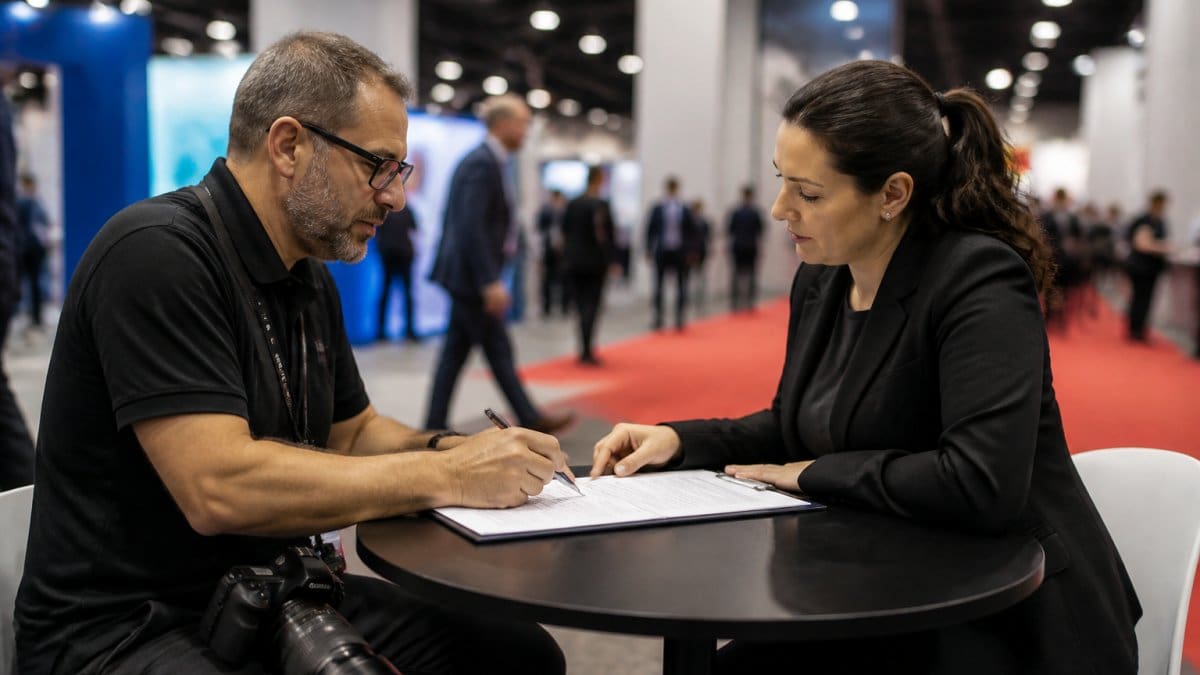
A written contract protects both parties and eliminates assumptions. Never hire a photographer without a signed agreement.
Your contract should specify event date, location, and hours of coverage, exact start and end times. For multi-day conferences, list dates and hours for each day. Define deliverables clearly: How many images? In what format (JPEG, TIFF, RAW)? What resolution? Will you receive all images or a curated selection?
Specify timeline for delivery. When will initial images arrive? When will final, fully edited images be ready? For conferences needing images for next-morning press releases, ensure the contract reflects your turnaround needs.
Key Contract Elements: Deliverables, Turnaround Time, and Image Licensing
State the total number of edited images you’ll receive. Clarify whether this is a minimum guarantee or estimate.
Specify file format and resolution. Most photographers deliver high-resolution JPEGs suitable for print and digital use. If you need RAW files for additional editing flexibility, negotiate separately, it may increase cost.
Define turnaround time precisely: "Initial gallery of 200 images within 48 hours; fully edited final gallery within 10 business days" creates accountability and manages expectations.
Image licensing and usage rights are critical. Who owns the images? Typically, the photographer retains copyright, but you receive a license for specific purposes. Clarify exactly what you can do: website use? Print materials? Social media? Media outlet licensing? Modifications?
For most organizations, you’ll want unlimited usage rights for your organization’s marketing, communications, and documentation indefinitely. Some photographers restrict usage to specific time periods or require attribution. Negotiate what works for your needs.
Discuss exclusivity. If you’re hiring a photographer for your conference, do they have permission to use images in their portfolio or for marketing? Most photographers want this right. If you need exclusive use, that’s a premium service costing more.
Post-Production Workflow and Raw Files Handling
For multi-day conferences generating thousands of images, post-production workflow matters tremendously. Ask about their editing process. Will they edit every image or only the best shots? For conference photography, you typically want consistent color and exposure across all images, but not heavy retouching that makes candid moments look artificial.
Discuss raw files specifically. Raw files contain all captured image data and allow maximum editing flexibility, but are large, require specialized software, and need significant post-processing. Most photographers don’t include raw files in standard deliverables because editing them is labor-intensive.
If you want raw files, negotiate separately. You might request raw files of specific important moments (keynote speakers, key executives) rather than all images, or ask for raw files after six months once initial editing is complete.
Clarify storage and backup processes. How will the photographer store your images during editing? Do they have backup systems against data loss? For multi-day conferences generating substantial data, you need assurance it’s handled professionally and securely.
Plan On-Site Logistics and Backup Contingency Strategy
Scout your venue in advance if possible. Walk through conference spaces with the photographer, or provide detailed descriptions and photos. Point out lighting challenges, access restrictions, and optimal positioning areas.
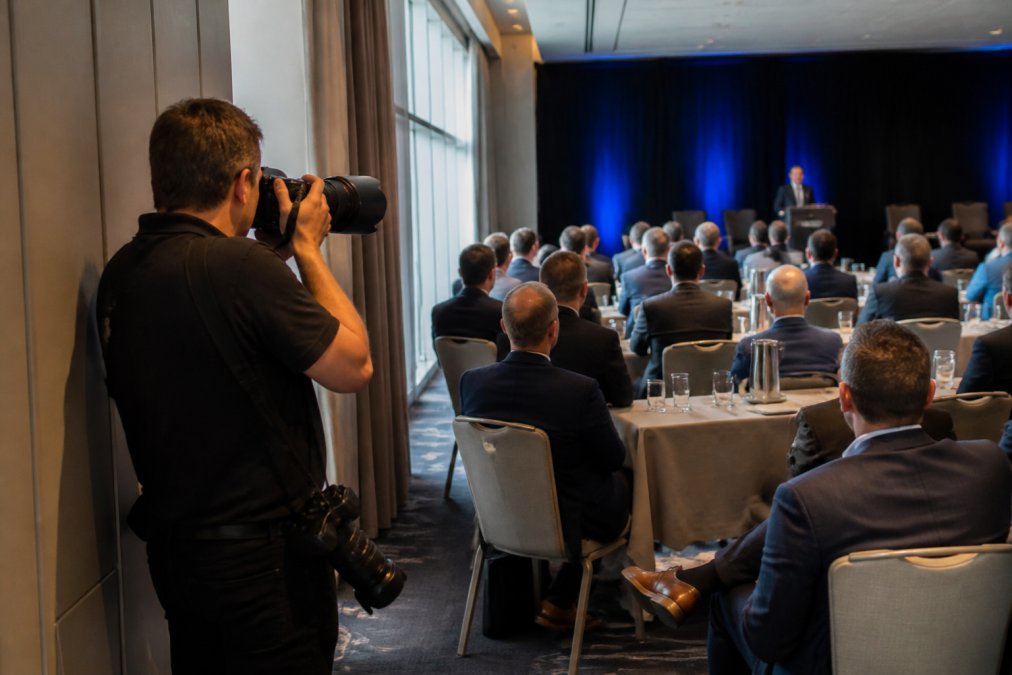
Create a detailed conference schedule for the photographer showing all sessions, speakers, room locations, and timing. Include notes on priority sessions and access restrictions. For multi-day events, provide this in advance and do a final walkthrough the morning of day one.
Establish a communication system during the event. Will you use text messages, walkie-talkies, or in-person check-ins? For large conferences, brief the photographer at each day’s start and let them work independently. For smaller events, you might want more frequent touchpoints.
Plan for photographer breaks and meal coverage. A photographer shooting 8-10 hours straight will fatigue, and image quality will suffer. If you need continuous coverage across multiple sessions, discuss whether you need two photographers or planned breaks.
Discuss backup plans for technical failures. What happens if the photographer’s camera malfunctions? Do they have backup equipment? A professional should have redundant cameras and backup storage. Consider weather and venue-specific challenges. If your conference includes outdoor sessions, brief the photographer on potential weather issues. Clarify any restricted-access or security boundaries in advance.
Plan image delivery logistics. Will the photographer provide images on USB drive or through a cloud gallery? For multi-day events, you might want preliminary images during the conference for immediate marketing use, with final edited images following after the event concludes.
Hiring the right photographer for your multi-day conference requires clarity about your needs, diligent vendor research, and detailed contract terms. The investment in finding a photographer who understands your event’s specific demands, from coverage logistics to post-production workflow, pays dividends in image quality and usability.
Event Photojournalism specializes in comprehensive conference coverage. Our team understands the complexities of multi-day events across the DMV area, from technical challenges of varying lighting to logistical demands of managing thousands of images. We deliver high-resolution imagery with fast turnaround times, detailed pre-event planning, and the discretion your executive attendees expect. Contact us to discuss how we can document your next conference with the professionalism and expertise your organization deserves.
Frequently Asked Questions
What specific shots are essential for multi-day business conferences?
Essential shots include keynote speakers at the podium, attendees networking during breaks, group photos of VIPs and sponsors, candid moments during sessions, sponsor booth activations, and closing ceremony moments. A strong conference photography shot list should prioritize brand consistency and marketing asset value. Work with your photographer to identify which sessions, speakers, and networking moments matter most to your organization's goals.
How do you manage photographer deliverables for a multi-day event?
Establish clear expectations in your contract about file formats, resolution, turnaround time, and delivery method upfront. For multi-day conferences, discuss whether you need daily highlights or a complete delivery after the event ends. Clarify whether you'll receive raw files, edited images, or both. Specify the cloud gallery or file transfer method. Include post-production timelines and the number of editing hours the photographer will invest to meet your deadline.
What should be included in a conference photography contract?
Your event photography contract template must cover coverage dates and hours, deliverables (file count, resolution, formats), turnaround time for delivery, image licensing and usage rights, payment terms and day rate, cancellation and weather contingencies, on-site logistics (parking, access, meals), and backup photographer arrangements. Include specifics about raw files, editing scope, and whether images are exclusive or can be used in the photographer's portfolio. This protects both parties and prevents misunderstandings.
What's the average cost of an event photographer per day for a multi-day conference?
Pricing depends on quantity of coverage hours, number of days, photographer experience level, editing scope, and deliverables included. Day rates vary based on location, travel requirements, and whether you need multiple photographers for simultaneous sessions. Contact Event Photojournalism or similar vendors for current pricing and custom quotes tailored to your specific conference needs, dates, and coverage requirements.
This article was written using GrandRanker