
Table of Contents
- Why a Corporate Event Photography Shot List Matters
- 10 Essential Corporate Event Photography Shot List Items
- 1. Establishing Shots and Venue Overview
- 2. Registration Table and Attendee Arrival
- 3. Candid Networking and Social Interaction
- 4. Keynote Speakers and Presentation Highlights
- 5. Sponsor Activations and Branding Signage
- 6. Detail Shots: Decor, Food, and Materials
- 7. Group Shots and Posed Portraits
- 8. AV Elements and LED Video Walls
- 9. Audience Reactions and Engagement
- 10. Event Recap and Closing Moments
- Corporate Event Photography Tips for Capturing Your Shot List
- Best Lenses for Event Photography and Gear Constraints
- Event Photography Shot List Template and Workflow
- Corporate Event Photography Pricing and Deliverables
- Hybrid and Virtual Event Photography Considerations
- Conclusion: Building Your Corporate Event Photography Strategy
10 Essential Corporate Event Photography Shot List Items
Last Updated: July 28, 2026
Planning a corporate event requires a structured photography approach. The 10 essential corporate event photography shot list items form the backbone of professional event coverage, ensuring you capture moments that matter to your client’s brand. At Event Photojournalism, we’ve worked with hundreds of corporate clients across the DMV region, and we’ve learned that a deliberate, strategic approach separates good event photography from exceptional coverage that delivers business value.
Without a clear shot list, photographers miss critical moments: keynote speakers, sponsor activations, candid networking, and brand-building opportunities. A structured approach determines whether your images end up in annual reports, LinkedIn campaigns, and investor presentations, or gathering dust in a folder.
Why a Corporate Event Photography Shot List Matters
A corporate event photography shot list is your roadmap to delivering images that serve your client’s business goals. Corporate events are expensive investments, a single gala can cost $50,000 to $200,000 to produce. Your photography must justify that investment by capturing moments that prove ROI, attendee engagement, brand presence, and speaker authority. Research shows organizations with documented photography plans capture 40% more usable images compared to unstructured shoots, meaning fewer wasted hours in post-production and faster delivery of marketing assets.
A structured approach also reduces stress on the day of the event. You already know your priorities: establish the venue, capture registration, document speakers, catch sponsors, grab candid moments, and close strong. This mental framework lets you stay present, anticipate moments, and adapt when the run-of-show shifts.
10 Essential Corporate Event Photography Shot List Items
1. Establishing Shots and Venue Overview
Capture the empty space before guests arrive. Establishing shots show the scale, design, and atmosphere of your venue, providing the visual foundation for every other image.
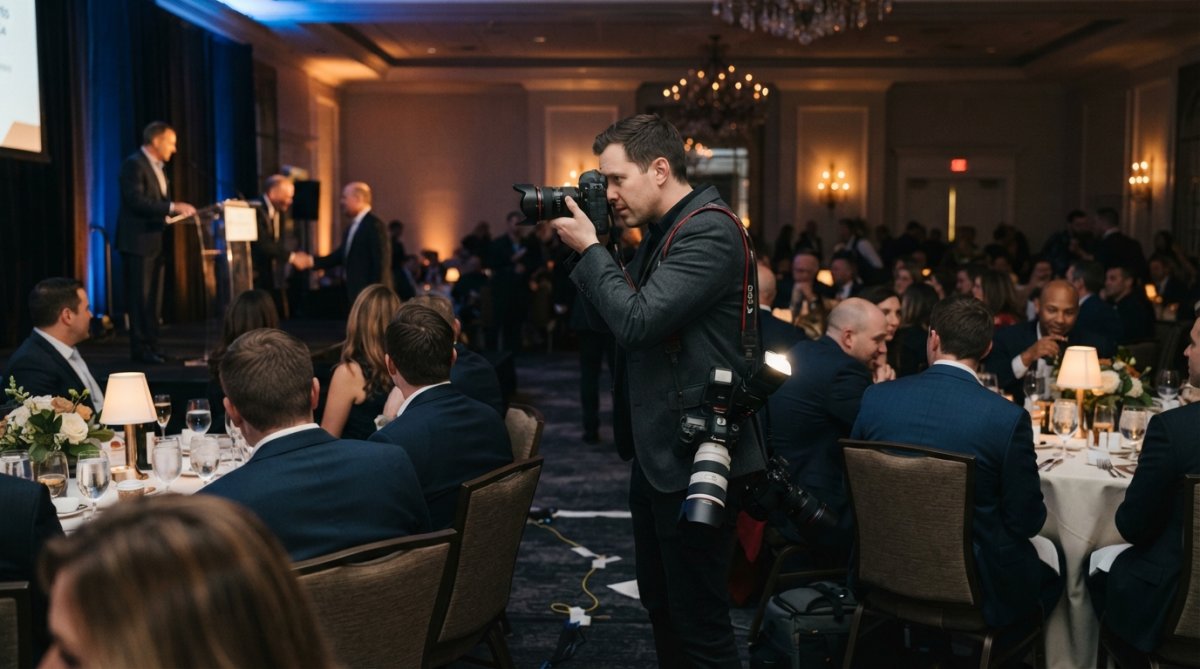
Shoot these wide shots 30-45 minutes before arrival using a wide-angle lens (14-24mm or 24-35mm range). Include the stage setup, entrance, registration area, and major design elements. Vary your angles: shoot from floor level looking up to show scale, then from an elevated position to show the full layout. Pay attention to ambient lighting and how uplighting, decorative LED walls, or architectural lighting enhance the space.
Capture establishing shots in both portrait and landscape orientation for Instagram Stories and website use.
2. Registration Table and Attendee Arrival
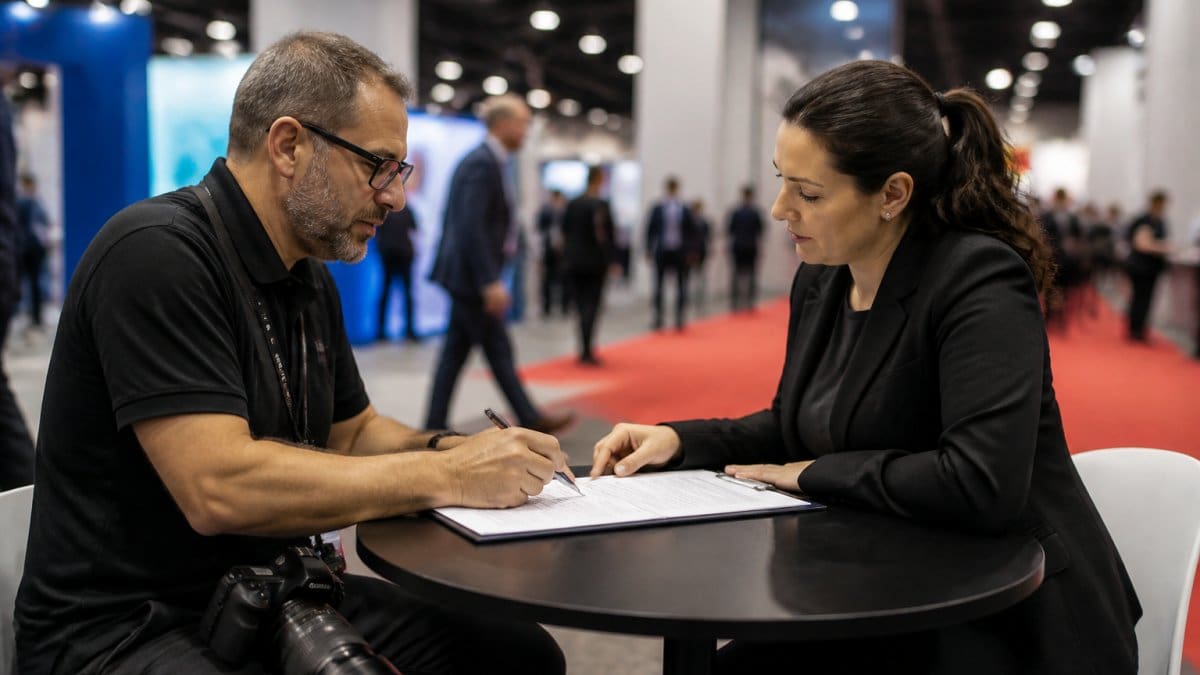
The registration area is where your event begins visually. Capture staff checking in attendees, people receiving badges, and the energy of first arrivals.
Shoot from multiple angles: wide shots of the full setup, medium shots of staff interacting with guests, and close-ups of registration materials and branded signage. Arrive during the first 15-20 minutes when there’s activity. Watch for details: branded pens, event programs with sponsor logos, table signage, and interactive elements like photo booths or digital check-in kiosks.
3. Candid Networking and Social Interaction
Candid shots of attendees talking, laughing, and connecting prove your event created value. Position yourself at the edges of conversations, watching for natural moments: handshakes, laughter, leaning in to listen, toasts. Use a 70-200mm lens or 50-85mm prime to compress the background and isolate subjects without being intrusive.
The key to authentic candid moments is invisibility. Shoot from a distance using longer focal lengths, avoiding attention. Capture a range of moments: formal introductions, casual conversations, mixed and same-gender groups, cross-generational interactions.
Never position yourself directly in front of someone’s face during a candid moment. Shoot from the side or behind, or use longer lenses to stay back.
4. Keynote Speakers and Presentation Highlights
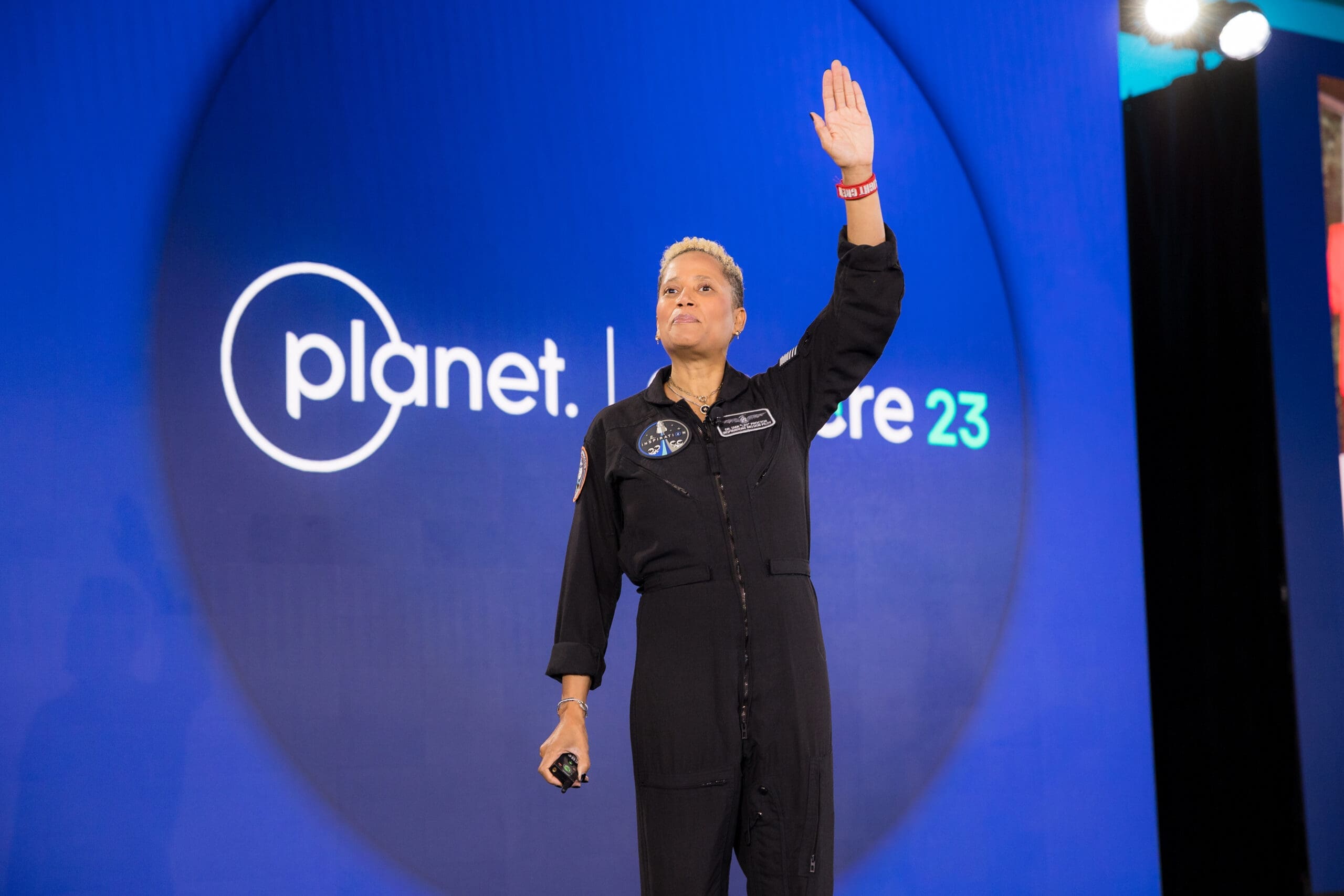
Keynote speakers are the anchor of corporate events. Shoot from multiple positions: stage left, stage right, and from the audience. Get wide shots showing the speaker with the full audience visible, medium shots of just the speaker capturing expressions and gestures, and close-ups during key moments.
Also photograph the presentation itself. If there are slides, LED video walls, or visual elements, capture those for event recaps and social media. Anticipate lighting challenges. Speakers are often backlit by stage lighting, creating silhouettes. Increase your ISO, widen your aperture, or use faster shutter speeds.
5. Sponsor Activations and Branding Signage
Sponsors pay for visibility and engagement. Document their presence, booth or activation area, and attendees interacting with their brand. Photograph each activation from multiple angles: wide shots of the full booth, medium shots of the setup and signage, and close-ups of branded materials.
Get clean, well-lit shots of sponsor logos and branding signage. Document subtle branding: logos on the stage, table signage, event programs, badges. Visit each activation during peak hours when there’s activity and engagement.
Sponsors are your client’s revenue stream. Photograph their activations with the same care you give to keynote speakers. This documentation influences whether sponsors return next year.
6. Detail Shots: Decor, Food, and Materials
Detail photography transforms event coverage into visual storytelling. Photograph table centerpieces, floral arrangements, place cards, table settings, food and beverage setups, appetizers, the bar, dessert displays, event programs, and printed collateral.
Use natural light from windows when possible, or position yourself so ambient event lighting flatters the subject. A 50mm or 85mm lens is ideal for detail work. These shots often become the most-used images in post-event marketing.
7. Group Shots and Posed Portraits
While candid photography captures authenticity, group shots and posed portraits provide clear, professional images of attendees, leadership teams, and sponsor representatives. Schedule dedicated time for group portraits. Coordinate with your client to identify which groups need photographs: leadership team, board of directors, sponsor representatives, volunteer staff.
For group shots, position people in a triangle or staggered formation rather than a straight line. Use a 50-70mm focal length to avoid distortion. For individual portraits, use a 70-85mm lens and position people with good posture, slight angles, and genuine expressions. Position people near windows or use off-camera flash bounced off the ceiling to create flattering light.
8. AV Elements and LED Video Walls
Modern corporate events rely on audiovisual elements, LED video walls, projection screens, live video feeds, and lighting design. Photograph LED walls and projection screens during key moments when they’re displaying sponsor content, keynote slides, or video testimonials. Get shots showing both the screen content and the audience’s reaction.
Capture how colored uplighting, architectural lighting, or dramatic stage lighting enhance the atmosphere. These atmospheric shots add visual richness to event recaps.
9. Audience Reactions and Engagement
The energy in the room and how attendees react to speakers and content is the heartbeat of your event story. Position yourself where you can see the audience’s faces during key moments. When a speaker makes a powerful point, capture the audience’s expressions. When there’s applause or laughter, document it. Use a 70-200mm lens to compress the background and isolate individual reactions.
Capture a range of reactions: people smiling, nodding, taking notes, leaning forward with interest, applauding. These reaction shots prove attendees found value in the content and demonstrate the event’s impact.
10. Event Recap and Closing Moments
As the event winds down, capture the final speaker, closing remarks, awards or recognition, and attendees beginning to leave. Get shots of people saying goodbye, exchanging contact information, and expressing gratitude. Don’t leave early; stay 15-20 minutes after the official closing to capture wind-down moments when people linger and network one last time.
| Shot Type | Timing | Best Lens | Key Focus |
|---|---|---|---|
| Establishing shots | Before guests arrive | 14-35mm wide | Full venue layout, lighting, design |
| Registration | First 15-20 minutes | 35-50mm | Staff, attendees, branding, energy |
| Candid networking | Throughout event | 70-200mm | Authentic moments, genuine expressions |
| Keynote speakers | During presentations | 50-200mm | Speaker authority, audience engagement |
| Sponsor activations | Peak hours | 35-85mm | Booths, branding, attendee interaction |
| Detail shots | Quiet moments | 50-85mm | Decor, food, materials, textures |
| Group portraits | Scheduled time | 50-85mm | Clear, professional, well-lit images |
| AV elements | During displays | 24-70mm | Screens, lighting, technical setup |
| Audience reactions | During presentations | 70-200mm | Engagement, expressions, energy |
| Closing moments | End of event | 35-85mm | Goodbyes, reflection, final moments |
Corporate Event Photography Tips for Capturing Your Shot List
Master Ambient Lighting and High-Contrast Scenes
Corporate event venues present lighting challenges: high-contrast situations where the stage is bright while the audience sits in darkness, colored uplighting that throws off white balance, and mixed lighting from fluorescent overheads, LED accents, and natural light.
Scout your venue before the event if possible. Identify light sources, understand where shadows fall, and plan your positioning. Shoot in aperture priority mode to adjust your f-stop based on available light. Use higher ISO (1600-3200); modern cameras handle this beautifully, and it’s better than blurry images from slow shutter speeds.
Set a custom white balance by photographing a white card under the venue’s lighting, or shoot RAW format to adjust white balance in post-production. For high-contrast scenes, expose for the highlights. Meter on the speaker’s face and let the audience fall slightly darker. You can recover shadow detail in post-production, but blown-out highlights are permanent.
Bring a small reflector or white foam board to bounce light onto subjects in shadow. Position yourself so ambient light naturally illuminates your subject’s face.
Work with Your Run-of-Show and Event Schedule
Get a detailed timeline from your client showing when speakers take the stage, when sponsor activations happen, when breaks occur, and when the event closes. Arrive 30 minutes early and walk the venue with the run-of-show in hand. Identify where speakers will stand, the best angles, and favorable lighting.
Use the run-of-show to anticipate moments. If a keynote speaker is coming up in five minutes, position yourself near the stage. If a sponsor activation is happening, move to that area. Build flexibility into your plan; events never run exactly on schedule. Stay alert and adapt when moments happen that weren’t planned.
Balance Wide Shots with Close-Up Detail Photography
A common mistake is shooting everything from the same distance, resulting in hundreds of similar medium shots lacking visual variety. Intentionally vary your focal lengths and distances. Shoot wide shots showing context and scale, medium shots with clear subjects and background context, and close-ups isolating details and creating intimacy. This variety makes your event coverage more visually interesting and gives your client’s marketing team more options.
Best Lenses for Event Photography and Gear Constraints
Versatile Zoom Lenses for Flexible Coverage
A 24-70mm f/2.8 zoom lens is the workhorse of event photography. It covers wide establishing shots, medium subject distances, and moderate telephoto reach without changing lenses. The constant f/2.8 aperture provides consistent light-gathering power across the entire focal range, critical in variable venue lighting.
A 70-200mm f/2.8 telephoto lens is your second essential lens. It lets you capture candid moments from a distance without being intrusive, isolate subjects from busy backgrounds, and get clean shots of speakers on stage. Together, these two lenses cover 95% of event photography scenarios.
Prime Lenses for Low-Light Performance
A fast 50mm f/1.8 prime lens offers exceptional low-light performance and beautiful bokeh for portraits at under $400. An 85mm f/1.8 prime is ideal for portraits and candid moments in dim lighting, with natural compression that flatters faces. The tradeoff is flexibility; you’re locked into one focal length. But the image quality and low-light performance often justify the extra effort.
Flash and Lighting Equipment for Ambient Challenges
Flash is a tool, not a crutch. Used poorly, it creates harsh shadows. Used well, it fills shadows and balances exposure without looking artificial. For corporate events, use flash sparingly. Bounce flash off the ceiling or walls rather than firing directly at subjects. Use fill flash to balance exposure in mixed lighting, not as your primary light source.
Event Photography Shot List Template and Workflow
Creating Your Customized Shot List
Start with the 10 essential items, then customize based on your client’s specific event. A corporate gala might emphasize sponsor activations and formal portraits. A conference might prioritize speaker coverage and networking. A fundraiser might focus on donor recognition.
Create a shot list document your client can review and approve before the event. Include the 10 essential categories, then add client-specific items with timing notes. Share this with your client and ask them to identify any moments you might miss.
Post-Production, Metadata, and Lightroom Organization
Import all images into Adobe Lightroom Classic. Create a folder structure organized by event name and date: "2026-07-28_ClientName_GalaEvent". Within that folder, create subfolders for each major category: "01_EstablishingShots", "02_Registration", etc.
Cull aggressively. You’ll shoot 2,000-3,000 images during a full event. Aim to deliver 200-400 final images. Add metadata as you edit: use keywords to tag images ("speaker", "networking", "sponsor"), add the client’s name, event name, and date. Apply consistent color grading and exposure corrections to your final selects.
Corporate Event Photography Pricing and Deliverables
What to Expect in Professional Deliverables
Professional corporate event photography typically includes high-resolution images delivered in digital format (JPEG and RAW files), organized by category, with metadata and keywords included. Most professionals deliver 200-400 final images from a full-day event.
Turnaround time matters. Clients often need images quickly for press releases and social media. Many professionals deliver preliminary edited images within 48 hours, then full final deliverables within 5-7 business days.
Deliverables typically include high-resolution JPEG files (300 DPI for print, sRGB color space), RAW files for maximum editing flexibility, organized folder structure with clear file naming, metadata and keywords embedded in image files, and web-optimized versions for social media (if requested). Clarify license terms upfront specifying how images can be used: internal use only, marketing materials, print publications, or unlimited use.
Legal and Privacy Considerations for Corporate Events
In the United States, photographers generally have the right to photograph in public spaces. However, corporate events are often held in private venues, and the venue owner or event organizer can restrict photography. Always get explicit permission from your client before the event.
For images of recognizable people used for commercial purposes, get signed model releases from identifiable people, especially executives or speakers. Respect any requests that certain people not be photographed. For events with sensitive content, confirm with your client what can and cannot be photographed.
Always get a signed contract before the event that specifies usage rights, deliverables, payment terms, and any restrictions on what can be photographed.
Hybrid and Virtual Event Photography Considerations
Corporate events increasingly blend in-person and virtual components. Prioritize capturing moments that work for both audiences. Establish shots of the physical venue still matter, but also capture screens showing virtual attendees.
For fully virtual events, your photography role shifts. You’re capturing the digital experience: the studio setup, speakers on camera, the technical team, and screen displays showing attendee engagement. Virtual event photography requires different equipment and positioning focused on clear, well-lit setups for speaker close-ups and capturing the technical aspects of the broadcast.
Conclusion: Building Your Corporate Event Photography Strategy
Corporate event photography combines technical proficiency, business acumen, and understanding of what matters to your client. A structured shot list transforms event coverage into strategic asset creation. The 10 essential corporate event photography shot list items form a complete framework for capturing every dimension of a corporate event.
Event Photojournalism specializes in corporate event coverage that delivers what your business needs. Our award-winning team understands that every moment matters, from establishing shots to candid networking moments that prove attendee engagement. We handle technical challenges of event lighting, manage comprehensive shot lists, and deliver high-resolution images organized and ready for your marketing team.
We serve corporate clients across the Washington DC and Northern Virginia region. Let us transform your corporate event into lasting visual assets that amplify your message and maximize your mission. Contact Event Photojournalism today to discuss your event’s photography needs and learn how we can ensure every important moment is remembered through stunning imagery.
Frequently Asked Questions
What should be on a corporate event photography shot list?
A comprehensive corporate event photography shot list should include establishing shots of the venue, registration table activity, candid networking moments, keynote speaker presentations, sponsor branding and activations, detail shots of decor and materials, group portraits, AV elements, audience engagement, and closing moments. Each category serves a different purpose in visual storytelling and marketing asset creation, ensuring you capture the full scope of the attendee experience and event highlights for post-event marketing and documentation.
How do you create a corporate event photography shot list template?
Start by reviewing the event schedule and run-of-show to identify key moments and speakers. Segment your shot list by event phase, arrival, keynotes, networking, sponsor activations, and closing. Prioritize shots based on client goals: are you building LinkedIn content, an annual report, a press release, or fundraising materials? Use tools like theShotlist App or Shot Lister to organize shots by priority level and reference photos. Share your customized template with the client beforehand to align expectations and gather information about VIPs, sponsors, and key moments they want emphasized.
What equipment is essential for capturing a complete corporate event photography shot list?
Professional event photographers typically need a full-frame camera body (like the Sony Alpha a7 IV for high-ISO performance), versatile lenses (a 24-70mm f/2.8 zoom for most situations, plus a fast prime for low-light), and reliable flash units (such as Godox V1 or V860II speedlights). Backup batteries, memory cards, and a sturdy tripod are critical. For post-production workflow, Adobe Lightroom Classic handles large volumes efficiently, while Photo Mechanic accelerates culling. Lighting and gear constraints often dictate your approach, know your venue's ambient lighting conditions before the event.
How does corporate event photography pricing relate to shot list complexity?
Pricing depends on several factors: the number of hours, venue size, shot list complexity, number of photographers needed, deliverable format (high-resolution files, edited gallery, printed materials), and turnaround time. Events requiring extensive candid coverage, multiple speakers, sponsor activations, and rapid post-production turnaround typically cost more. For accurate pricing tailored to your specific event needs and deliverables, contact a professional photographer directly for a customized quote based on your event's unique requirements and marketing goals.
Can corporate event photography work for hybrid or virtual events?
Yes, hybrid and virtual events require a modified shot list focused on capturing the in-person experience, speaker presentations, AV elements, and LED video walls for remote attendees. You'll photograph the physical venue, speakers at the podium, audience reactions, and technical setup. Virtual-only events need professional headshots, speaker close-ups, and screen captures of presentations. Post-production workflow becomes crucial for editing and delivering clips quickly. Client communication templates should clarify which shots will be captured on-site versus pulled from the virtual broadcast feed.
This article was written using GrandRanker