
Table of Contents
- 10 Key Benefits of Hiring Professional Event Photographers
- 1. Capturing Candid Moments That Tell the Real Story
- 2. Enhancing Brand Image and Identity Through Visual Storytelling
- 3. Professionalism, High-Quality Equipment, and Expert Lighting
- 4. Reliable Documentation of Keynote Speakers and Key Moments
- 5. Freedom for Hosts and Guests to Be Fully Present
- 6. Marketing Assets, Social Media Content, and PR Fuel
- 7. Building Trust, Credibility, and Stakeholder Confidence
- 8. Consistency in Visual Storytelling Across Events
- 9. Post-Event Workflow: Turnaround Time and Curated Galleries
- 10. Legal and Insurance Considerations You Should Not Overlook
- Measuring the ROI of Professional Event Photography
- How to Build Your Event Photography Shot List
- How to Choose an Event Photographer: What to Look For
- Event Photography Pricing Guide: Understanding What You Pay For
- Briefing Your Photographer: Setting Up for Success
- Why the Benefits of Hiring Professional Event Photographers Far Outweigh the Cost
Last Updated: May 26, 2026
10 Key Benefits of Hiring Professional Event Photographers
The benefits of hiring professional event photographers extend far beyond getting a few good shots for your website. At Event Photojournalism, we’ve documented hundreds of corporate conferences, galas, and leadership summits across the DMV area, and the difference between professional coverage and amateur attempts is stark. Events that invest in skilled photographers walk away with a library of high-resolution images that fuel marketing campaigns, build stakeholder trust, and document institutional history. Below, we’ll show you exactly what you gain when you hire right, including angles most guides skip entirely: ROI measurement, legal considerations, and how to brief your photographer for maximum results.
The thing nobody tells you about professional event coverage: most organizations underestimate how many ways they’ll use those images after the event ends. Sales decks, annual reports, press releases, LinkedIn campaigns, donor communications. The list grows every time a stakeholder asks for "a photo from that event."
1. Capturing Candid Moments That Tell the Real Story
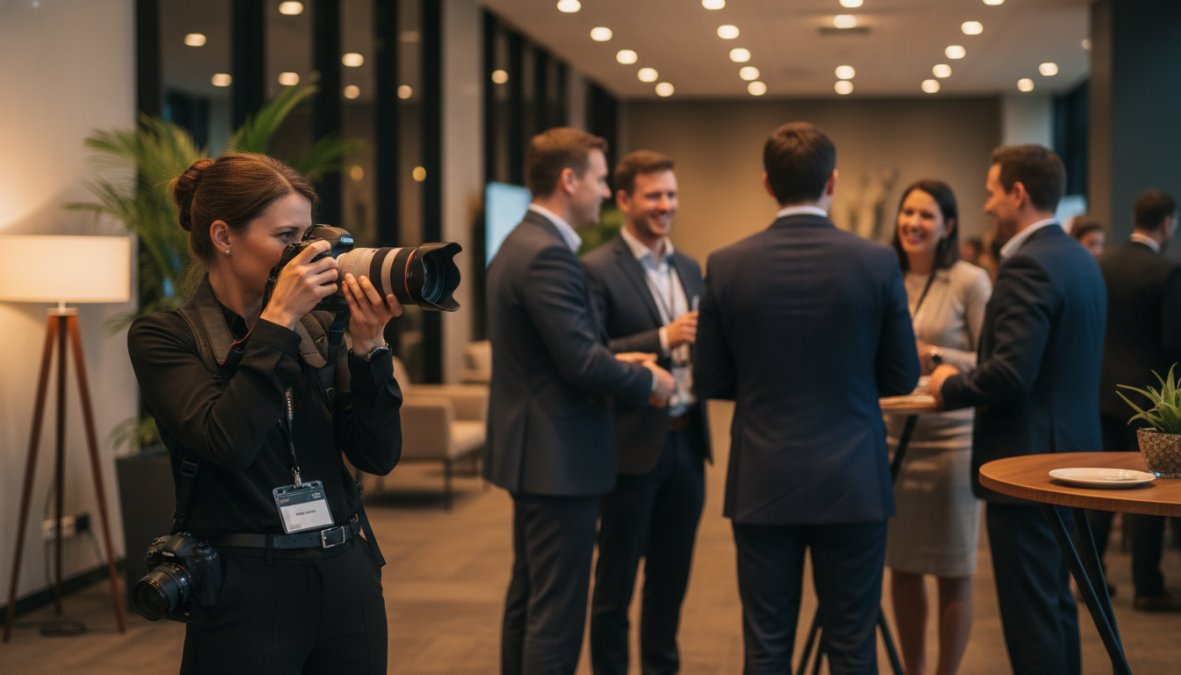
Candid photography is the hardest thing to fake. Posed shots have their place, but the images that generate the most engagement on social media and in marketing assets are almost always unscripted: a genuine laugh between colleagues, a speaker leaning forward to make a point, two executives deep in conversation at a networking reception. Professional photographers know how to move through a room invisibly, anticipating moments before they happen. That skill comes from thousands of hours of event coverage, not from owning an expensive camera.
Ask your photographer to specifically target “micro-moments” during breaks and networking sessions. These images consistently outperform formal stage shots in social media engagement because they feel authentic rather than staged.
2. Enhancing Brand Image and Identity Through Visual Storytelling
Visual storytelling is the practice of communicating a brand’s values, culture, and mission through images rather than words alone. For corporate events, this means every photograph should reinforce brand identity: the professionalism of your team, the quality of your venue, the caliber of your speakers. A curated gallery from a well-photographed event signals to clients, partners, and recruits that your organization operates at a high standard. Organizations that treat event photography as a brand activation tool, not just a documentation exercise, see their visual assets working harder across every channel.
3. Professionalism, High-Quality Equipment, and Expert Lighting
Most event venues present genuine photographic challenges. Low ambient light, mixed color temperatures from stage lighting and chandeliers, fast-moving subjects. Consumer-grade cameras and smartphone photography fail in these conditions. Professional event photographers arrive with full-frame cameras, fast prime lenses, portable flash systems, and backup equipment. They understand how to balance professional lighting with the existing environment to produce color-corrected images that look natural rather than blown out or muddy.
The equipment gap is real, but the skill gap is larger. Knowing which settings to use in a dim ballroom during a keynote address is something that takes years to develop.
4. Reliable Documentation of Keynote Speakers and Key Moments
Keynote speakers and featured presentations represent the intellectual centerpiece of most corporate events. Reliable documentation of these moments serves multiple purposes: speaker relations, post-event content marketing, internal communications, and press coverage. Professional photographers use telephoto lenses to capture clean, tight speaker portraits without disrupting the audience or the presentation. They also know how to work with stage lighting, which is often harsh and directional, to produce images that are usable rather than technically compromised.
According to guidelines on professional photography standards from the Professional Photographers of America, event photographers should always conduct a venue walkthrough before the event begins to identify lighting challenges and optimal shooting positions.
5. Freedom for Hosts and Guests to Be Fully Present
A common mistake organizations make is assigning photography duties to a staff member or asking guests to "take some photos." The result is predictable: the designated photographer spends the event anxious about getting good shots, misses conversations they should be having, and still comes back with mediocre images. Hiring a professional removes that burden entirely. Hosts can focus on running the event. Guests can focus on connecting. The photographer handles event coverage invisibly, and everyone walks away with a better experience.
This is one of the most undervalued benefits of hiring professional event photographers. The intangible value of being present at your own event is significant.
6. Marketing Assets, Social Media Content, and PR Fuel
A single well-photographed corporate event can generate three to six months of social media content, depending on your posting cadence. High-resolution images from trade shows, product launches, and leadership summits feed LinkedIn posts, email newsletters, press releases, website updates, and sales decks. Professional photographers understand the difference between images that work on a large printed banner and images that work as a cropped Instagram square. They shoot with multiple end uses in mind, giving your marketing team genuine flexibility.
Brief your photographer on your content calendar before the event. If you know you need a LinkedIn header image, a newsletter hero shot, and three vertical images for Instagram Stories, say so. A professional can plan for all three in a single event.
7. Building Trust, Credibility, and Stakeholder Confidence
High-quality event photography signals organizational credibility to every audience that sees it. Sponsors see evidence that their investment was visible and well-represented. Board members and donors see professionalism. Prospective clients see a company that takes its brand seriously. The absence of good photography sends the opposite signal. Many organizations underestimate how much their PR efforts depend on having a library of strong visual assets ready when journalists, partners, or stakeholders request them.
8. Consistency in Visual Storytelling Across Events
Brand consistency in photography means more than using the same logo. It means consistent color grading, consistent composition style, consistent image quality across every event your organization hosts. When a single professional photographer, or a studio with a defined visual style, covers your events over time, your brand develops a recognizable visual identity. This matters enormously for organizations that host recurring events: annual conferences, quarterly leadership summits, seasonal galas. A consistent visual portfolio builds brand recognition faster than any single campaign.
9. Post-Event Workflow: Turnaround Time and Curated Galleries
Post-production is where professional event photography earns its cost. After the event, a professional photographer culls hundreds or thousands of frames down to the strongest selects, applies color correction, and delivers a curated gallery through a secure online platform. Turnaround time varies by photographer and event scope, but most professional studios deliver edited galleries within five to ten business days. Some offer rush delivery for time-sensitive PR needs.
What to confirm before hiring:
- How many final edited images will be delivered?
- What is the standard turnaround time?
- Will images be delivered in multiple resolutions (web and print)?
- Is a private online gallery included?
- How long will the gallery remain accessible?
The detail most clients overlook: image resolution specifications. Confirm that your photographer delivers files at print resolution (300 DPI minimum) as well as web-optimized versions. Receiving only compressed web files limits your ability to use images in printed materials.
10. Legal and Insurance Considerations You Should Not Overlook
Professional event photographers carry general liability insurance and, in many cases, errors and omissions coverage. This matters for event organizers who are responsible for what happens on their premises. Beyond insurance, there are important legal considerations around image rights. A professional photographer will provide a clearly written contract specifying usage rights, licensing terms, and who owns the images after delivery. Many organizations assume they own all images automatically. That assumption is wrong without a contract that explicitly grants those rights.
Additional legal considerations for corporate event photography:
- Model releases for identifiable individuals in marketing materials
- Venue photography permits (some venues restrict commercial photography)
- Confidentiality clauses if proprietary presentations or products will be visible
- Social media usage rights versus print licensing
As noted in copyright guidance for photography from the U.S. Copyright Office, the photographer holds copyright by default unless a written work-for-hire agreement specifies otherwise.
Measuring the ROI of Professional Event Photography
Professional event photography is an investment, and like any investment, it deserves measurement. The ROI of event photography is real and trackable, yet most organizations never build a measurement framework, they simply assume the photos were worth it and move on. That assumption leaves budget justification entirely to gut feel, which is a fragile position when finance teams start scrutinizing discretionary spend.
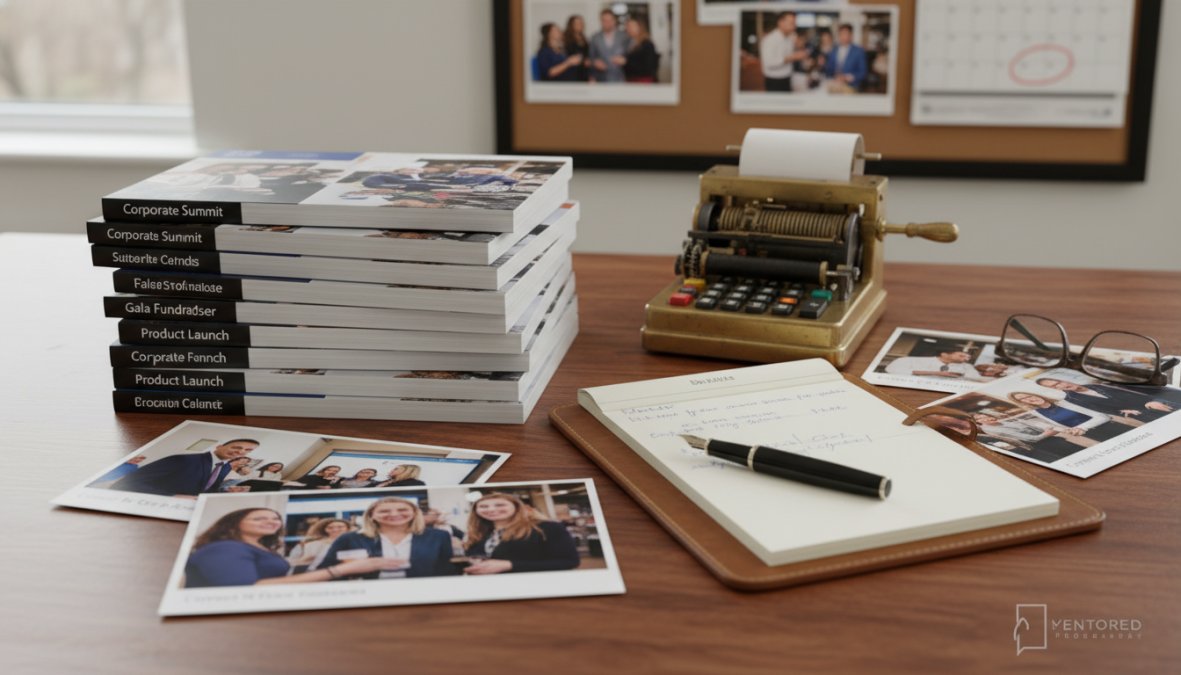
A rigorous ROI case for event photography connects to three categories of business value: content production efficiency, audience engagement lift, and pipeline and credibility signals. Each can be measured with data your team already has access to.
Content Production Efficiency
Start by auditing how your organization currently produces visual content outside of events. What does a single branded lifestyle photo shoot cost, including creative direction, talent, location fees, and post-production? Most mid-sized organizations spend between several hundred and several thousand dollars per usable image when they commission standalone shoots. A professional event photographer covering a half-day conference typically delivers 150 to 300 edited, print-ready images. Divide your photography investment by the number of usable images delivered, then compare that per-image cost against your standalone shoot benchmark. For most organizations, event photography produces images at a fraction of the cost of purpose-built content shoots, and the images carry the added authenticity of real people in real moments, which standalone shoots cannot replicate.
Track every downstream use of event images for 90 days post-event. A simple spreadsheet with columns for image used, channel, and content type is sufficient. Categories to log:
- Social media posts (LinkedIn, Instagram, X)
- Email newsletter hero images and inline images
- Press releases and media pitches
- Website updates (team pages, about pages, case studies)
- Sales decks and proposals
- Annual reports and donor communications
- Internal communications and intranet updates
- Conference and trade show booth graphics
At the end of 90 days, count total uses. Most organizations are surprised to find that a single event generates 20 to 40 distinct content deployments. If your photography investment was, for example, a few thousand dollars and it produced 30 content uses, the per-use cost is a fraction of what any individual content production effort would cost.
Audience Engagement Lift
If your organization posts consistently on LinkedIn or other platforms, you have a baseline engagement rate for posts without event photography. After your next professionally photographed event, compare the engagement rate, likes, comments, shares, click-throughs, on posts that feature professional event images against your 90-day baseline. Most social media managers who run this comparison find that authentic event photography outperforms stock imagery and graphic-only posts on engagement metrics. Document that delta. It is a concrete, platform-verifiable number you can bring to a budget conversation.
For email marketing, compare open rates and click-through rates on newsletters that feature event photography as the hero image against newsletters using other image types. Many email platforms (Mailchimp, HubSpot, Klaviyo, and others) make this comparison straightforward through campaign analytics.
Pipeline and Credibility Signals
This category is harder to quantify precisely but often carries the most weight in executive conversations. Consider the following touchpoints where event photography directly influences a prospect’s or stakeholder’s perception of your organization:
- A prospective client reviews your website before a sales call and sees a gallery of well-photographed events. That visual evidence of organizational scale and professionalism influences their confidence before the first conversation happens.
- A journalist covering your industry receives a press release with three high-resolution, publication-ready images attached. Coverage is more likely when the visual assets are ready to use.
- A board member or major donor receives an annual report featuring professional photography from events they attended or sponsored. The quality of that documentation reflects directly on how seriously your organization takes its commitments.
None of these are perfectly attributable, but they are not invisible either. Ask your sales team whether they use event photography in proposals and whether clients comment on it. Ask your PR contact whether having ready-to-use images has affected media pickup rates. Qualitative signals from people closest to the outcome are legitimate evidence in a budget justification.
Building the Internal Business Case
When presenting a photography budget to a finance team or executive sponsor, structure the case in three lines:
- Cost per usable image compared to your organization’s alternative content production cost
- Content deployment count over 90 days post-event, demonstrating asset utilization
- Engagement benchmark comparison from at least one measurable channel (social or email)
This framework does not require invented numbers or speculative projections. It uses data your organization generates naturally. The first time you run it, the numbers will be rough. By the third event, you will have a credible, organization-specific ROI model that makes budget approval a straightforward conversation rather than a faith-based request.
The single most important habit to build: log every use of event photography in a shared document for 90 days after each event. This takes less than five minutes per use and produces the evidence base that makes every future photography budget conversation easier.
How to Build Your Event Photography Shot List
A shot list is a written document given to your photographer before the event that specifies the images you need. It is the single most effective tool for ensuring your event photography investment delivers what your marketing team actually needs.
An effective event photography shot list includes:
- Establishing shots: Venue exterior, registration area, branded signage, room setup before guests arrive
- Speaker coverage: Stage portraits, audience reaction shots, Q&A moments
- Networking moments: Candid conversations, handshakes, group interactions
- Leadership and VIP portraits: Board members, executives, sponsors, keynote speakers
- Branded elements: Signage, step-and-repeat banners, branded materials
- Audience engagement: Full room shots, close-ups of engaged attendees, applause
- Sponsor visibility: Sponsor logos, sponsor booths, sponsor representatives
- Event highlights: Award presentations, panel discussions, product demos
Keep the shot list to one page. A photographer buried in a 40-item checklist will spend the event hunting for specific frames rather than capturing the organic moments that make event photography valuable.
Do not hand your photographer a shot list for the first time on the day of the event. Send it at least 48 hours in advance so they can plan their positioning, timing, and equipment accordingly. Last-minute lists consistently produce missed shots.
How to Choose an Event Photographer: What to Look For
Choosing the right event photographer requires looking past a polished website. Many photographers produce beautiful portraits or landscape work but struggle in the fast-paced, unpredictable environment of a corporate event.
Key criteria for evaluating how to choose an event photographer:
Portfolio specificity: Does their portfolio include work from events similar to yours in scale and format? A photographer who specializes in intimate weddings may not have the experience to cover a 500-person trade show effectively.
Turnaround history: Ask for references from past corporate clients and specifically ask about delivery timelines. Late delivery is the most common complaint in event photography.
Equipment backup: Professional photographers carry backup camera bodies and lenses. Ask directly. A single equipment failure should never mean zero coverage of your event.
Contract clarity: Review the contract carefully for usage rights, delivery specifications, cancellation terms, and liability clauses.
Communication style: A photographer who asks good questions before the event, requests a shot list, and confirms logistics in advance is demonstrating the professionalism that will show up in their work.
For events in the Washington DC and Northern Virginia area, Event Photojournalism brings award-winning expertise across corporate conferences, galas, and special events, with a track record of delivering high-resolution images that meet both marketing and archival standards.
Event Photography Pricing Guide: Understanding What You Pay For
Event photography pricing varies significantly based on event duration, deliverable scope, photographer experience, and post-production requirements. Understanding the pricing structure helps organizations budget accurately and avoid surprises.
Typical pricing factors in an event photography pricing guide:
| Factor | Impact on Pricing |
|---|---|
| Event duration | Base rate typically per half-day or full-day |
| Number of photographers | Multi-photographer coverage increases cost, increases coverage |
| Edited image count | Higher select counts require more post-production time |
| Turnaround speed | Rush delivery typically carries a premium |
| Usage rights | Unlimited commercial use costs more than limited web use |
| Travel and logistics | Out-of-area events may include travel fees |
The most common pricing mistake organizations make is comparing photographers on day rate alone without accounting for what is included. A lower day rate that delivers 50 edited images is not comparable to a higher rate that delivers 300 color-corrected, print-ready images with full commercial usage rights.
As guidance from business event planning resources at Eventbrite suggests, photography should be treated as a core event budget line item rather than an afterthought, because the visual assets it produces extend the event’s value for months afterward.
Briefing Your Photographer: Setting Up for Success
A thorough pre-event briefing is what separates adequate event coverage from exceptional event coverage. Most clients skip this step entirely, hand the photographer a schedule, and hope for the best. That approach produces generic documentation rather than purposeful visual storytelling.
An effective photographer briefing covers:
- Event objectives: What is the event trying to achieve? A product launch has different photography priorities than an annual leadership summit.
- Key people: Provide names and photos of VIPs, executives, sponsors, and speakers who must be photographed.
- Schedule with priority moments: Mark the highest-priority moments clearly so the photographer is in position before they happen.
- Brand guidelines: Share your brand color palette, tone, and any visual style references that reflect your organization’s identity.
- Deliverable priorities: Which images are needed first? If a press release goes out the next morning, the photographer needs to know.
- Venue logistics: Confirm parking, load-in access, and any restricted areas.
Schedule a 20-minute call with your photographer three to five days before the event. This single conversation consistently produces better results than any amount of written communication alone.
Why the Benefits of Hiring Professional Event Photographers Far Outweigh the Cost
The case for professional event photography is not complicated once you account for all the ways the images get used. The benefits of hiring professional event photographers compound over time: each well-documented event builds your visual archive, strengthens your brand identity, and gives your marketing team assets that continue working long after the event itself is forgotten.
Organizations that treat event photography as an optional expense consistently find themselves scrambling for visuals when they need them most, pulling low-resolution phone photos for a board presentation or a press inquiry. Organizations that invest in professional coverage consistently have the right images at the right moment.
The math is straightforward. The decision should be too.
According to marketing asset research from the Content Marketing Institute, visual content is among the highest-performing asset types across B2B marketing channels, making event photography one of the most cost-effective content investments an organization can make.
Professional event photography is one of the few investments that pays forward. Every event you document well becomes a marketing asset, a credibility signal, and an institutional record. Event Photojournalism delivers award-winning, high-resolution photography services across the DMV area, with customized solutions built for corporate conferences, galas, product launches, and special events. Our team transforms your occasions into lasting visual assets that elevate your brand and amplify your message. Contact Event Photojournalism to discuss your next event and get coverage that your organization will use for years.
Frequently Asked Questions
Is it worth hiring a professional photographer for a corporate event?
Yes, the benefits of hiring professional event photographers extend well beyond the day itself. High-resolution images become reusable marketing assets for social media content, sales decks, PR efforts, and future event promotion. A professional also brings the right photography equipment, technical expertise, and post-production skills to deliver color-corrected, curated galleries that an amateur simply cannot match. For corporate events, brand activations, or leadership summits, the investment consistently pays for itself in content value alone.
What should I look for when hiring an event photographer?
When learning how to choose an event photographer, prioritize reviewing their event portfolio for work similar to yours, trade shows, galas, product launches, or conferences. Ask about their photography equipment, backup gear, turnaround time, and post-production process. Confirm they carry liability insurance and clarify image rights in the contract. A strong photographer will also welcome a detailed event photography shot list and a pre-event briefing call to align on your brand identity and coverage priorities.
How much does professional event photography cost?
Event photography pricing varies based on event length, coverage scope, photographer experience, and deliverables. Shorter corporate events may start at a few hundred dollars, while full-day conferences, galas, or multi-day brand activations can run into the thousands. Most photographers charge hourly or by half-day/full-day packages, with post-production and a curated gallery included. Always ask what is covered, some pricing includes only raw images, while others include fully edited, high-resolution image delivery ready for immediate use.
Why are high-quality event photos important for marketing?
High-quality event photos serve as versatile marketing assets long after the event ends. They can be used across social media content, email campaigns, press releases, websites, and sales decks to reinforce brand consistency and credibility. For stakeholders who could not attend, clients, partners, or media, a curated gallery of professional images communicates professionalism and brand identity far more effectively than text recaps. Investing in professional photography services is, in effect, investing in your brand's ongoing visual storytelling strategy.
What is typically included in an event photography shot list?
An event photography shot list is a prioritized document you share with your photographer before the event. It typically includes must-have shots such as keynote speakers at the podium, executive headshots, networking moments, branded signage, product displays, award presentations, and group photos. A good shot list also notes specific people, leadership, VIP guests, or sponsors, who must be photographed. Providing this list during your pre-event briefing ensures your photographer delivers comprehensive event coverage aligned with your goals.
This article was written using GrandRanker