Table of Contents
- Why Event Photography Services for Non-Profits Are a Mission-Critical Investment
- Pro Bono Event Photography for Non-Profits: Pros, Cons, and How to Find It
- Non-Profit Event Photography Pricing: What to Budget and Why
- How to Write a Photography Request for Proposal for Non-Profits
- The Essential Event Photography Shot List for Non-Profits
- Technical Requirements and Measuring the ROI of Your Event Photography Services for Non-Profits
- How to Hire the Right Non-Profit Event Photographer: A Step-by-Step Process
- Conclusion
Last Updated: June 10, 2026
Non-profit organizations that treat photography as an afterthought are leaving donor dollars on the table. Event photography services for non profits are not a luxury line item; they are a core communications tool that directly supports fundraising, donor retention, and mission visibility. At Event Photojournalism, we work with mission-driven organizations across the DMV area and have seen firsthand how the right visual assets transform a single event into months of compelling marketing collateral. Below, we break down everything a non-profit needs to know: from building a shot list to navigating copyright ownership, budgeting photography as a grant line item, and measuring real ROI.
Why Event Photography Services for Non-Profits Are a Mission-Critical Investment
Visual communication is the fastest way to close the gap between what a non-profit does and what a donor understands. A single candid shot of a youth program participant can convey impact more effectively than three paragraphs of program data.
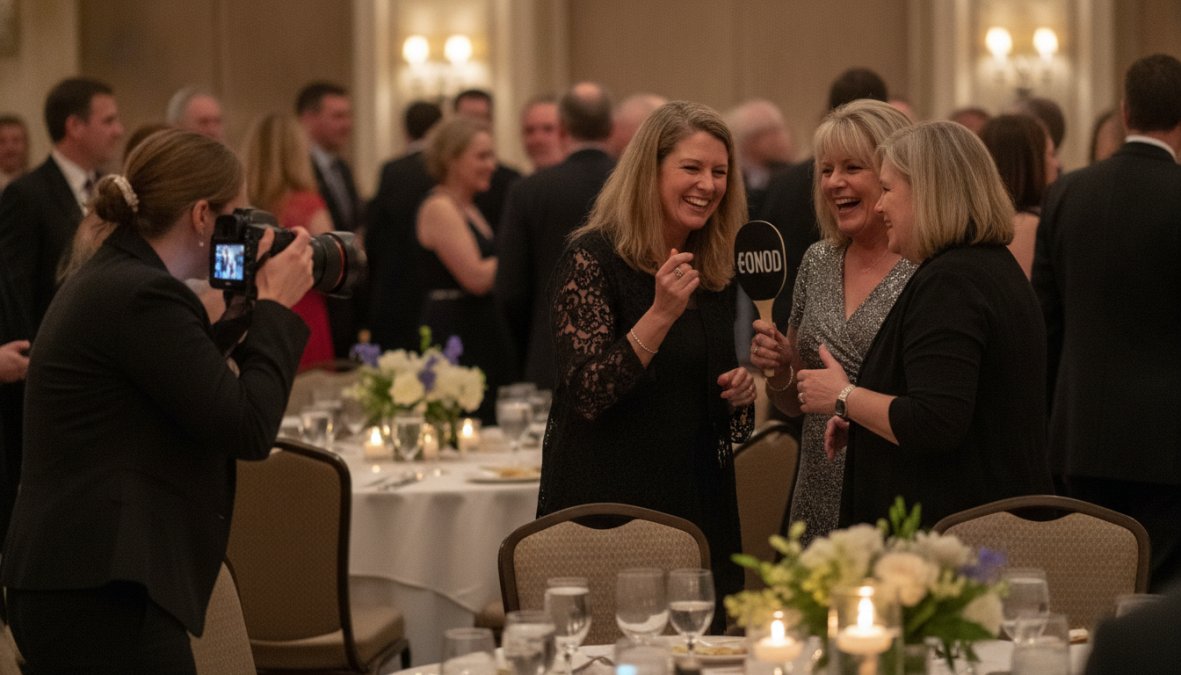
Without strong visual assets, organizations disappear from the crowded attention economy. Professional event photography services for non profits solve this by producing a library of high-resolution images that fuel social media content, press releases, annual reports, and grant applications simultaneously.
According to Nonprofit Marketing Guide’s annual trends research, visual content consistently ranks among the top priorities for non-profit communications teams. Donors give to organizations they believe in, and belief is built through repeated, authentic visual exposure to real program impact.
Storytelling Through Imagery: Turning Programs Into Donor Engagement
Storytelling through imagery uses sequenced, intentional photographs to communicate a narrative arc: the problem, the intervention, and the outcome. For non-profits, this means documenting community programs as visual case studies, not isolated snapshots.
A common mistake is assigning photography to a volunteer with a smartphone. The result is technically usable but strategically weak: poor lighting, inconsistent framing, and no editorial judgment about which moments carry emotional weight. A professional photographer brings narrative instinct, selecting the decisive moment that makes a donor feel something. The most effective donor engagement images are candid, show genuine emotion, and include enough environmental context to tell the viewer where and why this is happening.
How Visual Assets Support Brand Awareness and Marketing Collateral
Brand awareness for non-profits is built through consistent, high-quality visual identity across every channel. One well-photographed gala produces assets for email newsletters, social media, website hero images, grant reports, and press releases.
The math is straightforward: one four-hour event yields roughly 300 to 500 edited, high-resolution images that serve the organization for 12 to 18 months. The cost per asset, calculated honestly, is very low compared to producing each piece of marketing collateral separately.
Brief your photographer before the event with a list of specific program outcomes you need to document. If you are applying for a grant that requires proof of community impact, tell the photographer exactly what that looks like. Pre-event planning turns a generic coverage package into targeted evidence.
Pro Bono Event Photography for Non-Profits: Pros, Cons, and How to Find It
Pro-bono event photography is a real option, but it comes with trade-offs most non-profit managers underestimate. Free is not the same as free of cost: coordinating volunteer photographers requires staff time, quality is unpredictable, and there is no contractual recourse if the photographer cancels or delivers unusable images. It is a legitimate strategy for organizations with genuine budget constraints, provided they approach it with the same rigor as a paid engagement.
Where to Find Volunteer Photographers and Pro-Bono Networks
Photographers Without Borders maintains a global network of storytellers who partner with non-profits on documentary and event projects. Other reliable sources include:
- Local university photography programs: Advanced students need portfolio work and often welcome non-profit assignments.
- Professional photography associations: Many regional chapters run community service programs that match photographers with non-profits.
- Freelance platforms: Upwork allows non-profits to post projects with stated budget constraints, and some photographers offer reduced rates for mission-driven organizations.
- Corporate volunteer programs: Companies with in-house creative teams sometimes offer photography as part of employee volunteer hours.
The key requirement for any pro-bono arrangement is a written agreement covering deliverables, timelines, copyright ownership, and model releases. Skipping this step is the single most common and costly mistake in pro-bono photography partnerships.
When Paid Photography Services Are the Smarter Choice
Paid photography is the right choice for flagship events: annual galas, major fundraising campaigns, board presentations, and any event where images will appear in grant applications or major donor communications. The threshold is simple: if images need to be professional quality and delivered reliably, pay for a professional. The risk profile of a volunteer arrangement is acceptable for a small community event; it is not acceptable for a gala where a single image might appear in a six-figure grant report.
Never rely on a verbal agreement with a volunteer photographer. Without a written contract covering copyright, model releases, and delivery terms, your organization has no legal standing if the photographer withholds images or delivers unusable work.
Non-Profit Event Photography Pricing: What to Budget and Why
Non-profit event photography pricing varies based on event size, coverage duration, number of photographers, and post-production requirements. Budget in terms of coverage hours plus post-production time: a four-hour gala with one photographer and standard editing is a fundamentally different product than an eight-hour conference with two photographers, same-day social media delivery, and a branded step-and-repeat setup.
Budgeting Photography as a Program Cost and Grant Line Item
The most important reframe for non-profit finance teams: photography is not an organizational expense. It is a program cost and a communications investment. According to National Council of Nonprofits guidance on indirect costs, many funders accept communications and documentation costs as legitimate program expenses when tied directly to program delivery and impact reporting.
Practical steps for including photography in grant applications:
- Identify which grant reports require photographic evidence of program delivery.
- Calculate the total photography budget for the grant period.
- Write a one-sentence justification connecting photography to the grant’s reporting requirements.
- Include the line item under program costs, not administrative overhead.
How to Write a Photography Request for Proposal for Non-Profits
A photography request for proposal (RFP) is a structured document outlining your event, coverage requirements, deliverables, and evaluation criteria. A strong RFP attracts qualified photographers and establishes expectations in writing before any contract is signed.
A strong RFP for non-profit event photography includes:
- Event overview: Date, location, duration, expected attendance, and event type.
- Coverage requirements: Number of hours, specific moments to capture, and any restricted areas or sensitive populations.
- Deliverable specifications: File format, resolution, quantity, and delivery timeline.
- Usage rights: Explicit statement of how images will be used (social media, press releases, grant reports, print).
- Budget range: A stated range attracts realistic proposals and saves time for both parties.
- Selection criteria: How you will evaluate proposals (portfolio quality, non-profit experience, references).
Legal and Licensing Frameworks: Copyright Ownership and Model Releases
By default under U.S. copyright law, the photographer owns the copyright to images they create, even if the non-profit paid for the session. The solution is a written work-for-hire agreement or a broad licensing clause. The contract should specify:
- Copyright assignment or license scope: Does the organization own the images outright, or does it receive a license?
- Usage rights: Which channels and formats are covered (print, digital, social media, broadcast)?
- Duration: Is the license perpetual or time-limited?
- Model releases: Who is responsible for obtaining signed releases from attendees, particularly minors and program participants?
Organizations working with vulnerable populations have heightened obligations around consent and image use. A photographer experienced with non-profit work will understand these requirements and build them into their workflow.
The Essential Event Photography Shot List for Non-Profits
A shot list is a pre-event document specifying every photograph the organization needs. It is the single most effective tool for ensuring coverage produces usable marketing collateral rather than a random collection of images.
Core shots every non-profit event shot list should include:
- Venue and atmosphere: Wide establishing shots before guests arrive, table settings, and signage.
- Leadership and speakers: Portraits of board members, executive director, keynote speakers, and award recipients.
- Donor and sponsor recognition: Photographs of major donors, corporate sponsors, and branded sponsor displays.
- Program impact moments: Candid shots of program participants and beneficiaries in authentic interaction.
- Crowd and energy: Wide shots showing event scale, useful for press releases and grant reports.
- Award and recognition ceremonies: Formal and candid coverage of any presentations.
- Mission-specific imagery: Shots connecting directly to the organization’s programs.
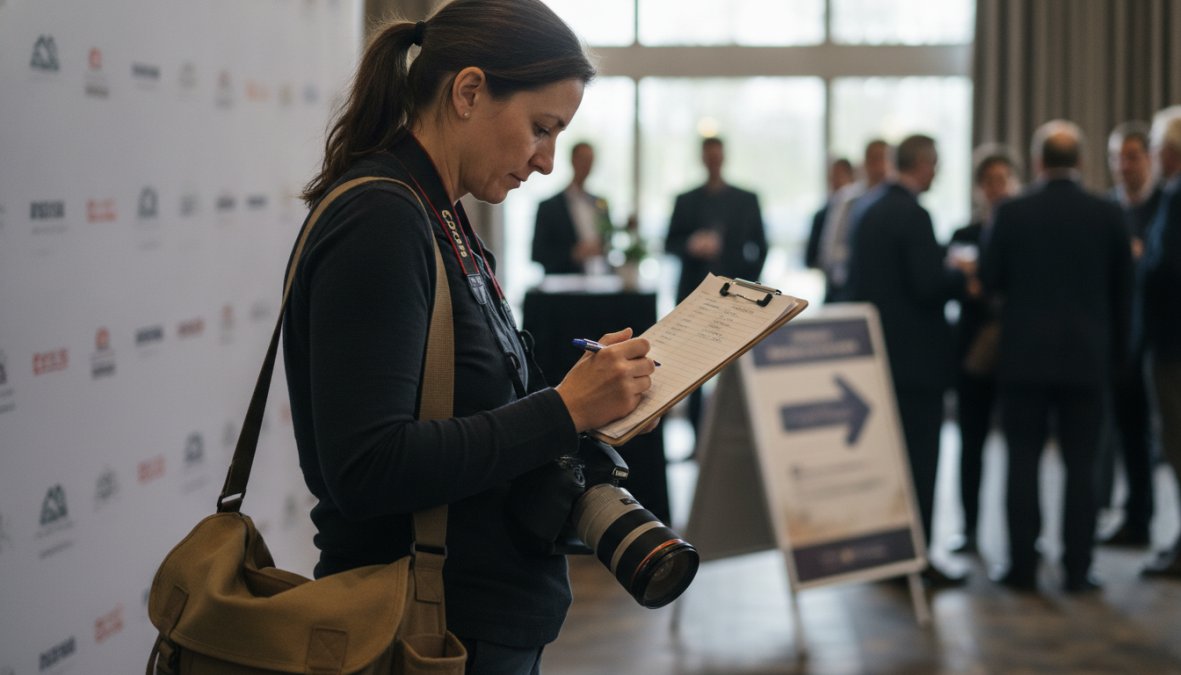
Share the shot list with your photographer at least one week before the event and walk through it together so the photographer understands the organizational context behind each required image.
A shot list is not a creative constraint. It is a strategic briefing document. Photographers who receive a detailed shot list deliver more usable images because they understand what the organization needs to accomplish with the coverage.
Technical Requirements and Measuring the ROI of Your Event Photography Services for Non-Profits
Technical quality determines where images can be used. A photograph that looks acceptable on a smartphone screen may be unusable for print or large-format display. Non-profits that do not specify technical requirements upfront often discover this problem months after the event, when it is too late to reshoot.
Technical Specifications for Social Media, Press Releases, and Print
Different distribution channels have different technical requirements. Here is a practical reference:
| Use Case | Minimum Resolution | File Format | Key Consideration |
|---|---|---|---|
| Social media (Instagram, Facebook) | 1080 x 1080 px | JPEG | Compressed for fast loading |
| Website hero images | 1920 x 1080 px | JPEG/WebP | Optimized for web performance |
| Press releases (digital) | 300 DPI, 2MB+ | JPEG | Editors need print-ready files |
| Print (brochures, annual reports) | 300 DPI minimum | TIFF or high-res JPEG | Larger files required |
| Large-format print (banners) | 150 DPI at final size | TIFF | Scales with print dimensions |
Always request high-resolution RAW or TIFF files as the master archive, even if you primarily distribute JPEGs. This preserves the ability to repurpose images for future needs without quality loss.
Measuring ROI: Donor Retention, Fundraising Lift, and Engagement Metrics
Measuring the ROI of photography requires connecting image use to specific outcomes. A practical ROI framework:
- Baseline your metrics before the event: Record current email open rates, social media engagement, and donor retention rate.
- Tag photography-driven content: Note in your content calendar when you publish campaigns using event images.
- Track engagement on visual versus non-visual content: Compare open rates, click rates, and donation conversions on campaigns featuring professional photography against those that do not.
- Measure donor retention at 90 and 180 days post-event: Professional photography in post-event donor communications reinforces the donor’s connection to the mission.
- Calculate cost per asset: Divide total photography cost by the number of images used across campaigns to produce a concrete per-asset cost comparable across vendors and events.
According to Blackbaud’s Giving USA research on donor communications, donor retention is directly influenced by the quality and frequency of impact communications. Photography is one of the most cost-effective tools for delivering that communication at scale.
How to Hire the Right Non-Profit Event Photographer: A Step-by-Step Process
Hiring a photographer for a non-profit event is a procurement decision that deserves the same rigor as any other vendor relationship.
Step 1: Define your requirements. Document the event details, required shots, technical specifications, usage rights, and budget range before reaching out to any photographer.
Step 2: Build a shortlist. Source candidates from referrals, professional associations, and platforms like Upwork. Prioritize photographers with demonstrated experience in non-profit or mission-driven work.
Step 3: Send your RFP. Use the RFP framework described earlier. Require portfolio samples, references from non-profit clients, and a proposed approach to your specific event.
Step 4: Evaluate proposals on quality, not price alone. The cheapest proposal is rarely the best value. Evaluate portfolio quality, communication responsiveness, and understanding of your mission.
Step 5: Negotiate the contract. Confirm copyright terms, model release responsibilities, delivery timeline, and payment schedule in writing before signing.
Step 6: Brief the photographer pre-event. Share the shot list, event schedule, key contacts, and any restrictions at least one week in advance. A 30-minute pre-event call is worth more than three rounds of post-event revision requests.
Step 7: Conduct a post-event debrief. Document what worked, what was missed, and what you would change. This institutional knowledge improves every subsequent event photography engagement.
For organizations in the Washington DC and Northern Virginia area, Event Photojournalism offers customized coverage packages specifically designed for conferences, galas, and mission-driven events, including pre-event planning, high-resolution delivery, and targeted solutions aligned with each organization’s communications goals.
Non-profits that treat photography as optional are consistently outpaced by organizations that invest in professional visual documentation. Event Photojournalism provides award-winning, high-resolution event coverage across the DMV area, with customized solutions designed to amplify your mission, support your fundraising, and produce the visual assets your organization needs to retain donors and secure grants. CONTACT US to discuss how professional event photography services for non profits can support your next event and your long-term communications strategy.
Frequently Asked Questions
Should non-profits hire professional photographers for events?
Yes. Professional event photography services for non-profits produce high-resolution images suitable for press releases, social media content, grant reports, and marketing collateral, assets that amateur or smartphone photography cannot reliably deliver. A professional photographer also understands how to capture candid shots and portraiture unobtrusively, which is especially important in community programs serving youth or vulnerable populations. The long-term donor engagement and fundraising value of quality imagery typically far outweighs the upfront organizational expense.
Do photographers offer pro bono event photography for non-profits?
Yes, many professional photographers offer pro bono or discounted photography services for non-profits, particularly mission-driven organizations aligned with causes they support. Networks like Photographers Without Borders formally connect volunteer photographers with NGOs and charities. However, pro bono arrangements require clear written agreements covering copyright ownership, image usage rights, and model releases, the same legal and licensing frameworks that govern paid contracts. For high-stakes fundraising galas or annual events, a paid professional is often more reliable.
What should be included in a non-profit photography request for proposal (RFP)?
A strong photography RFP for non-profits should include: your organization's mission and event overview, the specific deliverables required (high-resolution files, edited gallery, turnaround time), technical requirements for intended uses like social media or print, your event photography shot list, budget range, copyright and licensing expectations, model release requirements, and evaluation criteria. Providing this detail upfront attracts experienced photographers who understand impact documentation and helps you compare proposals accurately against your program costs and organizational expenses.
How can non-profits use event photos for fundraising and donor retention?
Event photography creates powerful visual communication tools that directly support fundraising. High-quality images can be used in donor newsletters, annual reports, social media campaigns, grant applications, and press releases to demonstrate real-world impact. Candid shots of community programs and youth programs humanize your mission and strengthen donor retention by showing supporters exactly how their contributions are used. Organizations that consistently share compelling visual assets typically see stronger donor engagement and improved fundraising results over time.
What is typical non-profit event photography pricing?
Non-profit event photography pricing varies widely based on event duration, photographer experience, deliverables, and geographic market. Many photographers offer a non-profit discount of 10-25% off standard rates. For a half-day fundraising gala in a major metro area like Washington DC, project-based fees can range from a few hundred dollars for emerging photographers to several thousand for award-winning professionals. When budgeting, treat photography as a program cost or include it as a line item in grant writing to offset organizational expenses.
This article was written using GrandRanker