Table of Contents
- Why Corporate Event Photography Matters Beyond Documentation
- Types of Corporate Events That Benefit Most from Professional Coverage
- How to Prepare for Corporate Event Photography: A Strategic Approach
- What to Look for When Hiring an Event Photographer
- Understanding Corporate Event Photography Rates and Investment
- Fast Turnaround and Post-Production: From Capture to Delivery
- Maximizing Your Event Photos as Long-Term Marketing Assets
- Conclusion
Last Updated: August 25, 2026
Why Corporate Event Photography Matters Beyond Documentation
Most organizations treat corporate event photography as a checklist item rather than a marketing investment. Professional event photography produces 150-250 high-resolution images from a single three-hour event (Matthew With A Camera, 2026). These images don’t sit in folders, they appear in blog headers, LinkedIn posts, email campaigns, annual reports, and recruitment materials for months afterward.
According to Street Escape Photography’s corporate event analysis, professional event photography serves as a data source, documentation tool, and visual language in event management. It humanizes your brand, making it more relatable and trustworthy to stakeholders, donors, sponsors, and potential clients.
Corporate event photography is a marketing investment that compounds over time. Images from a single event can feed your content calendar for up to two years.
The real cost of poor corporate event photography isn’t just the invoice, it’s the hours your team spends sorting through unsuitable images and the credibility erosion when photos look amateurish in your annual report or fundraising materials.
Types of Corporate Events That Benefit Most from Professional Coverage
Understanding which events demand professional-grade coverage helps you allocate your budget strategically.
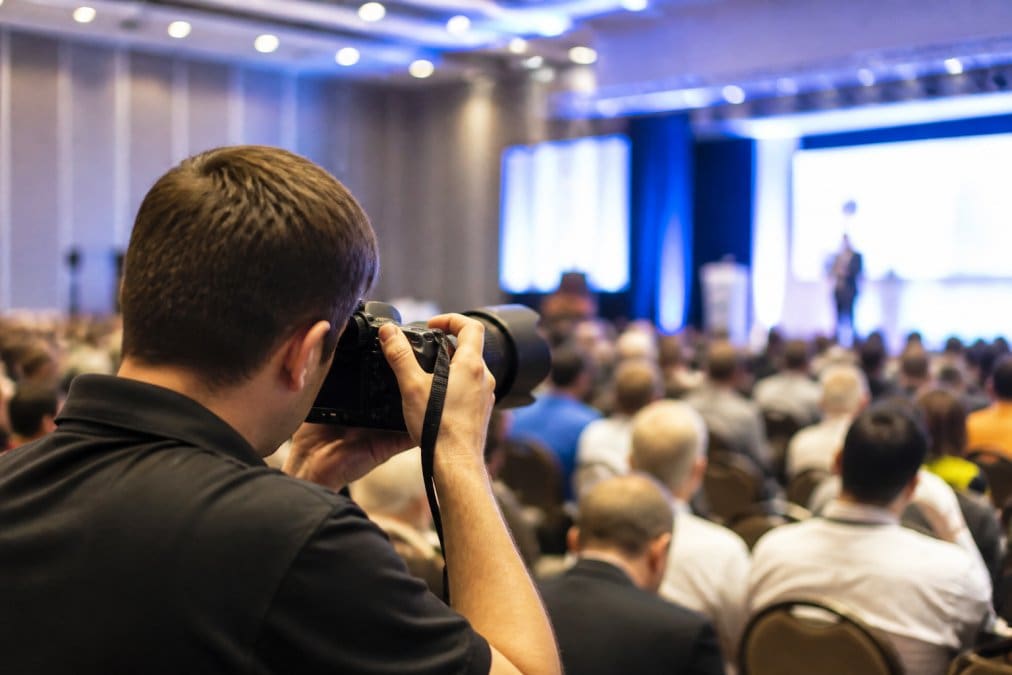
Conferences and Congresses create complex photography challenges with concurrent sessions, keynote speakers, networking moments, and exhibition halls. Standard conference coverage typically includes 50-75 professionally color-corrected images per hour (The Crop, 2026).
Awards nights and gala dinners require discretion, anticipation, and an understanding of formal dynamics. Your photographer must capture genuine moments without being intrusive.
Trade shows and exhibitions present unique logistics with multiple booths, product demonstrations, and visitor interactions. Your photographer needs to understand your booth layout and key messaging.
Product launches and brand activations demand storytelling. Your photographer should understand the narrative arc and capture images that communicate the story to those who weren’t there.
Executive meetings, board retreats, and summits require confidentiality and strategic discretion. Your photographer must understand what can and cannot be photographed.
The Association of Australian Convention Bureaux research on event management emphasizes that event planners now need to deliver customized experiences. Professional photography captures the nuanced moments that generic documentation misses.
How to Prepare for Corporate Event Photography: A Strategic Approach
Strategic preparation is the difference between mediocre event photos and exceptional ones. Your photographer needs to understand your event’s objectives, key stakeholders, venue layout, and priority moments before arrival.
Document your event timeline, identify VIPs and priority moments, and clarify your brand guidelines and visual preferences. These conversations prevent misalignment and ensure your photographer delivers exactly what you need.
Creating an Event Photography Brief Template
A detailed event photography brief prevents miscommunication:
Event Overview
- Event name, date, type, location, expected attendance, and duration
Photographic Objectives
- Primary use cases (social media, annual report, fundraising, recruitment, press release)
- Key messages or themes to communicate visually
- Target audience for the photos
Key Stakeholders and VIPs
- Names and photos of board members, speakers, sponsors, or executives
- Specific moments involving these individuals that need documentation
Venue and Logistics
- Venue layout, lighting conditions, photography restrictions, and access information
Coverage Details
- Photography start and end times
- Number of photographers needed
- Non-negotiable shots or moments
- Backup plan if primary photographer becomes unavailable
Deliverables and Timeline
- Number of final edited images expected
- Delivery format and timeline
- Usage rights and licensing terms
Brand Guidelines
- Logo placement, color palette, visual style preferences, and editing style
Include photos of your VIPs in the brief, not just names. A photographer who can identify your board chair by sight will capture them naturally.
What to Look for When Hiring an Event Photographer
Hiring the wrong photographer is expensive. Hiring the right one means your event is remembered through stunning imagery that serves your marketing goals.
Examine their full event galleries, not just their best shots. Can they maintain consistency across an entire event? Ask about their experience with your specific event type, a photographer experienced with conferences understands breakout session pacing differently than one experienced with galas.
Inquire about their backup plan. What happens if their primary camera fails? Do they have a second photographer on standby? Professional photographers have these answers ready.
Discuss their editing and color correction process. Do they shoot RAW? How long does post-production take? Can they deliver same-day social media highlights? Ask about their approach to discretion and access, your board members need to trust that your photographer captures moments authentically without being intrusive.
Finally, ask for references from past corporate clients. How responsive was the photographer? Did they deliver on time? Were the images suitable for intended use cases?
A lower day rate from a generalist photographer might seem cost-effective, but it often translates to higher costs in post-production hours. The real cost of photography is rarely just the invoice.
::: branded staff apparel.
Understanding Corporate Event Photography Rates and Investment
Event duration is the most straightforward pricing factor, but complexity matters significantly. A four-hour conference with multiple concurrent sessions requires more photographers than a four-hour gala in a single room.
The number of photographers affects pricing. A 200-person executive retreat might need one photographer. A 1,000-person conference needs multiple photographers to capture concurrent sessions.
Deliverables and turnaround time also influence cost. Same-day social media highlights cost more than a one-week turnaround. Extensive color correction costs more than minimal editing.
For specific pricing on corporate event photography services, Event Photojournalism recommends contacting photographers directly for custom quotes based on your event’s unique needs. Pricing depends on quantity, dates, and delivery specifications.
:::bestfor
Organizations with events under 500 attendees in a single venue typically need one experienced photographer. Larger, multi-track events need multiple photographers.
Fast Turnaround and Post-Production: From Capture to Delivery
The speed of image delivery has become a competitive advantage. Your marketing team needs highlights for tomorrow’s press release, and your fundraising team needs assets within days.
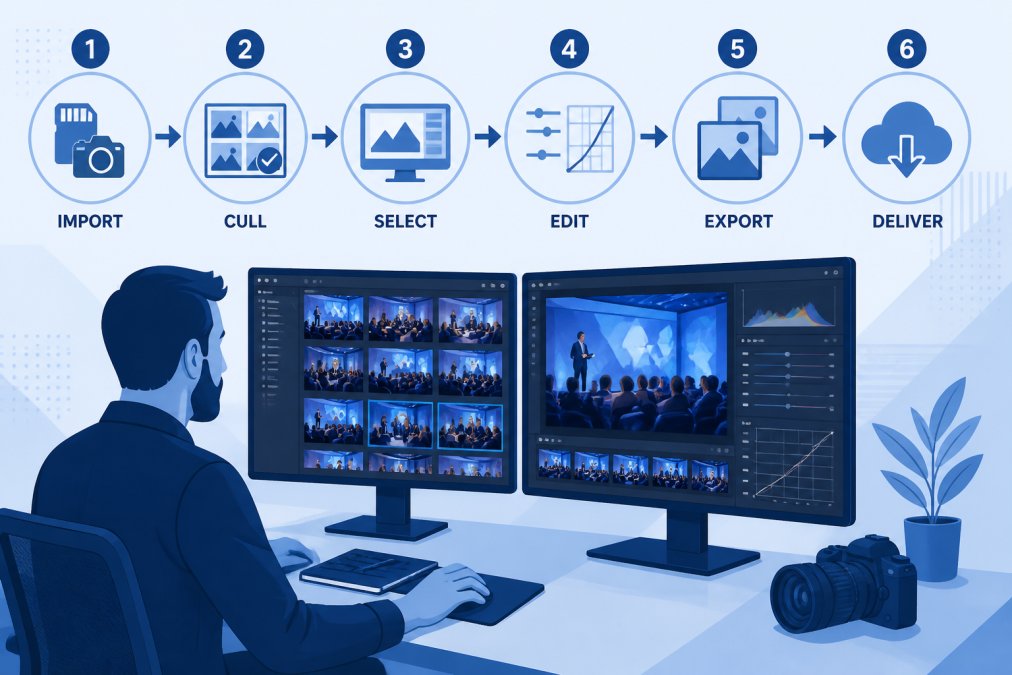
Professional post-production is where good event photography becomes great. Raw images from the camera are just the starting point. Color correction ensures consistent skin tones, proper exposure, and accurate colors across all images.
A typical three-hour event produces 150-250 high-resolution images. Professional photographers typically deliver 50-75 color-corrected images per hour of coverage (The Crop, 2026). This means a three-hour event yields roughly 150-225 final edited images.
Fast turnaround requires workflow efficiency. Some photographers offer same-day highlights, 15-20 images delivered within hours for immediate social media use. Others provide next-morning delivery of a larger edited gallery. Full editing typically takes 5-10 business days.
Ask your photographer about their editing workflow and prioritization. Do they deliver a curated selection of the best shots, or every usable image? Curation takes more time but gives you a more refined gallery.
Maximizing Your Event Photos as Long-Term Marketing Assets
A single event produces dozens or hundreds of images that can feed your marketing calendar for months. Your event photos work in annual reports, recruitment materials, fundraising campaigns, LinkedIn posts, email newsletters, blog headers, and press releases.
According to Faithful Photography’s corporate event insights, professional event photography is one of the few marketing investments that compounds over time. Images from a single conference can appear in multiple channels for up to two years.
As you receive edited images, categorize them by use case. Which images work for social media? Which suit annual reports? Create a searchable asset library and tag images with keywords: "conference," "networking," "keynote," "awards," "team," "sponsor," "audience."
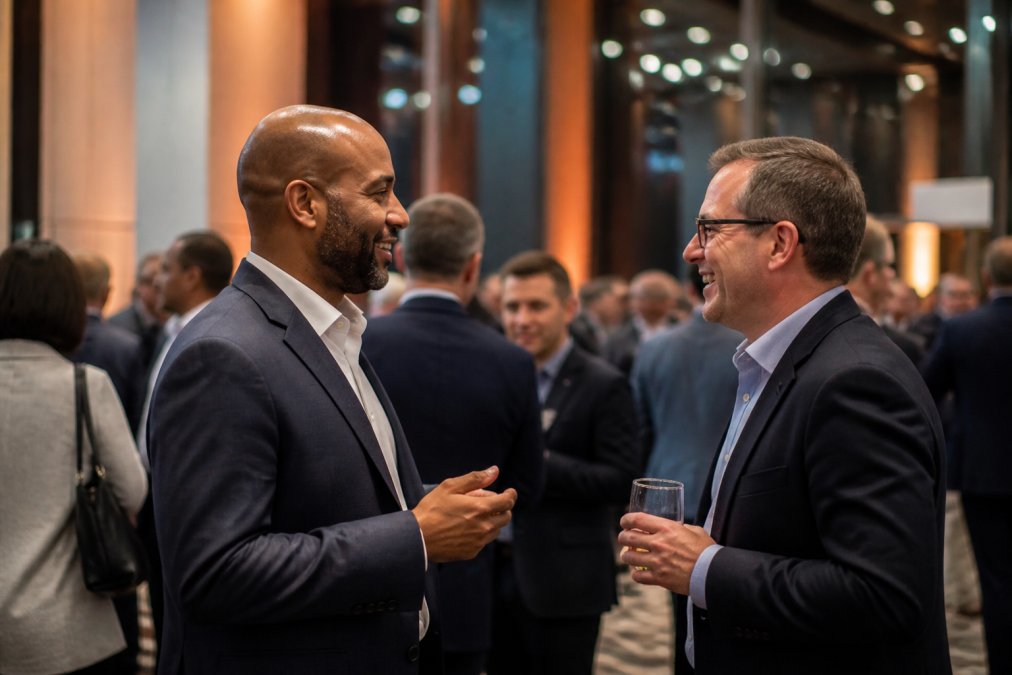
Repurpose images strategically. A candid photo of attendees networking becomes a LinkedIn post about community and a blog header about professional relationships. One image, multiple uses, extended ROI.
Plan for this from the beginning. When you brief your photographer, discuss how you’ll use the images. This shapes what they photograph and how they approach the event.
Corporate event photography is an investment in how your organization is perceived and remembered. The difference between a professional photographer who understands your goals and a generalist is measurable in the quality of your visual assets, the time your team spends sorting images, and the impact those images have on your stakeholders.
Event Photojournalism specializes in capturing the essence of corporate conferences, galas, and professional events across the DMV area with award-winning, high-resolution photography. Our team understands that every important moment deserves to be remembered through stunning imagery that elevates your brand and amplifies your message. When you’re ready to transform your next event into lasting visual assets, Event Photojournalism’s professional photography services are designed to deliver the strategic, authentic coverage your organization deserves.
Frequently Asked Questions
How long does it take to receive edited corporate event photos?
Turnaround time varies based on the event scope and your delivery needs. Many professional photographers offer same-day social media highlights, next-morning previews for press releases, or full edited galleries within 5-10 business days. Discuss your deadline during the initial consultation so the photographer can plan their post-production workflow accordingly. Rush delivery options may be available for an additional fee.
What should I include in an event photography brief template?
A strong brief covers event schedule and timeline, key moments or speakers to prioritize, VIP attendees or sponsors to capture, venue layout and lighting conditions, brand guidelines and color preferences, specific shots needed for annual reports or social media, delivery format and deadline, and any access restrictions. Sharing this information upfront helps the photographer anticipate moments and shoot with your end use in mind, reducing editing time and ensuring you get exactly what you need.
What's the difference between candid event photography and posed corporate portraits?
Candid event photography captures authentic moments as they happen, showing genuine interactions and energy throughout your event. Posed corporate portraits are arranged shots, often used for headshots or formal group photos. Professional event photographers blend both approaches: they capture the natural flow of your event while also orchestrating key group shots and individual portraits of executives or honorees. This combination gives you authentic storytelling plus the formal images your annual report requires.
How much does corporate event photography cost?
Pricing depends on event duration, number of photographers needed, venue complexity, post-production requirements, and delivery timeline. Half-day coverage costs less than full-day rates, and events with multiple concurrent sessions require more photographers. Contact a professional photographer directly for a custom quote based on your specific event needs, location, and deliverables. Many photographers offer tiered packages to fit different budgets and event sizes.
This article was written using GrandRanker