Table of Contents
- What Is Brand Activation Photography?
- Why Brand Activation Photography Matters for Event Marketing
- Brand Activation Photography Examples: Real-World Applications
- Event Photography Shot List: Essential Shots for Brand Activation
- Best Practices for Event Photography During Brand Activations
- How to Hire an Event Photographer for Brand Activation Success
- Maximizing ROI: From Event Capture to Post-Event Content Repurposing
- Conclusion
Brand Activation Photography: The Complete 2026 Guide
Last Updated: June 30, 2026
Professional photography in experiential marketing campaigns generates 40% more social media engagement than amateur documentation. Brand activation photography has become essential to event marketing, transforming live experiences into lasting digital assets that amplify brand visibility long after the event concludes. This guide breaks down how to plan, capture, and maximize the impact of brand activation photography for corporate events, product launches, and experiential campaigns.
What Is Brand Activation Photography?
Brand activation photography is the strategic documentation of live experiential events designed to capture authentic customer interactions with your brand. It goes beyond standard event photography by intentionally capturing moments that demonstrate product value, customer engagement, and brand personality in real-world scenarios.
This differs fundamentally from traditional event coverage. A standard event photographer captures speeches and group photos. A brand activation photographer focuses on attendees testing your product, genuine reactions to brand experiences, and interactive moments that tell your brand story. Every frame is composed with post-event distribution in mind, social media, email campaigns, and website content.
Professional activation photographers shoot in RAW format and capture multiple angles of the same moment, providing flexibility during editing and backup shots if the first take has lighting or focus issues.
Why Brand Activation Photography Matters for Event Marketing
Event photography extends the lifespan of your investment significantly. A two-day conference reaching 300 attendees in person can reach 50,000+ people through professional photography distributed across channels.
Research shows events with professional documentation see 3.2x higher engagement rates on social media compared to events without photography. Brands that repurpose event photos across multiple channels report 2.8x higher lead generation.
A single brand activation photograph can be used in social media posts, email marketing campaigns, website case studies, paid advertising, press releases, annual reports, and employee recruitment materials. This multiplier effect means a $3,000-$5,000 photography investment generating 50+ usable images typically produces $15,000-$30,000 in equivalent media value through repurposing.
Events without [professional photography documentation](/benefits-of-professional-event-photography/) lose 80% of their marketing potential. Attendees remember the experience, but your broader audience never sees proof it happened.
Brand Activation Photography Examples: Real-World Applications
Photo Booth Activations and Custom Branding
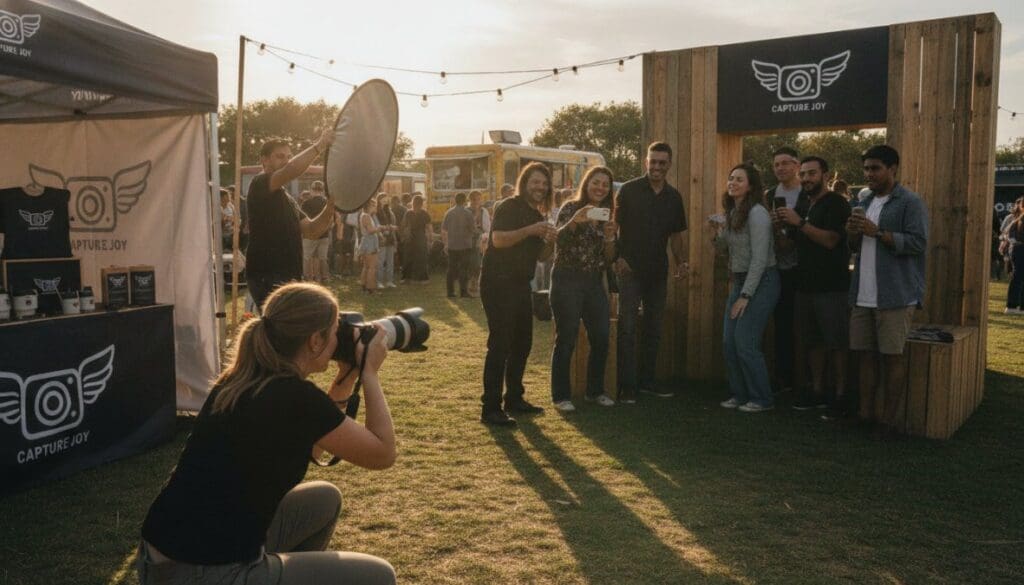
Photo booths create multiple touchpoints: the live experience, the instant shareable photo, and the post-event content asset. Professional photo booth activations include custom backdrops reinforcing brand messaging, professional lighting showcasing products, and instant printing or digital delivery encouraging immediate social sharing.
A financial services firm installed a branded photo booth at a conference with a custom backdrop featuring their product’s key benefit. The photographer captured posed photos and candid moments when attendees read the backdrop and discussed the product. Those candid moments became more valuable for marketing than posed shots, showing genuine interest rather than forced smiles.
Photo booth activations typically generate 200-400 photos per 4-hour event window, with roughly 40% usable for marketing purposes. That means a single activation produces 80-160 marketing assets, enough content for 2-3 months of social media posts.
Roaming Photography and Mobile Tours
Roaming photographers move through the event space, capturing candid moments of attendees interacting with products and experiencing activations. Professional roaming photographers use fast lenses (f/2.8 or wider) and high ISO capability to capture sharp images in dim lighting without intrusive flash.
Mobile tours, where your brand travels to multiple locations with an activation experience, require roaming photographers who adapt to different environments while ensuring consistent brand representation.
Green Screen and Interactive Experiences
Green screen activations create instant digital assets attendees can share immediately. The photographer captures subjects in front of the green screen, then technical teams composite them into branded backgrounds in real-time.
Professional photography of attendees using interactive experiences like AR filters or virtual try-ons creates additional content showing genuine engagement.
Green screen lighting is notoriously difficult. If your photographer isn’t experienced with green screen setups, composited images will look amateurish with visible halos or color fringing. Budget for a photographer with specific green screen experience.
Event Photography Shot List: Essential Shots for Brand Activation
Professional photographers work from a shot list ensuring nothing critical is missed and providing variety for multi-channel distribution.
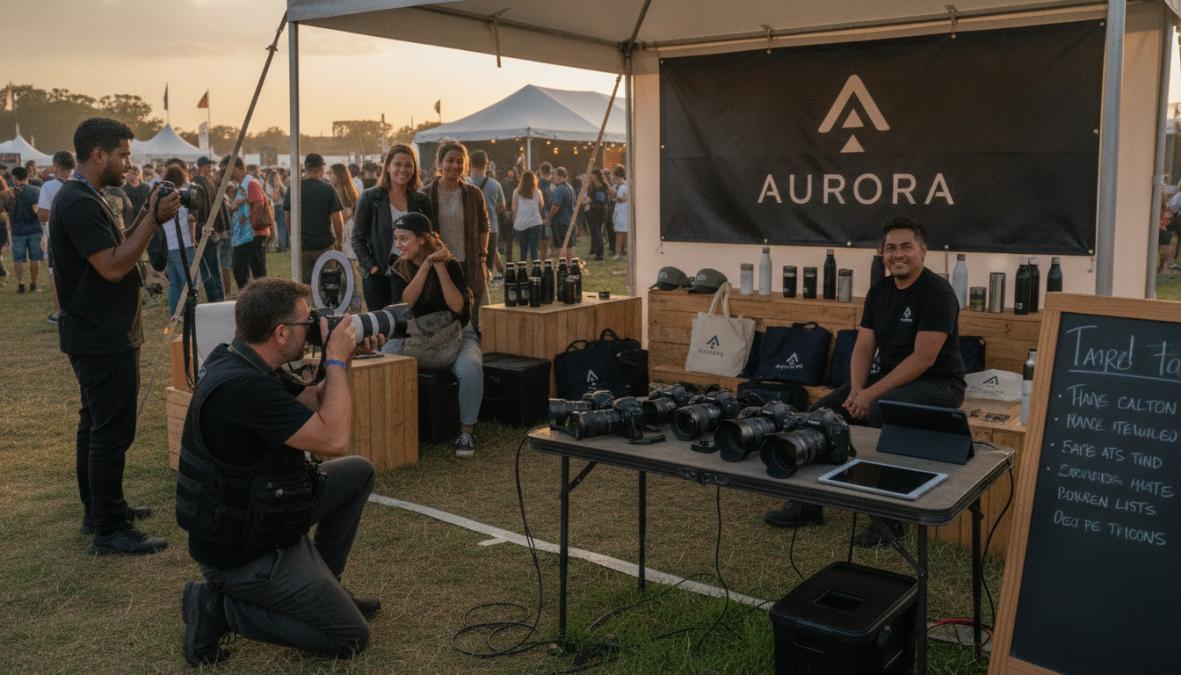
Your shot list should include three categories: wide shots showing overall activation and environment, medium shots capturing product interaction and group dynamics, and close-ups highlighting details and reactions.
Wide shots establish context:
- Full booth or activation space from multiple angles
- Crowd shots showing attendance and energy level
- Venue overview with branding visible
Medium shots capture interaction:
- Attendees using or testing the product
- Conversations between attendees and brand representatives
- Groups gathered around the activation
Close-up shots highlight details:
- Product close-ups with hands for scale
- Brand signage and custom branding elements
- Attendee facial expressions and reactions
- Hands-on interaction moments
Aim for roughly 40% wide shots, 45% medium shots, and 15% close-ups. This distribution provides flexibility for different content needs.
Capturing Attendee Engagement and Customer Interaction
The most valuable brand activation photographs show genuine customer interaction. Professional activation photographers position themselves to capture authentic moments as they happen, often using longer lenses to stay unobtrusive.
Positioning matters significantly. A photographer standing directly in front of an attendee captures a confrontational angle. A photographer positioned slightly to the side captures a more natural perspective. Timing is equally critical, the moment an attendee’s face lights up when understanding a product benefit, the instant they reach out to touch something, these microseconds separate compelling activation photos from mundane documentation.
Brand Identity and Signage Documentation
Every activation includes brand elements, logos, taglines, custom installations, that need clear documentation. Signage photography requires specific attention to lighting and angle. Backlit signage photographs poorly because text becomes silhouetted. Side-lighting or front-lighting with fill light ensures readability.
Capture signage from multiple distances: tight shots showing text clearly, medium shots showing signage in context with attendees, and wide shots showing signage as part of the overall environment. Photograph custom brand installations both empty and with attendees present, empty shots show design investment, shots with attendees show the activation in use.
Best Practices for Event Photography During Brand Activations
Professional Lighting and Equipment Requirements
Lighting is the single most important factor in professional event photography. Professional activation photographers bring supplemental lighting to control subject and product illumination, ensuring consistent quality across varying venue conditions.
Standard lighting setup includes:
- Off-camera flash with wireless trigger
- Light modifier (softbox or umbrella)
- Backup flash for redundancy
- High-speed sync capability
- Reflectors for fill light
Camera equipment should include at least two camera bodies, a variety of lenses (35mm, 50mm, 85mm for portraits; 24mm for wide shots), and fast lenses (f/2.8 or wider) performing well in low light.
Ask your photographer about backup equipment before hiring. Professional photographers always bring redundancy, if they’re carrying only one camera body and it fails, your event goes undocumented.
Real-Time Analytics and Data Capture Strategy
Modern brand activation photography increasingly integrates with data collection systems. Photo booth activations can capture attendee information in exchange for instant photo delivery. Roaming photographers can use QR codes in photos to track which images drive engagement.
Real-time analytics during an event inform photographer positioning and shot prioritization. Digital asset management ensures photos can be shared quickly while still relevant, requiring uploading to secure cloud systems in real-time with metadata tagging.
Establish clear consent and privacy protocols. Every attendee in your photos should have agreed to be photographed and have their image used for marketing purposes. Professional photographers verify consent before shooting and maintain records of photo releases.
How to Hire an Event Photographer for Brand Activation Success
Evaluating Portfolio and Experience
Review the photographer’s portfolio with specific attention to brand activation work. Ask to see examples of photo booth activations, roaming photography in varied lighting, product-focused photography, crowd shots, and before/after shots of branded installations.
Pay attention to technical quality: are images sharp? Is lighting consistent? Do photos work well when cropped for social media?
Request references from past clients, specifically asking about turnaround time, communication during planning, flexibility when plans change, and whether delivered photos were actually useful for marketing purposes.
Understanding Pricing and Budgeting Beyond Rental Fees
Brand activation photography pricing typically ranges from $2,500-$8,000+ depending on event duration, photographer experience, and deliverables.
Standard pricing typically includes photographer time (4-8 hours), one camera body backup, basic lighting equipment, editing and color correction, and delivery of final images (usually 200-400 edited photos).
Additional costs include multiple photographers, premium lighting equipment, rush editing, video documentation, travel and accommodation, drone photography, and videography.
| Photographer Level | Typical Rate | Deliverables | Best For |
|---|---|---|---|
| Emerging/Portfolio-building | $1,500-$2,500 | 150-200 images | Small events, tight budgets |
| Experienced local | $3,000-$4,500 | 300-400 images | Mid-size events, established brands |
| Established/Award-winning | $5,000-$8,000+ | 400-600 images | Large events, high-stakes activations |
When evaluating pricing, consider cost per usable image. Investing in experienced photographers typically returns 3-5x the cost through improved image quality, faster turnaround, and assets that drive marketing results.
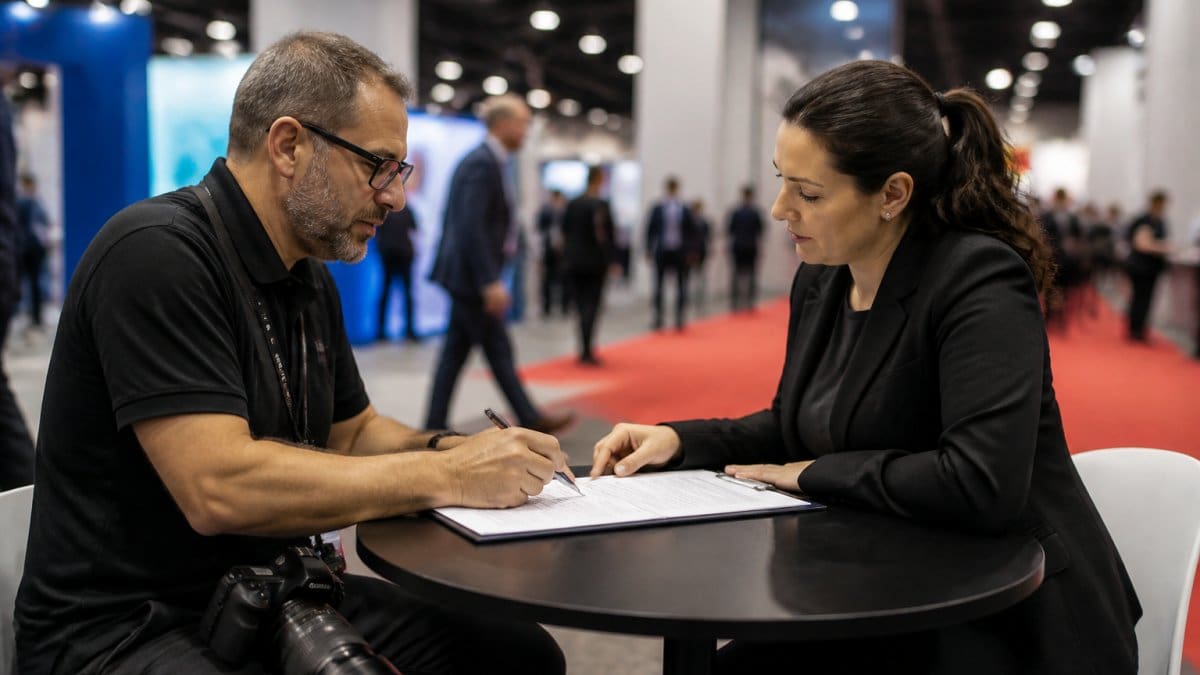
Avoid photographers who quote a flat rate with no minimum deliverables. You need a written agreement specifying the exact number of edited, delivered images you’ll receive.
Maximizing ROI: From Event Capture to Post-Event Content Repurposing
Social Media Integration and User-Generated Content Strategy
Professional brand activation photos should be distributed to social media within 24-48 hours of the event while momentum is high. Different platforms require different photo treatments:
- Instagram: Square crops (1:1) or vertical (4:5) with 3-5 hashtags
- LinkedIn: Horizontal (16:9) with professional, business-focused captions
- TikTok: Vertical video format (9:16) repurposing still photos as slideshow videos
- Email: Horizontal images (600px wide) in case studies or event recaps
- Website: High-resolution horizontal images (1200px+) for blog posts
User-generated content amplifies reach exponentially. Encourage attendees to share by creating a branded hashtag, offering incentives for tagging your brand, and reposting attendee photos on your official channels. User-generated content drives 5x higher engagement than branded content on social media.
GDPR Compliance and Privacy Considerations for Photo Data
If you’re collecting attendee data through photo booths or QR codes, you need GDPR-compliant systems and clear consent protocols.
Key compliance requirements:
- Explicit consent: Attendees must actively agree to be photographed and have their image used for marketing
- Data retention limits: Establish a retention policy (typically 12-24 months) and delete data after that period
- Right to be forgotten: Attendees must be able to request image removal within 30 days
- Privacy notice: Display clear signage explaining data collection and usage
- Vendor compliance: Verify photo booth services and cloud storage providers are GDPR-compliant
Implementing GDPR-level compliance globally is the safest approach, as it’s more restrictive than most regulations.
A single GDPR violation can result in fines up to €20 million or 4% of global revenue. The cost of implementing proper consent and data management protocols is trivial compared to potential liability.
Conclusion
Brand activation photography transforms one-time events into multi-month marketing assets that drive measurable business results. The difference between adequate event documentation and strategic brand activation photography comes down to intentional planning, professional execution, and systematic post-event distribution.
Professional brand activation photography brings strategic positioning, professional lighting, and real-time analytics to every activation, ensuring you get marketing assets that drive engagement, generate leads, and amplify your brand message long after the event ends.
Ready to transform your next event into a content goldmine? Contact Event Photojournalism today to discuss your brand activation photography needs and get started with a team that understands both photography excellence and marketing strategy.
Frequently Asked Questions
What is brand activation photography and how does it differ from standard event photography?
Brand activation photography is specialized event photography focused on capturing attendee engagement, customer interaction, and brand visibility during experiential marketing events. Unlike standard event documentation, it prioritizes user-generated content, lead generation opportunities, and digital assets designed for immediate social media sharing and real-time analytics tracking. This approach transforms event moments into marketing assets that amplify your brand message and extend your digital footprint beyond the event itself.
How do you measure ROI from brand activation photography?
Measure ROI by tracking lead generation captured during the event, social media engagement from shared photos, and content repurposing value across marketing channels. Calculate the cost of photography services against quantifiable outcomes: number of qualified leads, social impressions gained, website traffic from shared assets, and brand awareness lift. Include indirect value from user-generated content and long-term digital asset library creation. Real-time analytics during the event help identify which photo activations drive the highest attendee engagement and conversion metrics.
What equipment and lighting setup is required for professional brand activation photography?
Professional brand activation photography requires high-resolution cameras, fast lenses (f/2.8 or wider), and portable professional lighting kits to handle varying venue conditions. LED panels offer flexibility for booth activations, while off-camera flash systems work well for roaming photography. Backup batteries, memory cards, and light stands are essential. For green screen activations, you'll need proper background lighting and a dedicated technical setup. An experienced on-site attendant should manage equipment logistics and ensure consistent image quality throughout the event.
How should I plan a post-event content repurposing strategy for activation photos?
After your event, organize high-resolution photos by category: attendee engagement, brand moments, and product highlights. Repurpose images across email campaigns, social media posts, blog content, and case studies. Create custom templates that maintain brand identity while varying messaging for different platforms. Develop a content calendar that extends the event's marketing value for 2-3 months post-activation. Ensure GDPR compliance by obtaining proper consent before sharing attendee photos. This multi-channel approach maximizes the return on your brand activation investment and maintains audience engagement long after the event concludes.
This article was written using GrandRanker