Table of Contents
- Finding a Photographer for Your Gala Event: Where to Start
- What to Look for in a Gala Photographer
- Questions to Ask Your Event Photographer Before Hiring
- Creating a Gala Event Photography Shot List
- Event Photography Pricing Guide and Packages
- Event Photography Contract Template and Legal Considerations
- Hiring Your Gala Photographer: The Booking Process
- Conclusion
Last Updated: July 9, 2026
Finding a Photographer for Your Gala Event: Where to Start
Finding photographer for gala event requires careful planning and clear understanding of what you need. At Event Photojournalism, we’ve guided hundreds of organizations through this process, and the difference between a successful outcome and a disappointing one typically comes down to preparation. Most event planners approach this backwards, they search for photographers first, then try to figure out what they actually need. The smarter approach is understanding your requirements before you start looking.
A gala event demands more from photography than almost any other occasion. The formal attire, professional setting, high-profile guests, and carefully orchestrated moments mean your photographer needs specific expertise. According to industry event coordination standards, professional event photography for formal galas requires technical knowledge of low-light shooting, formal posing, and candid capture techniques that many general photographers simply don’t possess. This is where the process becomes critical, you’re not just hiring someone with a camera; you’re hiring expertise in a specific type of event coverage.
The timeline for booking matters significantly. Venues fill their photography slots months in advance, especially during peak gala season. Securing your photographer 4-6 months before your event gives you access to the best available talent and allows time for detailed planning conversations. Below, we’ll walk you through exactly what to look for, what questions to ask, and how to evaluate whether a photographer is right for your specific event.
Understanding Your Gala’s Photography Needs
Before you start contacting photographers, define what you actually need. Galas vary dramatically, a nonprofit fundraising event has different photography priorities than a corporate holiday gala or a high-society wedding reception. Understanding these differences shapes every decision that follows.
Consider the primary purpose of your gala photography. Are you capturing content for social media promotion? Building a visual archive for your organization? Creating images for press coverage and donor relations? Each purpose demands different coverage styles. A nonprofit fundraiser might prioritize photos of donors and volunteers in action, while a corporate gala might focus on executive networking moments and award presentations.
The venue itself impacts your photography needs significantly. A ballroom with dramatic lighting presents different challenges than an outdoor garden setting. Formal galas often feature dim ambient lighting, which requires photographers with technical expertise in high-ISO shooting and flash techniques. If your gala includes a stage presentation, award ceremony, or formal program, your photographer needs to anticipate and capture these moments with precision.
Guest count and event duration matter too. A 200-person gala with a 4-hour timeline requires different coverage than a 500-person event spanning 6 hours. Larger events may justify hiring multiple photographers to ensure comprehensive coverage of simultaneous moments. Duration affects how many outfit changes, venue transitions, or program moments your photographer needs to capture.
Timeline for Booking Your Gala Photographer
Timing your photographer search correctly determines whether you secure your top choice or settle for whoever remains available. The booking timeline works backwards from your event date.
Start your search 4-6 months before your gala. This is when top-tier photographers still have availability, and you have time for thorough vetting. At 3-4 months out, you should have narrowed your options and be in detailed planning conversations with your top choice. By 2 months before, your photographer should be booked and you should be exchanging shot lists and logistics details. The final month is for confirming details, discussing deliverables, and ensuring your photographer understands the event flow.
If you’re planning a gala with less than 3 months’ notice, your options narrow considerably. Many professional photographers book 6-12 months in advance, especially for peak season galas. You may need to pay a rush fee or accept a less-experienced photographer. This is why early planning pays dividends, it gives you negotiating power and access to the best talent.
What to Look for in a Gala Photographer
The difference between a good gala photographer and an excellent one often comes down to specific skills and experience that aren’t always obvious from a website. Understanding what to evaluate prevents costly hiring mistakes.
Portfolio Quality and Style
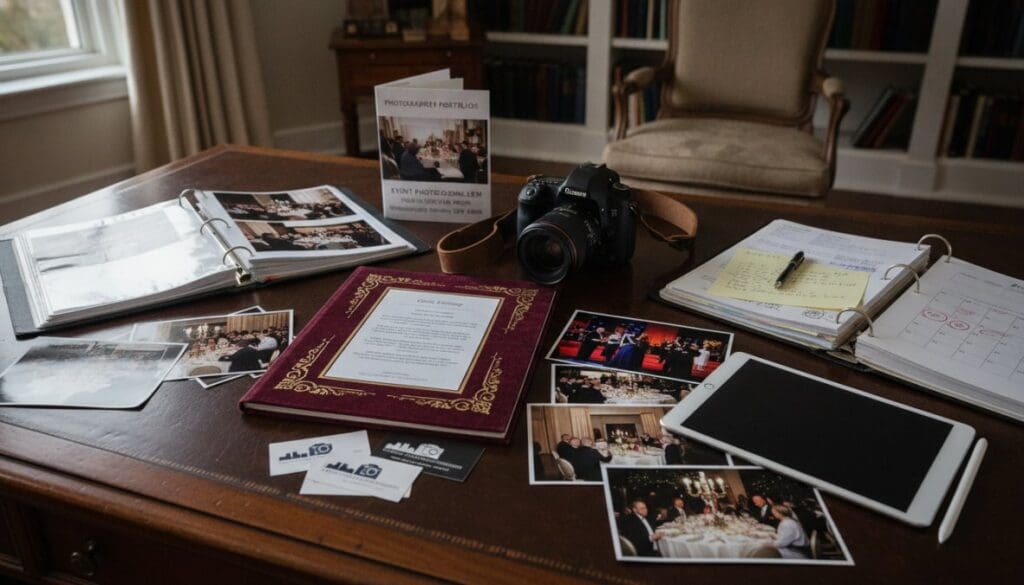
Your first evaluation point is the photographer’s portfolio. Don’t just look for technically good photos, look for photos that match the style and energy you want for your event. A photographer might be technically excellent at landscapes but lack the eye for formal event dynamics. Review their gala and corporate event photography specifically, not their wedding work or lifestyle photography.
Pay attention to consistency across their portfolio. Do their images show varied compositions, or do they fall into repetitive patterns? Can they capture both formal posed moments and authentic candid interactions? Gala photography requires both, the official group photos and award presentations, plus the genuine moments of guests enjoying themselves. A strong portfolio shows mastery of both.
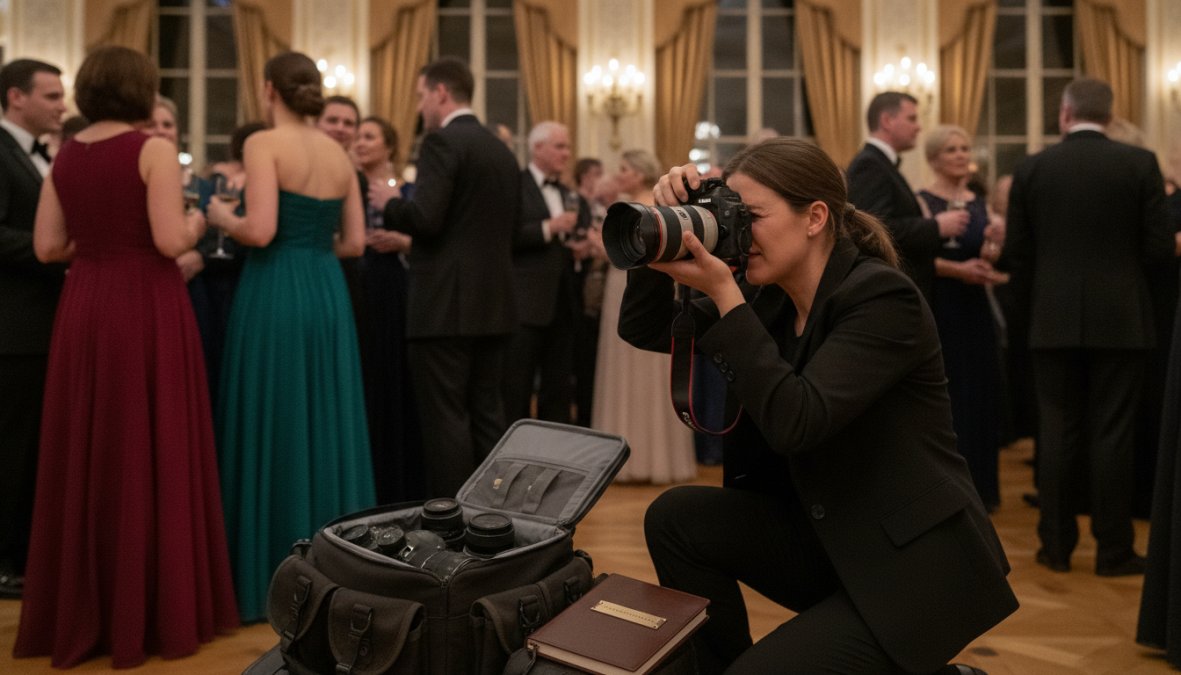
Look for technical quality in challenging lighting conditions. Most galas feature dim ballroom lighting, dramatic uplighting on tables, and stage spotlights. A photographer’s ability to expose correctly in these mixed-light situations separates professionals from amateurs. Check whether their images show proper exposure on faces even when there’s strong backlighting or colored ambient light.
Color grading and editing style matter more than many people realize. Some photographers prefer warm, saturated tones; others favor cool, crisp processing. Neither is inherently wrong, but you need to ensure their style aligns with your brand and preferences. Ask to see images processed in their final delivery format, not just raw samples.
Experience with High-Profile Events
Gala photography often involves working with prominent guests, sensitive moments, and strict event logistics. A photographer experienced with high-profile events understands discretion, professionalism, and the specific challenges of formal occasions.
Ask specifically about their experience with the type of gala you’re planning. Have they photographed nonprofit fundraisers, corporate galas, or formal charity events? Their answer reveals whether they understand the unique demands of your event type. A photographer who regularly covers formal galas will anticipate moments you might not think to mention, the silent auction activity, the award presentation setup, the donor recognition moments.
Experience with event logistics is equally important. Professional event photographers understand how to work within venue restrictions, coordinate with event staff, and anticipate the flow of the evening. They know where to position themselves during ceremonies, how to work around caterers and venue staff, and when to step back to allow the event to unfold naturally.
Ask about their experience with security and privacy considerations. High-profile galas often have restrictions on photography, certain guests may not want to be photographed, or there may be designated photo-free zones. A photographer experienced with these situations handles them smoothly without disrupting your event.
Technical Expertise and Lighting Knowledge
Formal galas present lighting challenges that demand technical expertise. The photographer needs to work with mixed color temperatures, dramatic uplighting, and often very dim ambient light. This isn’t something every photographer handles well.
Ask about their approach to low-light photography. Do they use fast lenses, high ISO settings, and flash techniques? Can they explain their workflow for maintaining image quality in challenging lighting? A photographer who can articulate their technical approach demonstrates the expertise you need.
Lighting knowledge extends beyond just exposure. A skilled gala photographer understands how to use available light creatively, position themselves to avoid harsh shadows on faces, and work with venue lighting rather than against it. Some photographers bring supplemental lighting equipment for specific moments, which can significantly improve image quality during formal program events or speeches.
Ask about their equipment backup plan. What happens if their primary camera fails? Do they carry backup bodies and lenses? Gala events are one-time occasions where equipment failure could mean missing critical moments. A professional photographer has redundancy built into their setup.
Questions to Ask Your Event Photographer Before Hiring
The right questions reveal whether a photographer understands your event and can deliver what you need. These aren’t generic questions, they’re specific to gala events and formal photography.
Start with their experience: "How many formal galas have you photographed in the last two years?" This tells you whether they have current, relevant experience. Someone who shoots galas regularly understands the specific demands better than someone who does them occasionally.
Ask about their workflow: "Walk me through how you’ll cover our event from start to finish." Their answer reveals whether they’ve thought through your specific event or are giving a generic response. A strong answer includes specific moments they’ll prioritize, how they’ll position themselves during different program segments, and how they’ll handle transitions between spaces.
Clarify deliverables: "What format will images be delivered in, and when can we expect them?" Turnaround time matters for social media posting and press coverage. Some photographers deliver within 2 weeks; others take 6-8 weeks for full editing and delivery.
Ask about their editing approach: "How do you edit gala photos?" Do they enhance colors and lighting, or keep editing minimal? Do they remove people from backgrounds or crop tight on subjects? Understanding their editing philosophy ensures the final images match your vision.
Discuss coverage specifics: "What’s your approach to photographing formal program moments versus candid interactions?" A photographer who can articulate this distinction shows they understand gala photography requires both documentary-style program coverage and candid moment capture.
Ask about their contingency plans: "What if you need to cover multiple rooms or simultaneous events?" For larger galas, you might need coverage of the silent auction while the main program happens elsewhere. Understanding how they’d handle this prevents coverage gaps.
Finally, ask for references: "Can you provide contact information from three nonprofits or organizations you’ve photographed in the last year?" Speaking directly with past clients reveals whether the photographer delivers on promises and handles event challenges professionally.
Creating a Gala Event Photography Shot List
A shot list is your roadmap for ensuring critical moments get captured. Working with your photographer to develop this list before the event prevents misunderstandings and ensures nothing important gets missed.
Start by identifying the non-negotiable moments. For most galas, this includes arrival photos, group photos with leadership or honorees, formal program moments, award presentations, and key donor interactions. These moments form the foundation of your shot list.
Essential Shots for Formal Galas
The formal program moments are your starting point. List every planned program element, speeches, award presentations, performances, or ceremonial moments. For each, note whether you want wide shots showing the full audience, medium shots of the speaker or honoree, or close-up details of the moment.
Include arrival coverage. Many galas feature a formal arrival line or red-carpet style entry. Specify whether you want photos of individual guests arriving, group arrivals, or both. Note any VIP guests who should be prioritized for arrival photos.
Document the venue and decor in the opening moments before guests arrive. These establishing shots provide context and show the effort that went into event production. Request photos of table settings, floral arrangements, signage, and the overall ballroom setup.
Add specific moments unique to your event. If you’re honoring a particular individual, request detailed coverage of that moment, the presentation, their reaction, any emotional elements. If your gala features a live auction, request photos of the auctioneer, bid activity, and winning moments.
Include coverage of key stakeholders and leadership. Identify specific people, board members, major donors, executives, who should be photographed during the event. Note whether you want them photographed individually, in groups, or in specific moments.
Candid Moments and Spontaneous Coverage
Beyond planned moments, request candid coverage that captures the genuine energy and enjoyment of your event. This includes guests mingling, networking conversations, people laughing and enjoying themselves, and spontaneous interactions that make an event memorable.
Specify the balance you want between formal and candid coverage. A typical gala might be 40% formal program and posed moments, 60% candid interactions. Adjust this ratio based on your priorities.
Request specific candid moments that reflect your event’s purpose. For a fundraiser, this might include donors reviewing auction items, volunteers assisting guests, or people engaged in conversation about your mission. For a corporate gala, this might include networking moments, employees interacting with executives, or team celebrations.
Include details and close-ups in your candid coverage request. Photos of place cards, menus, centerpieces, and guests’ reactions add depth and storytelling to your photo collection. These details help viewers experience the event’s atmosphere and sophistication.
Specify any sensitive moments to avoid. If certain guests prefer not to be photographed, or if there are private moments you want protected, communicate this clearly. A professional photographer respects these boundaries while still capturing the event comprehensively.
Event Photography Pricing Guide and Packages
Understanding gala photography pricing helps you budget appropriately and evaluate whether a photographer’s rates align with the value they provide. Pricing varies significantly based on photographer experience, event size, and deliverables.
Understanding Hourly Rates and Coverage Options
Most professional event photographers charge either hourly rates or package pricing. Hourly rates for gala photography typically reflect the photographer’s experience level and market. Photographers in major metropolitan areas command higher rates than those in smaller markets. A photographer with significant gala experience and an award-winning portfolio generally charges more than someone newer to event photography.
Coverage duration affects total cost. A 4-hour gala costs less than a 6-hour event, but the price difference isn’t linear, most photographers offer discounted rates for longer coverage. If your gala spans 6+ hours, asking about half-day or full-day rates often provides better value than multiple hourly segments.
Multiple photographers provide more comprehensive coverage but increase cost. For larger galas with 300+ guests or events spanning multiple venues, hiring two photographers ensures simultaneous coverage of different areas. This prevents missing moments that happen while your single photographer is elsewhere.
What’s Included in Photography Packages
Package pricing typically includes the photographer’s time, a set number of edited images, and specific deliverables. Understanding what’s included prevents surprises when you receive your invoice.
Most packages specify the number of edited images you’ll receive. A 4-hour gala might include 300-500 edited images; a 6-hour event might include 500-800. Clarify whether this number represents edited, final images or total images captured. Some photographers deliver every image; others deliver only their best work.
Deliverable format matters for how you’ll use the images. Digital files allow for printing, social media posting, and archiving. Some photographers include prints or albums; others charge separately for these. Clarify whether files come with printing rights and whether you can use images for promotional purposes.
Turnaround time for delivery is part of the package. If you need images for immediate social media posting, a photographer offering 48-hour delivery provides more value than one requiring 6 weeks. Rush delivery often costs extra.
Ask about image licensing and usage rights. Can you use photos for social media, your website, and printed materials? Can you share them with media outlets? These details prevent legal complications later.
Event Photography Contract Template and Legal Considerations
A written contract protects both you and your photographer by clarifying expectations, deliverables, and responsibilities. Never hire a photographer without a signed agreement.
Essential Contract Elements
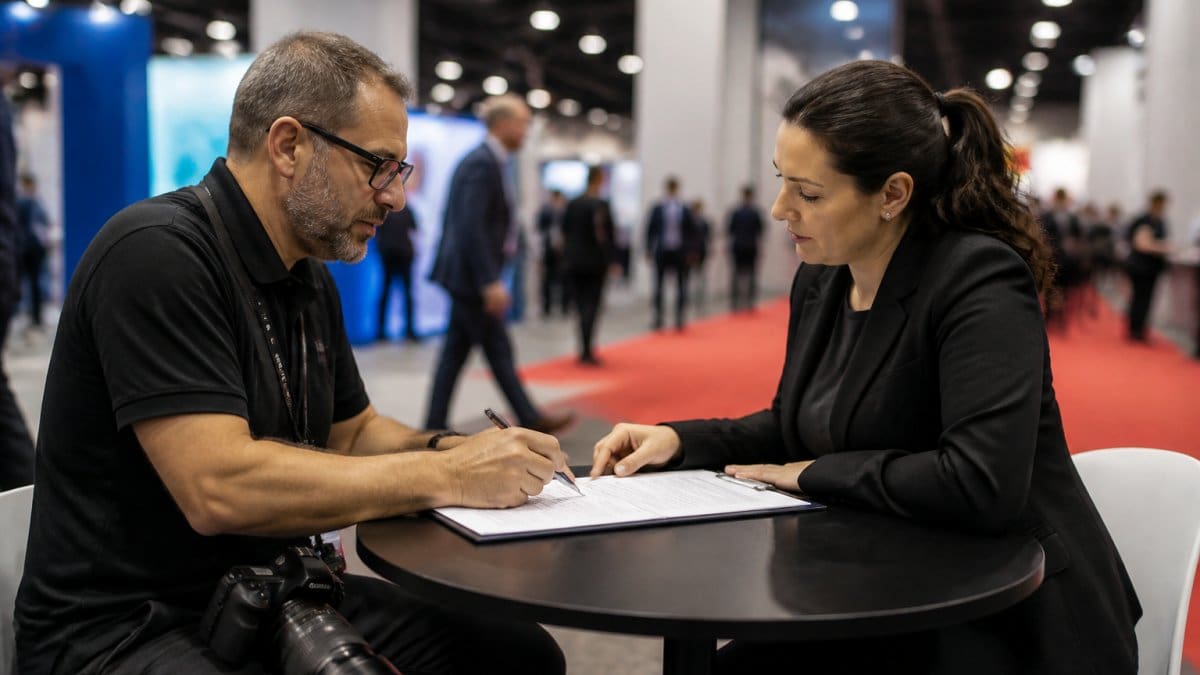
Your contract should specify the event date, time, location, and duration of coverage. Include the exact start and end times to prevent misunderstandings about how long the photographer will be present.
Define deliverables clearly: number of edited images, file format, delivery timeline, and usage rights. Specify whether the photographer retains copyright or transfers it to you. Most photographers retain copyright but grant you a license to use images for specified purposes.
Include payment terms: total cost, deposit amount, deposit due date, and final payment due date. Specify what happens if the event is cancelled or rescheduled. Most photographers require a non-refundable deposit to hold the date.
Address the photographer’s responsibilities and limitations. What happens if the photographer becomes ill and can’t attend? Do they provide a replacement? What are their obligations regarding equipment failure or technical issues?
Include your expectations regarding image delivery. Specify file format, resolution, whether images will be color-corrected, and the delivery method (cloud link, external drive, etc.).
Insurance and Liability Requirements
Professional photographers should carry liability insurance that covers their work at your event. Ask to see proof of insurance before signing a contract. This protects you if the photographer causes damage at your venue or if there are disputes about their work.
Your event venue may require vendors, including photographers, to carry specific insurance coverage. Confirm your venue’s requirements and ensure your photographer meets them. Some venues require photographers to be listed as additional insured on the photographer’s policy.
Include a clause about image ownership and usage rights. Clarify whether you own the images outright, have a license to use them, or have limited usage rights. For formal galas, you typically want broad usage rights for promotional purposes, internal communications, and archiving.
Address confidentiality if your event includes sensitive information or high-profile guests. Your contract should specify that the photographer will maintain confidentiality about guest lists, event details, or any sensitive moments captured.
Hiring Your Gala Photographer: The Booking Process
Once you’ve identified your top choice, the booking process involves several steps to formalize the agreement and prepare for successful coverage.
Evaluating Multiple Vendors
Before committing to one photographer, evaluate at least 2-3 options. Compare their portfolios, experience, rates, and communication style. Request proposals from each photographer that outline their specific approach to your event.
During initial consultations, assess how well the photographer listens to your needs. Do they ask detailed questions about your event, or do they give a generic pitch? A photographer who takes time to understand your specific event demonstrates they’ll deliver customized coverage rather than a one-size-fits-all approach.
Evaluate their professionalism and communication. Are they responsive to emails and calls? Do they provide clear, detailed information about their services? Poor communication during the booking process often predicts communication problems later.
Consider the photographer’s personality fit. You’ll be working together for several hours, and your photographer needs to be professional yet unobtrusive. During consultations, assess whether you feel comfortable with them.
Review contracts carefully before signing. Ensure all terms are clear, deliverables are specified, and payment terms work for your budget. Don’t hesitate to ask for clarification on anything unclear.
Image Delivery and Post-Production Turnaround
Clarify the post-production timeline before booking. How long after the event will images be delivered? What does the editing process include? Will you receive RAW files or only edited JPEGs?
Establish a delivery method that works for you. Cloud-based delivery through platforms like Dropbox or Google Drive allows easy sharing and downloading. Some photographers provide external hard drives or USB sticks. Confirm the method before your event.
Discuss image organization and labeling. Will images be organized by time, by event moment, or by location? Will they be labeled with names or descriptions? Good organization makes it easier to find and use specific images later.
Ask about revisions or adjustments. If you receive images and want specific edits, brightness adjustments, color corrections, or cropping changes, can the photographer make those? Most photographers include reasonable revision requests; excessive changes may incur additional fees.
Confirm what happens to your images after delivery. Will the photographer keep copies for their portfolio? Do they have the right to post images on their website or social media? Clarify these rights to avoid surprises when you see your event photos shared publicly.
Conclusion
Selecting the right photographer for your gala event determines whether you’ll have stunning visual documentation of your important occasion or mediocre photos that fail to capture the event’s elegance and significance. The process requires planning, clear communication about your specific needs, and careful evaluation of photographer experience and expertise.
Event Photojournalism understands the unique demands of formal gala photography. Our award-winning team has captured hundreds of galas across the DMV area, delivering high-resolution images that elevate your brand and preserve your event’s most important moments. We provide customized coverage that balances formal program documentation with candid moments that reveal your event’s genuine energy and impact. Contact Event Photojournalism today to discuss your gala photography needs and ensure your event is remembered through stunning, professional imagery that maximizes your mission.
| Evaluation Criteria | What to Look For | Why It Matters |
|---|---|---|
| Portfolio Quality | Consistent, varied compositions in formal settings | Reveals photographer’s skill and style consistency |
| Gala Experience | 3+ years photographing formal events | Demonstrates understanding of unique gala demands |
| Technical Expertise | Proficiency in low-light shooting and mixed lighting | Ensures quality images in challenging ballroom conditions |
| Communication | Responsive, asks detailed questions about your event | Prevents misunderstandings and ensures customized coverage |
| Contract Clarity | Detailed deliverables, timeline, and payment terms | Protects both parties and sets clear expectations |
| References | Positive feedback from recent gala clients | Validates photographer’s reliability and professionalism |
Frequently Asked Questions
What should I look for in a gala event photographer?
Look for a professional photographer with a strong portfolio demonstrating experience with high-profile, formal events. Evaluate their ability to capture candid moments alongside formal portraits, their technical expertise with event lighting, and their familiarity with gala logistics. Review their past work for image quality, composition, and consistency. Verify they have appropriate insurance and understand the specific requirements of your event.
What questions should I ask a photographer before hiring them for an event?
Ask about their experience with galas specifically, backup equipment and contingency plans, their shooting style and approach to candid moments, post-production turnaround time for image delivery, what's included in their photography packages, whether they provide a shot list review, insurance coverage, contract terms, and their availability for pre-event consultations. Request references from similar high-profile events they've covered.
How should I create a gala event photography shot list?
Start by identifying essential moments: arrivals, formal group photos, keynote speakers, award presentations, and candid networking moments. Work with your photographer to prioritize shots based on your event's goals, whether emphasizing fundraising, brand amplification, or mission messaging. Include specific details like venue backdrops, VIP attendees, and key activities. Share the shot list in advance so your photographer can plan positioning, lighting, and timing for optimal coverage.
What should an event photography contract include?
A solid contract should specify the event date, location, hours of coverage, deliverables (number of edited images, file formats, delivery timeline), usage rights, cancellation policies, payment terms, and deposit requirements. Include provisions for insurance, liability, and weather contingencies. Clarify ownership of images, whether the photographer retains rights for portfolio use, and any restrictions on client use of photos. Define post-production turnaround and what happens if additional editing is needed.
[EXTERNAL_LINK: Professional event photography standards and best practices | eventmanagementinstitute.com]
[EXTERNAL_LINK: Guide to vendor contracts and liability insurance for events | eventplannersassociation.org]
[EXTERNAL_LINK: Gala event planning and photography documentation guidelines | corporateeventcouncil.org]
This article was written using GrandRanker