Table of Contents
- Why Gala Photography Matters for Your Social Media Strategy
- Creating an Event Photography Shot List for Maximum Coverage
- Candid vs. Posed: Capturing Authentic Black-Tie Elegance
- Red Carpet Photography Tips for Professional Results
- Real-Time Social Media Content Creation During Your Event
- How to Edit Event Photos for Instagram and Other Platforms
- Legal and Privacy Considerations for Event Photography
- Maximizing Sponsor Visibility and Event ROI
Last Updated: August 6, 2026
Why Gala Photography Matters for Your Social Media Strategy
Professional event photography has become inseparable from modern fundraising and corporate communications. Gala photography for social media isn’t just documentation, it’s a strategic asset that amplifies your message, engages donors, and extends your event’s reach far beyond the ballroom.
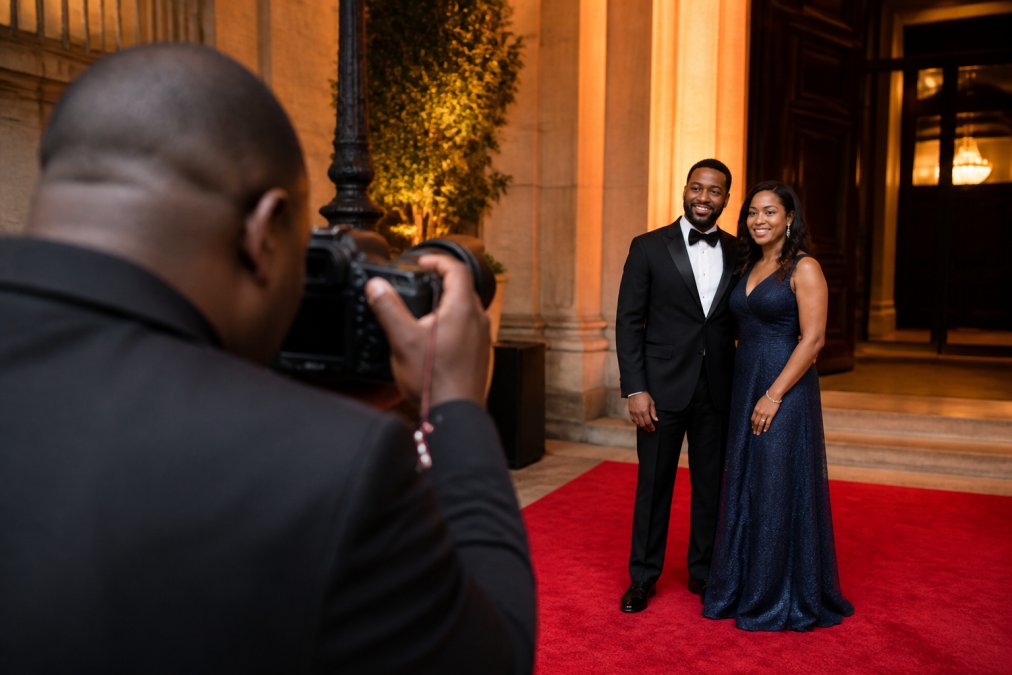
High-quality imagery captures moments words cannot convey: the energy of a successful fundraiser, genuine donor gratitude, and your brand in action. When distributed strategically across social platforms, these images become proof of impact. For nonprofit marketing directors, corporate communications teams, and event planners, the challenge is finding a photographer who understands that event photography serves dual purposes: images must be beautiful enough for your annual report and immediate enough for next-morning press releases.
A gala attended by 300 people can reach thousands more through social media if imagery is compelling, timely, and properly formatted for each platform. Poor photography, stiff poses, inadequate lighting, or slow turnaround wastes that opportunity entirely.
Gala photography for social media transforms one-night events into sustained digital narratives that build relationships with donors, sponsors, and stakeholders long after the event ends.
Creating an Event Photography Shot List for Maximum Coverage
Before your photographer arrives, clarity about what needs capturing is non-negotiable. A detailed event photography shot list ensures nothing critical is missed and your photographer understands priorities without constant direction during the event.
Start by identifying moments that matter most: for nonprofits, this typically includes arrivals, silent auction moments, the main program, award presentations, sponsor recognition, and donor-leadership interactions. For corporate events, prioritize keynote speakers, product demonstrations, networking sessions, and executive interactions.
A comprehensive shot list guides photographer positioning, communicates priorities without real-time micromanagement, and ensures important people and moments receive appropriate coverage.
Essential Moments to Capture
The opening hour sets the tone for social media coverage. Red carpet arrivals and check-ins are your first visual opportunity to showcase attendee engagement, performing particularly well on Instagram Stories and LinkedIn.
Program moments, speeches, award presentations, performances, are essential for press releases and official communications. These require wider shots capturing stage setup and audience reaction, plus close-ups of emotional responses that humanize your organization’s impact.
Sponsor recognition deserves dedicated coverage. Ensure sponsors receive the visual assets they expect: their CEO receiving recognition, branded signage in key moments, employees networking with leadership. These details matter for sponsor retention and future partnerships.
Donor interactions with leadership and program beneficiaries create powerful fundraising images. Candid moments, a donor speaking with a scholarship recipient, a board member in genuine conversation with a major supporter, demonstrate impact more effectively than staged photos.
VIP and Sponsor Documentation
Create a separate shot list section for specific individuals and organizations. Include names, descriptions, and desired photographic context. Your photographer should have a brief identifying major donors, executives needing portraits, sponsors requiring logo visibility, and specific board members or honorees to feature prominently.
Provide your photographer with a one-page VIP list 48 hours before the event. Include photos or descriptions of key individuals, their titles, and desired photographic context. This transforms a photographer into a strategic partner rather than a hired technician.
Candid vs. Posed: Capturing Authentic Black-Tie Elegance
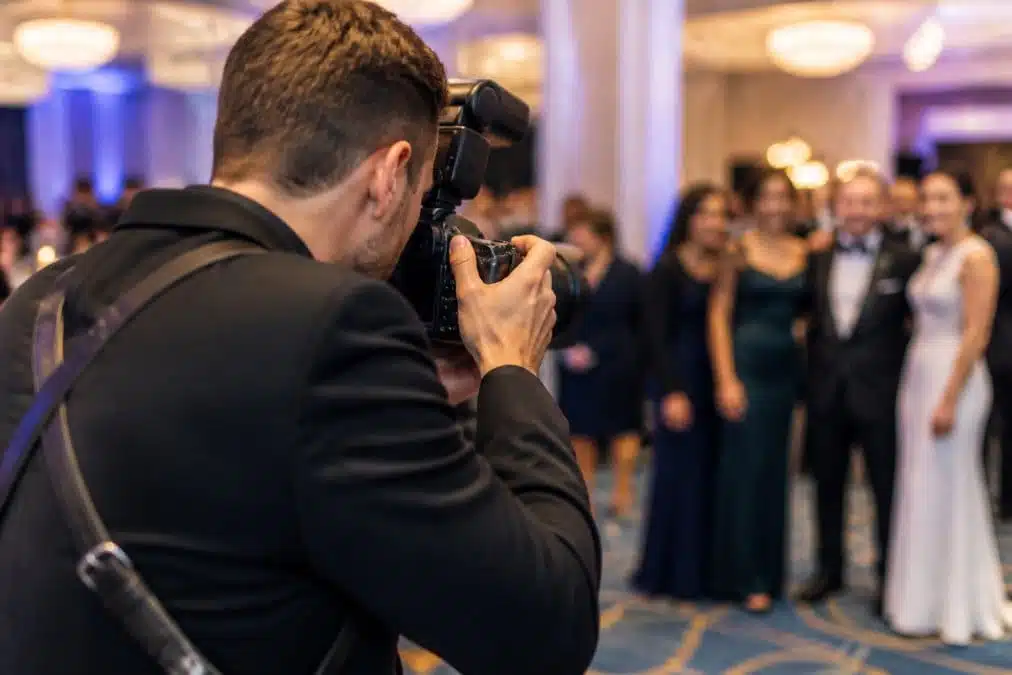
The tension between posed and candid photography defines the difference between stiff event coverage and authentic visual storytelling. Candid photography captures genuine moments, unguarded laughter, authentic conversation, real event energy. These images perform best on social media because they feel alive.
Posed photography ensures key individuals are properly documented, important group shots exist for your annual report, and sponsor logos appear in professional contexts. The best strategy combines both approaches with roughly 70% candid coverage and 30% posed documentation, ensuring authentic moments for social feeds while maintaining formal documentation your organization needs.
The photojournalistic approach leans heavily toward candid coverage, with photographers remaining unobtrusive and capturing moments as they unfold naturally rather than directing subjects into poses. This works particularly well for audiences valuing authenticity.
Avoid requesting “candid photos that look posed.” This creates contradiction. Either photographers capture moments naturally, or they direct subjects into positions. Authentic candid coverage requires trusting your photographer to work without constant direction during the event.
Red Carpet Photography Tips for Professional Results
Red carpet moments define your gala’s first social media impression. Whether you have an actual red carpet or prominent arrival area, these opening moments deserve strategic attention.
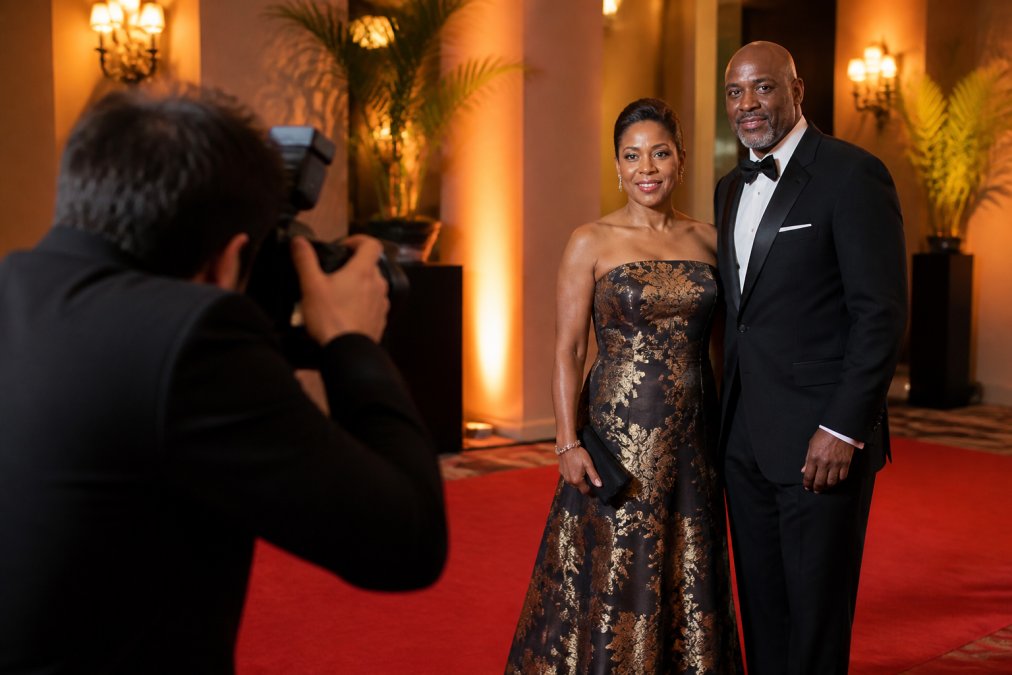
The best red carpet photography balances competing demands: clean backgrounds showcasing attendees without distraction, lighting that flatters formal wear and captures evening gown richness, and positioning allowing guests to move naturally while ensuring every important person receives coverage.
Lighting and Technical Setup
Red carpet lighting presents specific challenges. Natural light is unreliable; existing venue lighting emphasizes ambiance over photography. Professional event photographers bring supplemental lighting, off-camera flash positioned to fill shadows, or continuous lighting providing consistent illumination without harsh shadows.
Camera settings typically prioritize fast shutter speeds (1/250th or faster) to freeze motion, wider apertures (f/2.8 to f/4) to isolate subjects from background clutter, and ISO adjusted to ambient light. A 70-200mm telephoto lens captures candid moments from distance without intrusiveness; a 35mm or 50mm prime works well for intimate moments and environmental portraits.
Positioning and Angles
Photographer positioning determines what they capture. Position at slight angles (rather than directly in front) captures more natural expressions and shows evening wear more flatteringly. Multiple angles throughout the arrival area ensure comprehensive coverage: one near the entrance captures initial arrivals, another captures full-length shots, a third captures the exit transition.
Shooting slightly downward (from eye level or slightly above) is generally more flattering than shooting upward.
Brief your photographer on physical layout 24 hours before the event. Where will guests arrive? What’s the sightline to faces? Where are background distractions? A photographer understanding the space can position themselves strategically without needing direction during the event.
Real-Time Social Media Content Creation During Your Event
Modern expectations include same-night social media updates. Your followers want to see your gala happening during the event, not three weeks later in formal posts.
This requires a fundamentally different approach than traditional event photography. Your photographer needs to work with immediate distribution in mind, understanding which moments translate well to Instagram Stories, which work for LinkedIn posts, and what editing decisions allow polished images within minutes.
Real-time content creation requires infrastructure: someone at the event with high-speed internet access receiving images from the photographer, performing basic editing, and publishing immediately. This person isn’t the photographer, photographers should focus entirely on capturing images.
The workflow: photographer captures images, transfers them wirelessly to a laptop or tablet, a designated team member selects best shots, applies consistent editing, and publishes to social platforms within 15-30 minutes of the moment being captured.
Same-Night Selects and Quick Turnaround
"Same-night selects" refers to curated best images from the event, edited and delivered before guests leave. This requires establishing clear criteria for "best images" beforehand: are you prioritizing specific people, specific moments, or images working well for social media?
Editing for same-night selects is necessarily faster than comprehensive post-production. Expect consistent color grading and exposure correction, but not extensive retouching. The goal is professional, on-brand images delivered fast enough to matter for immediate social distribution.
Platform-Specific Aspect Ratios and Formats
Different social platforms demand different dimensions: Instagram feed posts work best as square (1:1) or portrait (4:5); Instagram Stories require vertical (9:16); LinkedIn performs well with square or horizontal (16:9); TikTok requires vertical video or stills.
A photographer understanding these requirements captures images with composition working across formats. The editing workflow should include cropping images to multiple formats, a single image might be cropped to square for Instagram feed, vertical for Stories, and horizontal for LinkedIn.
Real-time social media content from your gala extends its reach exponentially. Attendees seeing images posted during the event are more likely to engage, share, and feel invested in your organization’s narrative.
How to Edit Event Photos for Instagram and Other Platforms
Event photography editing should enhance natural beauty without appearing over-processed. Instagram feeds are full of over-edited event photos looking more like art projects than documentation. Consistency matters more than individual perfection, all images should look like they came from the same event, shot by the same photographer.
Professional Editing Workflow
A professional workflow includes several standardized steps. First, import all images and create preliminary selection, culling obvious rejects to reduce the full library to 200-300 images you’ll actually edit.
Next, apply consistent color profile to all selected images. This might be a preset or custom color grade matching your brand. All images should have the same color temperature, saturation, and tonal balance.
Exposure correction comes next, brightening shadows, controlling highlights, or adjusting overall exposure. Modern software allows batch application, then fine-tuning on individual images.
Finally, selective adjustments on individual images: sharpening, clarity adjustments, spot removal, and localized exposure corrections. The entire workflow should take approximately 5-8 hours for 300-500 images.
Maintaining Brand Consistency
Your event photos should look unmistakably like they belong to your organization. Consistent color grading, saturation levels, and tonal range across all images create immediate recognition when someone scrolls your Instagram feed.
Develop a simple editing preset or style guide defining your visual approach: warm color temperature, moderate saturation, lifted blacks, and slightly increased clarity. These decisions should be documented and applied consistently to every event.
Create a simple one-page editing guide for your photographer or editing team. Include examples of colors you want, saturation levels, and overall mood. This prevents editing surprises and ensures consistency across events.
Legal and Privacy Considerations for Event Photography
Event photography involves capturing people’s images without always obtaining explicit written consent beforehand. Understanding the legal landscape protects both your organization and your photographer.
In the United States, the right to photograph people in public spaces is broad, but event photography often occurs in semi-private venues where privacy expectations may be higher. The key legal question is how images will be used. Images used for nonprofit fundraising have different implications than images sold to third parties.
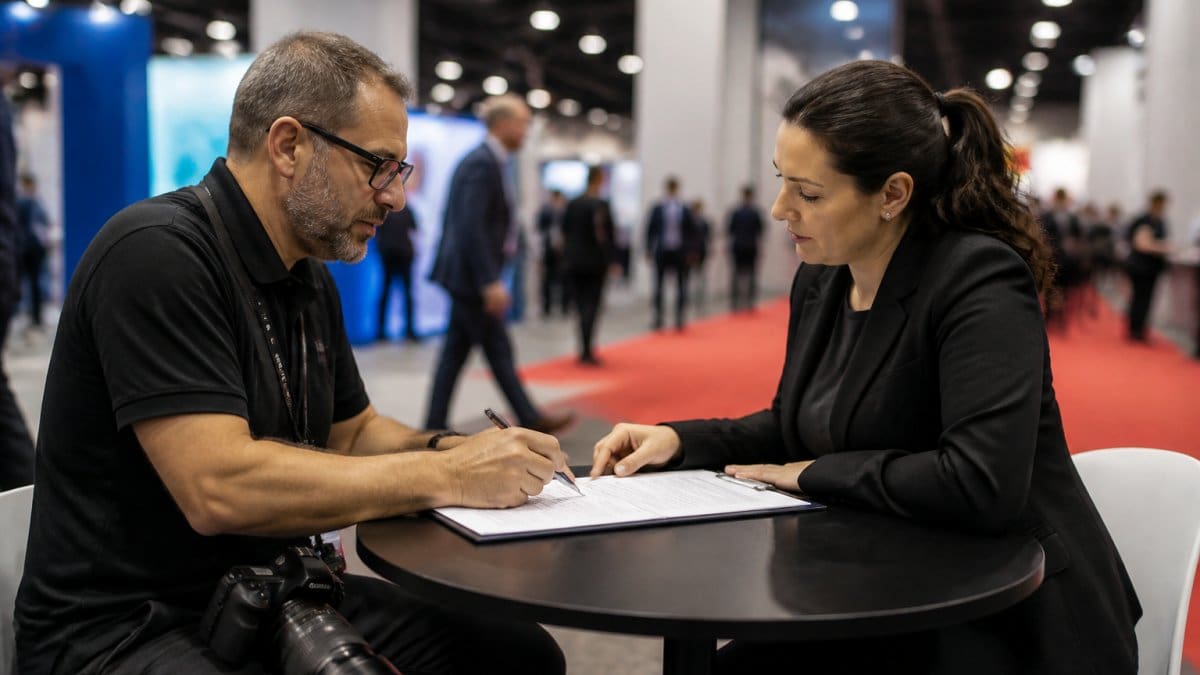
Document photography permissions clearly. Include a statement in your event invitation that professional photography will occur and images may be used for organizational communications, social media, and fundraising materials. Most attendees will proceed without objection, constituting implicit consent.
For high-profile attendees, major donors, or individuals explicitly requesting not to be photographed, honor those requests. Consider having simple photo release forms available for attendees wanting to explicitly grant permission.
Never use event photos to identify or locate individuals without consent, and never use images misrepresenting context or falsifying moments. Ethical use of event photography protects your organization’s reputation and maintains attendee trust.
Maximizing Sponsor Visibility and Event ROI
Sponsors invest expecting return on that investment. For many sponsors, visual assets and brand visibility constitute significant expected value. Strategic event photography ensures sponsors receive expected visibility, translating to sponsor retention and higher future commitments.
Begin by clarifying sponsor expectations during sales. What logo visibility do they expect? Do they want images of their employees? Should their branded signage appear prominently? Document and communicate these expectations to your photographer.
Create a sponsor shot list including each sponsor’s logo placement, key personnel to photograph, and specific moments where their brand should be visible. Deliver sponsor-specific image packages after the event, including high-resolution images showing their branding and employees at the event. Sponsors receiving these assets are more likely to share them on their own channels, extending your event’s reach.
The ROI calculation should include sponsor visibility value. Sponsors feeling their investment is visible and documented are sponsors who renew and increase commitment.
Professional gala photography serves purposes far beyond documentation. It’s the visual foundation of your fundraising narrative, evidence of your event’s success, and the asset extending your event’s reach long after guests depart. When approached strategically with clear shot lists, real-time social media distribution, and thoughtful editing, event photography becomes one of your most valuable communications tools.
The challenge most organizations face isn’t finding a photographer who takes good pictures, it’s finding one understanding that gala photography for social media requires strategic thinking, technical excellence, and the ability to work quickly without sacrificing quality. Contact Event Photojournalism to discuss how award-winning photography can elevate your next gala, amplify your fundraising message, and ensure every important moment is captured and distributed strategically across your social platforms.
Frequently Asked Questions
What makes a good gala photo for social media?
Strong gala photography for social media combines sharp focus, professional lighting, and authentic moments that showcase attendee engagement and event atmosphere. Look for images with clear subjects, minimal distracting backgrounds, and emotional resonance, whether candid laughter at a charity ball or formal executive portraits. High-resolution images that work well in both square and vertical formats perform best across platforms. Photos featuring sponsor logos, branded elements, and VIP attendance also drive higher engagement and event ROI.
How quickly can I get edited photos after my gala for press releases?
Professional gala photographers typically deliver same-night selects within 4-6 hours, allowing you to post highlights to social media and prepare press releases the morning after your event. Full edited galleries usually arrive within 3-5 business days. This fast turnaround requires pre-planning: providing a detailed shot list, VIP names, and sponsor information in advance ensures your photographer captures exactly what you need for immediate distribution. Confirm turnaround expectations with your photographer before your event.
How do I ensure candid, unobtrusive coverage at my gala without posed, stiff shots?
Candid gala photography requires a photojournalistic approach where the photographer blends into the event rather than directing action. Brief your photographer on your preference for natural moments, genuine conversations, authentic reactions, and unguarded interactions, over posed group shots. Position the photographer to observe from the edges of key moments rather than interrupting them. Discuss specific moments you want captured (award presentations, toasts, networking) so they anticipate action rather than interrupt it. This style of documentation creates visual assets that feel authentic and engaging for social media.
What's the difference between hiring a general event photographer and someone specialized in gala photography for social media?
Gala photography specialists understand luxury corporate events, black-tie elegance, and the strategic use of images for brand engagement and fundraising. They're experienced with low-light performance in ballrooms, red carpet coverage, sponsor logo integration, and real-time social media workflows. They also understand platform-specific requirements, aspect ratios for Instagram Stories, LinkedIn posts, and email campaigns. A specialized photographer delivers high-resolution digital media optimized for immediate distribution, not just a USB drive of unedited images weeks later.
This article was written using GrandRanker