Table of Contents
- Why Asking the Right Questions Matters
- How to Evaluate Event Photographer Portfolios
- Questions About Photography Style and Approach
- Event Photography Turnaround Time Expectations
- Essential Questions About Backup Plans and Insurance
- Event Photography Contract Checklist
- Questions About Venue Familiarity and Event Coverage
- Frequently Asked Questions
Last Updated: September 29, 2026
Why Asking the Right Questions Matters
Booking an event photographer is one of the most important decisions you’ll make for your occasion. The wrong choice can leave you with images that don’t capture your vision, miss critical moments, or fail to deliver in time for your needs. The right photographer becomes a partner in preserving what matters most.
The key is knowing what to ask before you sign anything. According to industry guidance on vetting professional credentials, photographers are increasingly expected to provide liability insurance documentation, backup equipment protocols, and transparent delivery timelines. These aren’t optional details, they’re the foundation of a professional working relationship.
Most people focus only on portfolio style and price. But the real difference between a photographer who delivers and one who doesn’t comes down to clarity on the operational side: what happens if equipment fails, how long you’ll wait for images, what you actually own once you’ve paid, and whether the photographer understands your specific event type. This guide walks you through the questions that matter, organized by category so you can move through your vetting process systematically.
How to Evaluate Event Photographer Portfolios
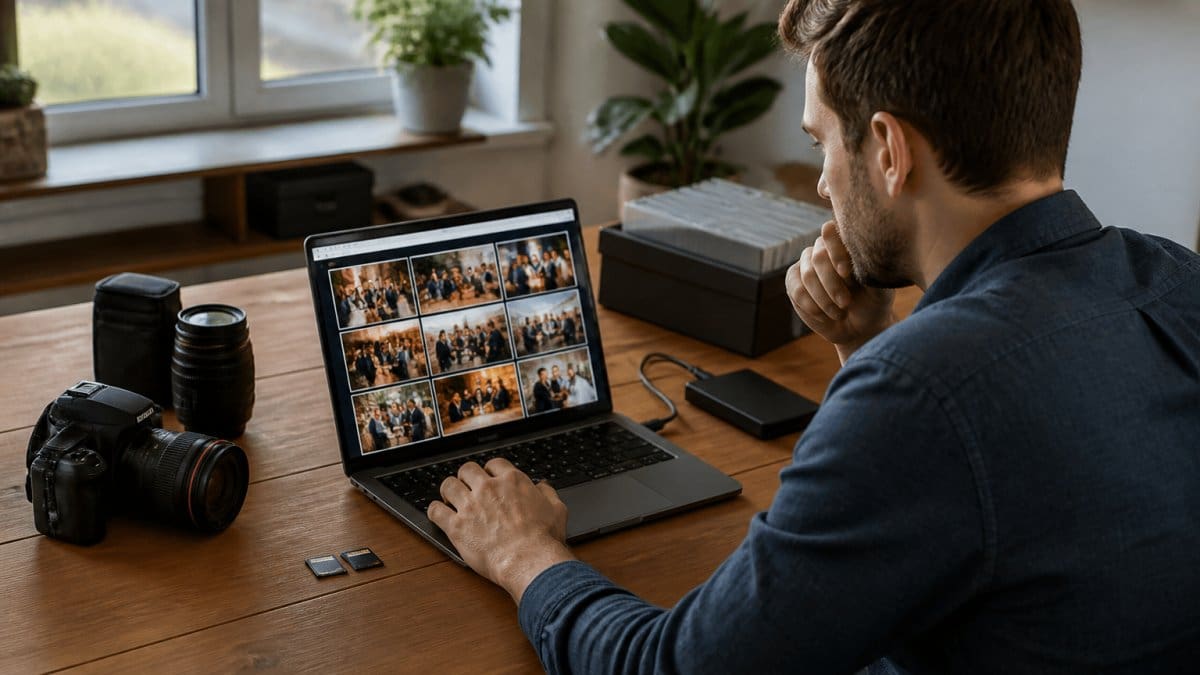
Start by asking to see full event galleries, not just highlight reels. A photographer’s curated Instagram feed tells you what they think is their best work. A complete gallery from a real event tells you what you’re actually getting.
Request 2-3 full galleries from events similar to yours. Look at the entire set, not just the standout shots. How do they handle the quiet moments? Are there technical issues, blown-out backgrounds, inconsistent focus, color shifts between images? Do the images tell a story, or do they feel like disconnected snapshots?
Pay attention to how they’ve captured different event phases. Can they shoot both the formal moments and the candid celebrations? Have they documented the behind-the-scenes setup? Do they show the full emotional arc of the event?
Ask specifically about their portfolio curation process. How do they decide what to show potential clients? A photographer who’s transparent about their selection criteria, “I show one gallery per event type to demonstrate consistency”, is more trustworthy than one who won’t explain their choices. This transparency matters because it tells you they’re thinking about realistic expectations.
Questions About Photography Style and Approach
Understanding candid vs. posed coverage
The difference between candid and posed photography is fundamental, and it directly affects how your event will be documented. Candid photography captures moments as they naturally unfold, genuine reactions, unguarded interactions, the real feel of your event. Posed photography involves directing subjects, arranging people intentionally, and creating composed shots.
Most event photographers blend both approaches, but the balance varies significantly. Ask directly: what percentage of your coverage is candid versus posed? For a gala or corporate event, you might want 80% candid and 20% posed. For a wedding, the split might be different. For a board meeting or conference, you may need more posed shots of key moments and speakers.
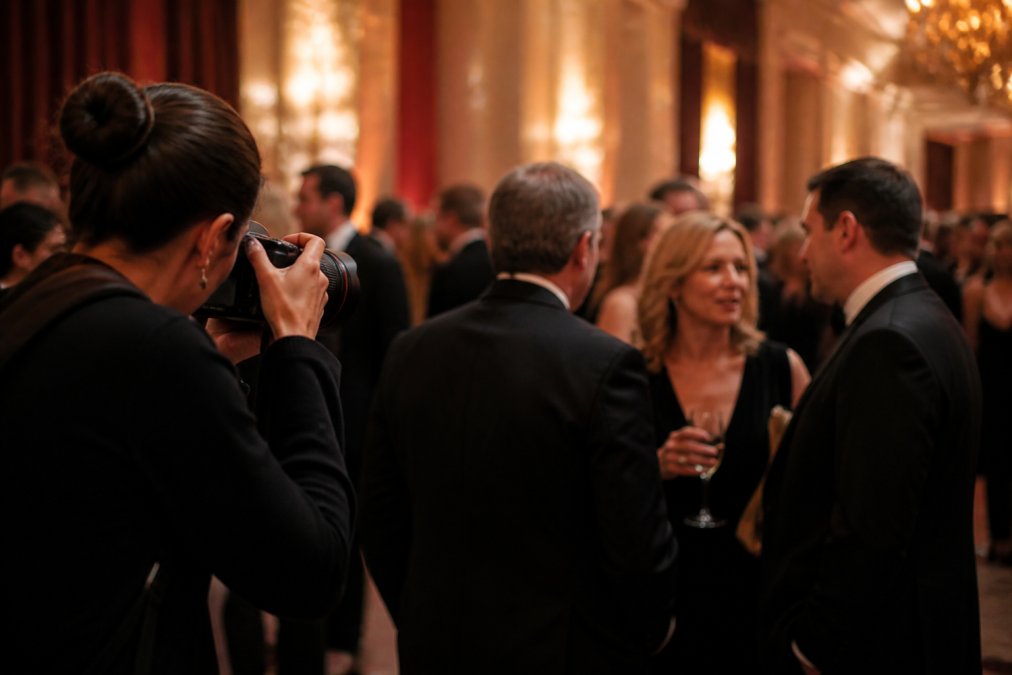
Ask about their approach to being unobtrusive. If your board members are private or your donors prefer not to be constantly aware of the camera, you need a photographer who understands how to work quietly. Can they give you examples of how they’ve handled similar situations? Have they worked at formal events where discretion was essential?
This is where the photojournalistic approach matters. Event Photojournalism delivers award-winning, high-resolution photography services across the DMV area, expertly capturing the essence of corporate conferences, galas, weddings, and special events, ensuring every important moment is remembered through stunning imagery.
Discussing second shooter vs. solo photographer
A second shooter is an additional photographer who works alongside the primary photographer. This person captures different angles simultaneously, ensures coverage of multiple simultaneous events, and provides backup if the primary photographer encounters technical issues.
Ask whether a second shooter is included in their standard package or available as an add-on. For larger events, galas with multiple venues, conferences with concurrent sessions, weddings with simultaneous bride and groom prep, a second shooter is nearly essential. For smaller events, a solo photographer may be sufficient.
If they offer a second shooter, ask about that person’s experience level. Is the second shooter a trained professional or an assistant? Will they have creative input on shots, or are they primarily capturing coverage? How long have they worked together? Photographers who regularly work with the same second shooter have developed a rhythm and understand each other’s positioning, which results in better coverage.
For solo coverage, ask how they prioritize moments if two important things happen simultaneously. What’s their strategy? Do they have a shot list that helps them anticipate key moments?
Event Photography Turnaround Time Expectations
Highlights delivery vs. full gallery timelines
Turnaround time has two phases: highlights and full gallery. Highlights are typically 20-50 carefully edited images delivered quickly, often within 24-48 hours (Top 11 Questions to ask your wedding photographer). These are the images you’d use for a press release, social media announcement, or immediate stakeholder communication.
The full gallery, which includes all edited images from the event, typically takes longer. Ask specifically about both timelines. A common expectation is highlights within 48 hours and full gallery within 2-3 weeks, but this varies. For nonprofit galas needing press coverage the morning after an event, you need a photographer who can commit to overnight highlights delivery.
Ask what “turnaround time” means in their contract. Does it mean images are delivered, or does it mean editing is complete? Some photographers deliver unedited RAW files quickly but take weeks on the final edited versions. Others deliver fully processed images but need more time upfront.
Post-processing workflow and culling process
Culling is the process of reviewing all images shot and selecting which ones to edit. Color correction and retouching are the editing steps that follow. Understanding this workflow helps you know what to expect.
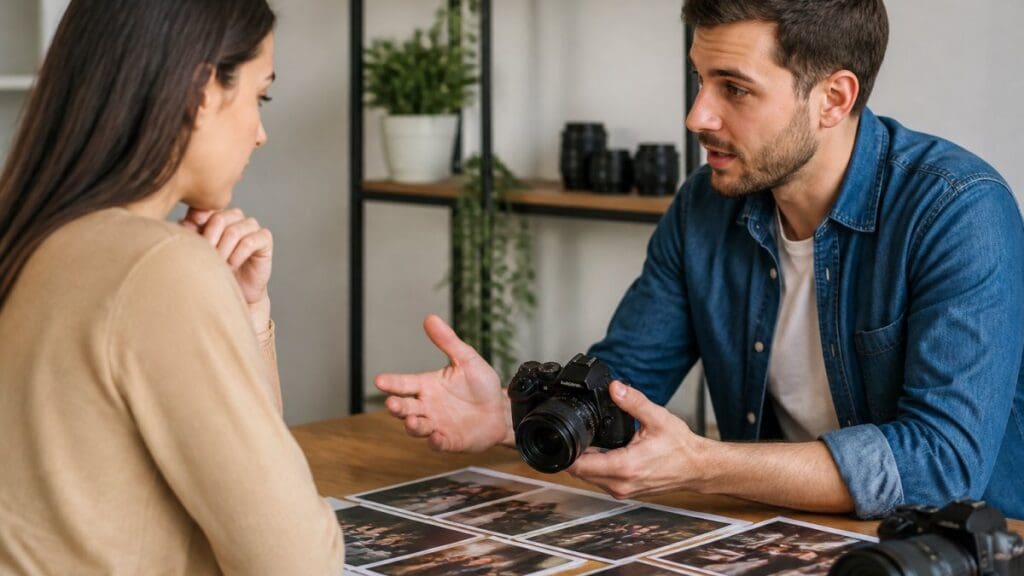
Ask how many images they typically shoot at an event and how many make it into the final gallery. If a photographer shoots 3,000 images and delivers 500, they’re doing significant culling. If they shoot 800 and deliver 750, they’re doing minimal selection. Neither is inherently wrong, it depends on your preference. Some clients want comprehensive coverage; others prefer a tightly curated set.
Ask about their editing style. Do they prefer natural color correction or more stylized editing? How consistent is the color grading across images? For corporate events, consistency is crucial. For weddings or celebrations, you might prefer more artistic variation.
Essential Questions About Backup Plans and Insurance
Contingency plans and backup equipment
Equipment fails. Cameras malfunction, lenses develop issues, memory cards corrupt. A professional photographer has contingency plans for these scenarios.
Ask directly: what’s your backup plan if your primary camera fails during the event? Do you carry backup equipment? What type? A photographer who carries a second camera body, additional lenses, and extra memory cards is prepared. One who doesn’t have backup equipment is taking a risk with your event.
Ask about their insurance coverage. Professional liability insurance protects you if something goes wrong. Do they carry it? What does it cover? This question is increasingly standard in the industry, and photographers who are insured are more credible.
Liability insurance and professional conduct
Liability insurance covers scenarios where the photographer’s actions cause damage, they trip and knock over a display, their equipment damages property, or they injure someone. For events at upscale venues or corporate settings, this protection is essential.
Ask what their insurance covers and what the limits are.
Event Photography Contract Checklist
Defining scope of work and package inclusions
Your contract should clearly state what’s included. How many hours of coverage? What’s the deliverable format? How many images will you receive? Are prints included, or only digital files?
Usage rights, print release, and RAW files
This section determines what you can do with the images after you’ve paid. Usage rights define whether you can print images, use them on your website, share them on social media, or use them in marketing materials.
Cancellation policies and booking deposit terms
Understand the financial terms before committing. What deposit is required to book? Is it refundable? Under what circumstances would you lose the deposit?
Questions About Venue Familiarity and Event Coverage
Venue familiarity is a practical consideration. A photographer who has shot at your venue before understands the lighting challenges, knows the best positions for key moments, and can anticipate logistical issues.
Frequently Asked Questions
What are the most important questions to ask an event photographer before booking?
Start with questions about photography style, turnaround time for final images, backup equipment and contingency plans, liability insurance, contract terms, and cancellation policies. Ask to review full event galleries from similar events, not just highlight reels. Discuss how they handle post-processing, whether they deliver RAW files, and what happens if images don’t meet expectations. Industry guidance now explicitly highlights the necessity of verifying liability insurance and backup equipment protocols for event photographers.
How should I evaluate an event photographer’s portfolio?
Request 2-3 full example galleries from real events rather than relying solely on curated highlight reels. Look for consistent quality across different lighting conditions and event types. Ask about their experience with your specific event type and venue. Check whether their color correction and retouching style matches your vision. Photographers are increasingly advised to provide full-gallery transparency to demonstrate their actual coverage capabilities and consistency.
What should I ask about turnaround time and image delivery?
Clarify when you’ll receive highlights for immediate use (press releases, social media) versus the full gallery. Ask about their post-processing workflow, culling process, and whether they offer web-ready versions or high-resolution files. Discuss digital delivery platforms they use and how long final edited images take. Specify your deadline needs upfront so the photographer can confirm they can meet them.
What backup plans should an event photographer have in place?
Ask about contingency plans if they become ill or unable to attend. Verify they carry liability insurance and have backup equipment (cameras, lenses, lighting). Discuss whether they work with a second shooter or have a backup photographer they can call. Confirm they understand venue requirements and have experience managing unexpected technical challenges. Professional event photographers should be able to articulate specific protocols for handling equipment failure or other emergencies.