Table of Contents
- Why Tips for Nonprofit Gala Photography Differ From Standard Event Work
- Your Nonprofit Event Photography Shot List: What to Capture and When
- Best Camera Settings for Gala Events and Low-Light Environments
- Tips for Nonprofit Gala Photography: Unobtrusive Shooting Techniques
- Post-Production Workflow for Gala and Charity Ball Photography
- Legal and Privacy Considerations for Nonprofit Gala Coverage
- How to Price Nonprofit Photography and Structure Your Charity Gala Photography Contract
- Conclusion: Elevate Your Nonprofit Gala With Professional Documentation
Last Updated: June 9, 2026
Nonprofit galas are among the most demanding events a photographer will ever cover, and the tips for nonprofit gala photography that apply here go well beyond any standard event guide. At Event Photojournalism, we’ve covered hundreds of high-stakes galas across the DMV area, and the difference between images that drive donor engagement and images that collect dust comes down to a handful of deliberate choices.
The real stakes are different here. Nonprofit organizations use gala photography to cultivate donors, produce annual reports, fuel social media campaigns, and document their mission in action. A blurred paddle raise or a missed keynote moment isn’t just a missed shot, it’s a missed fundraising opportunity.
Why Tips for Nonprofit Gala Photography Differ From Standard Event Work
Nonprofit gala photography sits at the intersection of documentary storytelling and brand strategy. Unlike corporate conferences or weddings, a charity ball serves two distinct audiences simultaneously: the donors in the room and the broader public who will see the images later in marketing materials, impact reports, and social campaigns.
Understanding the Dual Audience: Donors and the Public
Donors in the room need to feel seen and connected to the cause. The public audience needs to feel inspired and moved to act. A common mistake is shooting exclusively for the room, photographers who focus only on flattering portraits miss the wider event atmosphere, mission-driven signage, and emotional reactions during a live auction. Those wider shots are what end up in post-event promotion and donor impact reports.
The Stakes: Marketing Materials, Donor Engagement, and Brand Storytelling
Nonprofits operate on tight budgets, and a single gala can represent a significant portion of annual fundraising. The photography will be used for months, sometimes years, across email campaigns, grant applications, and social media. According to guidance from the Nonprofit Technology Network on visual storytelling for fundraising, organizations that invest in professional event documentation consistently report stronger donor retention and higher response rates on follow-up appeals. Every image should reinforce the organization’s mission, values, and community.
Your Nonprofit Event Photography Shot List: What to Capture and When
A structured nonprofit event photography shot list is the single most important planning tool a photographer can bring to a gala. Without one, you’re reacting to the event. With one, you’re directing a visual narrative.
Pre-Event and Arrival Coverage: Red Carpet and Setup Moments
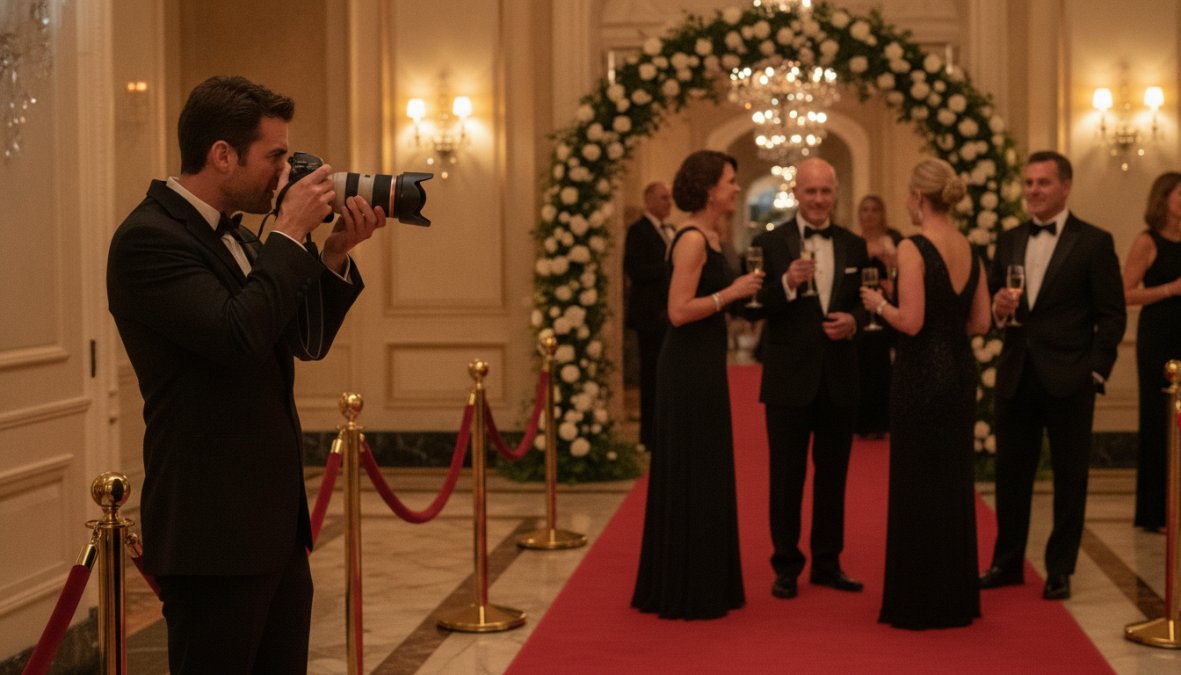
Arrive at least 90 minutes before doors open. The setup phase offers images that carry enormous storytelling weight, staff arranging centerpieces, volunteers reviewing paddle raise paddles, the venue transforming from empty hall to black-tie elegance. Red carpet photography requires a fixed position with a consistent background; use a 70-200mm zoom at f/2.8 and capture arrivals three ways: full-length, mid-body, and candid interaction.
The pre-event window also covers:
- Venue detail shots: table settings, centerpieces, branded signage
- Staff and volunteer portraits
- Sponsor recognition displays
- Empty room establishing shots before guests arrive
Program Highlights: Live Auction, Paddle Raise, and Keynote Speakers
The live auction and paddle raise are the financial heart of most nonprofit galas. Position yourself on the side of the room during the paddle raise to capture both the auctioneer and the crowd simultaneously. Use a second body with a 24-70mm for the room-wide reaction while your primary body with a longer lens captures individual donor moments.
Keynote speakers deserve coverage from multiple angles: wide establishing shots against the branded backdrop, medium shots capturing expression and gesture, and audience reaction shots. Reaction frames are often the most powerful images in the entire gallery.
Capturing Authentic Candid Moments During Networking Interactions
Authentic moments during networking interactions separate memorable gala photography from generic event documentation. Work from the edges of conversations, use a longer focal length to compress distance, and resist the urge to direct or interrupt. The best candid photography happens during cocktail hour, guests are relaxed, connections are forming, and the atmosphere is at its most genuine.
Best Camera Settings for Gala Events and Low-Light Environments
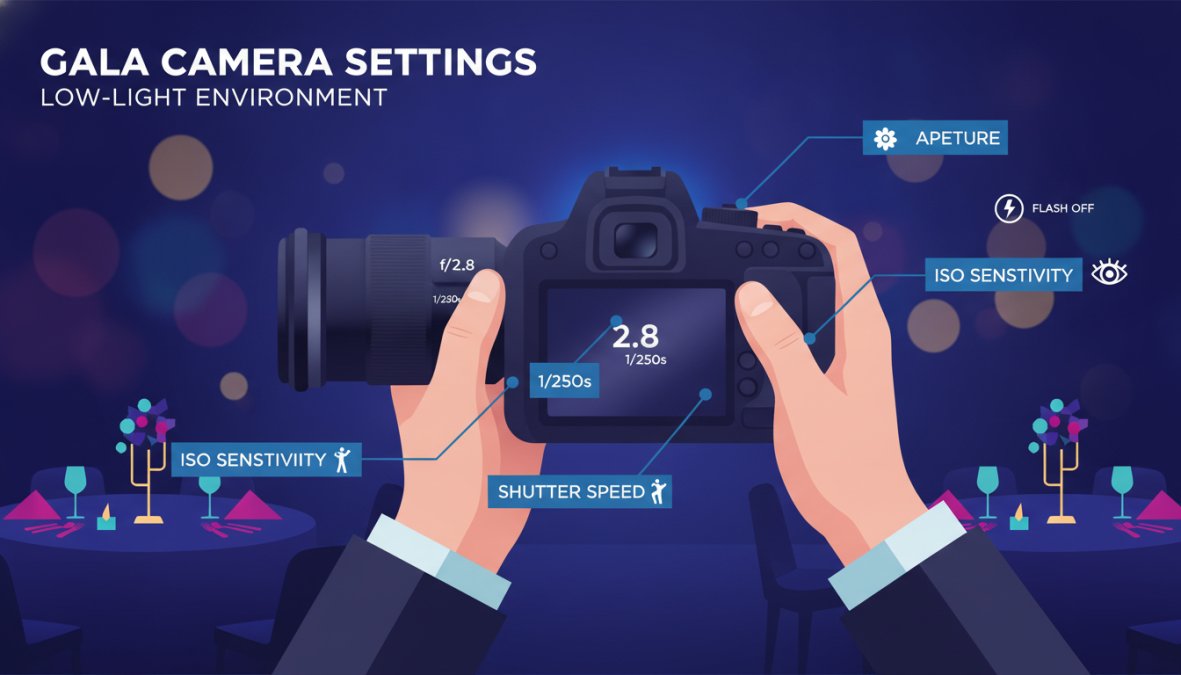
Gala ballrooms present one of the most technically challenging environments in event coverage. A practical starting point:
- ISO: 1600-6400 depending on available light
- Aperture: f/2.8 or wider on fast lenses
- Shutter speed: 1/100s minimum to freeze movement
- White balance: Auto or a custom preset matched to the venue’s dominant light source
Lighting Techniques: Off-Camera Flash, Bounced Lighting, and Flattering Light
For formal seated dinners, direct on-camera flash is disruptive and produces flat, harsh results. Bounced lighting off a white ceiling or nearby wall produces far more flattering light that blends with the ambient warmth of the venue. A CTO gel matched to the ambient color temperature prevents the cold, clinical look of unmodified flash against warm candlelight. Many experienced photographers combine available light for candid interactions with a single off-camera flash for formal portraits and award presentations.
Choosing the Right Event Photography Gear: Zoom Lens and Body Selection
For gala coverage, a two-body setup is strongly recommended. A 24-70mm f/2.8 handles cocktail hour and program wide shots; a 70-200mm f/2.8 covers the stage and candid moments from across the room. Full-frame sensors produce cleaner files at ISO 3200-6400 than crop-sensor alternatives, directly relevant to most charity ball venues. Bring a backup body; gala events are not recoverable if equipment fails mid-program.
Bring two fully charged batteries per body and format your cards before every event. A 4-hour gala can produce 1,500-2,500 images, and running out of storage during the paddle raise is a mistake that cannot be undone.
Tips for Nonprofit Gala Photography: Unobtrusive Shooting Techniques
The best tips for nonprofit gala photography in high-end settings center on invisibility. Guests at a charity ball are there to connect, celebrate, and give. A photographer who constantly interrupts the event flow undermines the very moments worth capturing.
Managing Guest Interactions Without Disrupting Event Flow
Develop a light touch with guest interactions, a quick smile and nod is often enough to get a natural expression without stopping conversation. For formal portraits, designate a specific portrait area and brief guests through event staff rather than interrupting networking directly. Learn the program schedule before doors open so you can anticipate transitions and position yourself ahead of the moment rather than chasing it.
Never use a pop-up flash in a darkened ballroom during a speaker presentation or emotional video segment. The disruption damages guest experience and can permanently alter the mood of a high-stakes fundraising moment.
Adopting a Documentary Approach to Black-Tie Elegance
A documentary approach treats the gala as a story unfolding in real time rather than a series of shots to check off. Shoot sequences of related moments, capture context alongside subjects, and resist over-directing. Black-tie elegance creates natural visual richness, formal attire, candlelight, floral arrangements, and the physical language of people invested in a shared cause. Shoot wide enough to include environmental context and let the event atmosphere do the storytelling work.
Post-Production Workflow for Gala and Charity Ball Photography
Post-production is where many photographers lose the gains made during the shoot. A disorganized workflow produces inconsistent deliverables and delays that frustrate nonprofit clients who need images quickly for post-event promotion.
A reliable workflow follows these steps:
- Ingest all cards immediately after the event using a dedicated backup drive
- Create a primary and redundant backup before culling begins
- Cull to a selects folder (typically 10-15% of total frames)
- Apply a base edit preset matched to the venue’s lighting conditions
- Fine-tune exposure and color on hero images individually
- Export at full resolution for print and web-optimized versions for digital use
- Deliver via a password-protected gallery within the agreed timeline
AI-Assisted Event Photography Editing and Culling Tools
AI-assisted culling tools like Aftershoot and Narrative Select use machine learning to identify sharp, well-exposed frames and filter duplicates, significantly reducing culling time for galleries of 1,500 or more images. The practical result is faster delivery, nonprofits often need images within 48-72 hours for post-event email campaigns. AI culling handles the mechanical work; the photographer still makes final editorial decisions on which moments tell the story most effectively.
As documented in Adobe’s photography workflow resources, consistent color grading across a gallery is as important as individual image quality. A gala gallery where cocktail hour images are warm-toned and dinner images are cool-toned looks amateurish regardless of individual frame quality.
Delivering Images for Post-Event Promotion and Donor Impact Reports
Delivery format should be agreed upon in the contract before the event. Nonprofits typically need:
- High-resolution TIFF or JPEG files for print (annual reports, grant applications)
- Web-optimized JPEGs for email campaigns and social media
- Vertical crops for Instagram Stories and social media reels
- A selection of 20-30 hero images for immediate post-event promotion
Organize deliverables by event segment so the nonprofit’s communications team can find what they need without sorting through hundreds of files.
Legal and Privacy Considerations for Nonprofit Gala Coverage
Legal and privacy considerations are frequently overlooked until a problem arises. Most gala attendees sign implicit consent to photography by attending a ticketed event where photography is disclosed, but explicit consent is required for images used in fundraising appeals featuring identifiable individuals. The American Society of Media Photographers model release guidelines provides a standard framework for event release documentation.
Key considerations include:
- Model releases: Obtain signed releases from any individual whose image will be used in fundraising appeals, grant applications, or paid advertising
- Minor photography: Apply stricter consent standards for images featuring children at family-oriented gala events
- Sensitive contexts: Avoid images that could identify attendees in contexts they might find embarrassing or professionally damaging
- Data handling: Treat gallery access links as confidential and use password protection on all client deliverables
A one-page photography disclosure in the event program, combined with a model release station near the registration desk, covers the vast majority of legal exposure for nonprofit gala photography without creating friction for guests.
How to Price Nonprofit Photography and Structure Your Charity Gala Photography Contract
How to price nonprofit photography generates more confusion than almost any other business topic in event photography. The honest answer: nonprofits are not entitled to a discount simply because of their mission, but many photographers choose to offer one strategically.
A standard gala photography pricing structure covers:
- Base coverage rate (typically 4-6 hours minimum for a full gala)
- Overtime rate per hour beyond the base
- Post-production and delivery fee
- Travel fees for events outside a defined radius
- Rush delivery surcharge for 24-hour turnaround
Many photographers offer a 10-15% nonprofit discount as a business development decision, recognizing that well-documented galas generate referrals and portfolio work. This is a choice, not an obligation.
Key Clauses in a Charity Gala Photography Contract Template
A charity gala photography contract template should include the following clauses as a minimum:
| Clause | Purpose |
|---|---|
| Scope of coverage | Defines hours, deliverables, and event segments covered |
| Image rights | Specifies usage rights granted to the nonprofit |
| Model release language | Addresses consent for identifiable individuals |
| Delivery timeline | Sets expectations for gallery delivery |
| Payment schedule | Defines deposit and final payment terms |
| Force majeure | Covers event cancellations and rescheduling |
| Limitation of liability | Caps photographer liability to the contract value |
The image rights clause deserves particular attention. Granting unlimited usage rights within the nonprofit’s own communications while retaining rights for commercial licensing is a reasonable middle ground that protects both parties. According to Volunteer Lawyers for the Arts contract guidance for photographers, clear written agreements are the single most effective way to prevent disputes over image usage after a gala event.
Conclusion: Elevate Your Nonprofit Gala With Professional Documentation
Nonprofit gala photography done well is one of the most impactful investments an organization can make in its long-term fundraising capacity. The images from a single evening can drive donor engagement for months, support grant applications, and tell the story of a mission in ways no written report can match.
Producing that level of professional documentation requires more than technical skill, it requires a photographer who understands the stakes, plans coverage strategically, and delivers images that serve both the organization’s brand and its mission. Event Photojournalism brings award-winning photography expertise and customized gala coverage solutions to nonprofits across the DMV area, delivering high-resolution images designed to elevate your brand and maximize your mission. CONTACT US to discuss coverage for your next nonprofit gala or charity ball.
Frequently Asked Questions
What shots are essential for a nonprofit gala?
A strong nonprofit event photography shot list should include: pre-event venue setup and décor details, red carpet and guest arrivals, sponsor signage and branded elements, keynote speakers and award presentations, the live auction and paddle raise moments, candid networking interactions between donors, and emotional reactions during mission-driven speeches. Closing shots of the full room and VIP group portraits round out comprehensive event coverage for marketing materials and donor impact reports.
What is the best equipment for low-light gala photography?
For charity gala and corporate gala environments, prioritize a full-frame camera body with strong high-ISO performance, a fast zoom lens in the 24-70mm or 70-200mm range, and a reliable off-camera flash with a diffuser for bounced lighting. A secondary prime lens at f/1.8 helps in extremely low-light corners of a ballroom. Spare batteries and dual memory cards are essential for uninterrupted coverage at high-stakes events.
How do you price nonprofit event photography?
Pricing nonprofit photography typically involves a half-day or full-day flat rate, plus optional add-ons like rush delivery, additional edited images, or a second shooter. Many photographers offer a modest nonprofit discount, typically 10-20%, while still covering their time, gear, and post-production costs. Always factor in travel, editing hours, and licensing terms. A clear charity gala photography contract template protects both parties and should outline deliverable counts, turnaround times, and usage rights.
How do you get good candid photos at a dark charity event?
Getting great candid photography at a dark charity ball requires shooting in aperture-priority mode with a wide aperture (f/2.0-f/2.8), raising ISO to 3200-6400 on a capable body, and using bounced flash off ceilings or walls to create flattering, natural-looking light. An unobtrusive approach, staying at the edges of the room, using a zoom lens to compress distance, and anticipating emotional moments, is the key to authentic, documentary-style images that feel genuine rather than posed.
Do I need model releases for nonprofit gala photography?
Legal requirements vary, but best practice for nonprofit gala photography is to include a general photography notice in event invitations and on-site signage, informing guests that professional documentation will occur. For images used in commercial marketing materials or major donor campaigns, individual model releases offer stronger legal protection. Your charity gala photography contract template should specify how images will be used, who retains licensing rights, and any restrictions on publishing identifiable guest photos.
This article was written using GrandRanker