Table of Contents
- Event Photography vs Headshot Photography: What Sets Them Apart
- Purpose, Usage, and Brand Identity: How Each Type Serves Your Business
- Event Photography Equipment List vs Headshot Studio Setup
- Professional Headshot Pricing vs Event Photography Costs and ROI
- How to Prepare for a Professional Headshot Session
- Building Your Event Photography Shot List for Complete Coverage
- Choosing the Right Photography Style for Your Marketing Goals
- Conclusion: Matching the Right Photography Service to Your Business Needs
Last Updated: June 17, 2026
Event Photography vs Headshot Photography: What Sets Them Apart
The distinction between event photography vs headshot photography is one of the most misunderstood decisions business owners face when investing in professional imagery. At Event Photojournalism, we work with corporate clients across the DMV area who regularly confuse the two services and end up with assets that don’t serve their marketing goals. These are fundamentally different disciplines requiring different equipment, different skill sets, and delivering different business outcomes.
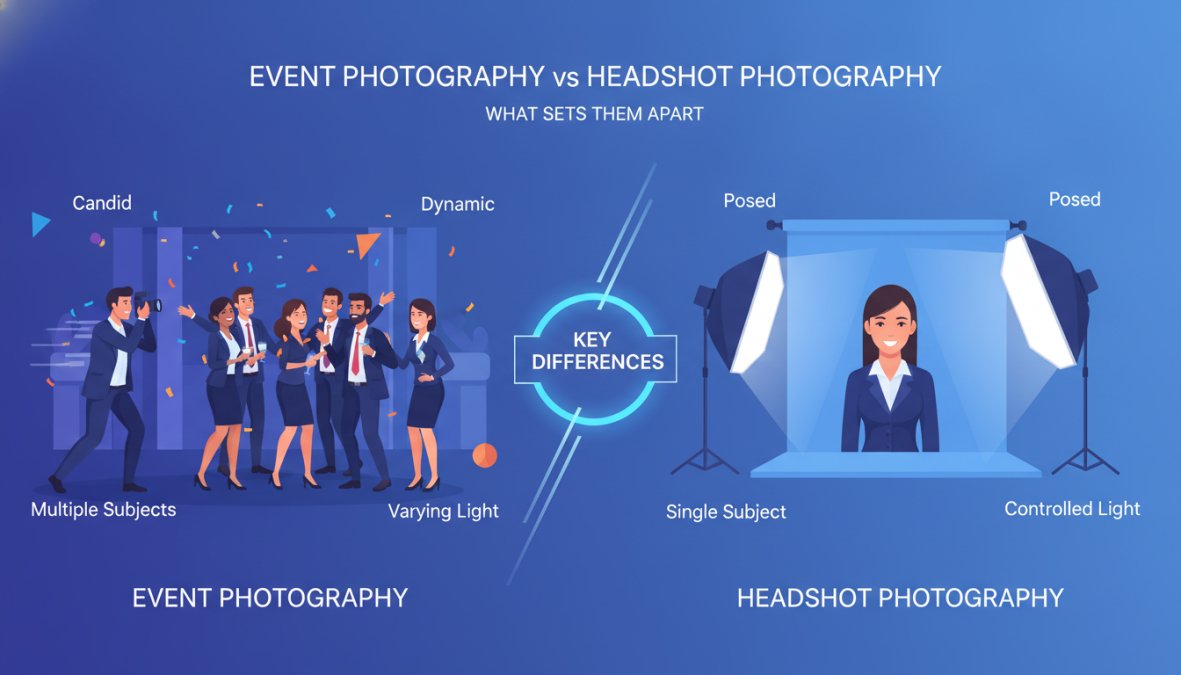
Event photography documents a live occasion, capturing candid shots, group photos, and environmental context as events unfold. Professional headshot photography is a controlled, studio-style portrait session producing polished individual business portraits for LinkedIn, websites, and marketing assets.
The core tension is motion versus stillness. Event coverage demands a photographer who anticipates moments in a dynamic environment. Headshot sessions demand precise lighting, careful composition, and a controlled atmosphere. Booking the wrong service produces flat headshots or stiff event coverage, the choice matters more than most clients realize.
What Is Corporate Event Photography?
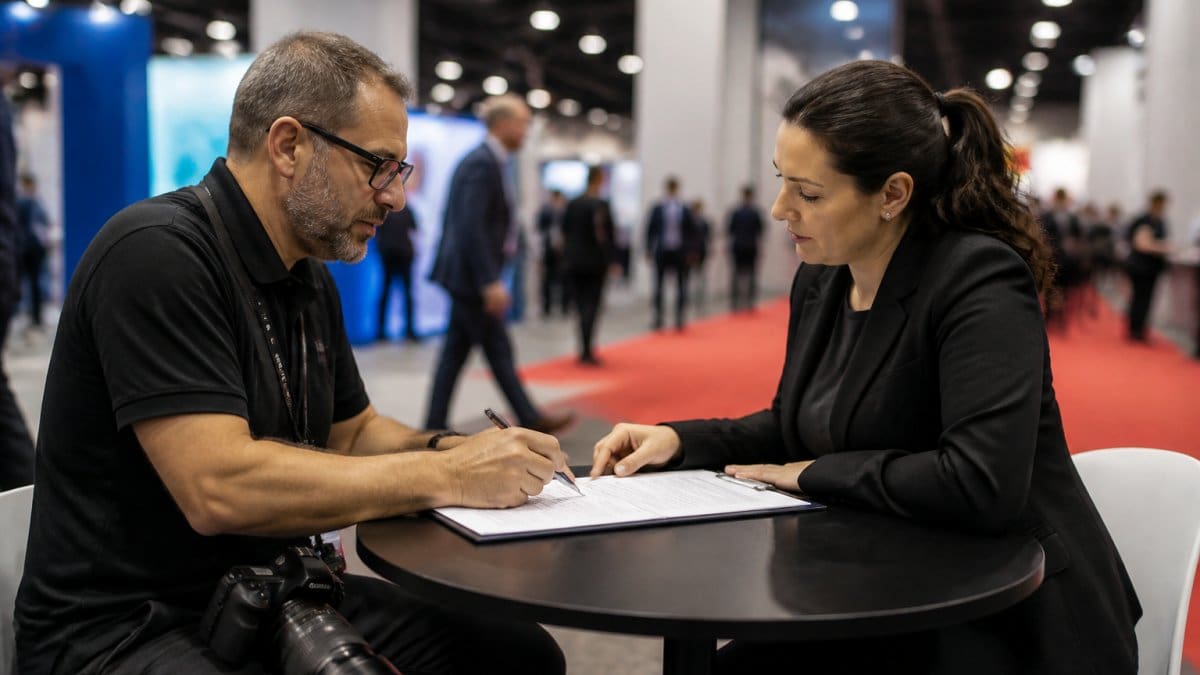
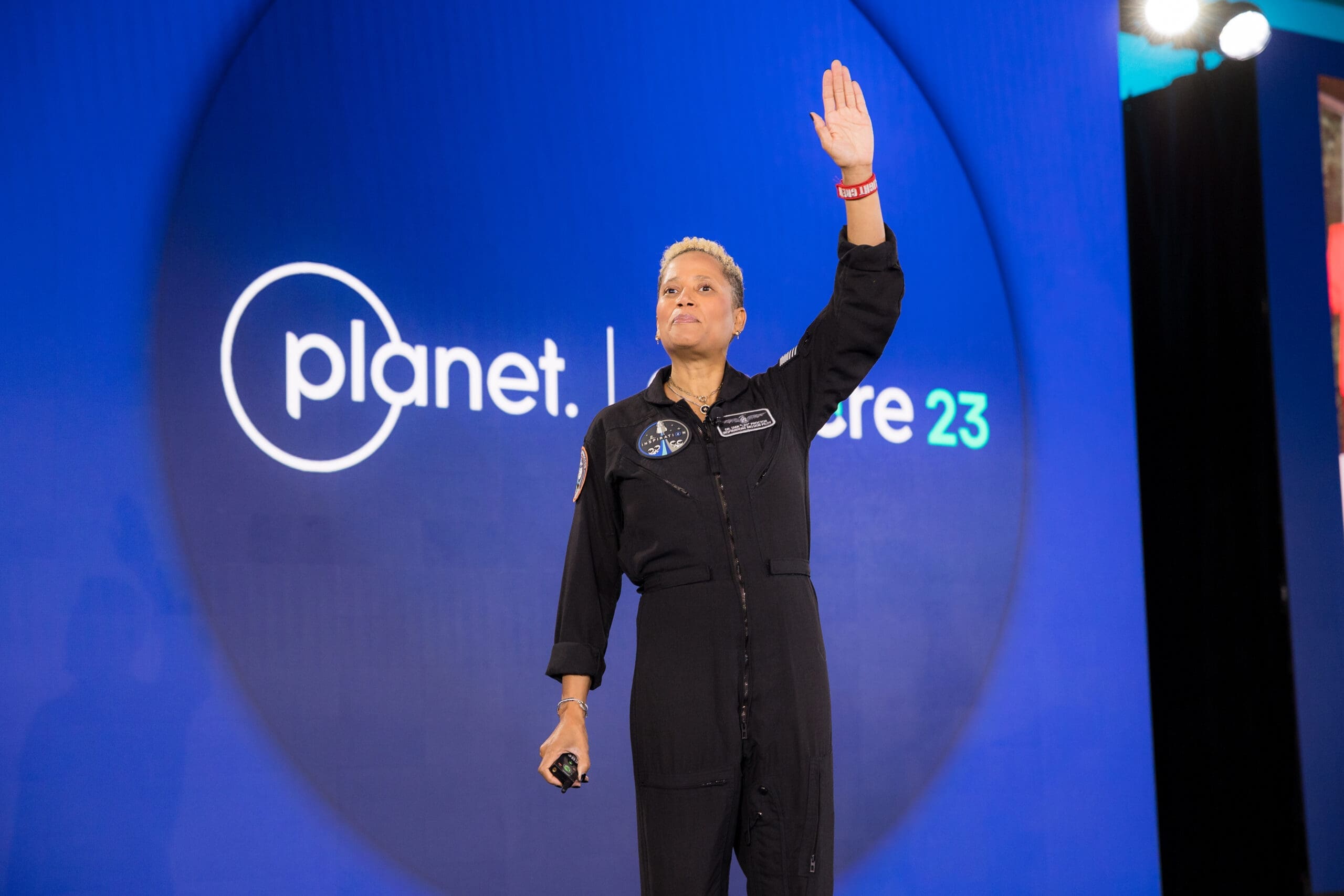
Corporate event photography is the editorial-style documentation of live business occasions, conferences, galas, product launches, and award ceremonies. The photographer works as an observer, capturing the visual narrative without interrupting the flow. Deliverables include candid shots, group photos, environmental wide shots, and branded detail images, serving post-event communications, social media, annual reports, and press coverage.
What Is Professional Headshot Photography?
Professional headshot photography is a structured portrait session producing polished, brand-aligned images of individual business professionals. Sessions use controlled lighting in a studio or on-location, with the photographer directing poses, expressions, and wardrobe. The output is a small set of highly refined images, typically five to twenty final retouched selects, used for LinkedIn profiles, company websites, speaker bios, and personal branding materials.
Purpose, Usage, and Brand Identity: How Each Type Serves Your Business
Headshots build individual identity. Event coverage builds organizational identity.
A strong business portrait communicates competence and professionalism before a single word is read. According to LinkedIn’s official marketing resources, profiles with professional headshots receive significantly more profile views and connection requests than those without, making this a functional investment, not a cosmetic one. Event coverage builds brand recognition at the organizational level, signaling investment and scale to stakeholders and partners in ways no written description can replicate.
The Role of Candid Photography in Event Coverage
Candid photography is the backbone of strong event coverage. The most valuable images capture genuine interaction: two executives laughing during a panel break, a speaker connecting with the audience, a team celebrating a milestone. These unposed moments create emotional resonance and are the images that get shared on social media and used in recruitment materials because they feel real. A skilled event photographer moves through the room like a journalist, anticipating moments rather than manufacturing them.
Brief your event photographer on the key people and moments you need captured before the event starts. A shot list is valuable, but the best candid shots happen in the margins between scheduled moments. Give your photographer permission to roam.
Professionalism and Personal Branding Through Business Portraits
A business portrait is a personal branding tool. Studio lighting eliminates unflattering shadows, controlled composition directs the viewer’s eye, and professional retouching ensures accurate skin tones without looking artificial, combining to communicate confidence and credibility in a way casual photography cannot. For organizations updating team pages or preparing for a speaker series, coordinated portraits also reinforce corporate branding: consistent backgrounds, lighting, and editing styles across an entire team create visual cohesion that reflects organizational professionalism.
Event Photography Equipment List vs Headshot Studio Setup
The equipment requirements reveal exactly why these services demand different photographers. An event kit is built for speed, low light, and flexibility. A headshot studio setup is built for precision and control. Showing up to a headshot session with event gear, or vice versa, produces mediocre results.
Typical event photography equipment list:
- Two camera bodies (primary and backup, full-frame sensors preferred)
- Fast zoom lenses: 24-70mm f/2.8 and 70-200mm f/2.8 for subject reach
- Wide-angle lens: 16-35mm for environmental shots and group photos
- External flash units with diffusers for indoor reception lighting
- High-capacity memory cards and on-site backup drives
- Monopod for stability during long coverage sessions
- Extra batteries (a full-day event can drain three to four battery packs)
Typical headshot studio setup:
- Single camera body with tethered shooting capability
- Prime lenses: 85mm f/1.4 or 105mm f/2.8 for flattering compression
- Two to three studio strobes or continuous LED panels
- Softboxes, beauty dishes, and reflectors for light shaping
- Seamless paper backgrounds in multiple colors
- Tethering software for real-time review on a laptop
- Retouching software such as PortraitPro for post-session editing
Do not assume a photographer who owns both camera bodies and a flash can do both services equally well. Equipment is necessary but not sufficient. The skill of reading a room for candid moments and the skill of directing a subject for a flattering portrait are developed through entirely different practice. Ask to see specific portfolio examples for the exact service you need.
On-location headshot sessions bridge these worlds somewhat, but still require portable lighting gear and a controlled backdrop. A conference room with overhead fluorescent lights is not a substitute for a proper setup.
Professional Headshot Pricing vs Event Photography Costs and ROI
Pricing structures differ significantly because the cost drivers are different. Professional headshot pricing is session-based: a flat fee covering time, equipment, and a set number of final edited images, with additional images priced per image. Event photography pricing is time-based: an hourly or day rate, with additional fees for rush editing, extended coverage, or commercial licensing.
| Service | Typical Pricing Model | Primary Cost Driver | Deliverable |
|---|---|---|---|
| Professional headshots | Session fee + per-image | Editing time per image | 5-20 retouched portraits |
| Event photography | Hourly or day rate | Coverage hours | 100-500+ edited images |
| Corporate team headshots | Group package rate | Number of subjects | Consistent team portraits |
| Multi-day event coverage | Day rate x days | Total coverage time | Full event documentation |
The ROI calculation also differs. A strong business portrait used across LinkedIn, a website, and speaking engagements compounds in value over two to three years. Event photography generates returns immediately through post-event marketing, but those assets have a shorter relevance window. According to Forbes Business Council guidance on visual branding ROI, professional imagery consistently ranks among the highest-ROI investments for personal and corporate branding because visual assets are reused across multiple channels without additional production cost.
Post-Production Turnaround Times: What to Expect
For professional headshots, standard turnaround is three to seven business days, with rush turnaround (24-48 hours) available at a premium. Each image receives individual retouching for skin, lighting corrections, and background cleanup. Event photography turnaround typically runs five to fourteen business days; same-day or next-day delivery of a curated selection is worth requesting if you need images for a post-event press release. Full gallery delivery for a large conference takes longer because the photographer must cull hundreds of frames before editing begins.
Always confirm turnaround time in writing before booking either service. If you have a publication deadline or a conference recap to send out, your photographer needs to know upfront so they can factor it into their workflow and quote accordingly.
How to Prepare for a Professional Headshot Session
Preparation is the single biggest factor clients control in determining headshot quality. Follow these steps to arrive ready:
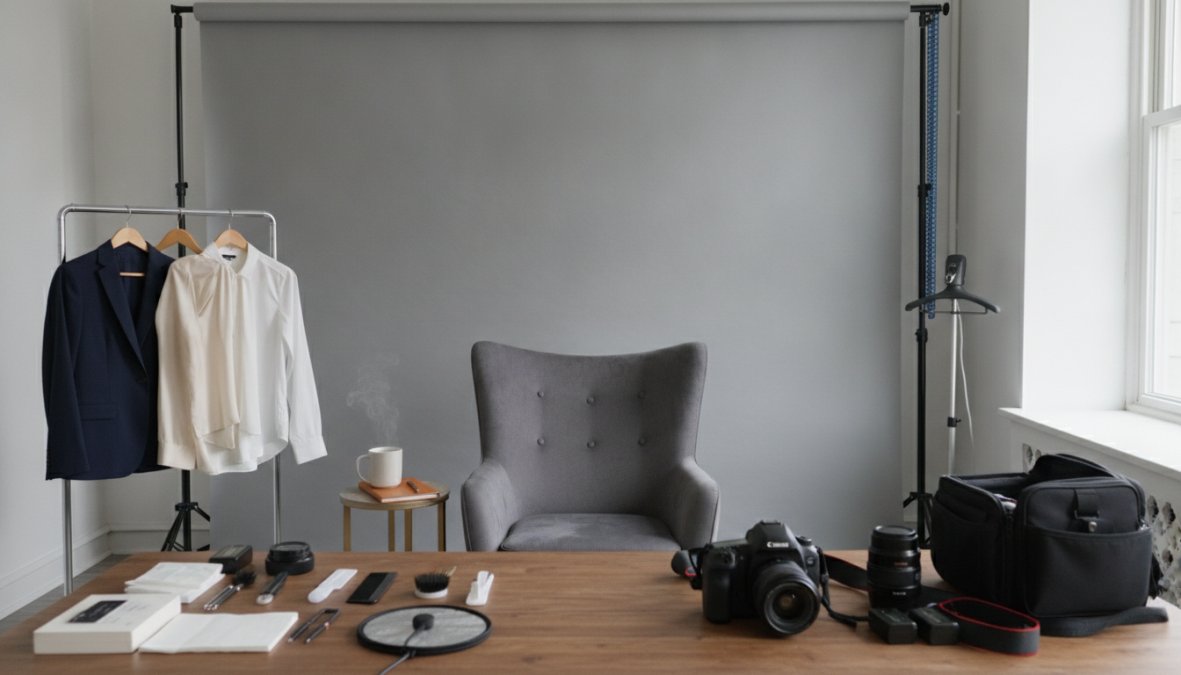
- Confirm your wardrobe two days before the session. Solid colors photograph better than patterns. Avoid white and neon. Bring two to three outfit options.
- Get a haircut seven to ten days before the session. This gives a fresh cut time to settle naturally.
- Sleep well the night before. Tired eyes and skin show clearly in close-up portraits and no amount of retouching fully corrects them.
- Moisturize your skin the morning of the session. Well-hydrated skin photographs more evenly and requires less retouching.
- Arrive ten minutes early. Use the time to decompress and consult briefly with the photographer.
- Bring reference images. Show the photographer two or three headshots you admire to communicate your preferred tone and style faster than any verbal description.
- Communicate your intended use. A LinkedIn profile image, speaker bio photo, and corporate website portrait may call for different expressions and crops. Tell your photographer where the images will appear.
Individual sessions typically run thirty to sixty minutes. Corporate team sessions are scheduled in fifteen to twenty minute blocks per person to maintain efficiency.
Building Your Event Photography Shot List for Complete Coverage
The event photography shot list is the most underused planning tool in corporate event management. The best clients send a detailed brief forty-eight hours before the event, it ensures nothing critical is missed while leaving room for the candid moments that make coverage compelling.
Core categories for any corporate event shot list:
- Arrival and registration: Guests signing in, networking in the foyer, branded signage
- Room setup before guests arrive: Stage, AV setup, table arrangements, branded materials
- Keynote and speaker coverage: Wide establishing shots, close-up portraits of speakers, audience reaction shots
- Audience engagement: Attendees taking notes, asking questions, applauding
- Networking breaks: Candid conversations, handshakes, group discussions
- Awards or recognition moments: Recipient walking to stage, award presentation, group photo with leadership
- Sponsor and partner visibility: Branded banners, sponsor booths, product displays
- Closing and departure: Final group photos, informal farewells
Share this list alongside a schedule of the day, noting must-have shots versus nice-to-have shots. According to Professional Photographers of America guidelines on event coverage, a detailed shot list reduces post-event disputes about missing coverage by giving both parties a documented agreement on deliverables before the event begins.
Choosing the Right Photography Style for Your Marketing Goals
The practical question most business owners need answered: which service do I actually need right now? The answer depends on your current marketing gaps and where you are in your business cycle.
When You Need Event Photography
Book event photography when you have a live occasion that generates marketing value, corporate conferences, product launches, galas, award ceremonies, and client appreciation events. The visual narrative from a well-documented event serves multiple channels simultaneously: social media, email newsletters, press releases, website galleries, and annual reports. Event coverage is also the right choice when your goal is showing organizational culture and scale to potential clients and recruits.
When You Need Professional Headshots
Book professional headshots when your personal or team’s visual representation is outdated, inconsistent, or absent. If your LinkedIn profile photo is more than three years old, your team page has a mix of casual and professional photos, or you’re preparing for a speaking engagement or media appearance, headshots are the priority. This investment pays off most directly for executives, consultants, sales professionals, and anyone whose credibility is partly built on individual reputation.
When Your Business Needs Both
Many organizations in the DMV area need both services but schedule them independently, ending up with visual assets that don’t align. The smarter approach: schedule team headshots in the weeks before a major corporate event. This gives you fresh, consistent portraits for event promotion, speaker bios, and post-event press materials, while the event coverage documents the occasion itself, both asset types working together cohesively across all marketing channels.
Event Photojournalism serves clients across Washington DC and Northern Virginia who need exactly this kind of integrated approach, delivering high-resolution imagery for both corporate events and portrait sessions as part of a customized solution designed to elevate your brand and amplify your message.
When planning your annual marketing calendar, identify your major events first, then schedule headshots two to four weeks before the first major event of the year. This ensures your team’s visual representation is current when you have the most public visibility.
Conclusion: Matching the Right Photography Service to Your Business Needs
Understanding event photography vs headshot photography helps you invest in the right service at the right time. The two disciplines serve distinct marketing functions, require different technical approaches, and produce assets with different shelf lives. A business that treats them as interchangeable consistently ends up with visual assets that underperform.
For organizations across the DMV area, Event Photojournalism brings award-winning expertise to corporate conferences, galas, and special events alongside coordinated team portrait sessions. As guidance from the American Marketing Association on visual content strategy consistently shows, organizations that invest in professional imagery across both event and portrait photography see stronger brand recognition and more consistent visual communication across all channels.
CONTACT US to discuss your upcoming event or headshot session and get a customized photography plan built around your specific marketing goals.
Frequently Asked Questions
What is the main difference between event photography and headshot photography?
Event photography vs headshot photography comes down to environment and intent. Event photography captures candid shots and dynamic moments across a corporate event, conference, or gala in real time. Headshot photography uses controlled studio lighting and deliberate composition to produce polished business portraits for LinkedIn profiles, marketing assets, and corporate branding. One tells a visual narrative; the other builds personal branding through a single, refined image.
How does professional headshot pricing compare to event photography costs?
Professional headshot pricing typically covers a shorter session, often one to two hours, with retouching for a small number of final images, making it more affordable per session. Event photography is priced by hours of coverage, often requiring multiple deliverables and a larger image library. Event packages generally cost more overall due to longer shooting times, more complex editing workflows, and larger volumes of final images. Both offer strong ROI when matched to the right marketing goal.
What equipment is needed for event photography vs headshot photography?
An event photography equipment list typically includes fast zoom lenses, multiple camera bodies, off-camera flash units, and high-capacity memory cards to handle a dynamic environment. Headshot photography relies on studio lighting setups, such as softboxes and reflectors, a prime portrait lens, and a controlled backdrop. Event photographers prioritize mobility and speed; headshot photographers prioritize precision, consistency, and lighting control for polished business portraits.
Can one photographer specialize in both event and headshot photography?
Yes, many professional photographers offer both photography services, though the skill sets and equipment differ significantly. A photographer experienced in corporate event coverage understands how to anticipate candid shots in a fast-paced setting, while headshot work demands patience, direction, and technical lighting expertise. When hiring, confirm the photographer has a strong portfolio in the specific service you need. Some studios, like those serving the DMV area, offer customized solutions covering both disciplines.
How should I prepare for a professional headshot session?
To prepare for a professional headshot, choose solid-colored, well-fitted clothing that aligns with your brand identity. Get a good night's sleep and arrive groomed and rested. Bring two to three outfit options to give your photographer flexibility. Discuss your intended use, LinkedIn profile, company website, or marketing assets, so the photographer can tailor composition and background. Reviewing examples of business portraits you admire beforehand also helps communicate your preferred editorial style.
This article was written using GrandRanker