Table of Contents
- What Is Event Photography for Corporate Retreats?
- Why Invest in Event Photography for Corporate Retreats?
- Unique Challenges in Photographing Corporate Retreats
- Building Your Event Photography Shot List for Retreats
- Selecting the Right Corporate Event Photographer
- Understanding Corporate Photography Pricing and Packages
- Technical and Creative Tips for Retreat Photography
- Maximizing Retreat Photos for Marketing and Internal Storytelling
Last Updated: August 1, 2026
What Is Event Photography for Corporate Retreats?
Event photography for corporate retreats captures authentic moments, professional interactions, and your team’s visual narrative through a photojournalistic lens. Unlike traditional corporate event photography, retreat photography demands deeper understanding of organizational culture and dynamics in less formal settings. Retreats span multiple days in remote venues and include diverse activities, from wellness sessions and team-building to board meetings and celebrations, requiring photographers who blend technical proficiency with storytelling ability. According to the Professional Photographers of America, corporate event photography has become essential for documenting culture and strengthening internal communications, with many organizations treating retreat photography as a strategic investment.
Why Invest in Event Photography for Corporate Retreats?
Strategic retreat photography serves multiple organizational objectives simultaneously, from internal storytelling to external brand building.
Building Brand Narrative and Internal Communications
Professional photography transforms retreat experiences into lasting visual assets that reinforce organizational values long after the event ends. High-quality images document your company’s commitment to employee development, team collaboration, and inclusive culture. Many organizations use retreat photography in newsletters and onboarding materials, where new hires see authentic culture rather than mission statements. Candid moments, genuine laughter, focused attention, authentic conversations, tell more compelling stories than written descriptions.
Creating Marketing Assets and Social Media Content
Retreat photography generates content serving your marketing strategy for months. Professional images work across LinkedIn, websites, recruitment campaigns, and social media. This content proves particularly valuable for recruitment: prospective employees want to see what working at your organization actually feels like. Authentic retreat photography demonstrates team dynamics, company values in action, and professional development opportunities.
Strengthening Donor Relations and Stakeholder Engagement
For nonprofits and associations, retreat photography documents mission impact and team dedication. Donors want to see the people behind the organization. Professional retreat imagery strengthens relationships by providing visual evidence of organizational health and effective stewardship.
Request a shot list that includes VIP and major donor recognition. Professional photographers can discreetly capture key stakeholders in meaningful moments, providing content that strengthens donor relationships.
Unique Challenges in Photographing Corporate Retreats
Corporate retreats present distinct photographic challenges that differ from office-based events or conferences.
Remote Locations and Variable Lighting Conditions
Many retreats occur at resort venues or outdoor locations chosen for distance from the office. These settings create unpredictable lighting scenarios, bright outdoor activities, dimly lit evening banquets, windowless conference rooms within the same day. Professional retreat photographers must scout venues early, understand how light moves throughout the day, and possess backup lighting equipment and rapid technical adjustment skills. Remote venues also mean limited power sources, no nearby backup equipment, and challenging terrain.
Privacy Concerns and Ethical Consent Practices
Corporate retreats often include sensitive discussions and confidential matters employees expect to remain private. Professional photographers understand which moments are appropriate to document and which should be off-limits. Many companies now require explicit consent protocols for retreat photography.
Establish a clear photography consent policy before the retreat. Communicate to attendees what photography will occur, how images will be used, and how employees can opt out. A photographer who doesn’t respect these boundaries creates legal and cultural risks.
Ethical considerations extend to post-retreat usage. A candid executive photo might suit internal communications but not external marketing. Your photographer should understand these distinctions.
Capturing Diverse Activities and Team Dynamics
Retreats include keynote presentations, breakout sessions, team-building activities, meals, networking, wellness sessions, and social events. Each requires different photographic approaches. A photographer must move fluidly between environments, anticipate meaningful moments, and maintain focus across full days of shooting. Retreat photography must capture genuine interactions, avoiding stiff, posed moments while documenting professional content.
Building Your Event Photography Shot List for Retreats
A comprehensive shot list ensures your photographer captures moments that matter most to your organization.
Essential Categories: Candid Moments, Group Photos, and Details
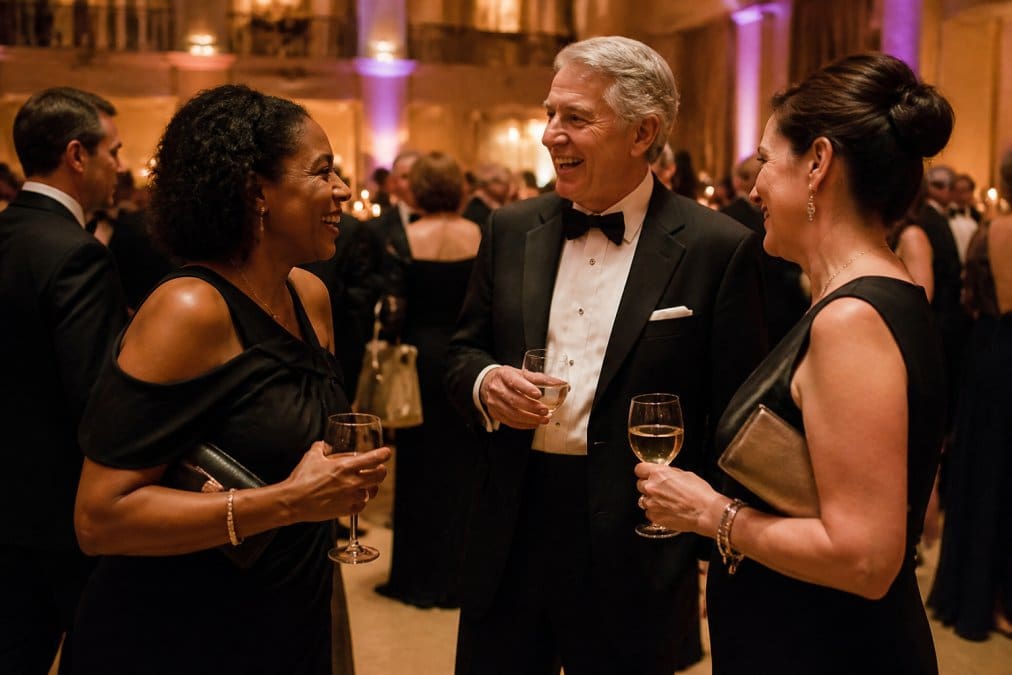
Candid moments, genuine interactions and authentic reactions, form the foundation of compelling retreat photography. Group photos serve different purposes: formal shots of entire teams, departments, and leadership for annual reports and website materials. Details like signage, materials, venue setup, and activity-specific moments create context and visual variety.
VIP and Keynote Speaker Coverage
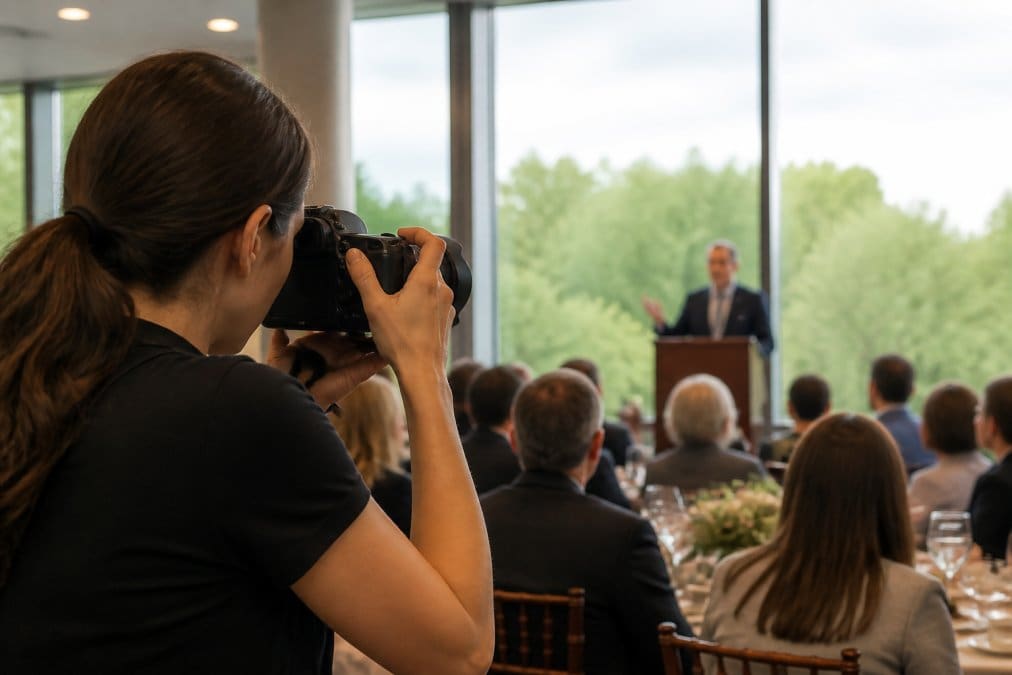
If your retreat includes keynote speakers, board members, or VIPs, prioritize their coverage. Your photographer should know who these people are in advance and understand their importance. Request specific images of awards ceremonies, recognitions, and leadership presentations, these often become your most-used assets.
Team Building Activities and Networking Moments
Structured team-building activities often produce the most authentic images because participants focus on the activity rather than the camera. Informal moments, coffee breaks, meals, evening events, reveal authentic team dynamics.
Prioritize coverage of moments revealing your actual culture: genuine laughter, focused collaboration, mentoring interactions, and authentic celebrations. These images resonate far more powerfully than formal posed shots.
Selecting the Right Corporate Event Photographer
Choosing the right photographer requires evaluating more than portfolio quality. You need someone who understands corporate culture, works professionally in challenging environments, and delivers your organization’s specific style and coverage needs.
Evaluating Portfolio and Photojournalistic Style
Examine a photographer’s corporate and event portfolio. Look for authentic candid moments, clear technical execution across different settings, and visual variety. Pay particular attention to group photos: do they feel stiff or relaxed? A photojournalistic style, documenting events as they unfold rather than heavily directing, works best for most corporate retreats, though ensure the photographer can execute formal group photos when needed.
Assessing Client Communication and Professionalism
Your photographer will be present during sensitive corporate moments. They need to demonstrate professionalism, discretion, and clear communication. Notice whether they ask thoughtful questions about your organization, goals, and culture. Discuss how they handle challenging situations, equipment failure, and unexpected changes. Check references from previous corporate clients, asking specifically about communication, responsiveness, and reliability.
Verifying Contract Terms and Usage Rights
Ensure you understand exactly what you’re getting. The contract should specify coverage hours, number of edited images, turnaround time, and critically, usage rights. Usage rights determine how you can use photographs, social media, marketing materials, annual reports. Discuss what happens if you’re unhappy with results and understand revision policies.
Understanding Corporate Photography Pricing and Packages
Corporate event photography pricing varies based on coverage scope, photographer experience, and deliverables.
Pricing Models: Day Rates, Hourly Rates, and Deliverables
Most corporate event photographers work on hourly or full-day rates. Day rates often provide better value for full-day or multi-day retreats. Clarify what a "day" includes: 8 hours, 10 hours, or full event duration? Does it include travel time?
Pricing depends on deliverables: how many edited, high-resolution images will you receive? Some photographers include a set number in their base rate; others charge separately. Discuss whether pricing includes digital delivery, prints, or both.
Request a detailed quote itemizing all costs: photographer fees, travel, equipment, number of edited images, and delivery format. This prevents surprise charges and enables fair comparison.
What to Expect: Turnaround Time and Image Delivery
Turnaround time varies significantly among photographers. Some deliver within days; others take weeks. For retreats needing quick images for press releases or social media, turnaround time matters significantly. Professional photographers typically deliver a curated selection of best images, not thousands of unedited shots. Discuss delivery method, cloud download, USB drive, or online gallery, and how long files remain available.
Technical and Creative Tips for Retreat Photography
These principles improve retreat photography quality whether working with professionals or providing guidance.
Lighting, Composition, and Equipment Essentials
Retreat venues present varied lighting challenges. Professional photographers manage these through technical knowledge and equipment: quality camera bodies, versatile lenses (24-70mm zoom for general coverage, 70-200mm for distant subjects), and supplementary lighting for challenging indoor environments.
Composition principles matter as much as technical execution. Leading lines draw viewers into images. Layered depth creates visual interest. Off-center framing creates more dynamic compositions than centered subjects. Strategic positioning ensures comprehensive coverage from varied angles.
Capturing Authenticity and Avoiding Stiff, Posed Shots
The difference between compelling and forgettable retreat photography comes down to authenticity. Best retreat photographers position themselves where they observe without being directly visible, anticipate moments before they fully develop, and capture genuine interactions. Rather than formal posing, skilled photographers direct people naturally, asking them to continue conversations while the camera captures moments.
Lighting choices affect authenticity. Harsh direct flash makes people uncomfortable. Softer, ambient lighting creates images feeling more natural and candid.
Maximizing Retreat Photos for Marketing and Internal Storytelling
The real value of retreat photography emerges after the event, when images become assets for broader communications strategy.
Web-Optimized Delivery and High-Resolution Archives
Request two versions of final images: high-resolution files (300 DPI, 3000+ pixels) suitable for print and web-optimized versions (72 DPI, 1200-1500 pixels) for digital use. Request images organized logically by category or day with detailed captions identifying people and moments. Maintain a high-resolution archive as historical records of organizational culture.
Integrating Videography Alongside Photography
Many organizations now add videography to retreat coverage. Video captures energy and tone that still photography cannot. A photographer and videographer working together create complementary coverage. Discuss coordination to ensure efficient coverage without redundancy. Consider how you’ll use video content, short clips for social media or longer-form recap videos for internal communications.
Corporate retreat photography transforms temporary team experiences into lasting visual assets that strengthen organizational culture and communications. The investment in professional coverage pays dividends through improved recruitment, strengthened internal communications, and compelling marketing content. Event Photojournalism specializes in understanding corporate culture and capturing authentic moments that reveal who your organization actually is. Our award-winning photographers bring technical expertise, professional discretion, and deep understanding of corporate environments to every retreat we document. Ready to ensure your next retreat is captured with the quality and insight it deserves? Contact Event Photojournalism for a consultation and discuss how we can transform your retreat into a powerful visual narrative.
Frequently Asked Questions
Why is professional event photography important for corporate retreats?
Professional event photography for corporate retreats captures authentic moments, team dynamics, and key activities that strengthen internal communications and create lasting brand narratives. High-quality images serve as marketing assets for social media, press releases, and annual reports. They also document the value of your retreat investment, reinforcing team engagement and providing visual proof of company culture for recruitment and stakeholder relations.
What should I include in my event photography shot list for a corporate retreat?
Your event photography shot list should cover candid moments of attendees engaging naturally, group photos with leadership and teams, keynote speakers presenting, VIPs and important guests, team building activities in action, networking moments, venue details and atmosphere, meals and social events, and any product or award highlights. Prioritize capturing the authentic energy and storytelling elements rather than just posed shots, which helps create a compelling visual narrative for marketing and internal communications.
How much does corporate event photography cost, and what affects pricing?
Corporate photography pricing depends on several factors including retreat duration, photographer experience level, number of deliverables, turnaround time, venue location, and whether you need edited high-resolution images or web-optimized versions. Pricing models typically include day rates, hourly rates, or package deals. For accurate pricing tailored to your specific retreat needs, contact a professional corporate event photographer directly for a customized quote based on your event scope and deliverable requirements.
How do I choose a corporate event photographer who captures candid, authentic moments?
Look for a corporate event photographer with a strong portfolio demonstrating photojournalistic style, authentic, unposed moments rather than stiff formal shots. Review their experience with corporate retreats, conferences, and team building activities. Assess their communication skills and ability to understand your venue, VIPs, and event flow. Verify their contract includes clear usage rights and turnaround time. Ask for references and confirm they work discreetly without being intrusive, which is essential for professional and private events.
Additional Resources
For more guidance on planning corporate events and maximizing their impact, explore these resources:
[EXTERNAL_LINK: Professional Photographers of America guidelines for event photography | ppa.com]
[EXTERNAL_LINK: Corporate event planning best practices | eventmanagementinstitute.com]
[EXTERNAL_LINK: Using photography for internal communications and employee engagement | communicationsdirectory.org]
This article was written using GrandRanker