Table of Contents
- Why Your Conference Photographer’s Portfolio Matters
- The Full Gallery vs. Highlight Reel Trap
- Essential Elements in a Conference Photography Shot List
- Technical Proficiency: What the Images Reveal
- Questions to Ask a Conference Photographer
- Professionalism and Event Documentation Standards
- Red Flags and What to Avoid
- Conclusion
Last Updated: August 12, 2026
Why Your Conference Photographer’s Portfolio Matters
Your choice of photographer shapes how your event is remembered. A strong conference photographer portfolio reveals technical mastery, strategic thinking, and the ability to capture moments that matter under real pressure. The stakes are high: your conference imagery becomes your visual record, fundraising asset, and proof of impact. Poor photography forces heavy editing, delays press releases, and makes your event look smaller than it was. The right photographer delivers images that need minimal post-production and are ready to work immediately.
Most organizations approach this decision backwards, looking at a few pretty shots and assuming consistency without verifying the photographer can handle your event’s specific demands. This guide walks you through exactly what to evaluate in a conference photographer portfolio and the red flags that should send you looking elsewhere.
The Full Gallery vs. Highlight Reel Trap
A highlight reel shows a photographer’s best work but doesn’t reveal consistency across an entire event, performance in challenging lighting, or whether they captured all the moments that mattered. You see the winners, not the missed shots or coverage gaps.
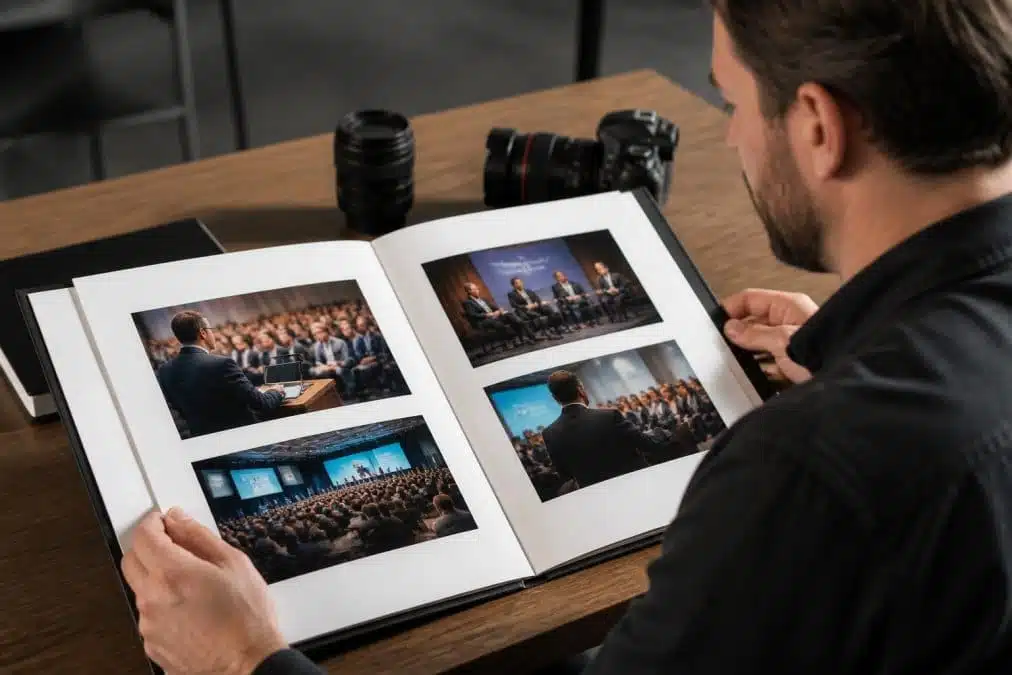
When evaluating a conference photographer portfolio, ask to see a full gallery from at least one recent event, not just edited highlights. This reveals whether lighting consistency holds across the entire event, how the photographer handles transitions between sessions, whether they captured the specific shot types you need, and the ratio of usable images to total captures (professionals typically deliver 30-50% of shots as final-quality images).
Full galleries are uncomfortable for photographers to share because they expose imperfections. That’s exactly why you need to see them. A photographer confident in their work will provide this without hesitation.
Request a full gallery from a similar-sized event, then randomly select 10 images from different parts of the event. Assess whether those 10 would be acceptable as final deliverables. If they wouldn’t, the photographer is relying too heavily on curation.
Essential Elements in a Conference Photography Shot List
A strong conference photographer portfolio demonstrates coverage across distinct shot categories that actually matter for your event record and communications.
Keynote and Formal Moments
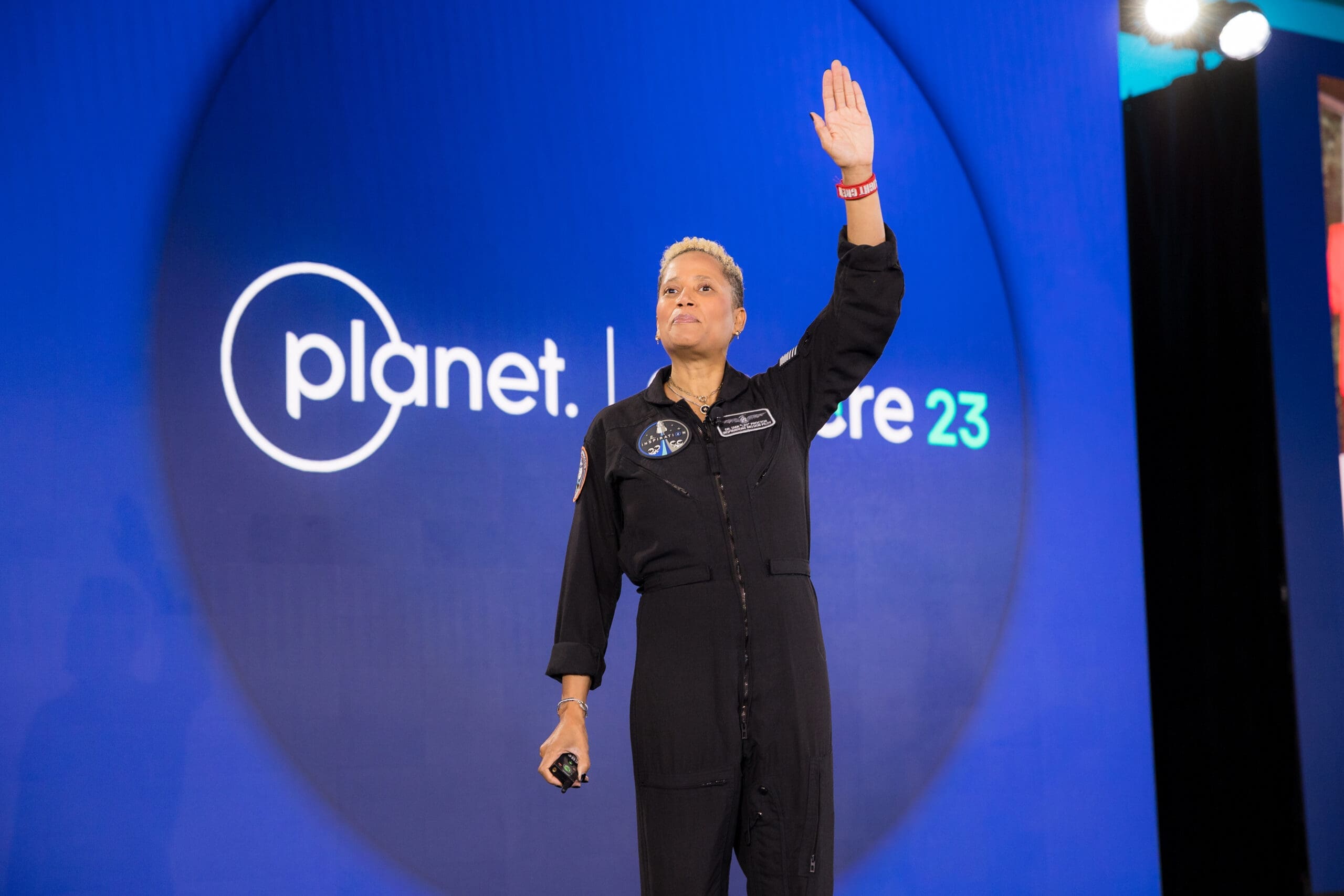
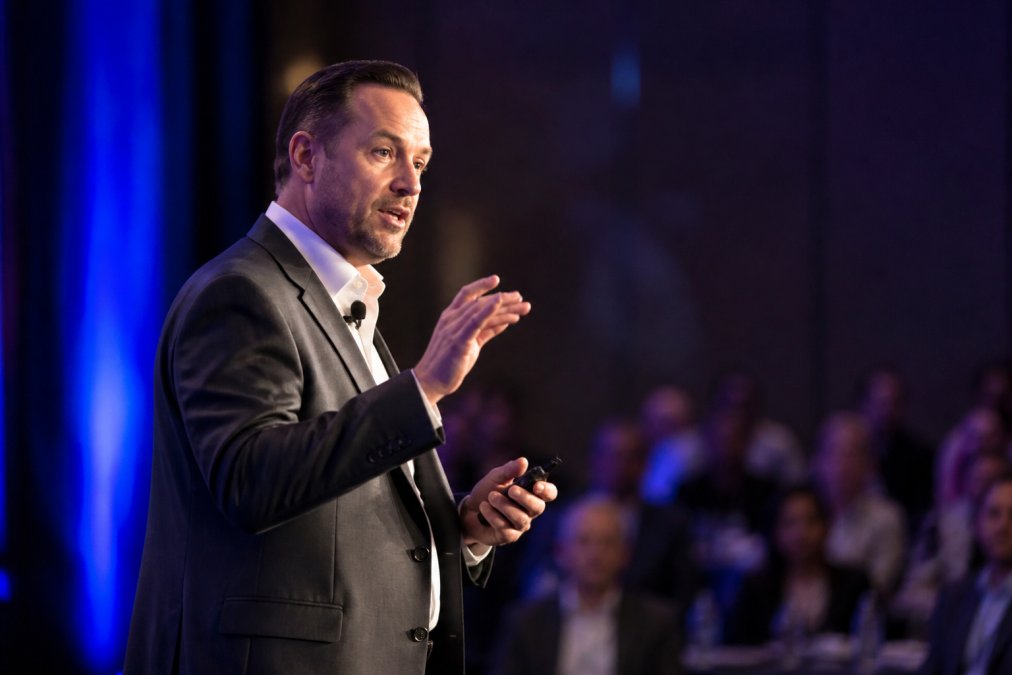
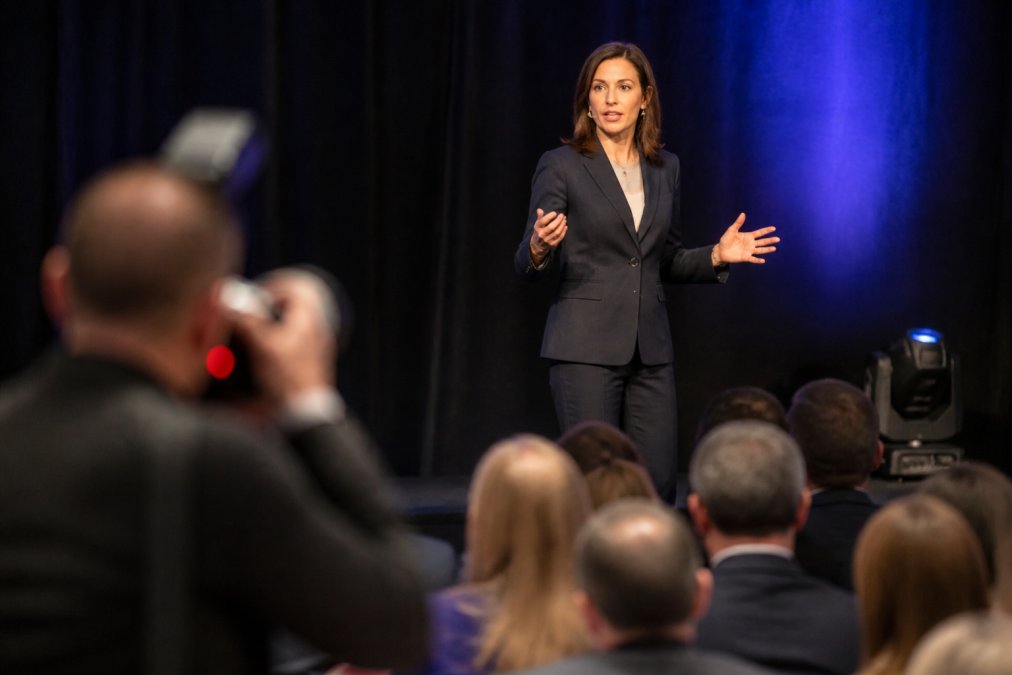
Keynote photography is the foundation of conference documentation. Look for images where the speaker is captured at peak moments, mid-gesture, with genuine expression. The background should be clean and appropriate, and lighting should be even across the speaker’s face without harsh shadows or blown-out highlights.
Formal group photos and award presentations demand composition discipline, proper alignment, and attention to detail like visibility and focus. A photographer who struggles with formal shots often compensates by avoiding them in their portfolio.
Candid Networking and Interaction
Candid shots capture the actual energy of your event. Strong candid photography shows genuine interaction without posed moments, proper positioning so the photographer captured the moment discreetly, varied framing that includes close-ups and wider shots, and lighting that works naturally with the venue.
Weak candid work shows stiff moments, people looking at the camera, or images taken from too far away to feel intimate. This signals a photographer who either doesn’t work discreetly or lacks technical skill to shoot in available light.
Wide-Angle Venue and Setup Shots
These images establish context and show your venue, setup, and scale. Look for wide-angle shots properly composed to convey the event’s energy, not just empty rooms. Strong venue photography shows awareness of perspective, depth, and how to make a space feel inviting rather than vacant.
Technical Proficiency: What the Images Reveal
A photographer’s technical skill shows in every image.
Lighting Consistency Across Varied Venues
Conference venues are notoriously difficult, with keynotes in ballrooms with theatrical lighting, breakout sessions in hotel rooms with fluorescent lights, and receptions with mixed ambient and accent lighting. A strong portfolio shows images that maintain consistent color temperature and exposure across all environments.
Look for images where skin tones appear natural and consistent from shot to shot. If one image has warm tones and another taken 30 minutes later has cool tones, the photographer either doesn’t understand white balance or isn’t adjusting for changing light conditions. This becomes obvious and unprofessional when using photos from the same event in marketing materials.
Exposure and White Balance Control
Examine the brightest and darkest parts of images. Well-exposed photos show detail in both highlights and shadows. Blown-out windows, completely black areas, or faces that are too bright or too dark indicate exposure problems.
White balance is the color cast of an image. In properly white-balanced images, whites appear white and skin tones appear natural. Images with noticeable blue or orange casts signal the photographer shot in auto white balance or didn’t correct for the venue’s lighting during post-production. This requires correction in editing, adding time to post-production and risking inconsistent color grading.
Composition and Framing Decisions
Strong composition shows intentional framing that draws attention to the subject, clean backgrounds that support rather than distract, use of depth to create visual interest, and varied perspectives. Weak composition shows centered subjects in every frame, distracting backgrounds, or unclear main subjects, signaling a photographer who is pointing and shooting rather than actively composing.
If more than 20% of images in a portfolio have distracting backgrounds or cluttered framing, the photographer likely won’t improve under pressure at your event. Poor composition habits are hard to break in real-time shooting.
Questions to Ask a Conference Photographer
Move beyond the portfolio. Direct questions reveal whether a photographer understands your specific needs and has the experience to handle your event.
Ask about their experience with your type of event. A photographer with extensive gala experience might struggle at a technical conference. Ask about their approach to challenging lighting and whether they adjust white balance between sessions. Ask how they handle strategy: do they want a briefing on key people, important moments, and specific shots you need? A photographer who asks detailed questions is thinking strategically.
Ask about turnaround time, deliverables format, and whether they provide raw files or edited images. Ask about backup systems and what happens if their primary camera fails. A professional photographer should have redundancy built in.
Professionalism and Event Documentation Standards
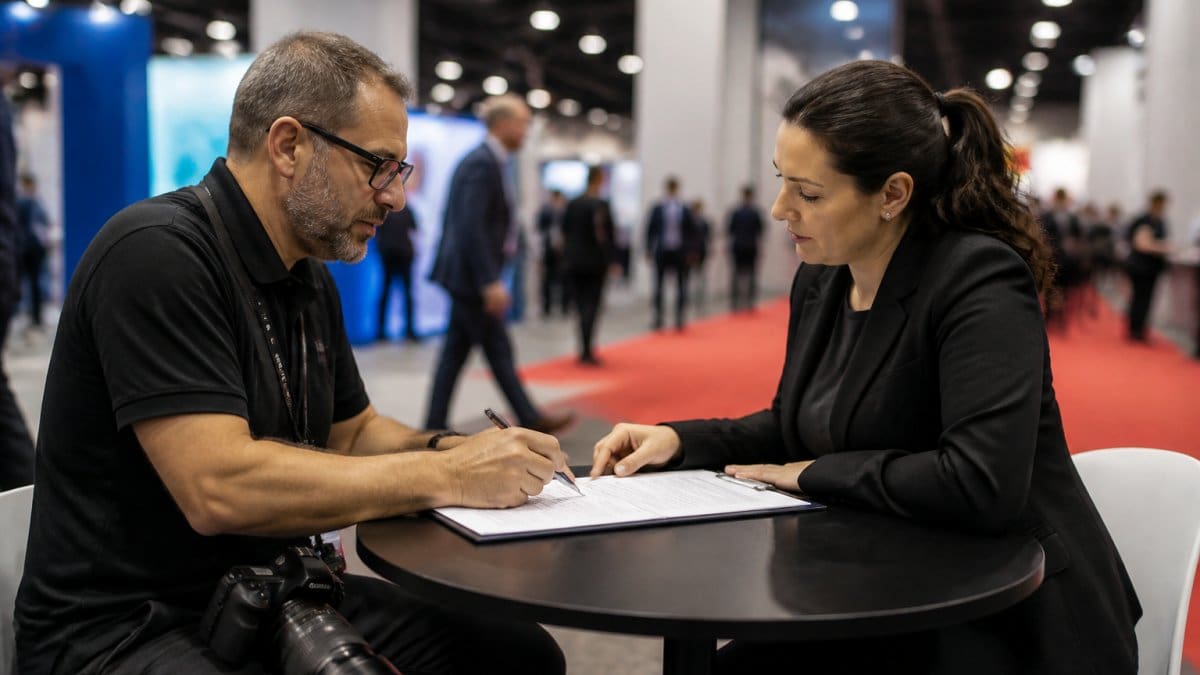
How a photographer conducts themselves during your event matters as much as the final images. A professional arrives early, understands the event schedule, and positions themselves strategically without disrupting the experience. They’re present but unobtrusive.
Event documentation standards include providing images in a timely, organized format with full-resolution files, consistent naming conventions, and metadata that makes images searchable. Images should be color-corrected and ready for immediate use without extensive post-production on your end.
A professional photographer also clarifies usage rights. You should have clear ownership of images you’ve paid for, with the ability to use them for internal communications, fundraising, and marketing without additional licensing fees.
Professional photographers deliver not just images, but a complete asset package: organized files, proper metadata, color-corrected final images, and clear usage rights. This is what separates a service from a one-time transaction.
Red Flags and What to Avoid
A portfolio that’s entirely highlight-reel material with no full-event galleries suggests the photographer is hiding inconsistency. Beware of portfolios where every image feels staged or overly polished, often indicating heavy post-production editing that won’t be realistic for your event turnaround.
Inconsistent image quality across a portfolio is a major red flag. If some images are sharp and well-lit while others are soft, underexposed, or poorly composed, you’re seeing the photographer’s range, and the lower end is what you might get at your event.
Photographers who are evasive about their process, equipment, or backup systems are concerning. Legitimate professionals are transparent about how they work. Be cautious of photographers who promise unlimited edits or guarantee "you’ll love every image." Photography is subjective, and no photographer delivers 100% keepers.
Avoid photographers who primarily shoot with smartphone cameras or entry-level equipment, and watch for those who’ve never shot your type of event before. Industry-specific experience shapes how a photographer anticipates moments and understands what’s important.
Conclusion
Evaluating a conference photographer portfolio comes down to three core questions: Can they deliver technical consistency across your entire event? Do they understand the specific demands of conference documentation? Are they professional enough to execute reliably under real-world conditions?
Event Photojournalism has built our reputation on award-winning technical execution, strategic coverage that captures what actually matters at your conference, and the professional reliability that transforms your event into lasting visual assets. When you’re ready to move forward with a photographer who understands both the technical and strategic side of corporate event documentation, contact Event Photojournalism for a consultation to discuss how we can elevate your conference imagery.
Frequently Asked Questions
What specific types of shots should be in a conference photography portfolio?
A strong conference photography portfolio includes keynote speakers captured mid-presentation, candid networking moments between attendees, formal group photos, wide-angle venue shots showing the setup and atmosphere, and close-ups of signage or sponsor displays. The mix should demonstrate the photographer's ability to capture both planned moments and spontaneous interactions. Look for variety in angles, distances, and lighting conditions, this shows real event experience, not just curated highlights.
How do you tell the difference between a wedding photographer and a professional conference photographer?
Conference photographers show mastery of venue lighting challenges, rapid subject changes, and large group dynamics. Their portfolios feature multiple speakers, varied room setups, and technical documentation shots. Wedding photographers typically show more posed couple portraits and controlled lighting scenarios. Conference photographers demonstrate faster turnaround times, higher image counts per event, and the ability to work unobtrusively in crowded, high-pressure settings. Ask directly about their corporate event experience and request references from conference clients specifically.
What technical skills should be evident in a corporate event photographer's portfolio?
Look for consistent exposure and white balance across different lighting conditions, ballrooms, dimly lit breakout sessions, and outdoor venue areas. Examine whether backgrounds stay sharp or blur appropriately based on composition intent. Check that colors remain accurate and skin tones look natural under varied lighting. Sharpness and focus should be consistent across moving subjects. These technical markers indicate a photographer who understands how to use equipment settings strategically, not someone relying on post-production fixes to salvage poorly exposed images.
How many images should a professional event photographer display in their portfolio?
Quality matters far more than quantity. A focused portfolio of 30-50 images from 3-5 complete events is stronger than hundreds of mediocre shots. This approach demonstrates editorial judgment and the ability to select images that tell a cohesive visual narrative. Ask the photographer how many images they typically deliver from a full-day conference, this reveals their shooting discipline and editing standards. Be cautious of portfolios with only 10-15 images or those that show every single frame from an event, as both can signal inexperience.
This article was written using GrandRanker